Artwork
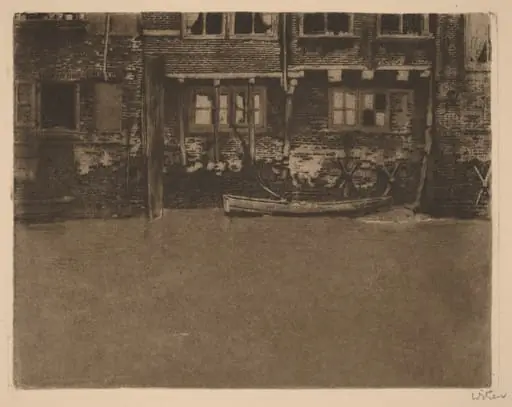
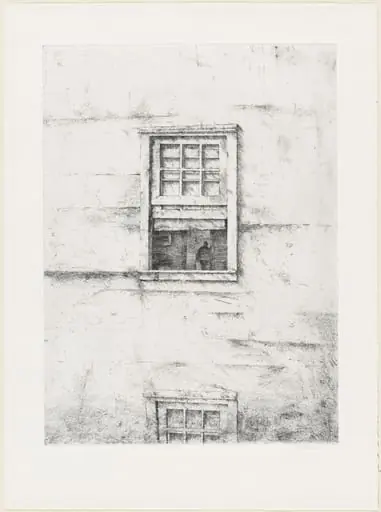
Oudezijds Achterburgwal, twee deuren in het midden [The Oudezijds Achterburgwal, with Two Doors in the Middle]
![Oudezijds Achterburgwal, twee deuren in het midden [The Oudezijds Achterburgwal, with Two Doors in the Middle], by Willem Arnold Witsen, ink](https://artifactworldgallery.com/img/willem-arnold-witsen--oudezijds-achterburgwal-twee-deuren-in-het-midden-the-oudezi--fa3aac16ddc6d38d-w1024.webp)
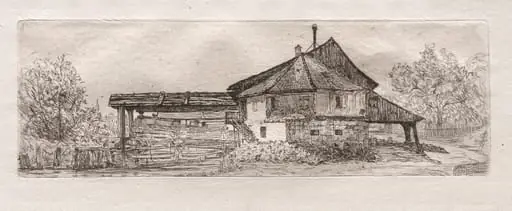
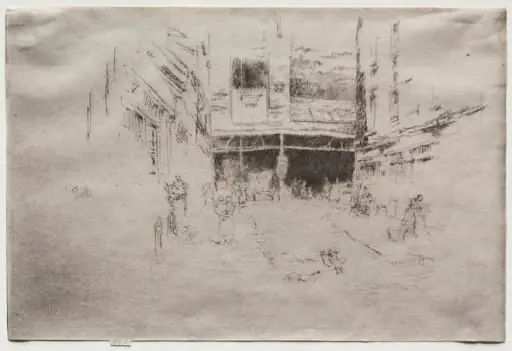
Oudezijds Achterburgwal, twee deuren in het midden [The Oudezijds Achterburgwal, with Two Doors in the Middle] is an ink print by Willem Arnold Witsen. It is held in the collection of the National Gallery of Art.
About this work
Overview
Willem Arnold Witsen’s early‑20th‑century print captures a narrow Amsterdam lane, the Oudezijds Achterburgwal, framed by weathered brick façades. The composition centers on a pair of modest doors that open slightly, allowing a faint glow to spill onto the street. The scene is rendered in a muted palette that conveys the quiet, lived‑in atmosphere of the historic canal district.
Subject & Meaning
The work documents everyday urban architecture, emphasizing the texture of aged masonry, peeling paint, and modest windows with curtains. A small plant on a sill and the soft interior light suggest domestic presence within the otherwise austere streetscape, hinting at the continuity of private life amid the public thoroughfare.
Technique & Style
Created with a combination of etching and aquatint on wove paper, the print balances crisp linear detail with broad, water‑based tonal washes. Fine incised lines delineate the brickwork, while the aquatint layers produce subtle gradations of shadow, giving depth to the walls and a gentle atmospheric quality to the scene.
History & Provenance
Executed around 1906, the piece belongs to a period when Witsen explored the visual record of Amsterdam’s historic neighborhoods. The print has circulated among collectors of Dutch graphic art and is noted in catalogues of early 20th‑century etchings, reflecting the artist’s interest in documenting the city’s changing face.
Context
At the turn of the century, Amsterdam’s canal quarters were undergoing modernization, yet many medieval structures remained. Witsen’s depiction aligns with contemporary efforts to preserve the visual memory of these neighborhoods, offering a counterpoint to the era’s rapid urban development.
Artist & collection