Artwork
Untitled
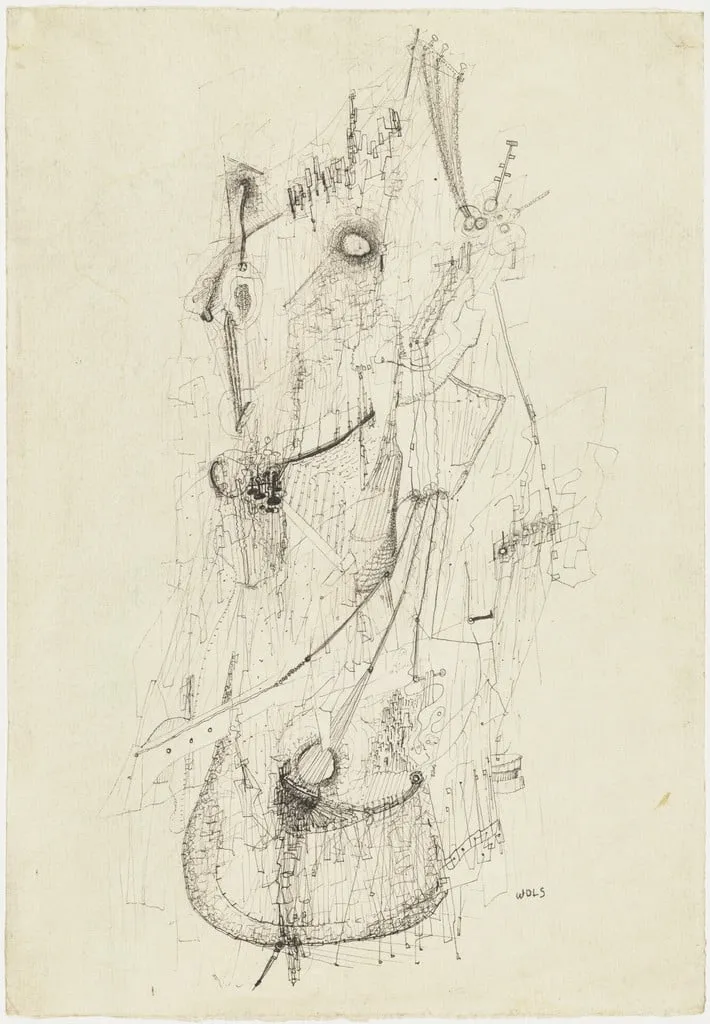
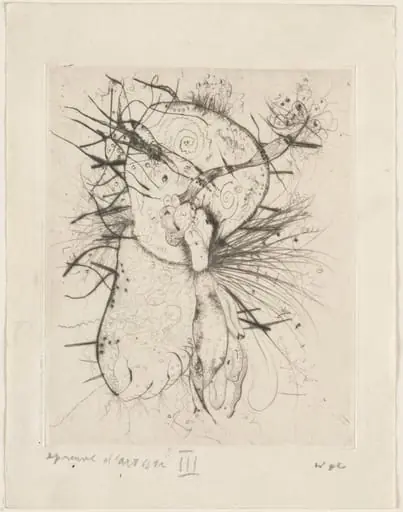
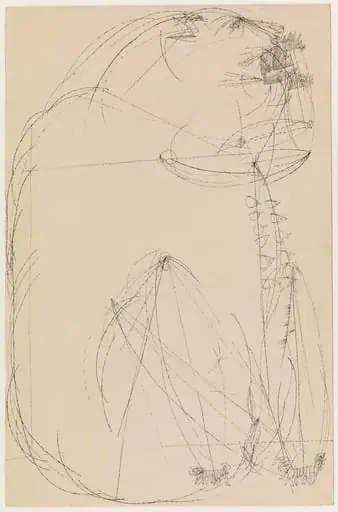
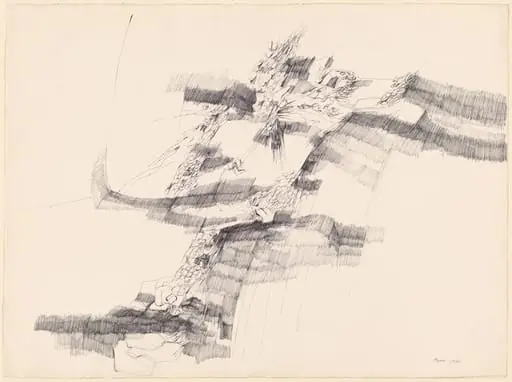
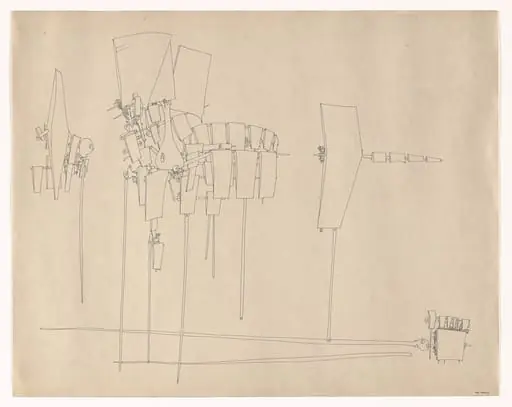
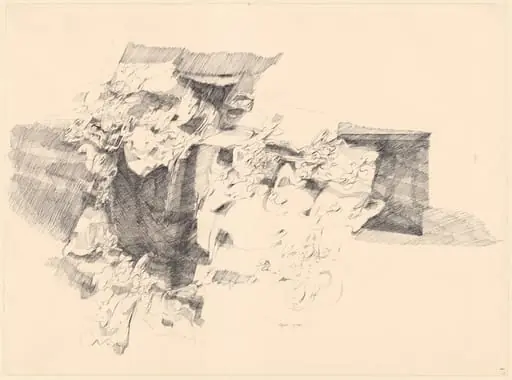
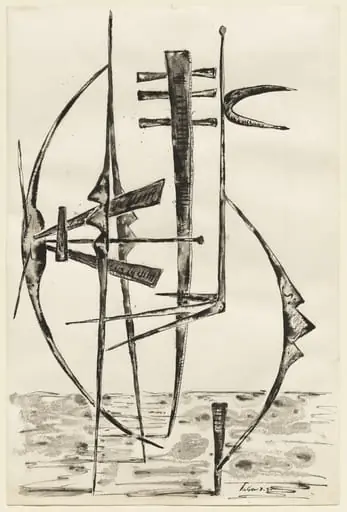
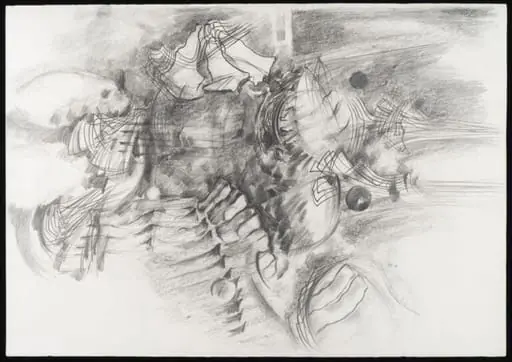
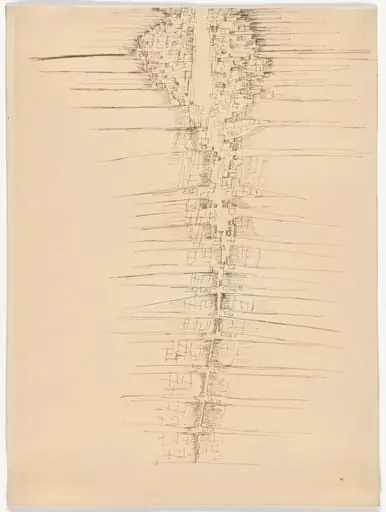
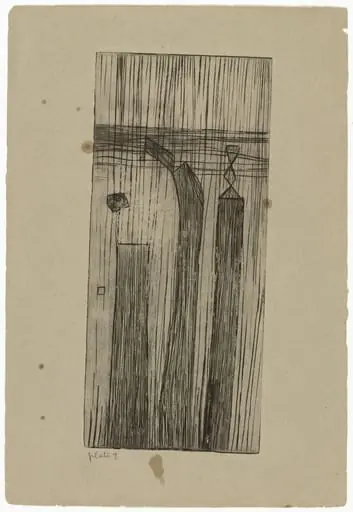
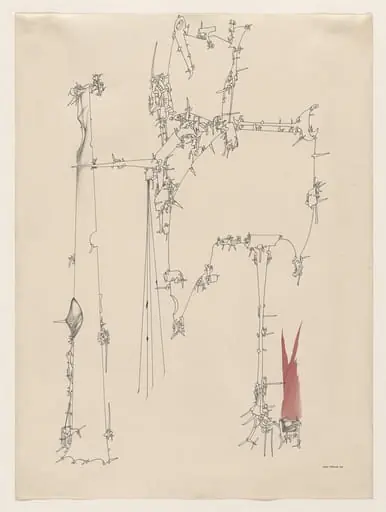
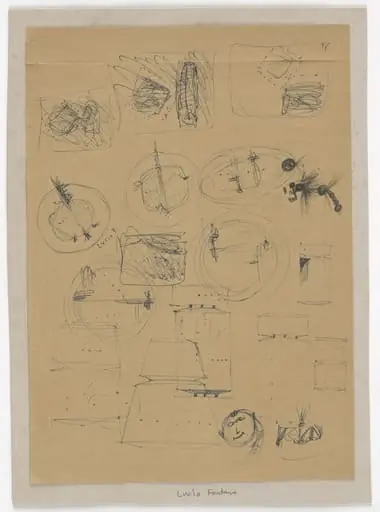
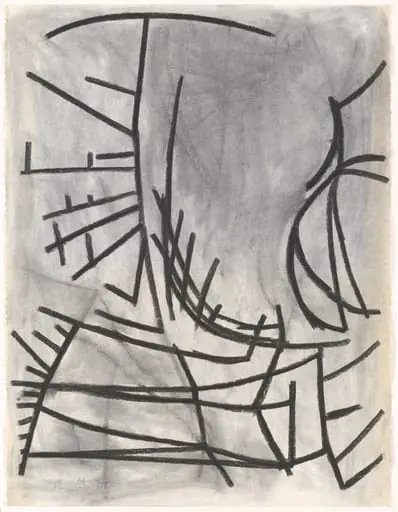
Untitled is a watercolor drawing by Wols. It dates from 1942 and is held in the collection of the Museum of Modern Art.
About this work
Overview
Created in 1942, this ink and watercolor drawing by Wols—born Alfred Otto Wolfgang Schulze—emerges from a period of intense personal and artistic upheaval.
Created in 1942, this ink and watercolor drawing by Wols—born Alfred Otto Wolfgang Schulze—emerges from a period of intense personal and artistic upheaval. Made in occupied France, the work embodies a shift away from representational clarity toward expressive abstraction. Its spontaneous marks and layered textures reflect a search for form through gesture rather than definition, positioning it within early developments of post-war European abstraction.
Subject & Meaning
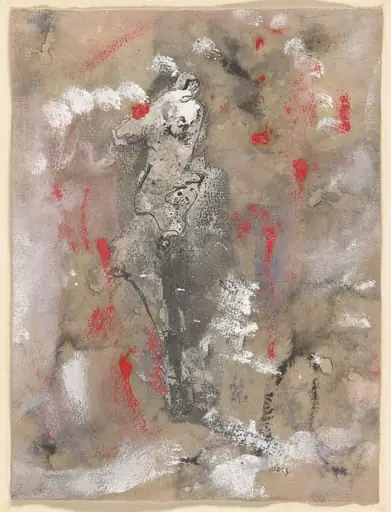
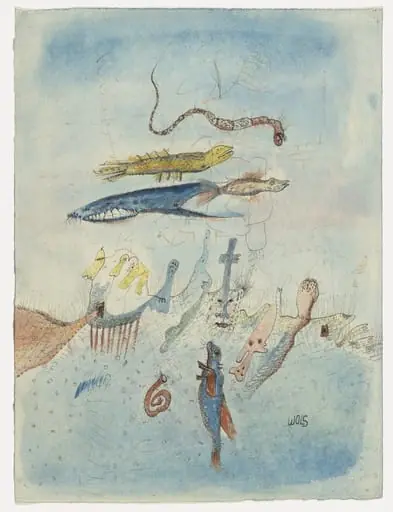
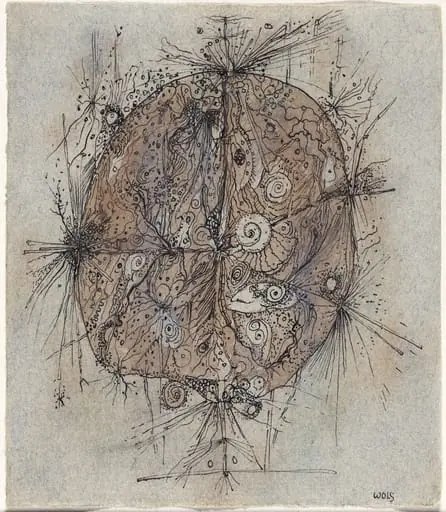
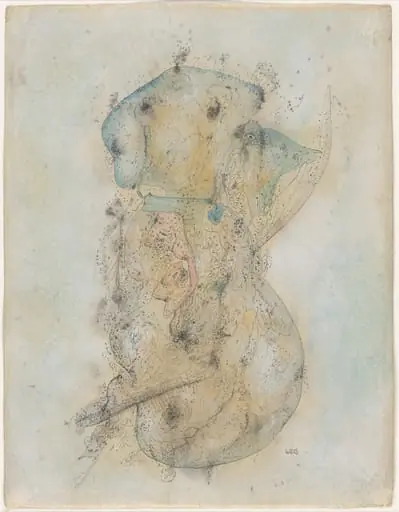
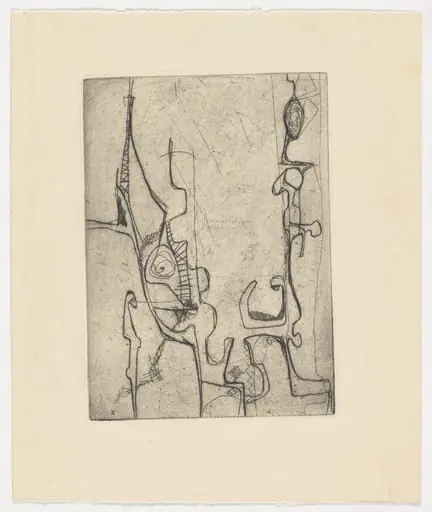
The drawing resists clear narrative or figuration. Beneath a dense network of ink strokes, faint suggestions of a human form may be perceived, but they dissolve into the surrounding chaos. Rather than depicting a scene, the work conveys inner states—tension, fragmentation, or fleeting presence. The ambiguity invites contemplation of the human condition under duress, without resorting to literal symbolism.
Technique & Style
Wols employed rapid, unpremeditated strokes, blending ink with diluted watercolor to create areas of saturation and transparency. Lines overlap unpredictably, some thick and dark, others faint and wispy, suggesting movement and erosion. There are no defined contours; forms emerge through accumulation and contrast. The surface retains the energy of its making, with drips and smudges preserved as part of the composition’s logic.
History & Provenance
Produced during Wols’s time in southern France under German occupation, the drawing reflects his isolation and limited access to conventional materials. It was made in a context of scarcity, where paper and ink were scarce, and artistic expression became a private act of resistance. The work remained in private hands until entering institutional collections decades later, its significance recognized only after his death.
Context
Wols was part of a circle of artists in Paris and later in the south of France who rejected traditional composition in favor of intuitive mark-making. His work preceded and influenced the Tachisme movement, aligning with broader European tendencies toward gestural abstraction. Unlike his contemporaries, he avoided political manifestos, instead channeling existential unease into visual rhythm and texture.
Legacy
Though little known during his lifetime, Wols’s drawings became foundational to later discussions of lyrical abstraction and post-war European art. His emphasis on process over product, and the emotional weight of the spontaneous line, resonated with artists like Jean Fautrier and the Informel group. His work is now studied as a bridge between surrealism and the abstract expressionist impulse in Europe.
Artist & collection
Artist
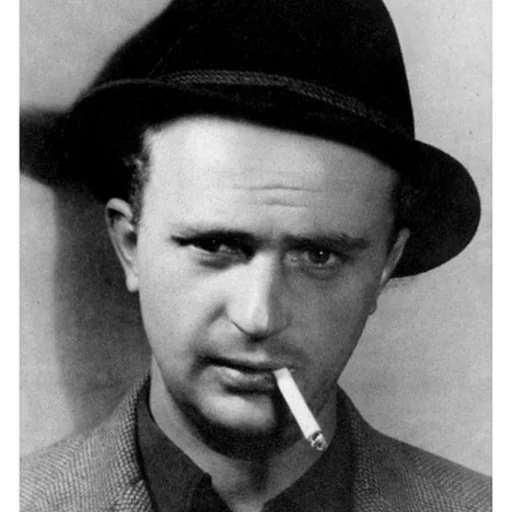
Wols was the pseudonym of Alfred Otto Wolfgang Schulze (27 May 1913 – 1 September 1951), a German painter and photographer predominantly active in France.