Artwork
Greeting the Spring
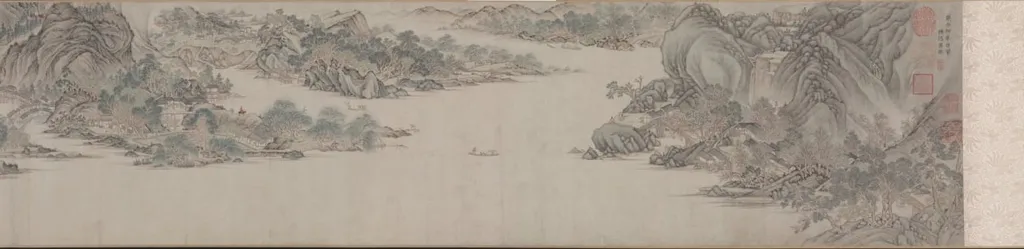
Greeting the Spring is an unspecified painting by the Baroque artist Wu Bin. It dates from 1600 and is held in the collection of the Cleveland Museum of Art.
About this work
Overview
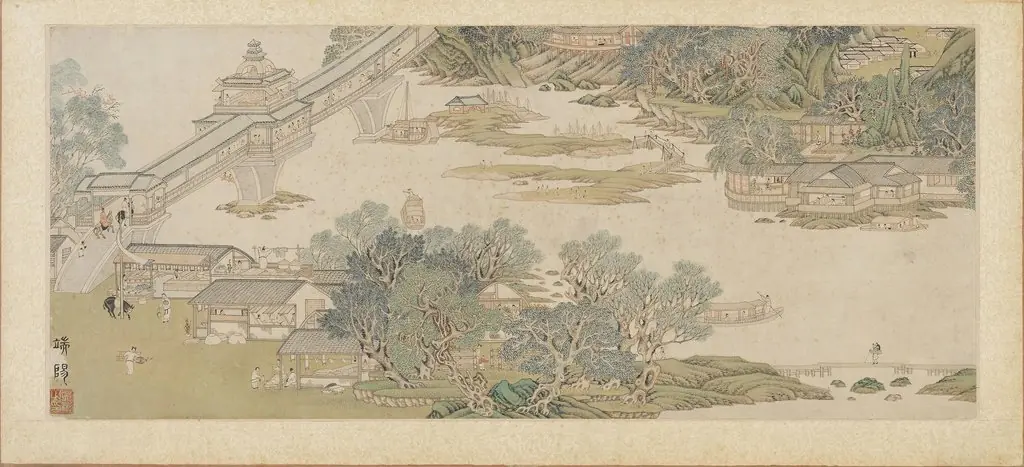
This handscroll depicts the Jiangnan region of southeastern China during spring, capturing its lush waterways, rolling hills, and clustered settlements.
This handscroll depicts the Jiangnan region of southeastern China during spring, capturing its lush waterways, rolling hills, and clustered settlements. Executed in soft tones and fine brushwork, the composition unfolds horizontally, inviting slow contemplation. The scene balances quiet natural beauty with subtle human activity, reflecting a tradition of lyrical landscape painting rooted in regional observation rather than grand spectacle.
Subject & Meaning
The painting illustrates seasonal rituals tied to agricultural renewal, particularly the ceremony of whipping the clay ox, symbolizing the awakening of the earth for planting. Alongside this, villagers engage in lantern displays, street performances, fishing, and silk production—activities that mark the transition into spring. These elements collectively convey a cultural rhythm aligned with lunar calendars and agrarian cycles, emphasizing harmony between human life and natural seasons.
Technique & Style
Wu Bin employed delicate, precise brushstrokes and muted pigments to evoke atmospheric depth without dramatic contrast. The landscape is rendered with a sense of spatial continuity, where distant hills fade into mist and water reflects the sky. Figures and structures are rendered with economy, their details suggesting movement without overwhelming the serene tone. This restrained aesthetic aligns with literati ideals of understated elegance and observational subtlety.
History & Provenance
The scroll bears five collector seals of the Qianlong emperor, affirming his personal endorsement and inclusion in the imperial collection. These seals, applied in red ink across the surface, indicate the work’s passage through elite circles and its recognition as a refined example of late Ming painting. Its survival and preservation reflect its status within courtly connoisseurship, though its earlier provenance prior to imperial acquisition remains undocumented.
Context
Created during the late Ming dynasty, the painting reflects the cultural flourishing of Jiangnan, a region known for its scholarly elites, textile industries, and poetic traditions. Artists like Wu Bin often drew from local customs and topography, blending documentary detail with poetic sensibility. Such works catered to literati audiences who valued introspective landscapes as expressions of moral and aesthetic order, distinct from courtly grandeur.
Legacy
The painting endures as a representative example of Ming-era landscape scroll painting that prioritizes quiet observation over narrative drama. Its integration of seasonal ritual, regional geography, and refined technique influenced later collectors and artists who sought to preserve the cultural memory of Jiangnan’s pastoral life. Today, it remains a touchstone for understanding how art mediated between nature, labor, and seasonal ritual in premodern China.
Artist & collection




 A Solitary Crane in the Bamboo Grove
 元吳鎮漁父圖 軸
 元 趙孟頫 雙松平遠圖 卷|Twin Pines, Level Distance
 Fisherman
 Untitled
 Recluse Dwellings in the Autumn Mountains
 Gazing at a Waterfall
 Untitled
 明 佚名 朱德潤 怡樂堂圖 卷|Hall of Harmony and Joy
 Paintings after Ancient Masters: Autumn Landscape
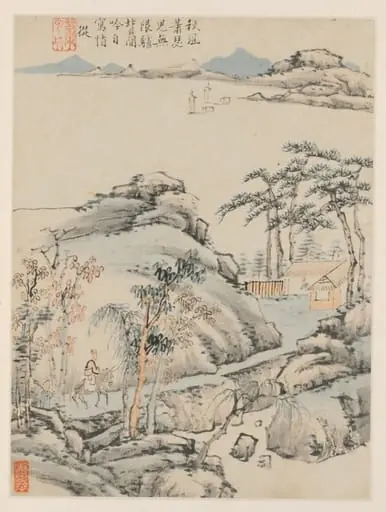 Album of Seasonal Landscapes, Leaf F (previous leaf 5)