Artwork
Spooling
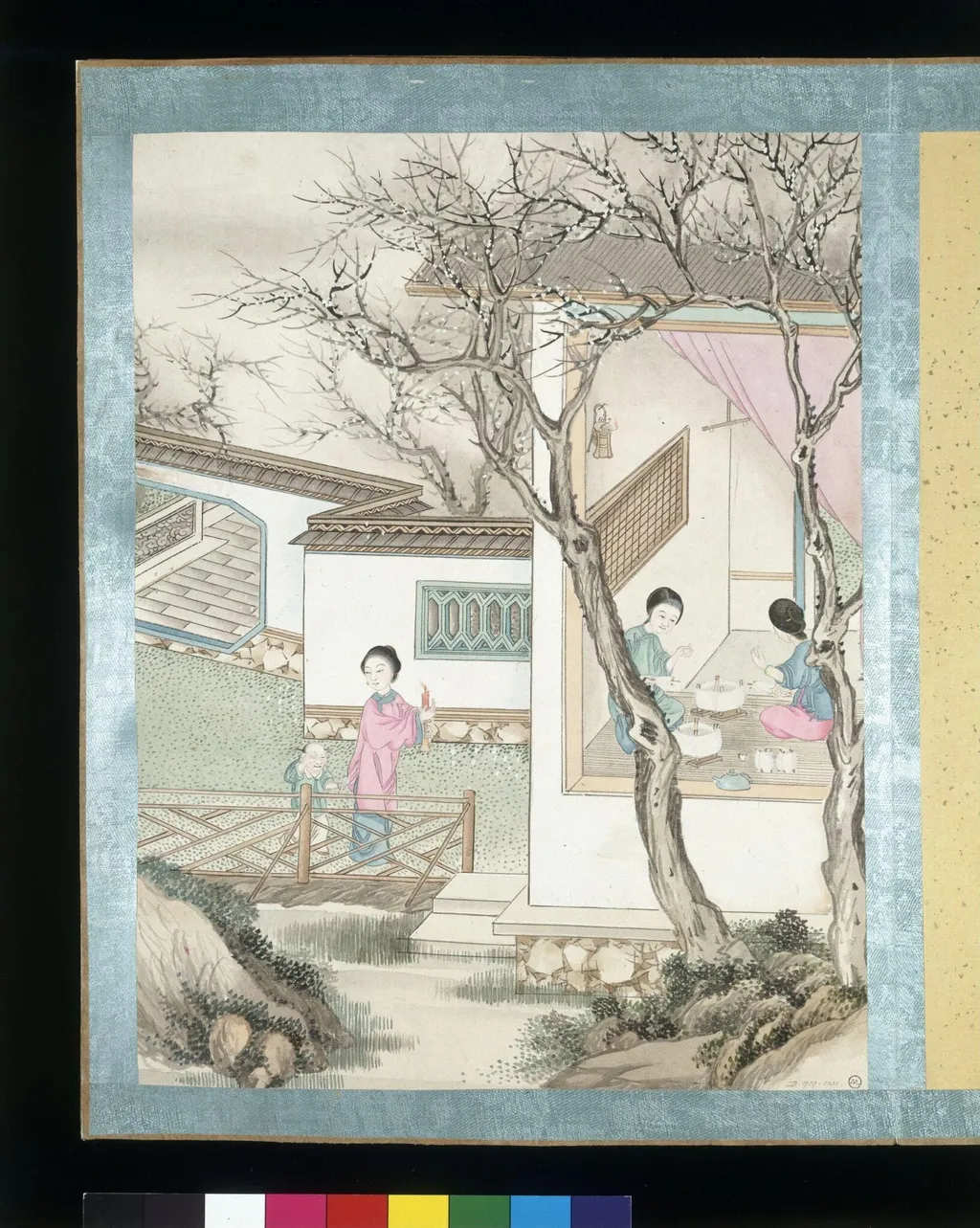
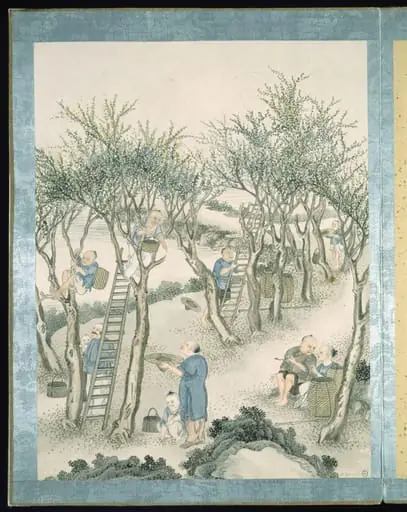
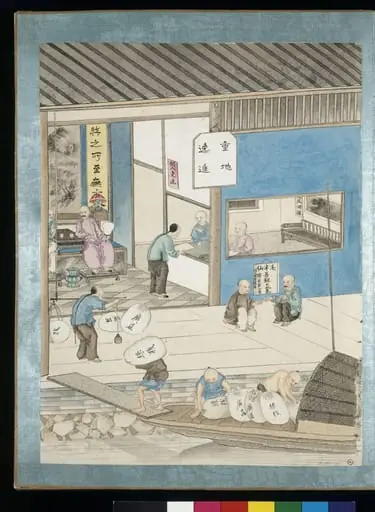
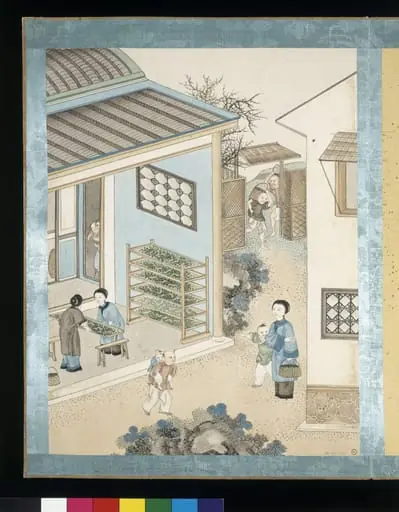
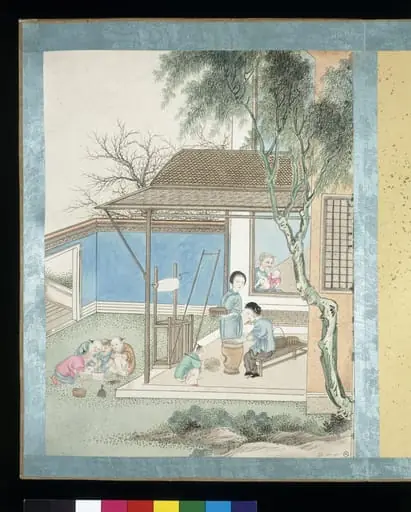
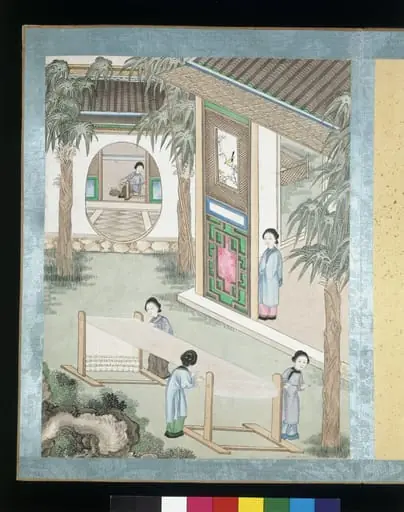
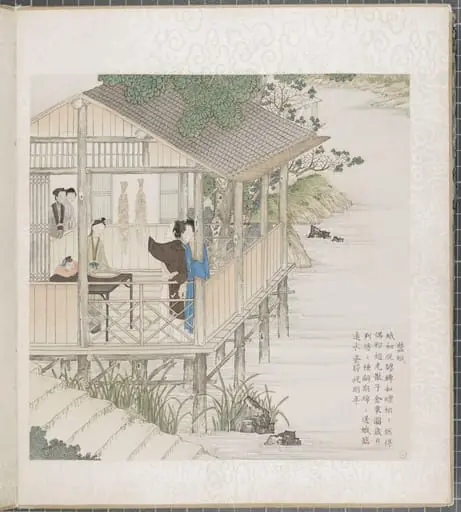
Spooling is a paint painting by the Impressionist artist Jun Wu. It dates from 1880 and is held in the collection of the Victoria and Albert Museum. This painting is one of a series documenting the silk production process in late Qing China.
About this work
This painting shows a moment in the silk trade. Wu Jun painted it between 1870 and 1890.
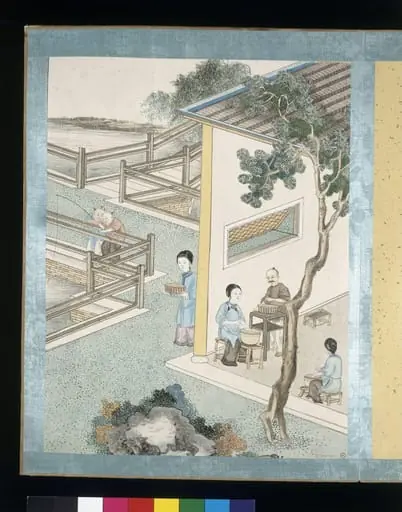
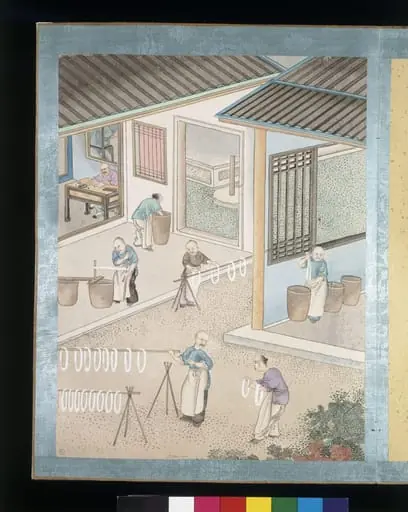
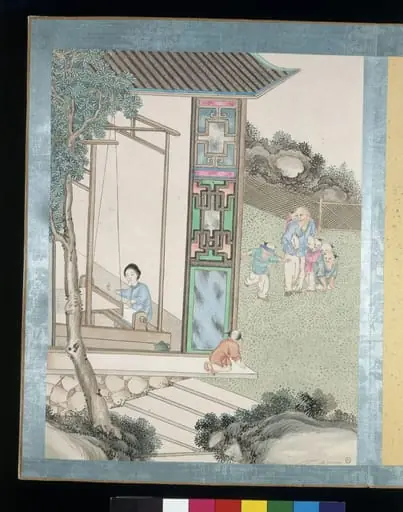
It’s part of an album about silk making. You see a woman guiding wet silk threads onto a reel. She checks for knots with her left hand while turning the reel with her right. The thread gets a gentle twist.
Look up Wu, Jun next.
Overview
This painting is one of a series documenting the silk production process in late Qing China. Created by Wu Jun between 1870 and 1890, it belongs to an illustrated album focused on the craft’s technical stages. The scene captures a single moment in silk processing, rendered with quiet precision and attention to laborious detail.
Subject & Meaning
The painting portrays a female worker engaged in spooling, a step where wet silk threads are wound onto a hand-reel. Her left hand carefully inspects the filament for imperfections, while her right rotates the reel clockwise. The action reflects the precision required in silk preparation, emphasizing skill over spectacle and highlighting the quiet diligence of textile labor.
Technique & Style
Wu Jun employs a restrained ink-and-wash technique, with fine brushwork defining the figure’s posture and the texture of damp silk. The composition is intimate and unadorned, avoiding decorative excess. Light and shadow are subtly suggested, grounding the scene in realism without theatricality, consistent with documentary illustration of the period.
History & Provenance
The work originates from a commissioned album illustrating silk manufacturing, likely produced for domestic or imperial use. Wu Jun, a painter active in the late 19th century, contributed to this series as part of a broader effort to record traditional crafts. The album’s survival suggests its value as both cultural record and artisanal reference.
Context
During the late Qing dynasty, silk production remained a vital economic activity, especially in southern China. While mechanization began elsewhere, many stages, including spooling, were still performed by hand. This painting preserves a view of labor before industrial transformation, offering insight into gendered roles and artisanal continuity in rural workshops.
Legacy
Wu Jun’s album stands as a rare visual archive of pre-industrial textile work. Unlike idealized depictions of craft, these images prioritize accuracy, making them valuable to historians of labor and material culture. The painting contributes to understanding how traditional techniques were observed, recorded, and preserved in an era of rapid change.
Artist & collection