Artwork
Drawing Silk Filaments
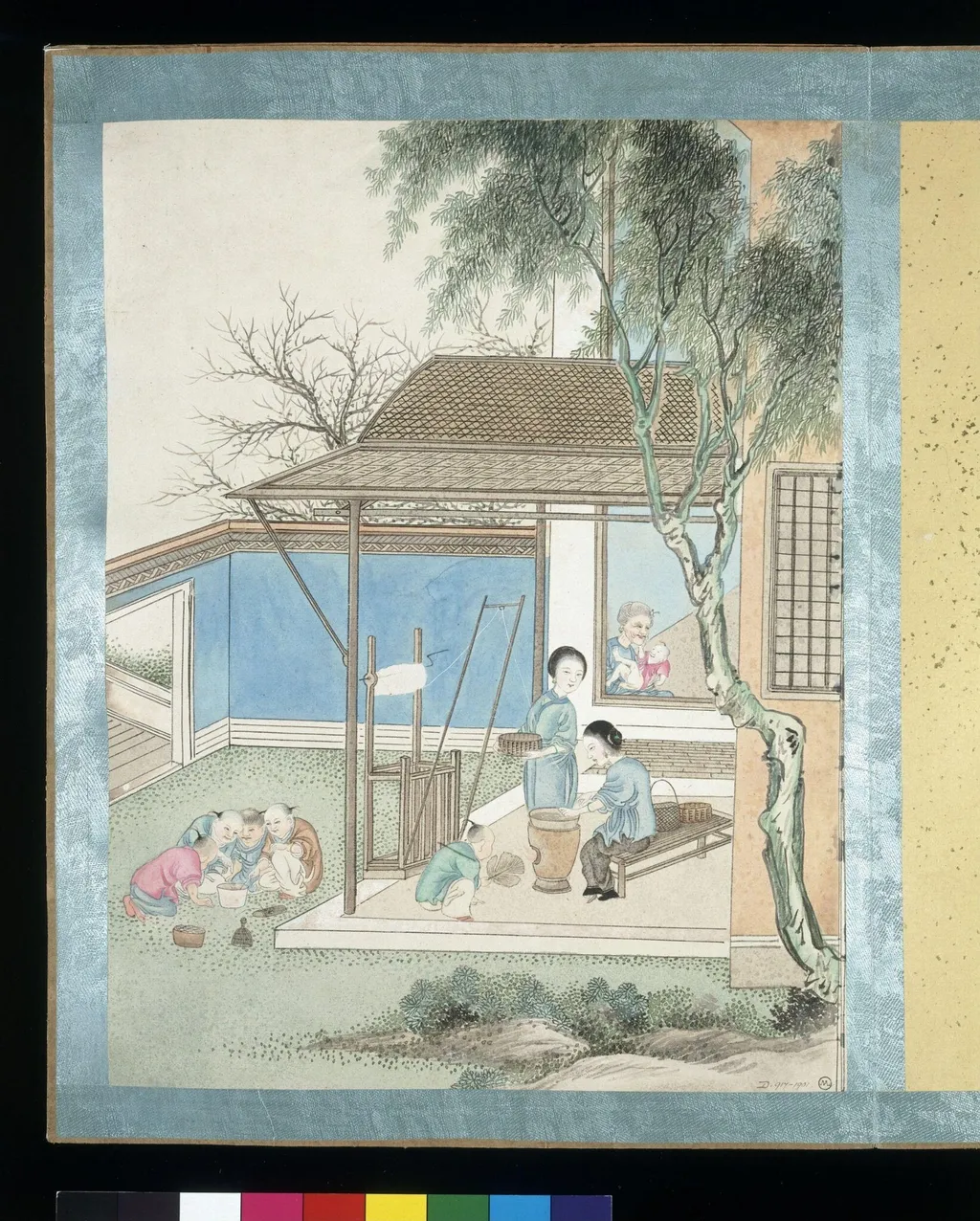
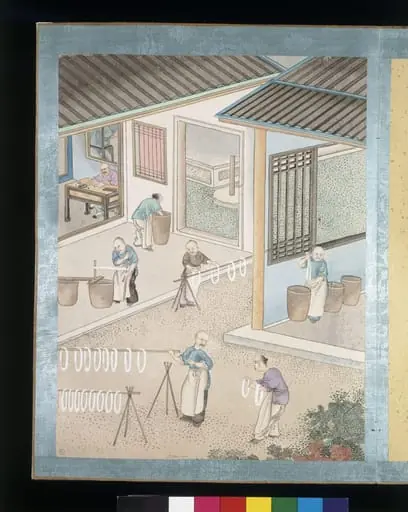
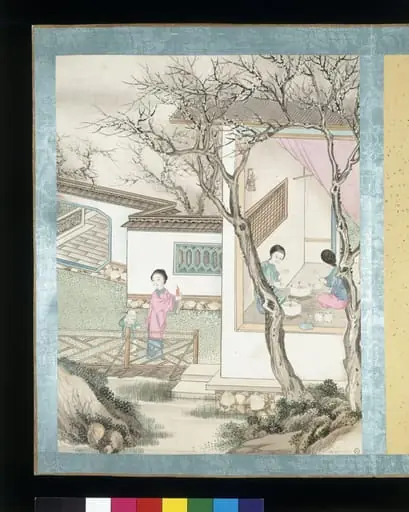
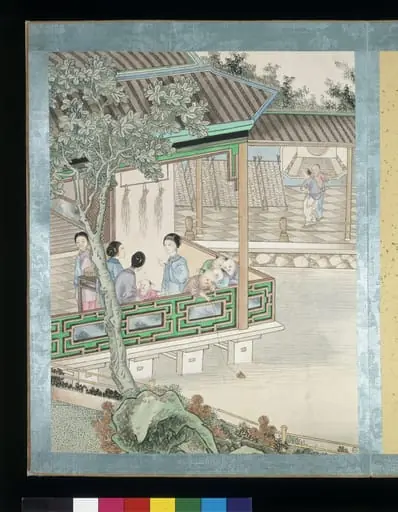
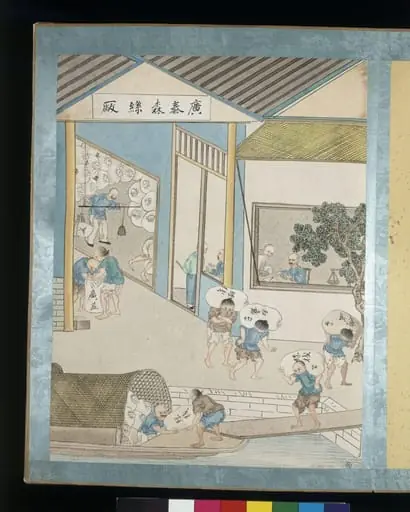
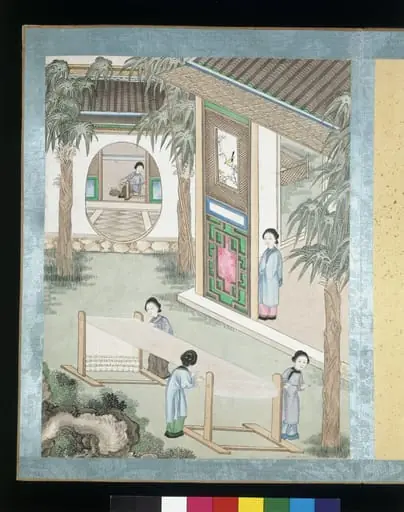
Drawing Silk Filaments is a paint painting by the Chinese Orthodox School artist Jun Wu. It dates from 1880 and is held in the collection of the Victoria and Albert Museum. This painting is part of a series documenting the silk production process in historical China.
About this work
Overview
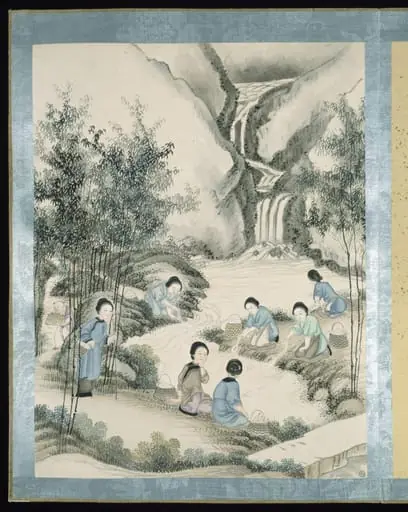
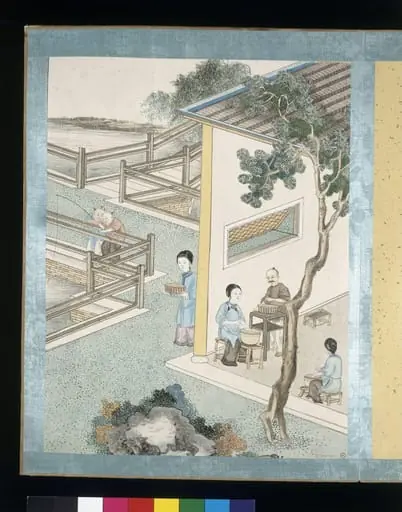
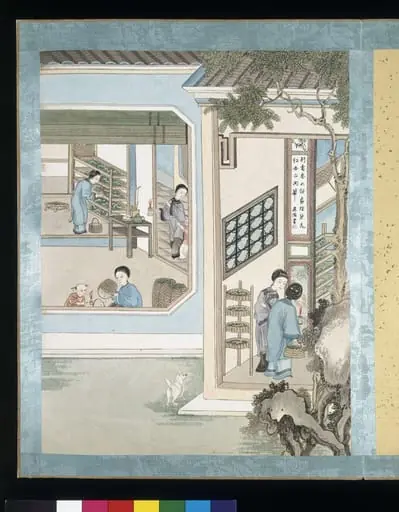
This painting is part of a series documenting the silk production process in historical China. It captures the delicate task of unwinding silk filaments from boiled cocoons, illustrating a key stage in textile manufacturing. The scene is rendered with attention to labor and tool use, emphasizing the precision required in early silk refinement.
Subject & Meaning
The painting depicts workers extracting silk threads by hand, using chopsticks to locate and guide filaments from multiple cocoons into a single strand. The number of filaments combined determines the thread’s thickness and final quality, reflecting a system where material value is tied to labor intensity and technical control. The scene honors craftsmanship without idealization.
Technique & Style
The artist employs fine brushwork to render textures—wet cocoons, steam, and woven fibers—with quiet realism. Light falls evenly across the figures and basin, avoiding dramatic contrast. While not using sfumato in the Italian sense, the soft modeling of forms suggests a deliberate restraint, aligning with Chinese pictorial traditions that favor clarity over atmospheric haze.
History & Provenance
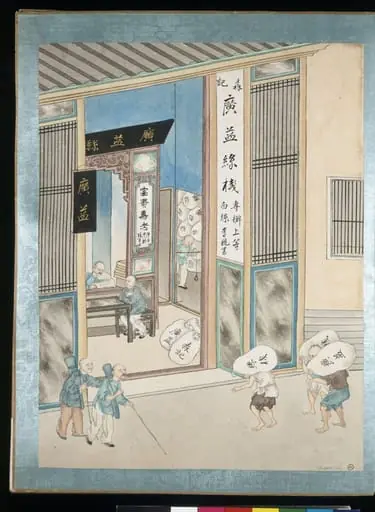
The work originates from an album commissioned to record industrial processes, likely during the Qing dynasty. Such albums served administrative or educational purposes, preserving knowledge of state-regulated industries. Its survival suggests it was valued as a record rather than purely decorative, possibly held in imperial or regional workshops.
Context
Silk production was a cornerstone of China’s economy and cultural identity, tightly controlled and highly skilled. This image reflects a standardized method passed down through generations, where each step—from boiling cocoons to reeling thread—was performed by specialized laborers. The painting situates this work within a broader system of craft regulation and economic output.
Legacy
As a visual document, the painting contributes to the historical understanding of pre-industrial textile labor. It preserves details of tools, posture, and workflow that written records often omit. Today, it remains a reference for scholars studying traditional craftsmanship and the social organization of labor in imperial China.
Artist & collection