Artwork
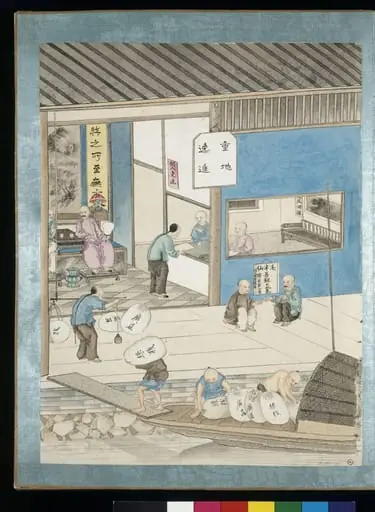
Weighing and Loading on to Boat
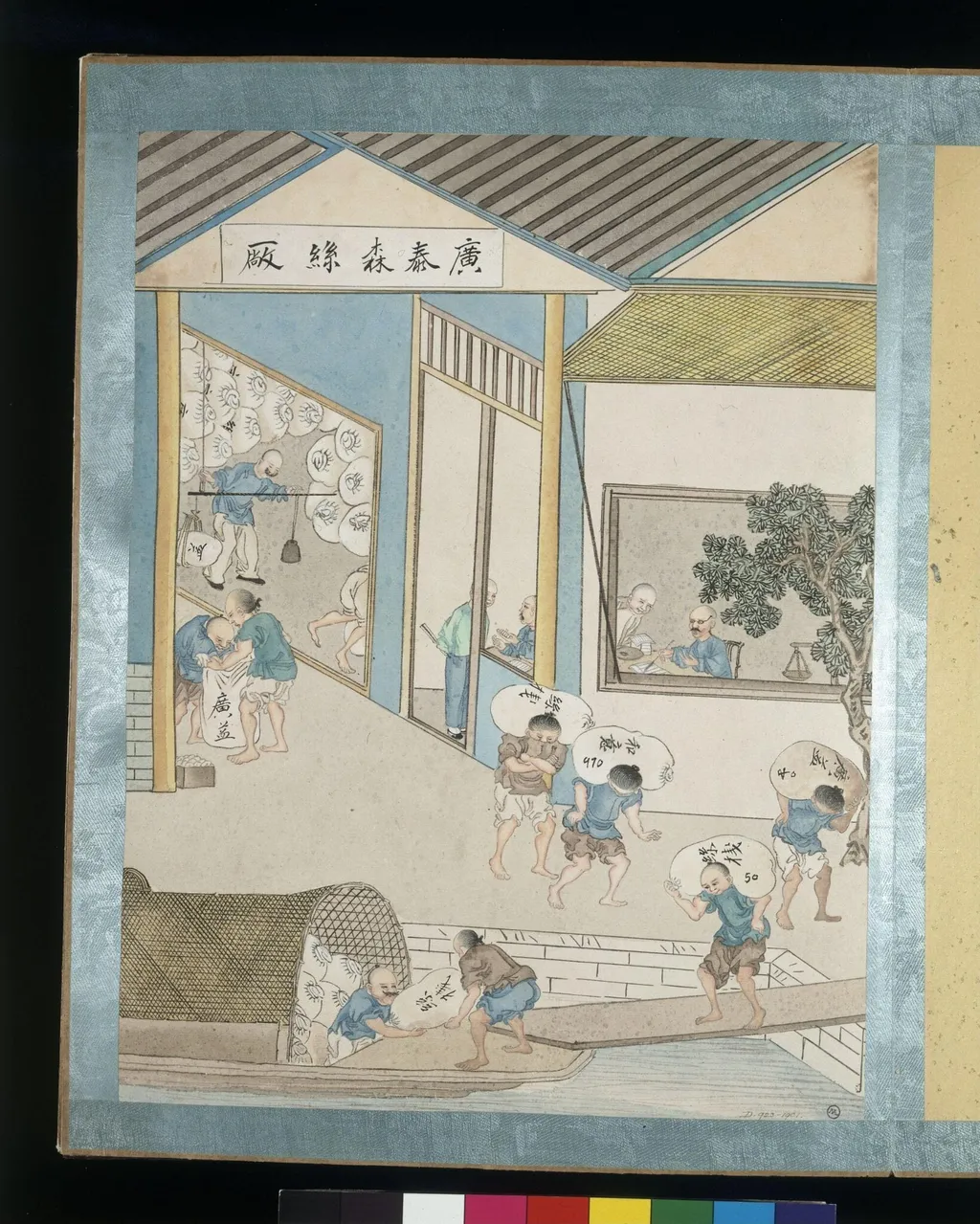
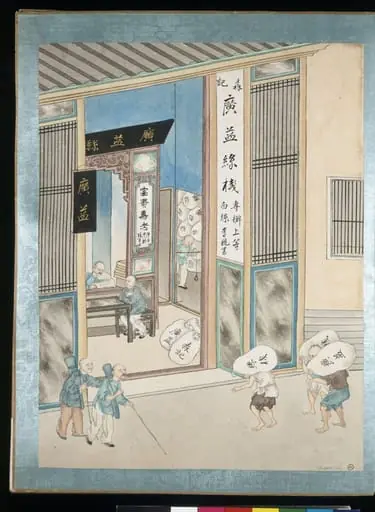
Weighing and Loading on to Boat is a paint painting by the Impressionist artist Jun Wu. It dates from 1880 and is held in the collection of the Victoria and Albert Museum. This painting is one of a series documenting the silk production process in 19th-century China.
About this work
Overview
The scene reflects the decentralized nature of silk manufacturing, where household labor supplied merchants who coordinated wider distribution.
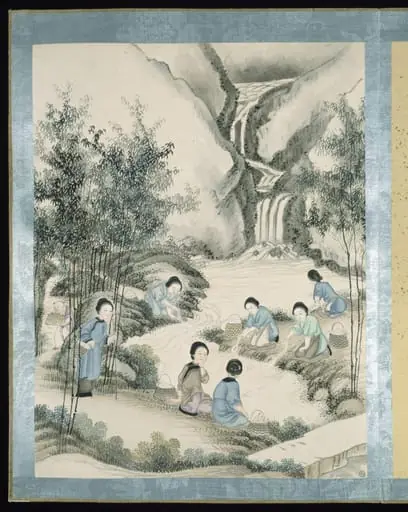
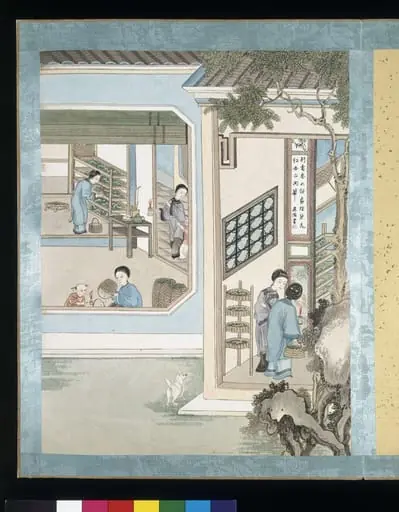
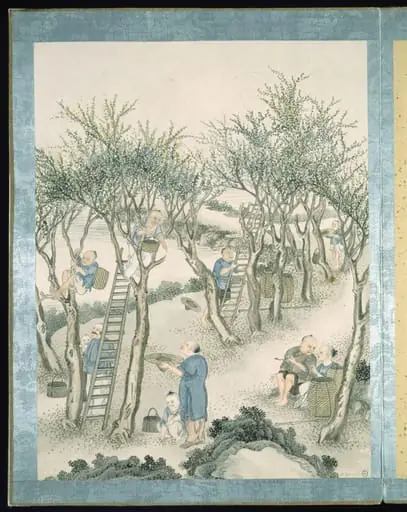
This painting is one of a series documenting the silk production process in 19th-century China. It captures a moment in rural commerce: bundles of raw silk are being weighed and prepared for transport by river. The scene reflects the decentralized nature of silk manufacturing, where household labor supplied merchants who coordinated wider distribution. The album as a whole records the economic rhythms of a key industry.
Subject & Meaning
The painting depicts the transition of silk from domestic production to commercial exchange. Workers carefully measure yarns, emphasizing precision in a trade reliant on quality and consistency. The boat awaiting cargo symbolizes the link between rural artisans and urban markets. No figures are idealized; their focused labor underscores the quiet dignity of everyday economic activity in pre-industrial China.
Technique & Style
Rendered in ink and color on paper, the painting employs fine brushwork to distinguish textures: the sheen of silk, the weave of baskets, the ripple of water. Light falls naturally across the scene, highlighting hands and bundles without dramatic contrast. The composition is orderly and contained, favoring clarity over spectacle, consistent with documentary albums produced for commercial or administrative audiences.
History & Provenance
Created in the 1800s, the painting belonged to a commissioned album illustrating China’s silk industry for foreign collectors or traders. Such albums were often made for export, catering to European interest in Chinese manufacturing. The work entered the Victoria and Albert Museum’s collection through 19th-century acquisitions, preserving a visual record of a trade that shaped global textile markets.
Context
Silk production in 19th-century China was largely a household-based enterprise, especially in the Yangtze Delta. Families raised silkworms, spun thread, and wove fabric, selling their output to middlemen who aggregated goods for shipment. River transport was vital, connecting rural workshops to ports like Shanghai. This painting reflects an economy still rooted in manual labor before mechanization transformed the industry.
Legacy
The painting survives as a rare visual archive of pre-modern Chinese industry. Unlike grand imperial art, it records ordinary labor with unembellished detail, offering insight into the material culture of commerce. Today, it contributes to scholarly understanding of how traditional economies functioned and how global trade networks were sustained through localized, skilled work.
Artist & collection