Artwork
A movement from Brahms
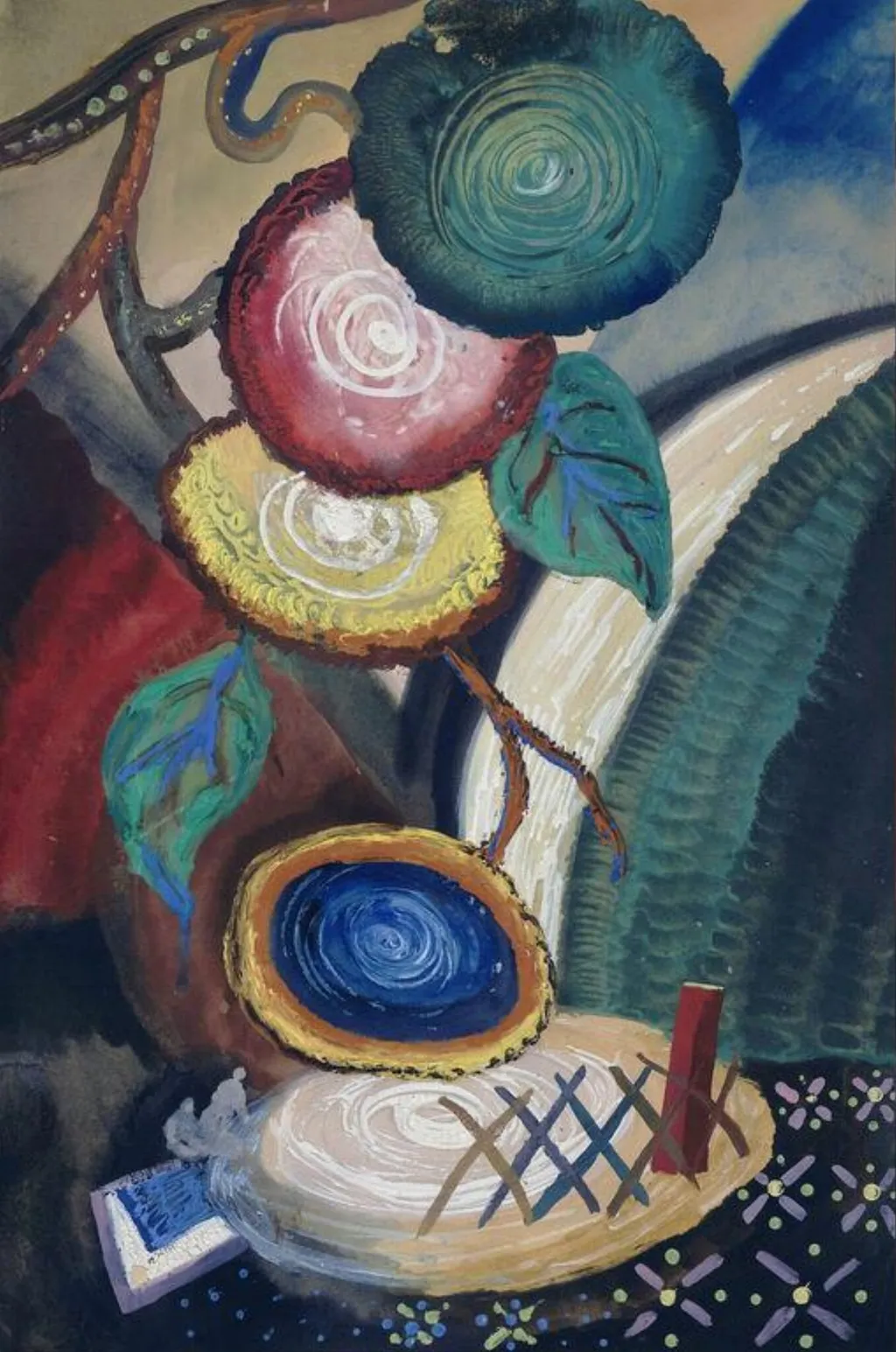
A movement from Brahms is a watercolor work on paper by the Impressionist artist Wyndham Tryon. It is held in the collection of the Victoria and Albert Museum.
About this work
Overview
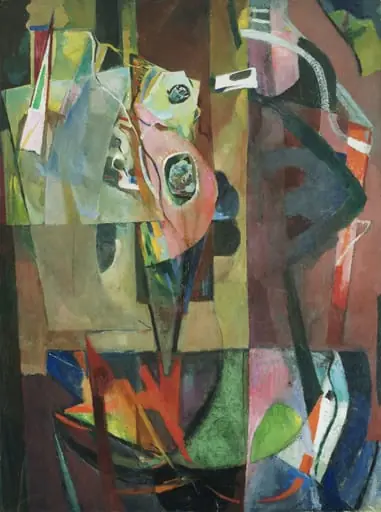
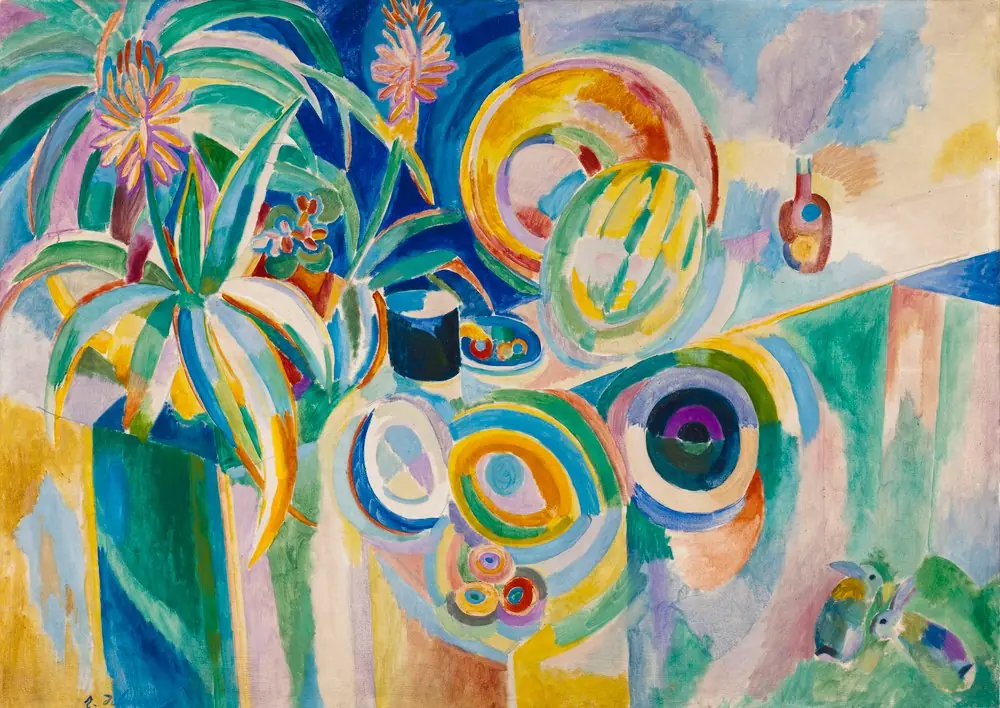
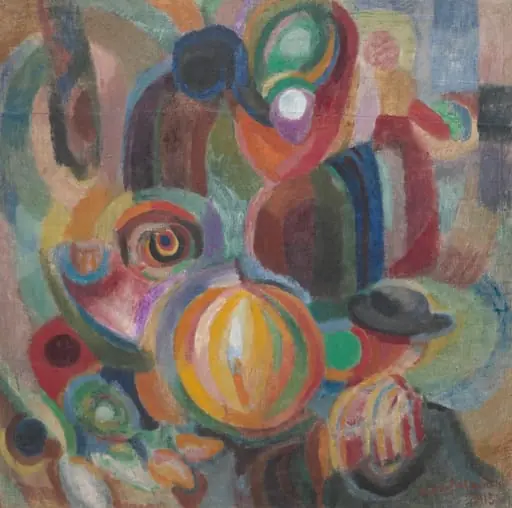
The work eschews literal depiction in favor of rhythmic abstraction, using fluid washes and vigorous brushwork to generate a sense of motion.
Created in 1950, this watercolour by Wyndham Tryon presents a non-representational composition built from dynamic, overlapping forms. The work eschews literal depiction in favor of rhythmic abstraction, using fluid washes and vigorous brushwork to generate a sense of motion. Its composition is driven by contrasting shapes and saturated hues, arranged without clear hierarchy, inviting the viewer to experience visual energy rather than narrative.
Subject & Meaning
Though rooted in organic motifs, the forms resist botanical identification. A red spiral, a blue circle with gold accents, and a green spiral with a deep core suggest internal forces or growth patterns, but do not map to specific plants. The white cloth marked with black X’s and the horizontal brown line introduce a structural counterpoint, possibly alluding to human intervention or fragmentation within natural systems. The work evokes vitality without prescribing meaning.
Technique & Style
Tryon employed watercolour with bold, uneven strokes that exploit the medium’s fluidity. Layers of pigment were applied rapidly, allowing colors to bleed and pool unpredictably. The dark background, punctuated by scattered yellow and purple dots, creates depth through contrast. The use of gold leaf and thick black lines adds tactile texture, enhancing the sense of spontaneity and physical gesture in the application.
History & Provenance
The work dates from a period when Tryon was deeply engaged with abstract expressionism, though he remained distinct in his use of watercolour rather than oil. It was likely created during his time in England, where he explored non-representational forms influenced by modernist movements. The piece has remained in private collections since its completion, with no public exhibition record prior to the late 20th century.
Context
Emerging in the post-war era, this piece reflects a broader interest in abstraction across British art, though Tryon’s approach diverged from dominant trends by prioritizing intimate scale and water-based media. His work engaged with ideas of spontaneity and emotional resonance, aligning loosely with European lyrical abstraction while retaining a uniquely personal vocabulary rooted in natural forms and tactile experimentation.
Legacy
Tryon’s watercolours, including this work, are recognized for their distinctive synthesis of control and chaos. Though not widely exhibited during his lifetime, they have gained attention among scholars of mid-century British abstraction for their technical ingenuity and emotional intensity. The piece exemplifies how watercolour, often seen as delicate, can convey force and complexity when pushed beyond traditional boundaries.
Artist & collection