Artwork
A vase of fruit and a vine branch
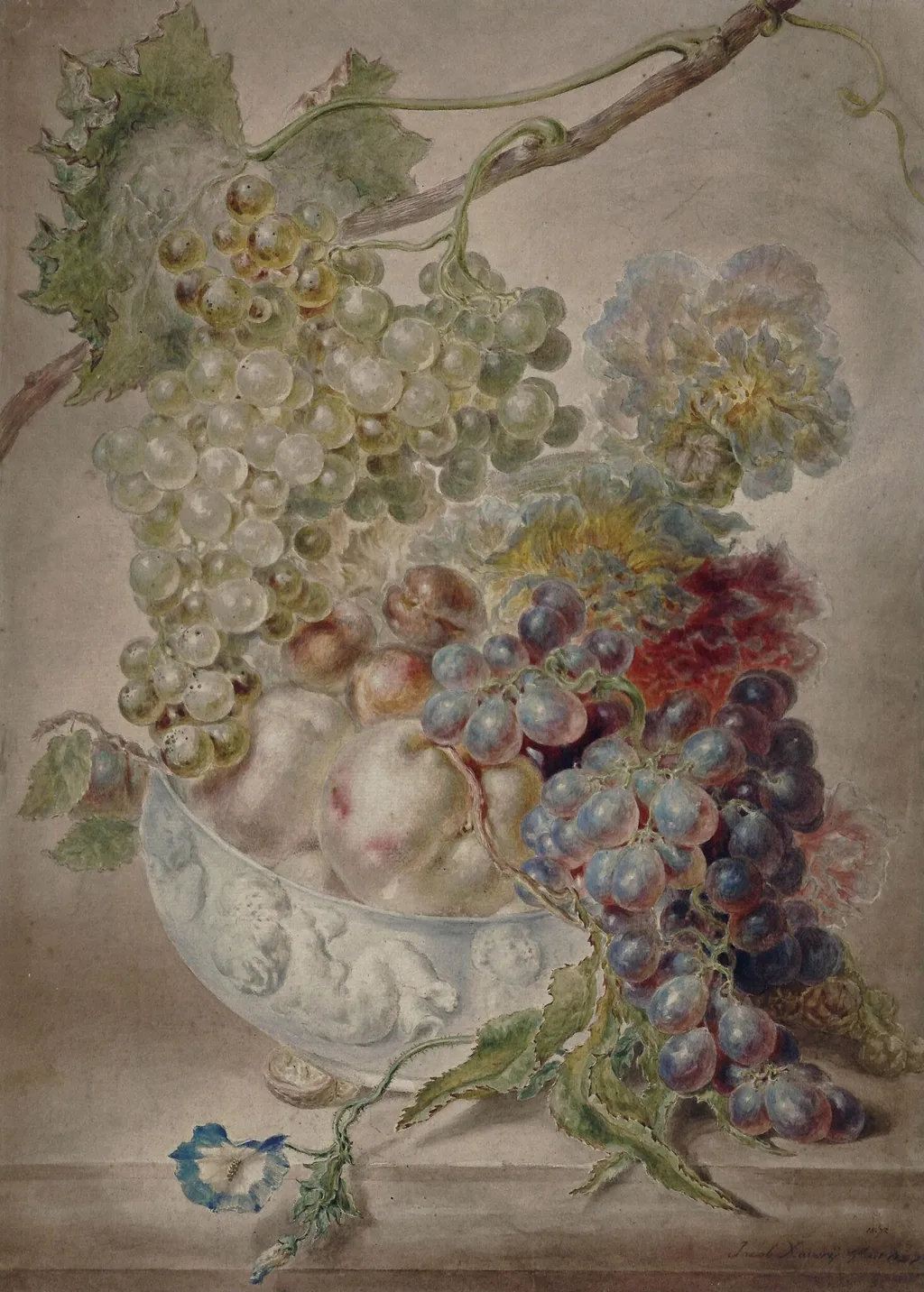
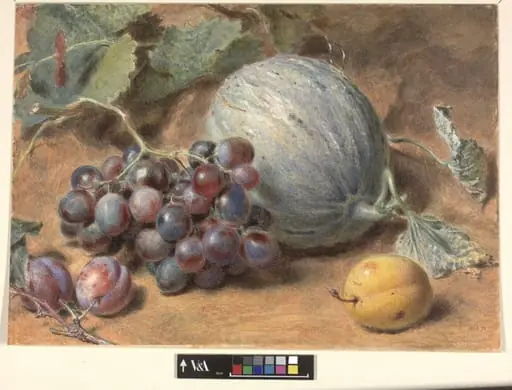
A vase of fruit and a vine branch is a watercolor work on paper by the Rococo painting artist Jacob Xavery. It dates from 1757 and is held in the collection of the Victoria and Albert Museum.
About this work
Overview
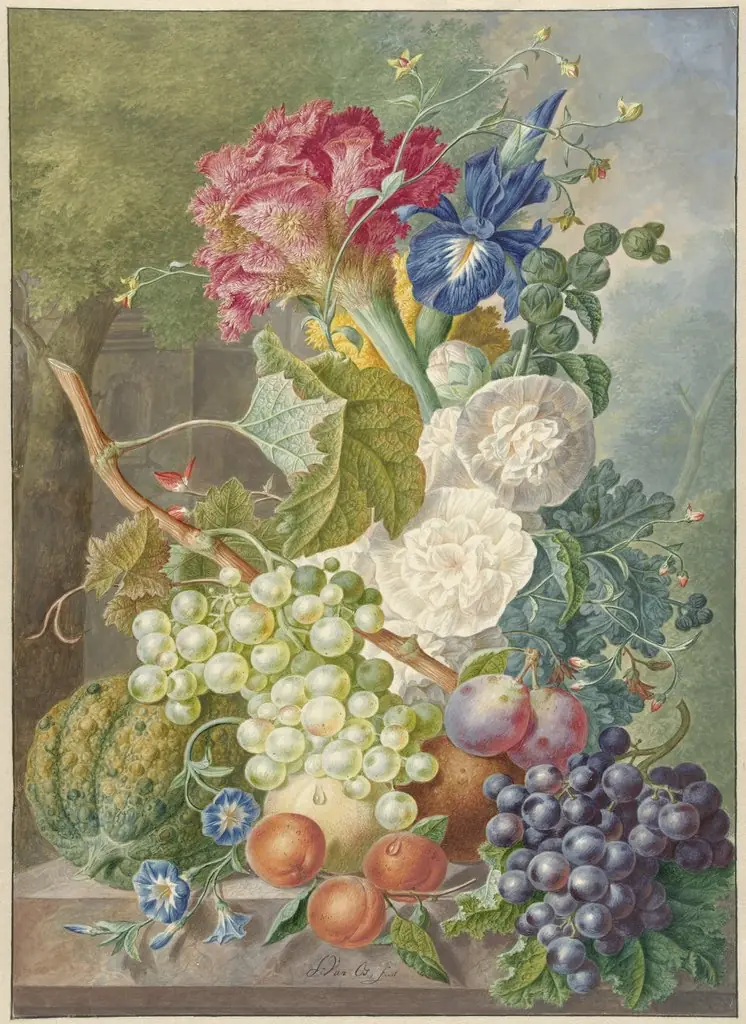
Painted in 1757 by Jacob Xavery, this watercolor depicts a modest still life centered on a white vase and a trailing vine. The composition is unadorned, focusing solely on the arrangement of fruit and foliage without architectural or decorative elements. The medium’s transparency allows for subtle layering, emphasizing natural forms through delicate washes rather than bold outlines.
Subject & Meaning
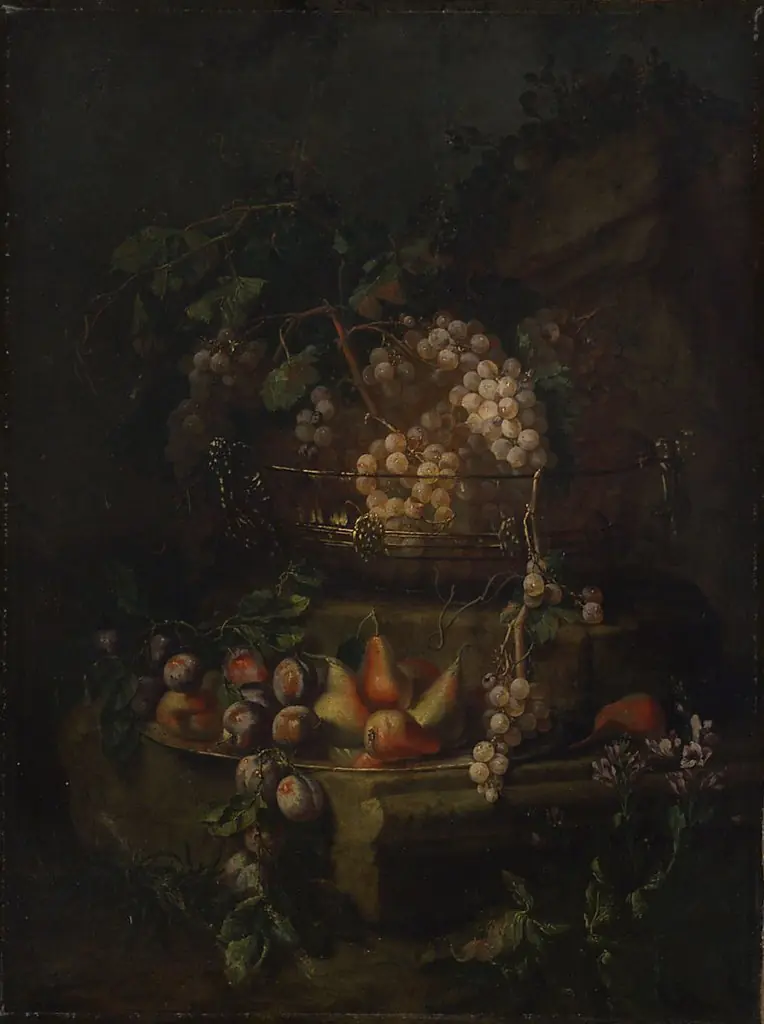
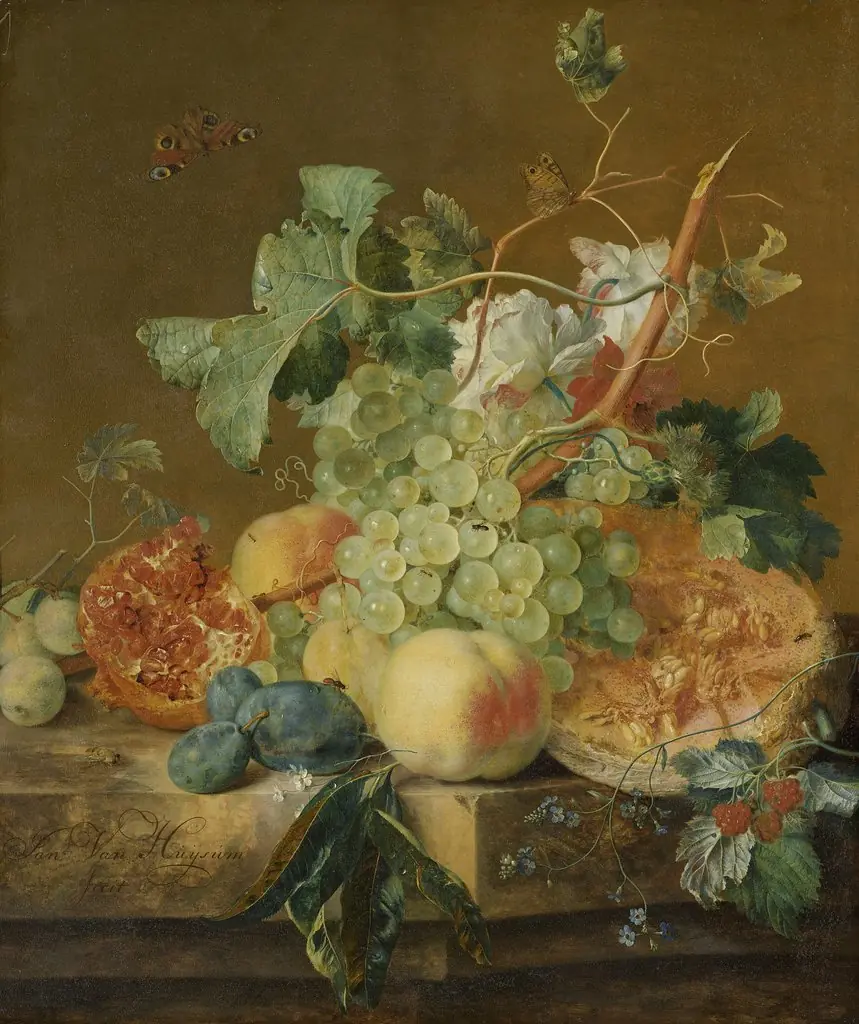
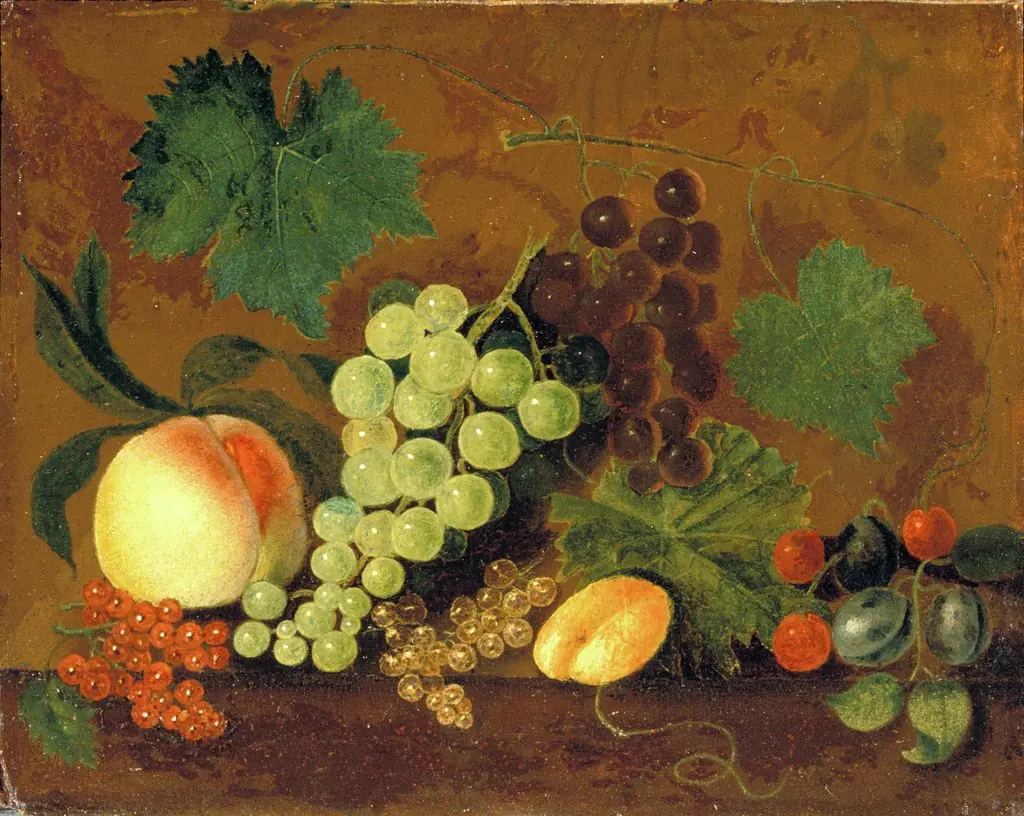
The arrangement includes green grapes, plums, and a peach, all rendered with quiet realism. The vine, spilling over the vase’s rim, suggests growth and transience. No symbolic references are overt; the work instead invites quiet contemplation of seasonal abundance and the fragility of perishable things, typical of 18th-century Dutch-influenced still life traditions.
Technique & Style
Xavery employed loose, rapid brushwork to capture the texture of fruit and leaves, particularly in the grapes, where wet-on-wet washes create a soft, slightly blurred effect. The background remains untouched, enhancing the sense of light and space. Muted tones of gray, pale pink, and blue unify the scene, avoiding sharp contrasts in favor of atmospheric harmony.
History & Provenance
The work is documented as part of Xavery’s output from the mid-18th century, though specific early ownership records are scarce. It entered the Victoria and Albert Museum’s collection in the 19th century, likely through a broader acquisition of Dutch and Flemish watercolors. Its preservation reflects growing institutional interest in non-oil works from this period.
Context
This piece aligns with a trend toward intimate, naturalistic depictions of everyday flora and fruit, distinct from the ornate still lifes of earlier centuries.
Xavery worked within a tradition of Dutch and Flemish still life painting that valued observation over grandeur. In the 1750s, watercolor was gaining traction among artists seeking lighter, more portable media for domestic or botanical subjects. This piece aligns with a trend toward intimate, naturalistic depictions of everyday flora and fruit, distinct from the ornate still lifes of earlier centuries.
Legacy
Though not widely exhibited, the work contributes to the understanding of 18th-century watercolor practice outside the English tradition. Its restrained aesthetic and technical finesse influenced later collectors and artists interested in the medium’s capacity for subtle realism. It remains a quiet example of how everyday objects could be rendered with sensitivity and precision.
Own this work as a print
Artist & collection
Artist
Jacob Xavery (27 April 1736 – after 1771) was a Dutch painter. Xavery was born in The Hague. He was the son of sculptor Jan Baptist Xavery and pupil of Jakob de Wit. He practised in Amsterdam, Breda, and The Hague, and…