Artwork
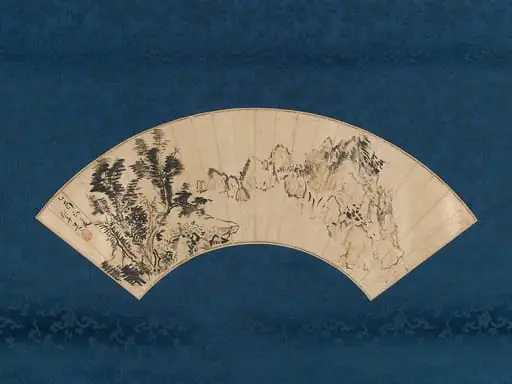
清 徐揚 仙山樓閣圖 扇面|Palaces of the Immortals
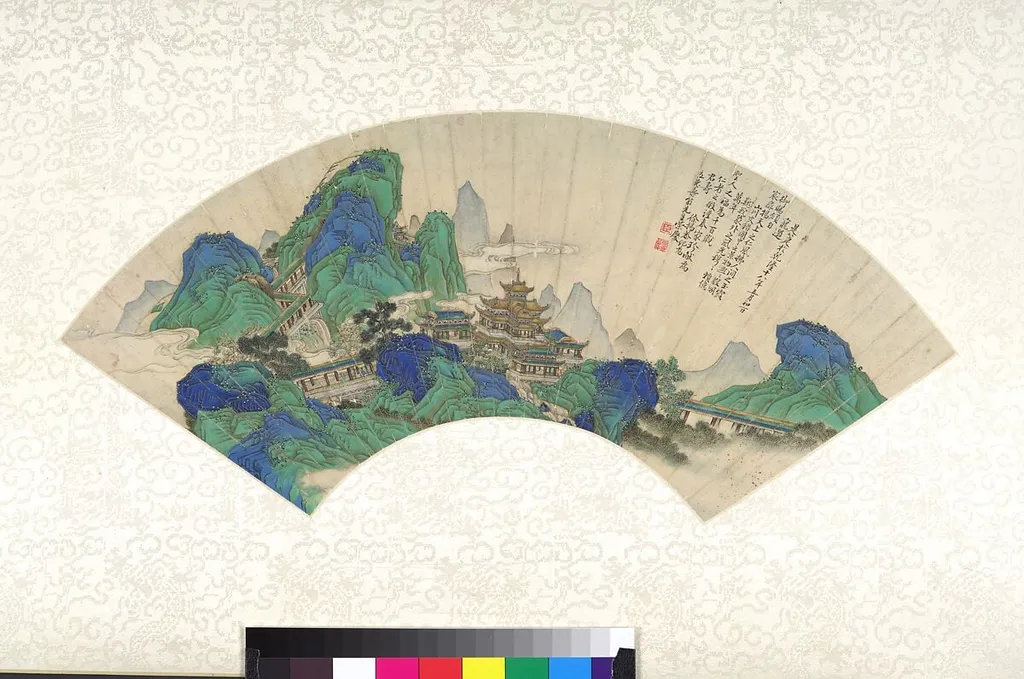
清 徐揚 仙山樓閣圖 扇面|Palaces of the Immortals is an ink painting by the Qing dynasty painting artist Xu Yang. It dates from 1753 and is held in the collection of the Metropolitan Museum of Art.
About this work
Overview
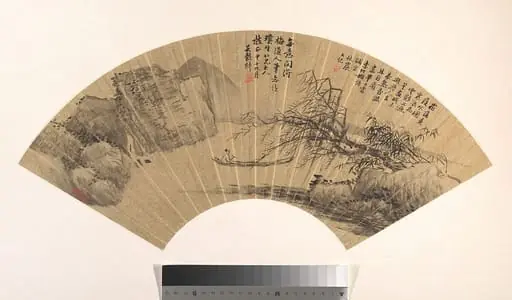
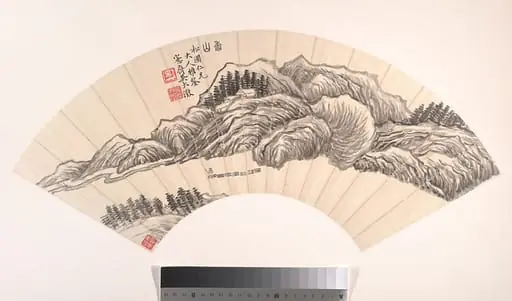
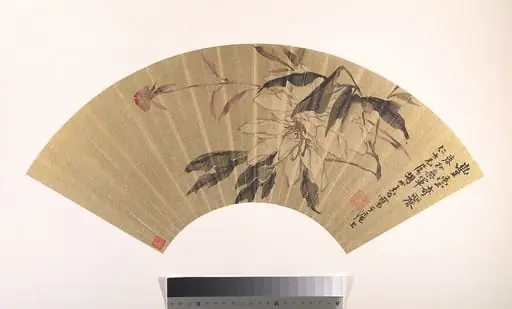
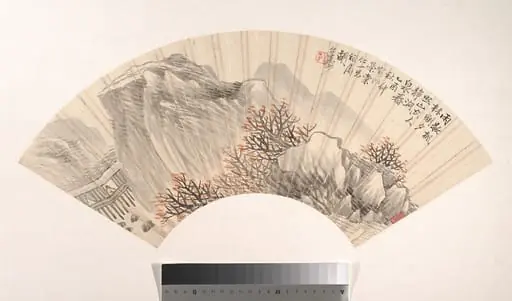
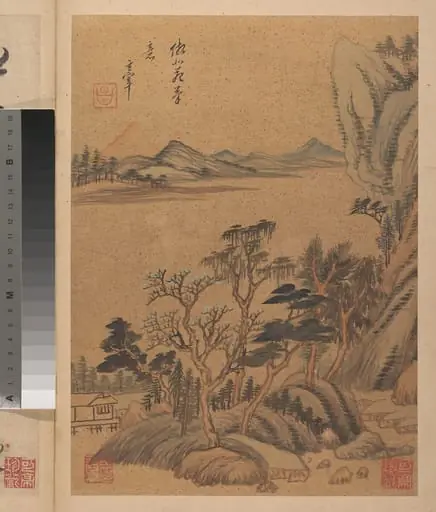
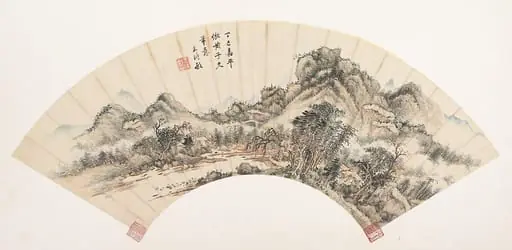
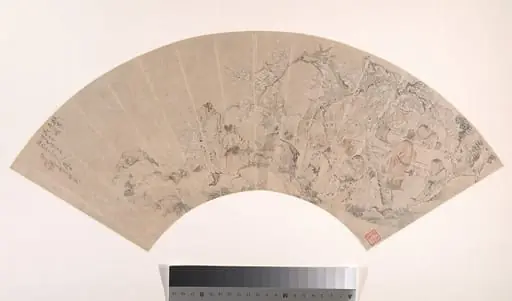
Created in 1753, this folding‑fan painting by the Qing court artist Xu Yang presents a compact landscape of soaring peaks and secluded valleys. Rendered on paper with ink, mineral pigments and gold, the work is mounted as a single leaf of an album, allowing the viewer to hold a miniature world within the hand.
Subject & Meaning
The scene portrays a rugged mountain range punctuated by small, red‑tiled structures that cling to sheer cliffs, suggesting the legendary dwellings of immortals. The mist‑filled valleys and distant horizons evoke a sense of transcendence, aligning the composition with traditional Chinese ideas of nature as a realm of spiritual retreat.
Technique & Style
Xu Yang employs fine ink lines to delineate craggy rock formations, while washes of color convey atmospheric depth. Gold flecks are interspersed within the ink, catching the light and imitating the glint of sunrise on water. The overall effect balances meticulous detail with the ethereal qualities typical of Qing court painting.
History & Provenance
The fan was commissioned for the Qianlong Emperor, whose reign (1735–1796) was marked by a fascination with miniature landscape scenes. As a court painter, Xu Yang produced works that adhered to imperial taste, and this piece reflects the emperor’s preference for portable, yet elaborate, depictions of idealized terrain.
Context
During the mid‑18th century, the Qing court encouraged the production of album leaves and fan paintings that combined literary allusion with visual refinement. Xu Yang’s work fits within this tradition, drawing on earlier landscape conventions while catering to the Qianlong emperor’s personal aesthetic interests.
Artist & collection

Artist
Xu Yang was stuck in the middle of a road trip he didn’t choose—an imperial artist assigned to ride along while the Qianlong Emperor cruised the Grand Canal in 1770.

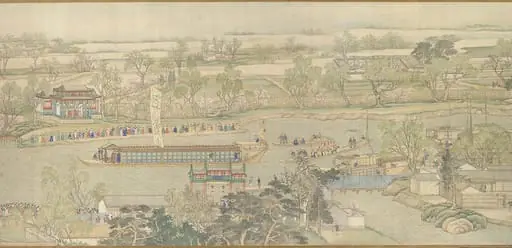 清 徐揚 等 乾隆南巡圖 (第六卷﹕大運河至蘇州) 卷|The Qianlong Emperor's Southern Inspection Tour, Scroll Six: Entering Suzhou along the Grand Canal
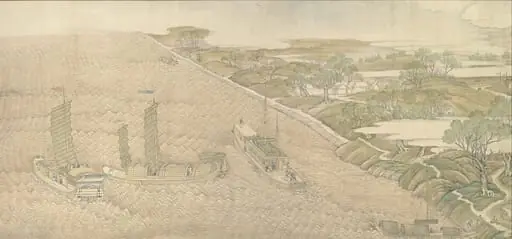 清 徐揚等 乾隆南巡圖, 第四卷﹕黃淮交流|The Qianlong Emperor's Southern Inspection Tour, Scroll Four: The Confluence of the Huai and Yellow Rivers (Qianlong nanxun, juan si: Huang Huai jiaoliu)