Artwork
Three Purities
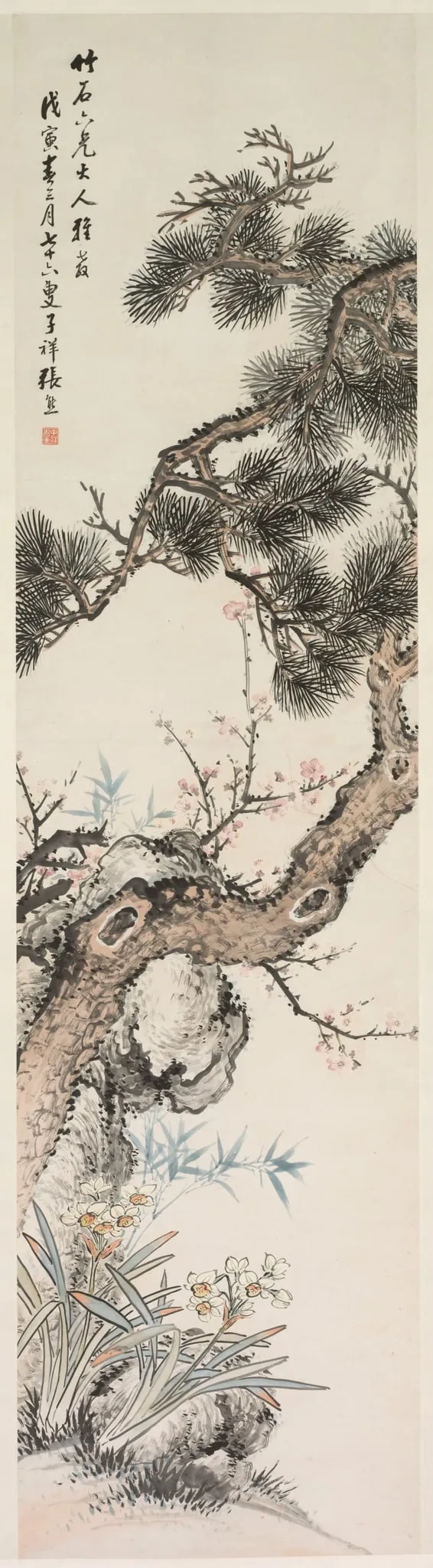
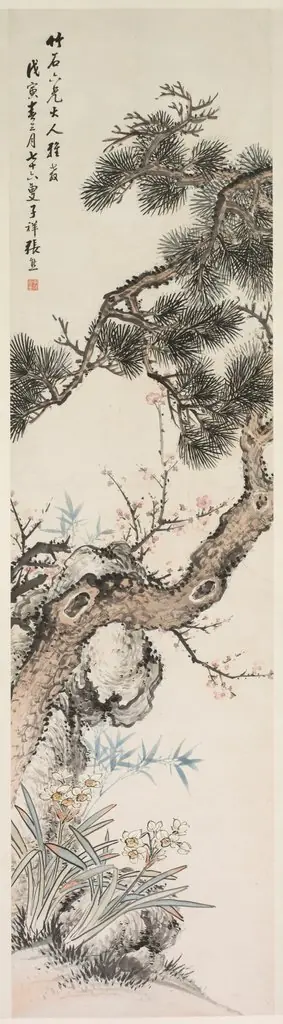
Three Purities is an unspecified painting by the Qing dynasty painting artist Zhang Xiong. It dates from 1804 and is held in the collection of the Cleveland Museum of Art.
About this work
Overview
Three Purities, a small-scale religious painting executed around 1804 by the Chinese artist Zhang Xiong, is part of the collection at the Cleveland Museum of Art. The work presents a solitary, slender conifer rendered in dark green, its bark textured with moss and its branches twisting upward toward a modest bloom of pink blossoms near the apex.
Subject & Meaning
The composition centers on a lone tree, a motif often associated with purity and spiritual resilience in Chinese visual culture. The delicate pink flowers at the top and the modest yellow blossoms on the ground suggest a harmonious balance between growth and decay, reinforcing the painting’s devotional intent.
Technique & Style
Rendered with ink and subtle washes of color, the piece employs a restrained palette that emphasizes tonal contrast. The artist’s brushwork captures the roughness of bark and the softness of moss, while the fine stippling of leaves and flowers conveys a sense of atmospheric depth within a compact format.
History & Provenance
Created in the early nineteenth century, Three Purities entered the Cleveland Museum of Art’s holdings through a mid‑twentieth‑century acquisition, though the precise chain of ownership prior to that remains undocumented. Its attribution to Zhang Xiong is supported by stylistic analysis and the presence of a handwritten poem along the upper margin.
Context
The painting reflects a broader tradition of literati art that blends natural observation with poetic inscription. The black‑ink verse, though partially illegible, adds a contemplative layer typical of works that merge visual and literary expression, inviting viewers to meditate on the interplay of nature and spirituality.
Artist & collection


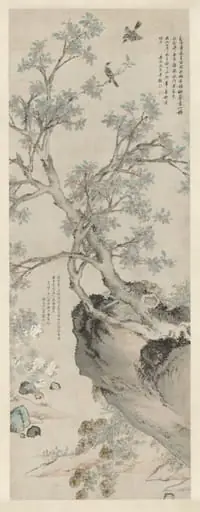 Yellow Chrysanthemums and Red Osmanthus in the Style of Wang Yuan
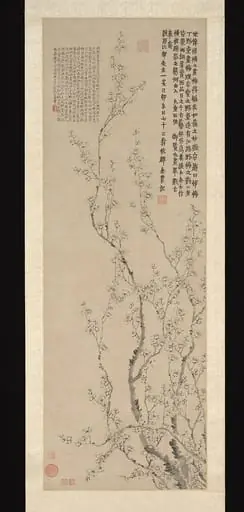 清 金農 墨梅圖 軸|Blossoming plum
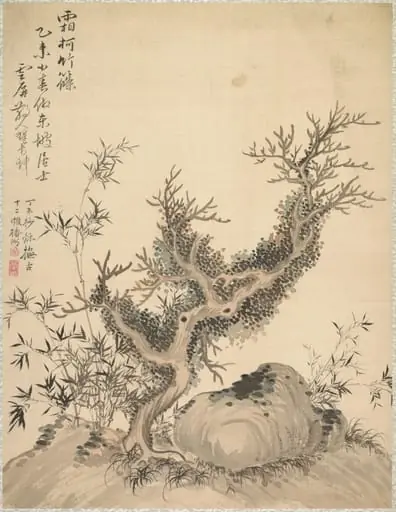 Frosted Branches and Dwarf Bamboo
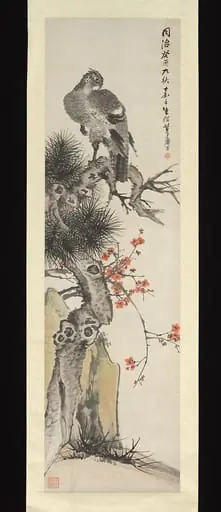 清 朱偁 松鷹圖 軸|Hawk, pine, plum, and rock
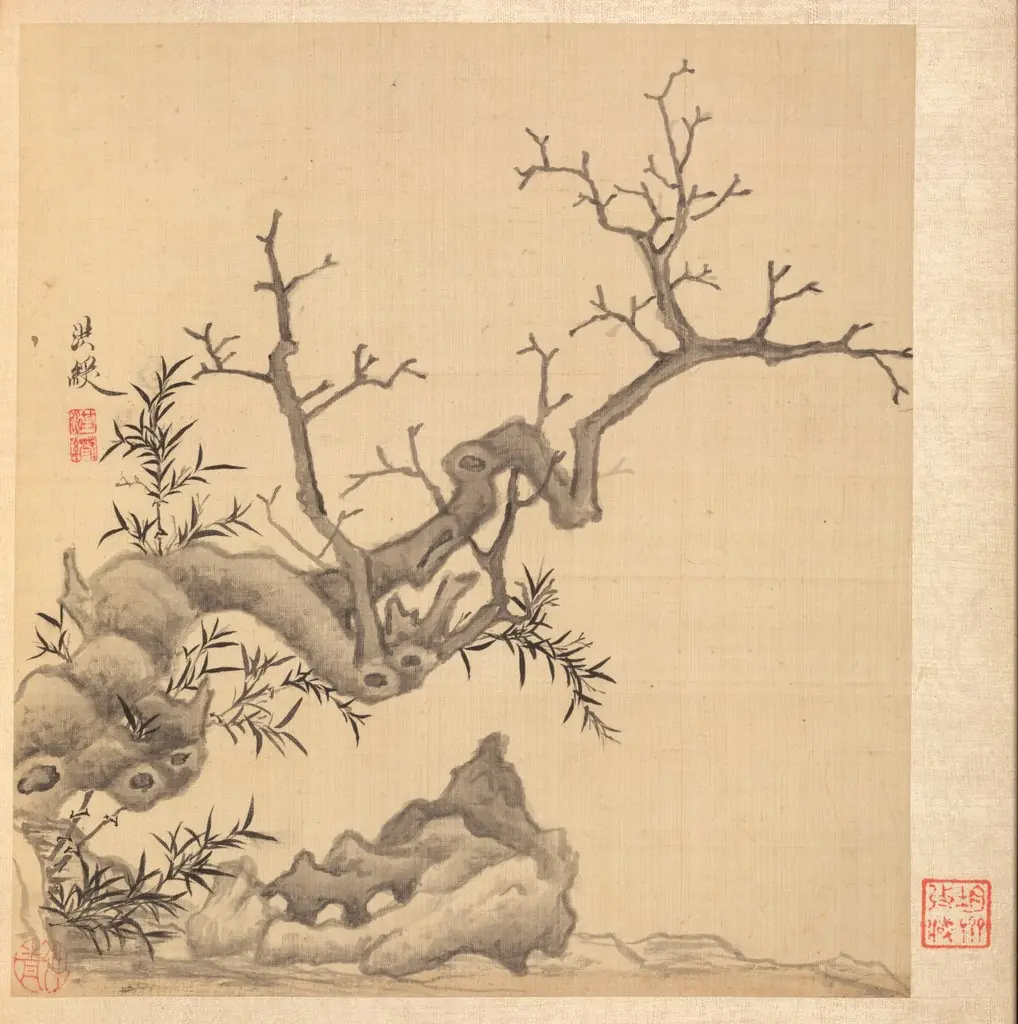 Paintings after Ancient Masters: Rock, Old Tree, and Bamboo
 Plums, Bamboo, and Orchid
 元 吳鎮 高節凌雲圖 軸|Bamboo, old tree, and rock
 Old Trees by a Wintry Brook
 Untitled
 Water Margin Bandits
 清 高鳳翰 菊石圖 軸|Chrysanthemums by a rock