Artwork
Fisherman
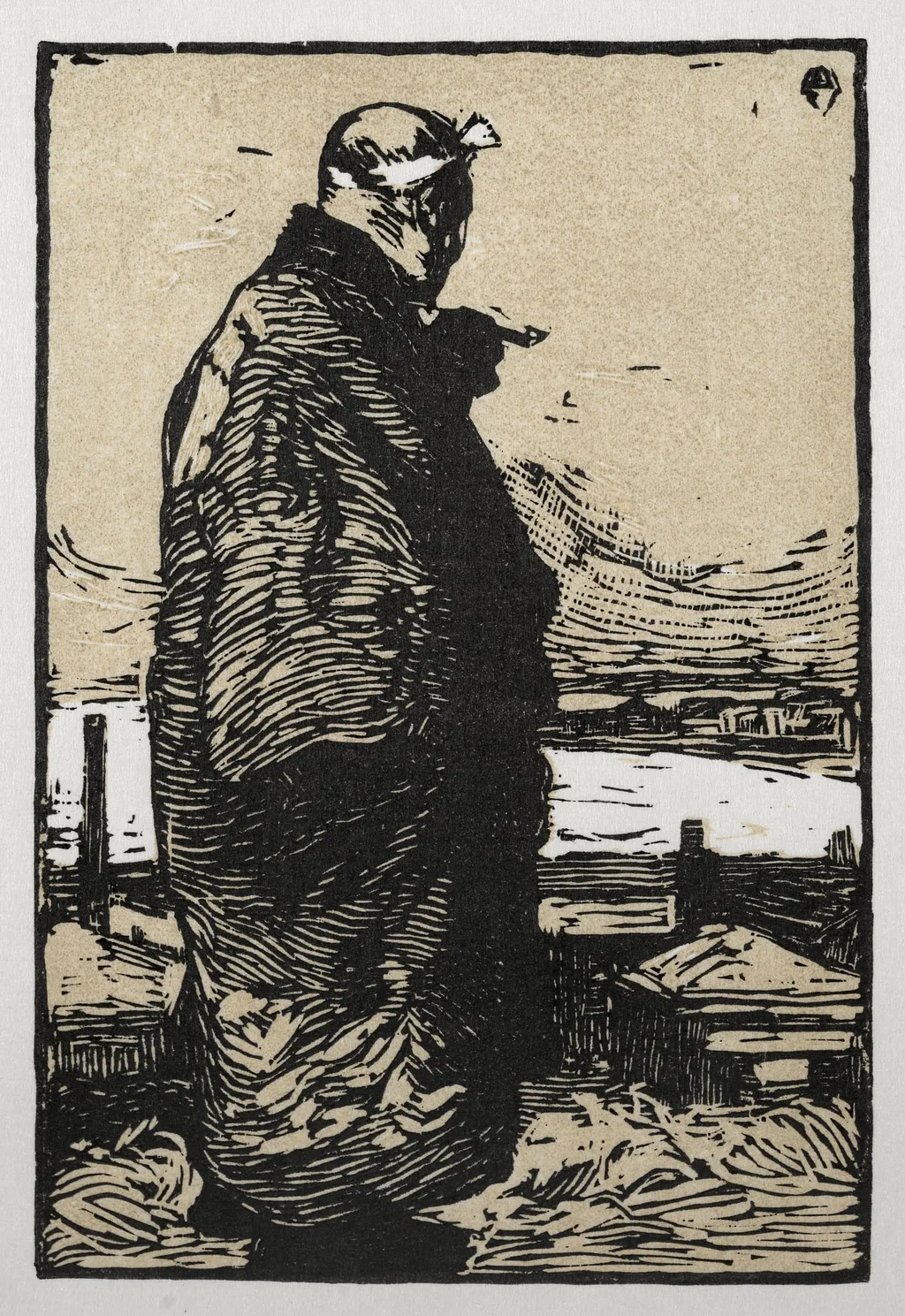
Fisherman is a print by Yamamoto Kanae. It dates from 1906 and is held in the collection of the Cleveland Museum of Art.
About this work
This woodblock shows a lone fisherman standing on a pier, waves crashing behind him. The single figure is carved in bold black lines. The print uses simple shapes but feels alive.
Yamamoto made this in 1906. It helped start a new way of making prints. Artists cut and printed their own woodblocks instead of using teams.
Look up Yamamoto Kanae (Japanese, 1882–1946) to see more of his work.
Overview
Created in 1906, this woodblock print portrays a solitary fisherman on a pier, his figure rendered in stark black lines against a backdrop of crashing waves. The composition relies on uncomplicated shapes, yet conveys a vivid sense of presence. It exemplifies an early work of the sosaku-hanga movement, which advocated that the artist should both carve and print the image.
Subject & Meaning
The image focuses on an aged fisherman, a traditional emblem of Japan’s maritime life, rendered with a restrained yet poignant simplicity. By isolating the figure against the sea, the work underscores themes of solitude and endurance, reflecting the enduring relationship between the Japanese people and the ocean.
Technique & Style
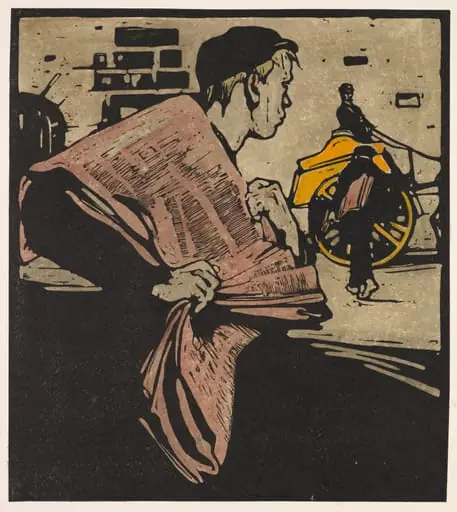
Yamamoto employed a direct carving approach, allowing the gouge marks to remain visible on the block, a choice that imparts a tactile quality to the final print. The flat, unshaded figure set against an unmodulated background echoes the boldness of early ukiyo-e and the influence of Western printmakers such as William Nicholson, whose own style derived from Japanese woodcuts.
History & Provenance
The print first appeared in the 1904 issue of the literary and art magazine Myojo (Morning Star), accompanying an article that highlighted Yamamoto’s break with the traditional division between designer and craftsman. This publication helped publicize the sosaku-hanga principle that the creator should oversee the entire production process.
Context
During the late 19th and early 20th centuries, Japanese visual conventions were being exchanged both ways: Western artists drew on ukiyo-e, while Japanese creators began to incorporate European techniques after Japan’s reopening in 1853. Yamamoto’s work sits at this crossroads, merging native woodcut traditions with the flat, graphic aesthetic championed by British printmaker William Nicholson.
Artist & collection
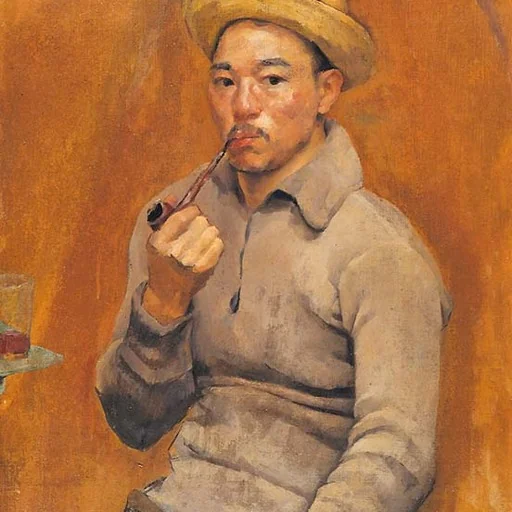
Artist
Kanae Yamamoto (山本 鼎, Yamamoto Kanae IPA: , 24 October 1882 – 8 October 1946) was a Japanese artist, known primarily for his prints and yōga Western-style paintings.

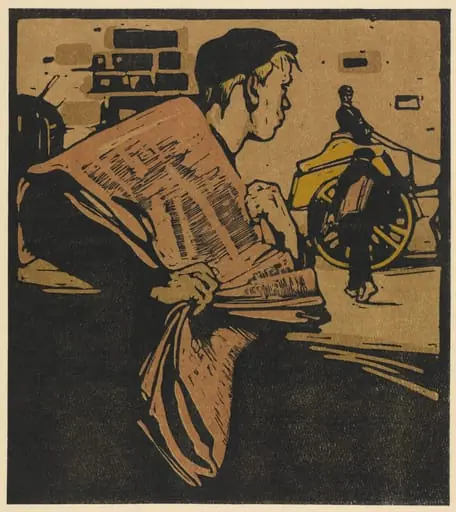 London Types: Newspaper Boy
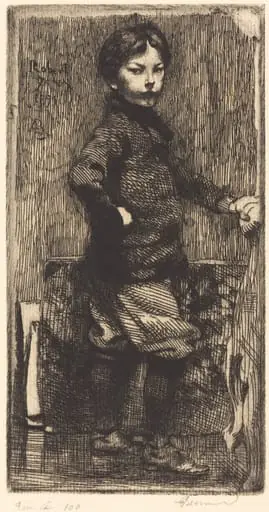 Robert Besnard
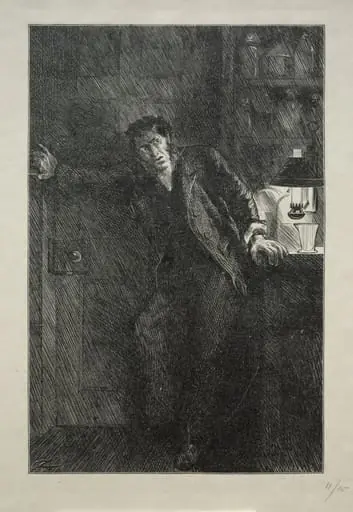 The Coat with the Fur Lining
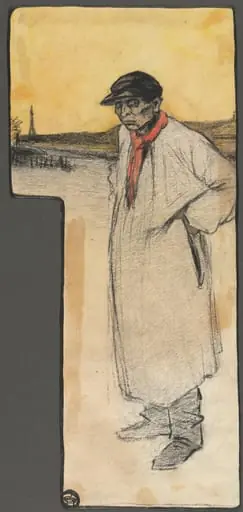 Design for a Book Illustration, Standing Male Figure
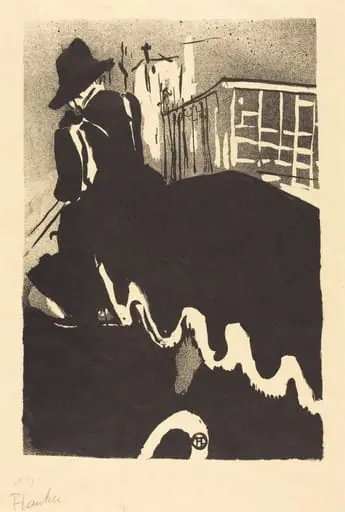 Last Ballad (Ultime ballade)
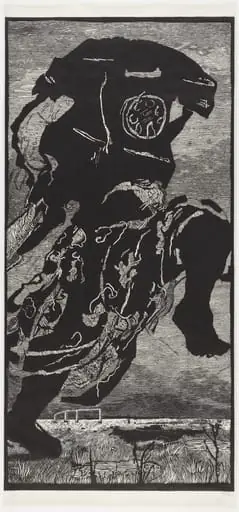 Untitled
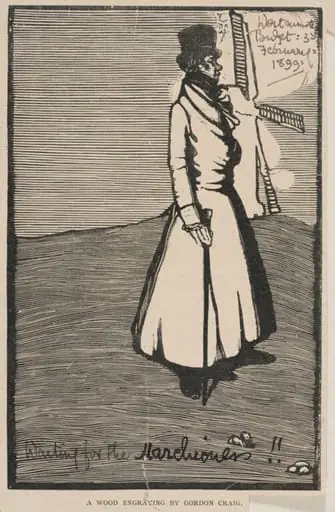 Waiting for the Marchioness
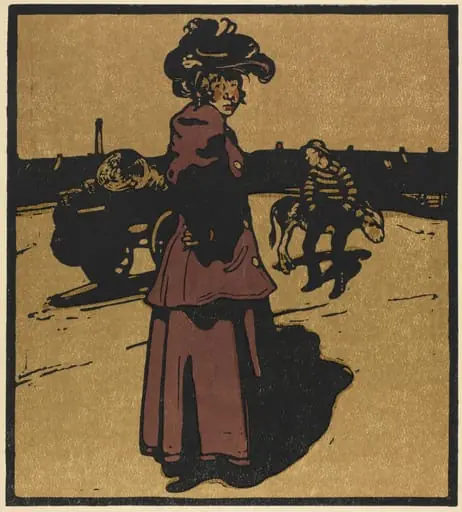 London Types: Costermonger
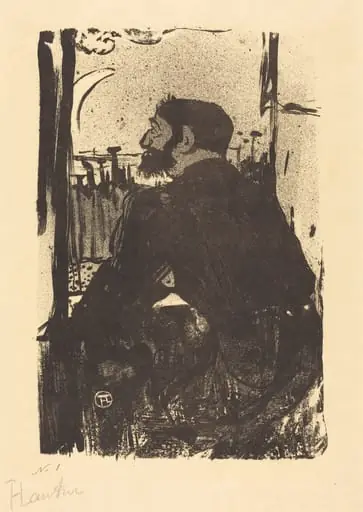 Sleepless Night (Nuit blanche)
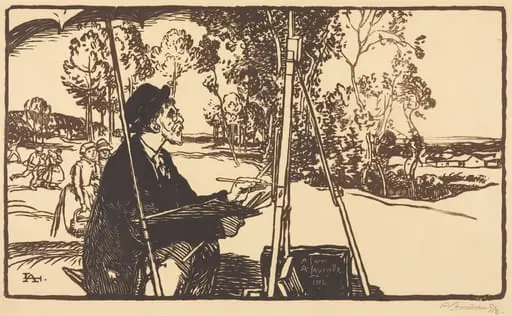 The Landscape Artist (Le paysagiste)
 London Types: News-boy
 Sleepless Night (Nuit blanche)