Artwork
Last Ballad (Ultime ballade)
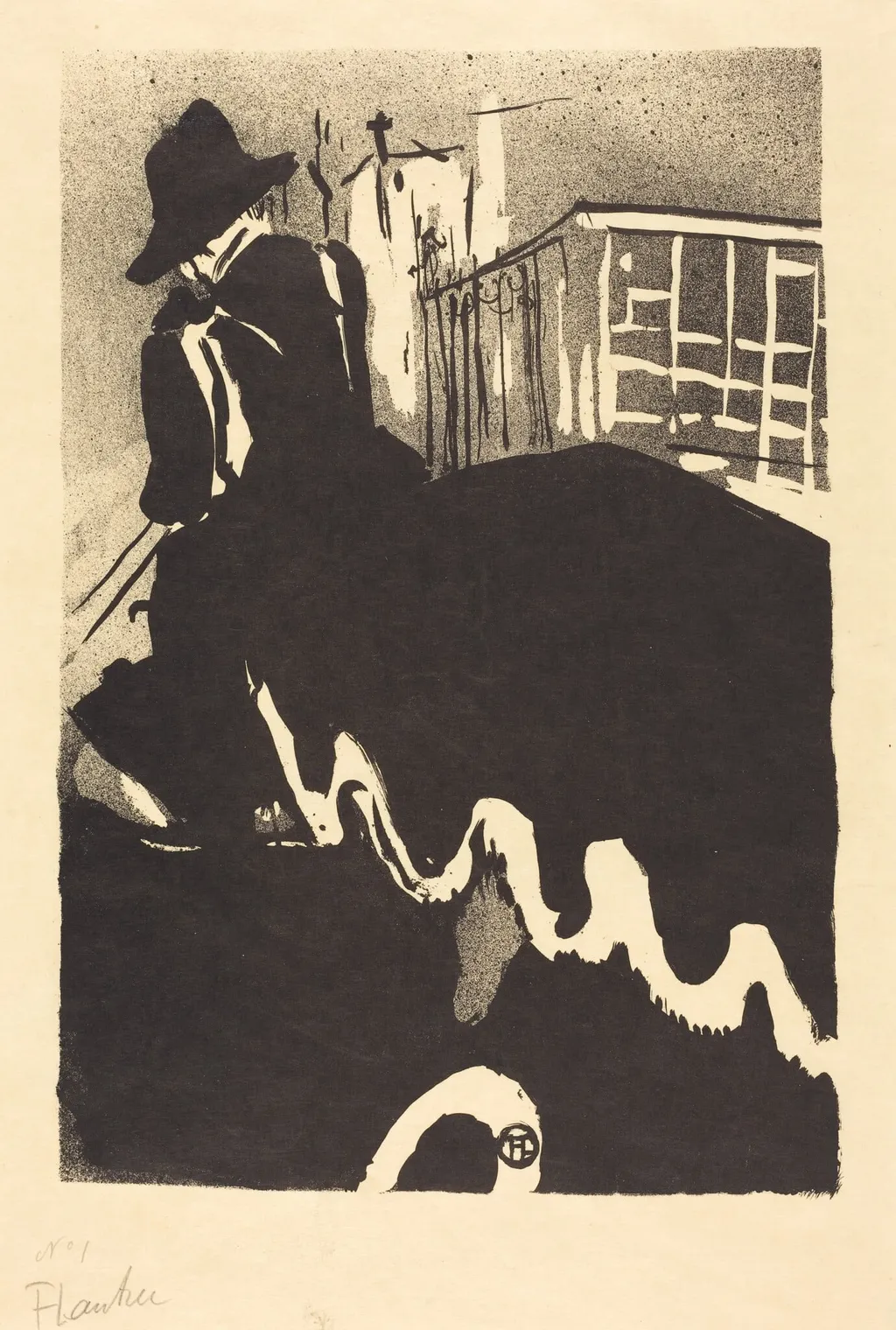
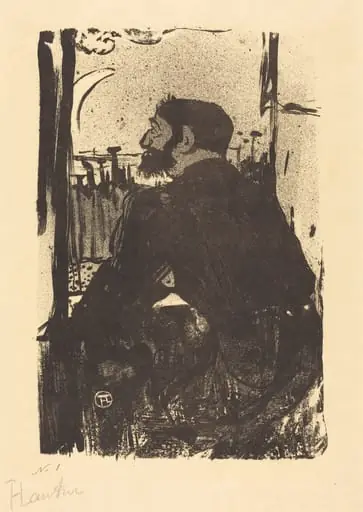
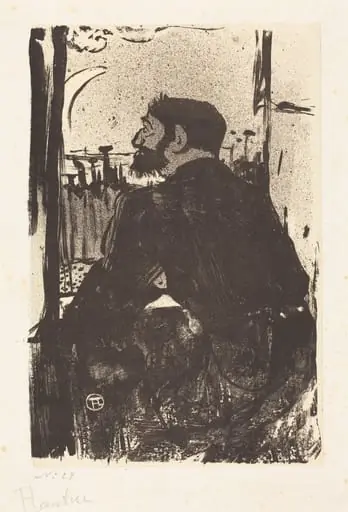
Last Ballad (Ultime ballade) is an ink print by the Impressionist artist Henri de Toulouse-Lautrec. It dates from 1893 and is held in the collection of the National Gallery of Art.
About this work
Overview
It captures a solitary equestrian figure departing from a modest building, rendered with minimal detail yet strong expressive lines.
Created in 1893, *Last Ballad (Ultime ballade)* is a black lithograph on Japan paper by Henri de Toulouse-Lautrec. It captures a solitary equestrian figure departing from a modest building, rendered with minimal detail yet strong expressive lines. The work belongs to a series of prints in which Lautrec explored transient moments of solitude within urban life, distancing himself from the flamboyant nightlife scenes he was otherwise known for.
Subject & Meaning
The lone rider, cloaked and motionless, suggests departure or isolation rather than celebration. The building behind, with its staircase and partial window, implies a private or transient space—perhaps a lodging or bordello. The figure’s anonymity and the quiet atmosphere evoke a sense of melancholy, reflecting Lautrec’s interest in those who move through society unseen, carrying private burdens beyond the stage lights.
Technique & Style
Lautrec employed lithography to achieve a spontaneous, sketch-like quality. The bold, uneven lines and lack of refinement were deliberate, conveying immediacy and emotional weight. By working directly on stone and embracing the medium’s inherent texture, he transformed printmaking into a vehicle for raw observation, prioritizing gesture over polish to mirror the fleeting nature of his subjects.
History & Provenance
Produced in 1893, this print emerged during a period when Lautrec was increasingly withdrawn from Parisian social circles, partly due to declining health and personal disillusionment. It was likely part of a small, private edition, not widely distributed at the time. Its survival in collections today reflects later recognition of his graphic work as a significant contribution to modern printmaking.
Context
In the 1890s, Lautrec’s focus shifted from crowded cabarets to quieter, more introspective scenes. This print aligns with his growing preoccupation with solitude and the margins of society. While his earlier works documented performers and patrons, *Last Ballad* omits spectacle entirely, offering instead a silent, almost cinematic moment that resonates with the emotional undercurrents of urban alienation.
Legacy
The print exemplifies Lautrec’s influence on modern graphic art through its emotional economy and rejection of academic finish. Later artists, particularly in expressionist and early 20th-century print movements, drew from his use of line to convey psychological depth. *Last Ballad* remains a quiet but enduring testament to his ability to transform the ordinary into something quietly haunting.
Artist & collection
Artist
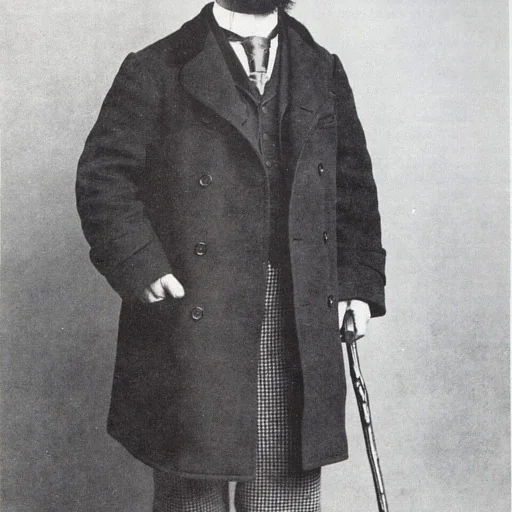
Comte Henri Marie Raymond de Toulouse-Lautrec-Montfa (24 November 1864 – 9 September 1901), known as Toulouse-Lautrec (French: ), was a French painter, printmaker, draughtsman, caricaturist, and illustrator.