Artwork
Untitled
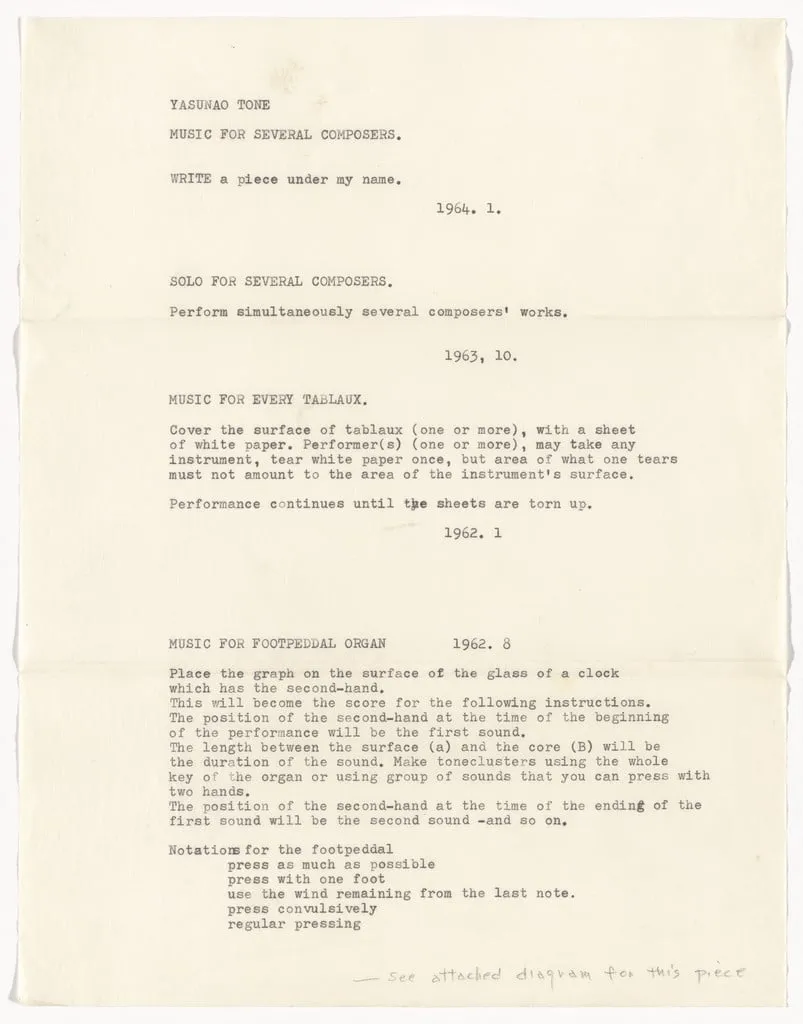
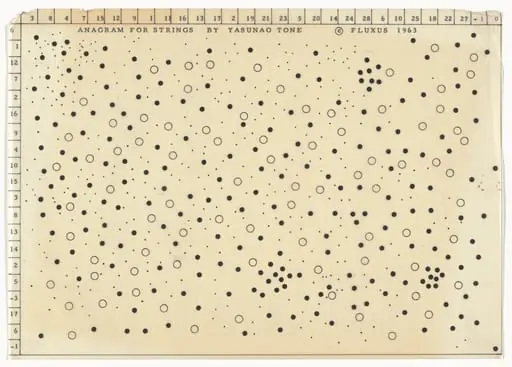
Untitled is a graphite drawing by Yasunao Tone. It dates from 1963 and is held in the collection of the Museum of Modern Art.
About this work
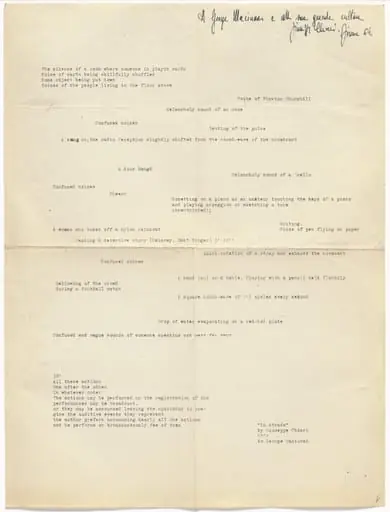
The text describes odd, playful music ideas—like covering a clock’s glass with paper or performing multiple composers at once.
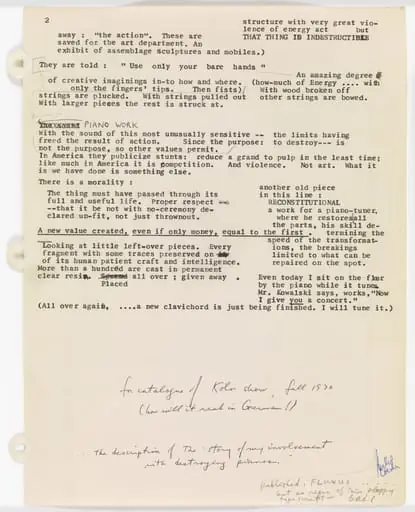
This is a sheet of paper covered in typed and handwritten instructions. The words are in short paragraphs, some crossed out or underlined. Dates like "1962.1" and "1964.1" appear next to different ideas. There’s also a note about a "diagram for this piece" at the bottom.
The text describes odd, playful music ideas—like covering a clock’s glass with paper or performing multiple composers at once. It’s less about drawing and more about rules for sound.
Next, check out Yasunao Tone to see how these instructions turned into real performances.
Overview
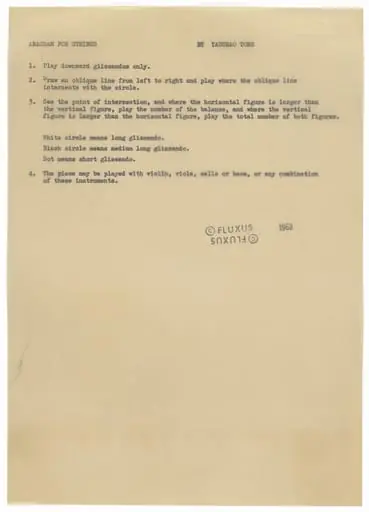
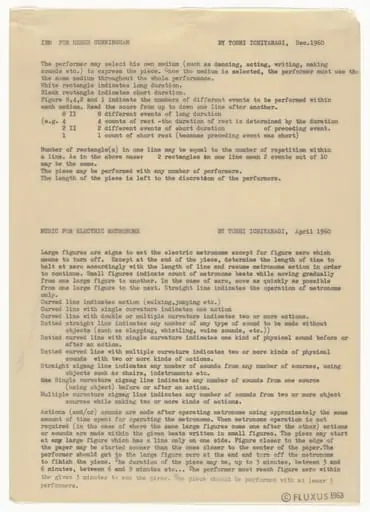
Created in 1963, this work by Yasunao Tone consists of handwritten and typewritten instructions on paper, augmented with pencil and colored pencil markings. Rather than a visual composition, it functions as a set of directives for sonic actions. Dates scattered across the surface suggest evolving thoughts, while crossed-out passages indicate revision. A reference to a missing diagram hints at an expanded conceptual framework beyond the page.
Subject & Meaning
The text outlines unconventional musical gestures—such as obscuring a clock’s face or layering compositions by different composers simultaneously. These instructions reject traditional notation in favor of performative, often absurd, acts that challenge the boundaries of music. The work treats sound as a malleable experience shaped by context and interpretation, not fixed scores or instruments.
Technique & Style
Tone combined typewritten text with handwritten annotations, underlinings, and color-coded notes to structure his ideas. The layout resembles a draft or notebook, prioritizing clarity of instruction over aesthetic polish. The use of multiple media—ink, pencil, colored pencil—reflects a process of iterative thinking, where revisions and additions are integral to the work’s form.
History & Provenance
The piece entered the collection of The Museum of Modern Art as part of its broader engagement with conceptual and experimental art from the 1960s. It reflects Tone’s involvement with the Japanese avant-garde, particularly the Fluxus movement, which valued process over product. Its preservation as a drawing underscores its role as a foundational document for live performance.
Context
Emerging from Tokyo’s experimental art scene, the work aligns with contemporaneous efforts to dissolve distinctions between art forms. Tone’s instructions echo John Cage’s indeterminacy and the Fluxus emphasis on everyday actions as art. This piece was not meant to be seen as an object but as a seed for performances that could vary with each interpretation.
Legacy
The work remains a key example of score-based conceptual art, influencing later generations of sound artists and performers who treat written instructions as generative frameworks. Its preservation in a major museum affirms its significance as a transitional object—neither fully musical nor purely visual—yet central to redefining artistic practice in the late 20th century.
Artist & collection

Artist
Yasunao Tone was a Japanese multidisciplinary artist born in Tokyo, Japan, and working in New York City.