Artwork
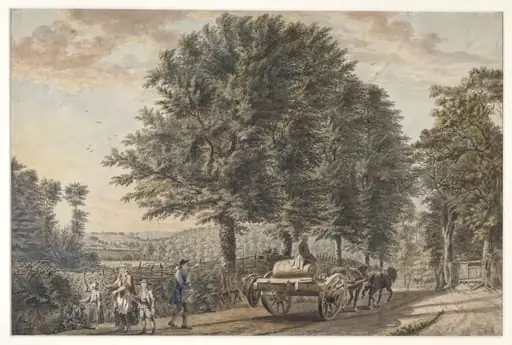
Landscape with a house and countryfolk
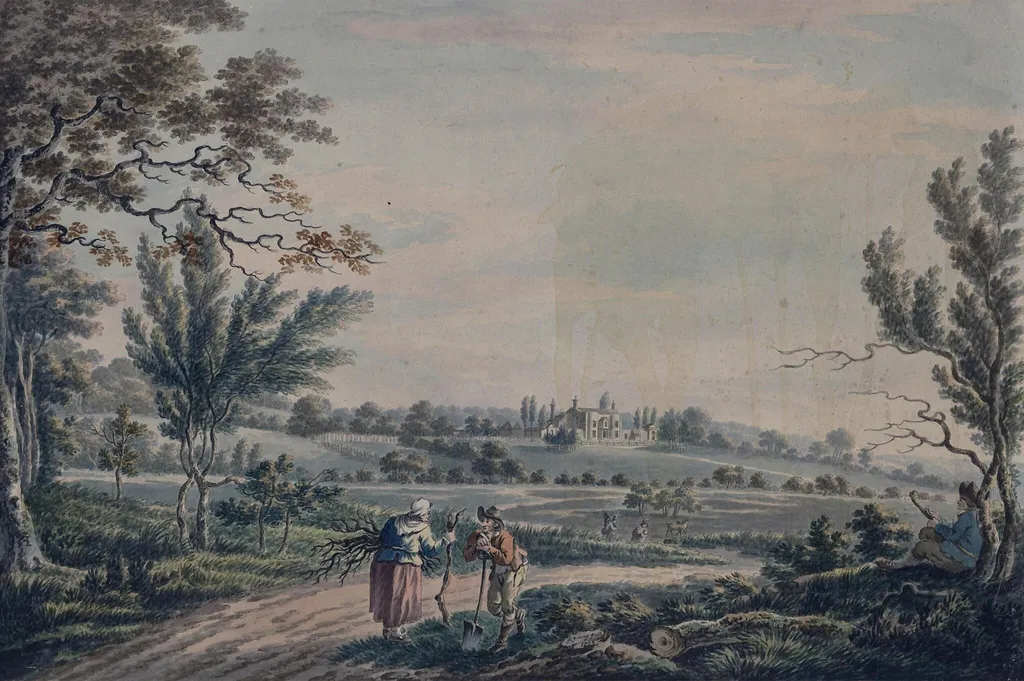
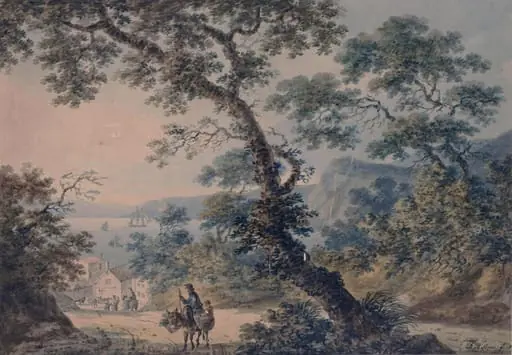
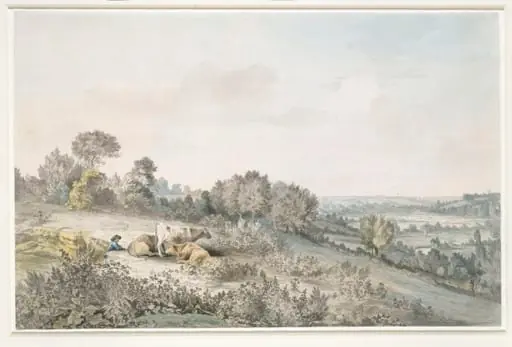
Landscape with a house and countryfolk is a watercolor work on paper by the British Romanticist artist Tobias Young. It dates from 1793 and is held in the collection of the Victoria and Albert Museum.
About this work
Overview
Painted in 1793, this watercolour by Tobias Young captures a tranquil rural moment with quiet precision. The work is signed and dated by the artist, affirming its origin. Executed in delicate washes, it presents a modest landscape centered on a single dwelling and two figures engaged in quiet labor. The composition avoids drama, favoring stillness and subtle observation of the natural world.
Subject & Meaning
Two figures, one holding a shovel and the other resting against a branch, suggest rural labor and pause.
Two figures, one holding a shovel and the other resting against a branch, suggest rural labor and pause. Their presence is unembellished, neither idealized nor dramatized. The house behind them, with its orderly garden, implies domestic stability. The scene reflects an unremarkable day in country life, emphasizing harmony between human activity and the surrounding land without overt narrative or symbolism.
Technique & Style
Young employs transparent watercolour washes to build soft gradients of green, brown, and pale sky tones. Light is used to gently isolate the figures against the muted background, enhancing their presence without contrast. The brushwork is restrained, with loose yet deliberate strokes defining trees and fields. The technique prioritizes atmosphere over detail, aligning with early 19th-century British watercolour traditions.
History & Provenance
The work’s documented date and signature place it firmly in Young’s early career. No record of prior ownership or exhibition history is widely available. It likely remained in private hands, consistent with the modest scale and subject matter typical of amateur or lesser-known artists of the period. Its survival suggests it was valued as a personal record rather than a public statement.
Context
Created during the rise of Romanticism, the painting shares an affinity for nature and everyday life, though it lacks the emotional intensity often associated with the movement. Unlike grand landscapes of the era, Young’s work reflects a quieter, more localized tradition in British art—where rural scenes were observed with quiet reverence, not mythic grandeur.
Legacy
Tobias Young’s watercolour contributes to a broader archive of 18th-century British landscape studies that documented ordinary rural life. While not widely known today, it represents the quiet persistence of non-elite artistic practice. Its value lies in its unassuming authenticity, offering a glimpse into the visual culture of a time when nature was seen not as sublime, but as lived-in and familiar.
Artist & collection