Artwork
Netley Abbey: South View
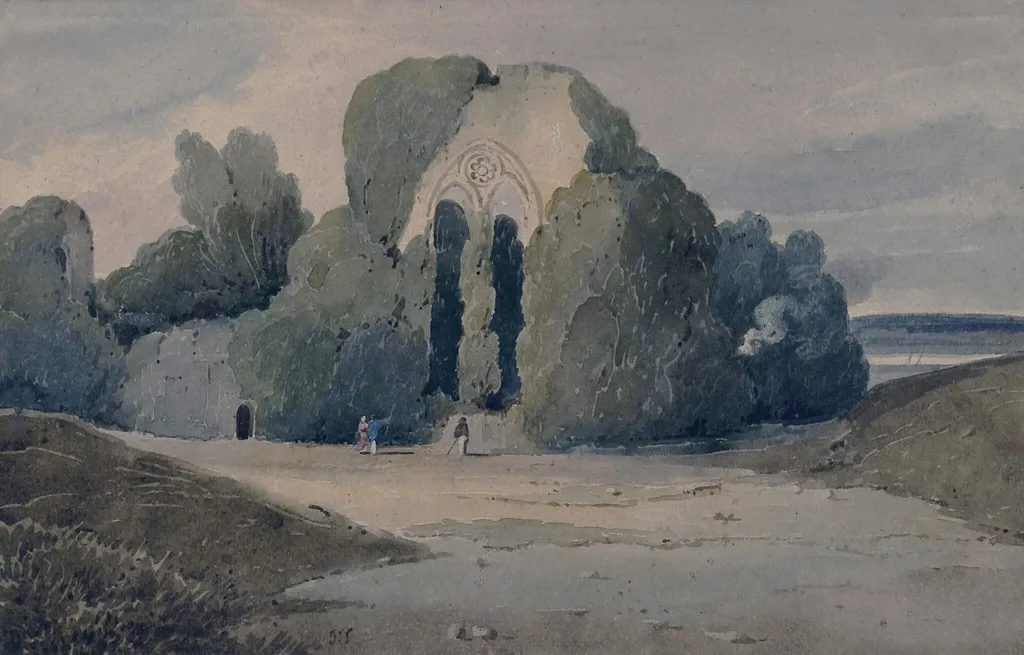
Netley Abbey: South View is a watercolor work on paper by the Rococo painting artist Tobias Young. It dates from 1775 and is held in the collection of the Victoria and Albert Museum.
About this work
Overview
Tobias Young’s 1775 watercolour, *Netley Abbey: South View*, presents a quiet, contemplative scene of the medieval monastery in ruins. Rendered in delicate washes, the composition emphasizes the abbey’s southern facade, framed by natural elements. The work belongs to a tradition of topographical watercolours that documented Britain’s historic sites with precision and mood, rather than grandeur.
Subject & Meaning
The painting focuses on the decaying architecture of Netley Abbey, a former Cistercian monastery dissolved in the 16th century.
The painting focuses on the decaying architecture of Netley Abbey, a former Cistercian monastery dissolved in the 16th century. Two small figures near the entrance suggest human presence against the scale of time and nature. The ruins are not merely architectural records but symbols of transience, reflecting a growing 18th-century interest in the passage of time and the quiet dominance of nature over human endeavor.
Technique & Style
Young employed soft, layered watercolour washes to convey subtle shifts in light and texture. The pale blues and muted greens of the landscape blend with the gray tones of the stone, while delicate brushwork defines the arched doorway and window openings. Shadows are gently modeled to enhance the three-dimensionality of the ruins, avoiding dramatic contrast in favor of atmospheric harmony.
History & Provenance
Created in 1775, the work emerged during a period of renewed interest in Britain’s monastic past, spurred by antiquarianism and travel. While its early ownership is undocumented, its style aligns with the practices of amateur topographical artists of the era. It entered the Victoria and Albert Museum’s collection as part of a broader effort to preserve 18th-century British watercolours.
Context
In the late 18th century, watercolour became a favored medium for documenting ruins, especially among educated travelers and artists. Netley Abbey, accessible from Southampton, was a popular subject. Young’s depiction reflects the aesthetic of the picturesque—where decay and natural overgrowth were seen as harmonious, evoking melancholy rather than destruction.
Legacy
This watercolour contributes to a body of work that shaped how later generations perceived Britain’s medieval heritage. Though not widely exhibited, it exemplifies the quiet, observational approach of pre-Romantic landscape art. Its preservation in a major museum underscores its value as a historical record of both place and artistic practice in 18th-century Britain.
Artist & collection

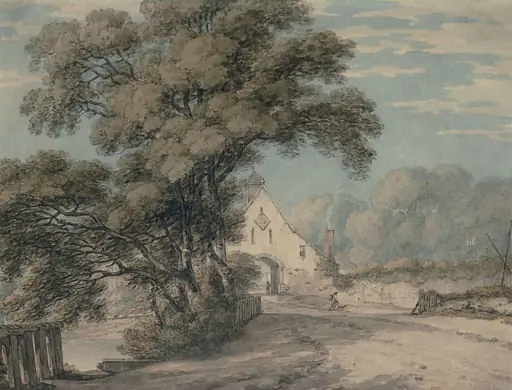 The Gateway at Beaulieu Abbey, Hants
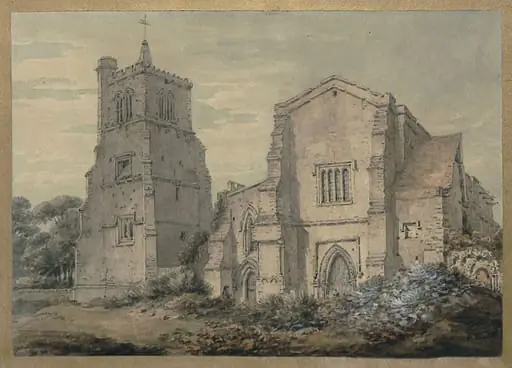 Priory church, Elstow, Bedfordshire
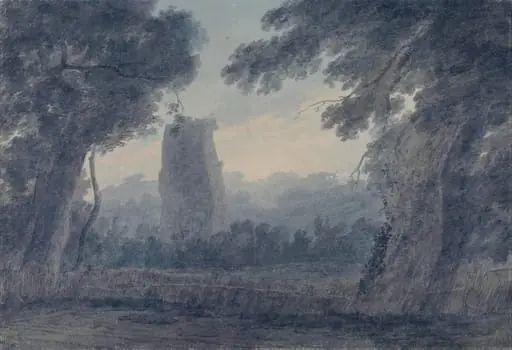 Tomb of the Horatii and Curiatii, Rome
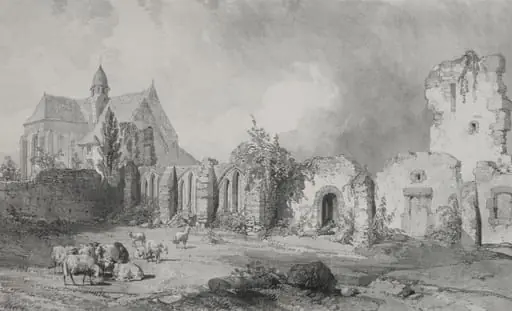 Voyages pittoresques et romantiques dans l'ancienne France. Bretagne: Abbaye de Relec
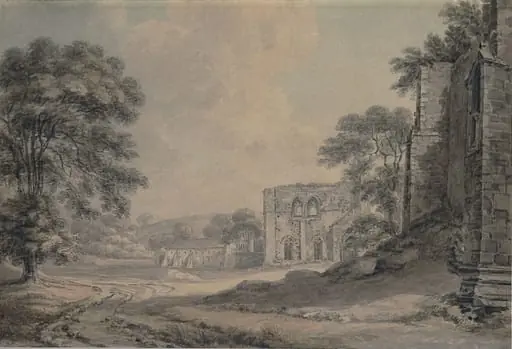 Landscape with ecclesiastical ruins
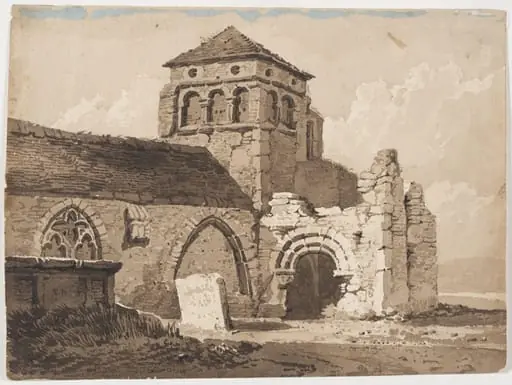 Old Shoreham Church, Sussex
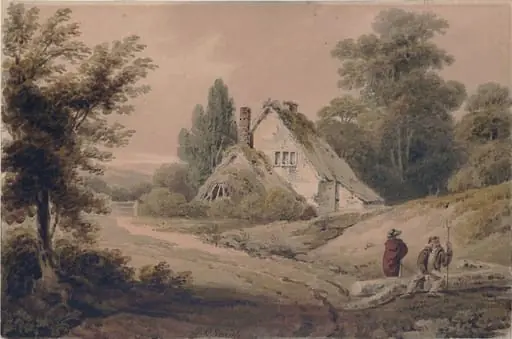 Landscape with cottage and figures
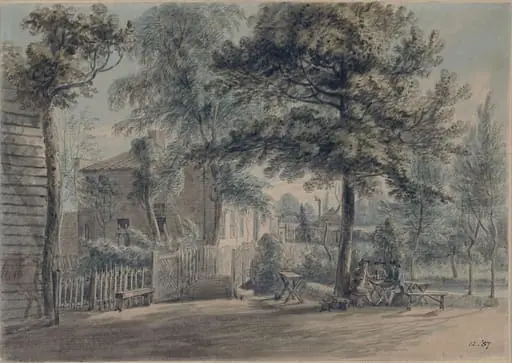 Old Tea Gardens, Bayswater Road
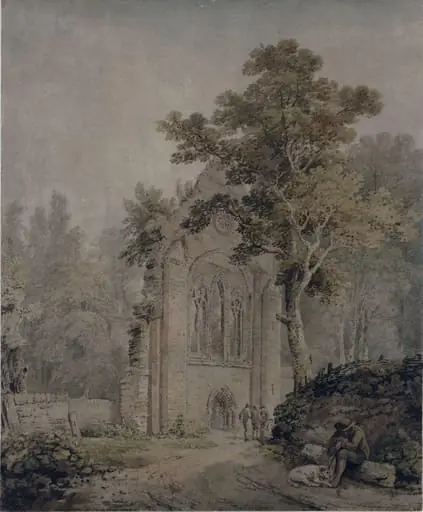 Doorway of a ruined abbey
 Landscape with Abbey by a Stream
 View at Cheshunt, Hertfordshire