Artwork
Untitled
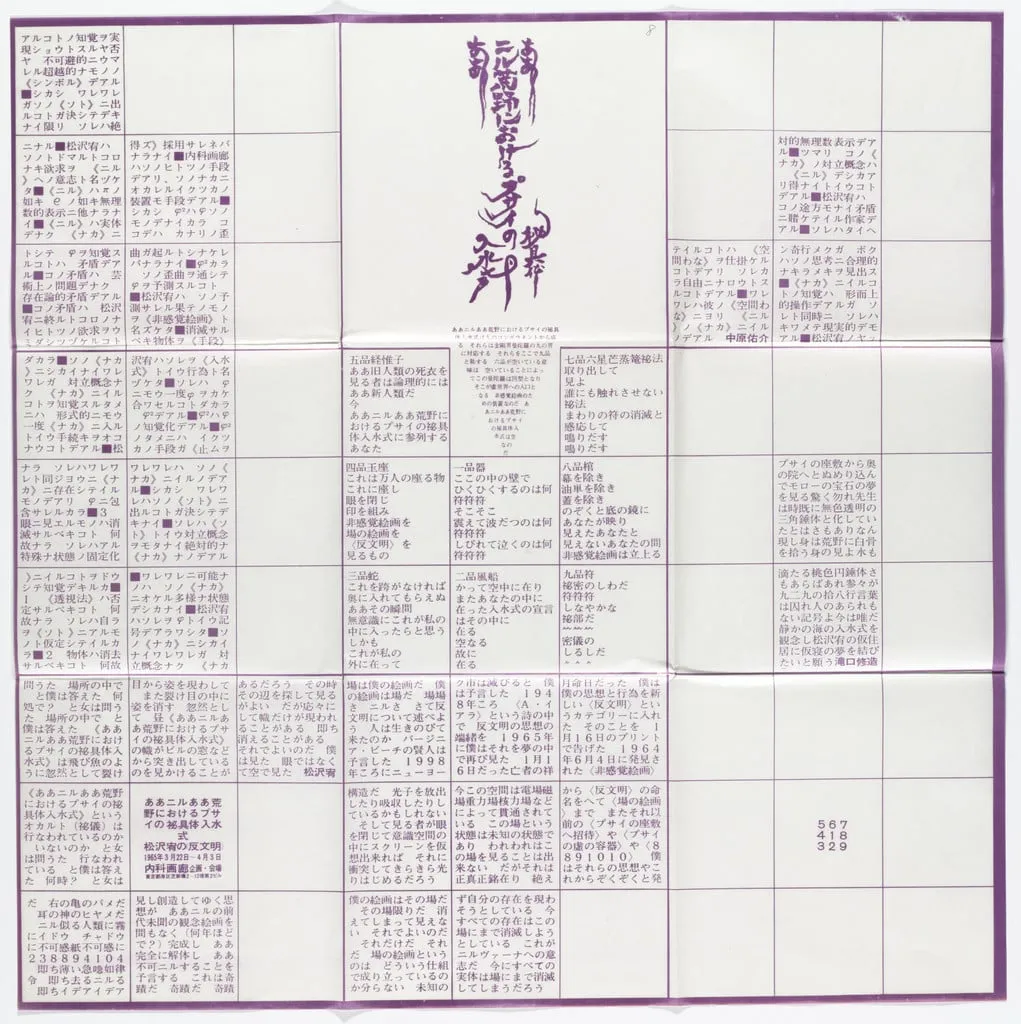
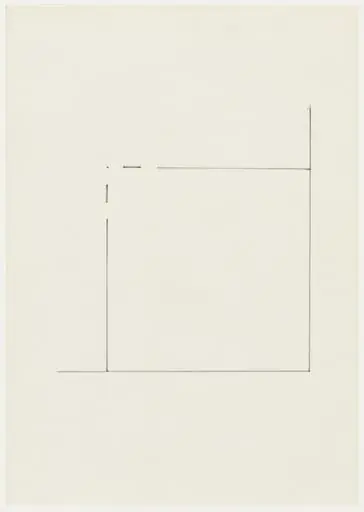
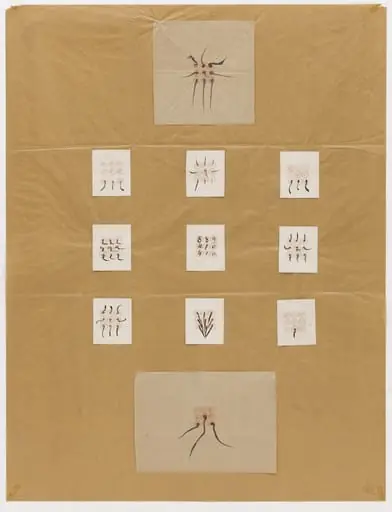
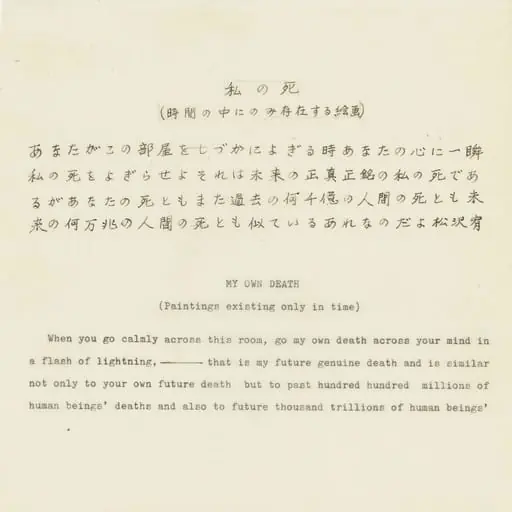
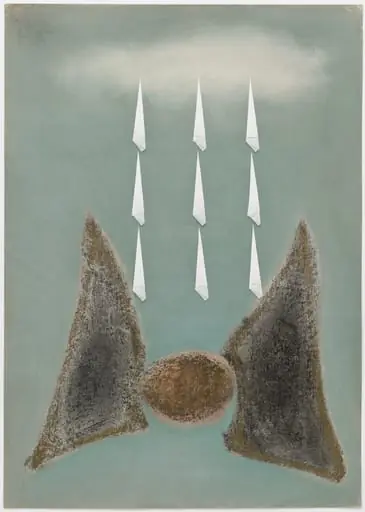
Untitled is an ink print by Yutaka Matsuzawa. It dates from 1965 and is held in the collection of the Museum of Modern Art.
About this work
Overview
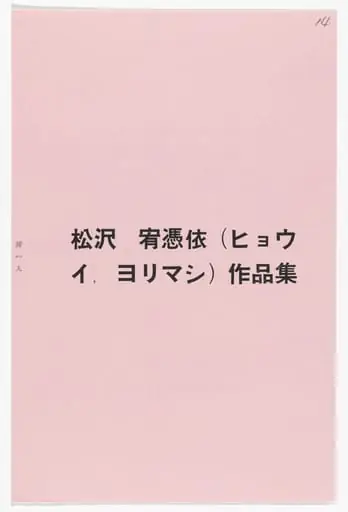
Created in 1965, this lithograph is one of 71 prints in a portfolio by Yutaka Matsuzawa, a key figure in Japanese conceptual art.
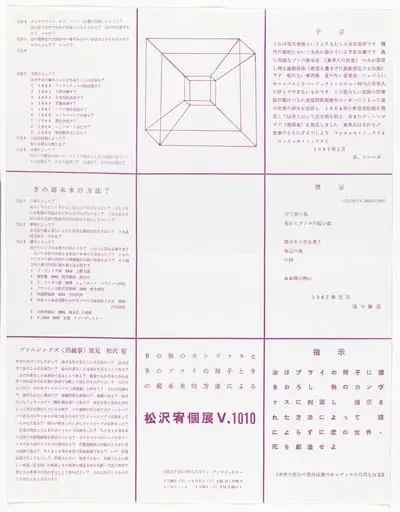
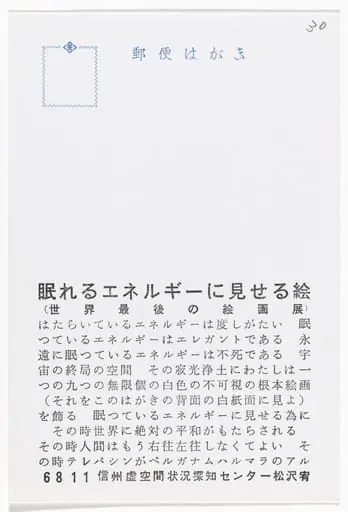
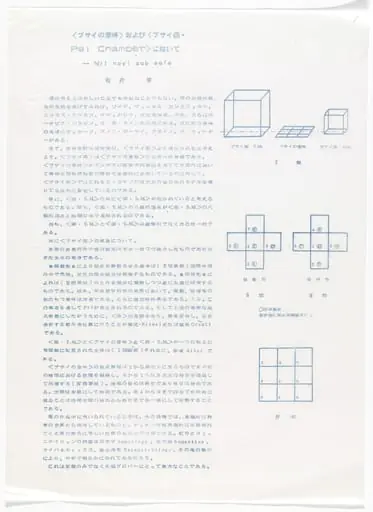
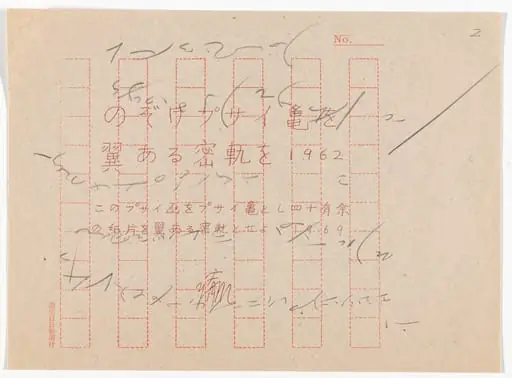
Created in 1965, this lithograph is one of 71 prints in a portfolio by Yutaka Matsuzawa, a key figure in Japanese conceptual art. The work belongs to a series that prioritizes intellectual engagement over aesthetic convention. Printed in purple ink on a light beige ground, it presents a structured arrangement of rectangular fields containing text and numerals, challenging traditional notions of visual composition and meaning.
Subject & Meaning
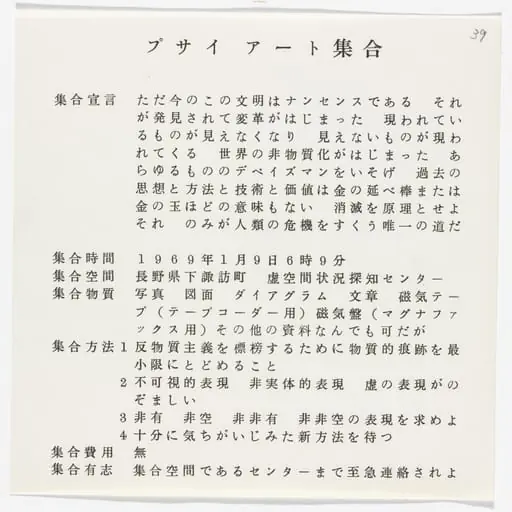
The piece contains a grid of varying-sized boxes filled with Japanese script and numerical sequences. The central, larger box holds dense text, surrounded by smaller ones with sparse content. The language resists immediate legibility, suggesting a poetic or catalog-like structure. Matsuzawa intended such works to evoke absence and silence, using language as a material to question representation rather than convey fixed meaning.
Technique & Style
Executed as a lithograph, the work employs a mechanical printing process to reproduce uniform yet irregular text forms. The purple ink contrasts subtly with the beige paper, emphasizing tone over color. The varying box sizes and uneven distribution of script reflect an intentional asymmetry, rejecting decorative harmony. This method aligns with Matsuzawa’s broader practice of reducing art to conceptual frameworks rather than expressive gestures.
History & Provenance
The portfolio was produced in 1965 during a period when Matsuzawa was deeply engaged with post-war conceptual movements in Japan. It was not widely exhibited at the time but became recognized later as part of his radical redefinition of art. The work has since entered institutional collections, including The Museum of Modern Art, where it contributes to broader narratives of global conceptual practices beyond Western centers.
Context
Emerging in the mid-1960s, this work coincided with Japan’s engagement with international conceptual art and the decline of formalist aesthetics. Matsuzawa’s use of text and grid structures paralleled global experiments in dematerialization, yet his focus on Japanese linguistic ambiguity and Zen-inspired voids offered a distinct cultural inflection. The portfolio was part of a larger effort to dissolve art into thought, resisting commodification.
Legacy
Matsuzawa’s portfolio influenced later generations of Japanese artists who explored language, impermanence, and institutional critique. The work’s quiet, systematic form helped redefine printmaking as a vehicle for philosophical inquiry rather than reproduction. Its inclusion in major collections affirms its role in expanding the boundaries of conceptual art beyond Euro-American contexts, grounding it in Japanese intellectual traditions.
Artist & collection
Artist
Yutaka Matsuzawa (松澤宥, Matsuzawa Yutaka; February 2, 1922 – October 15, 2006) was a pioneer conceptual artist. He was active from the 1950s until his death in central Japan.