Artwork
Untitled
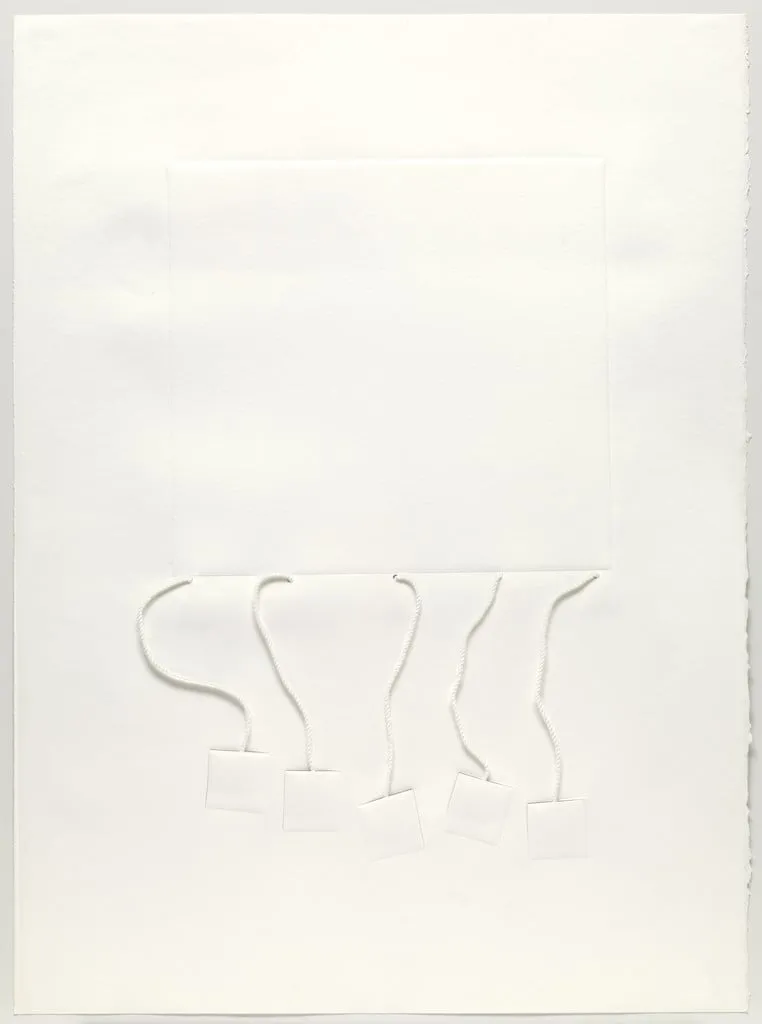
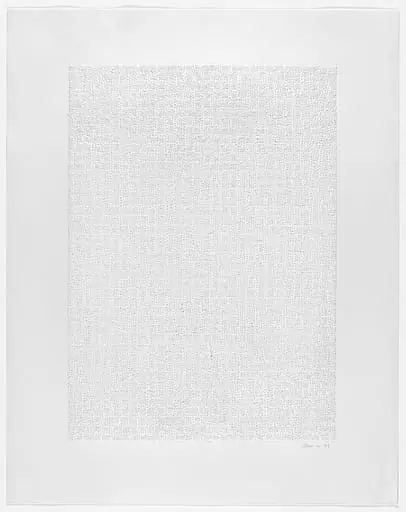
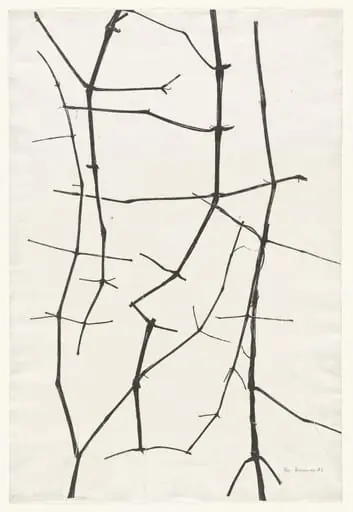
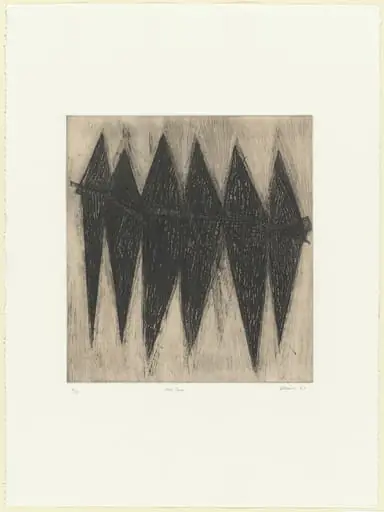
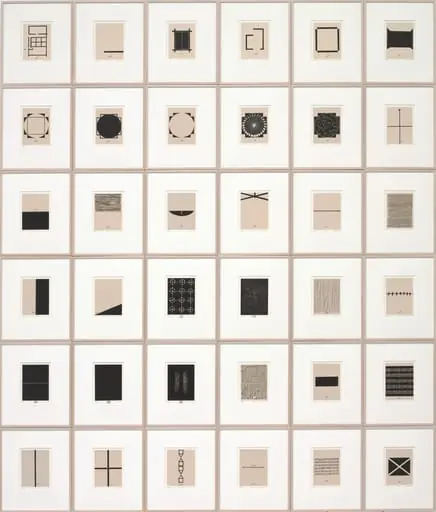
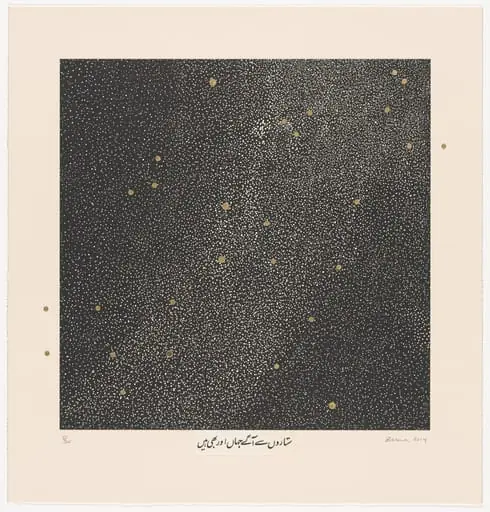
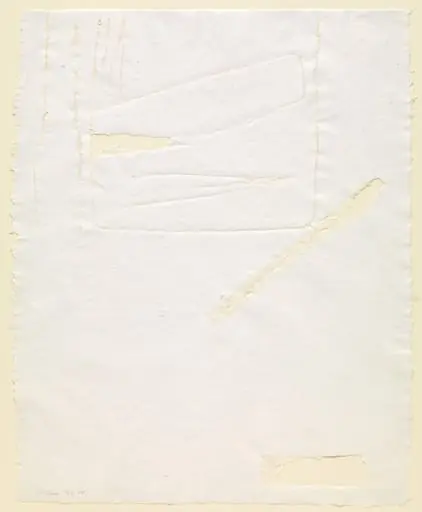
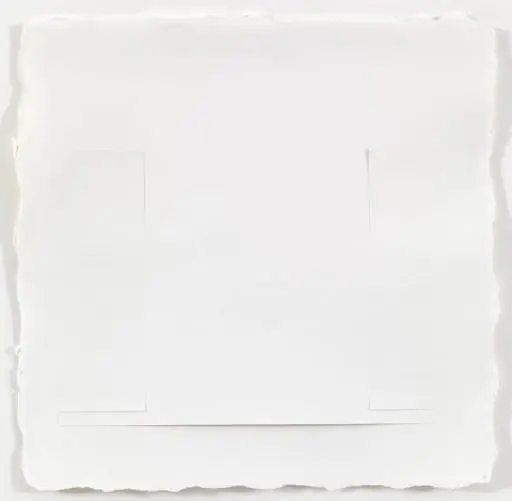
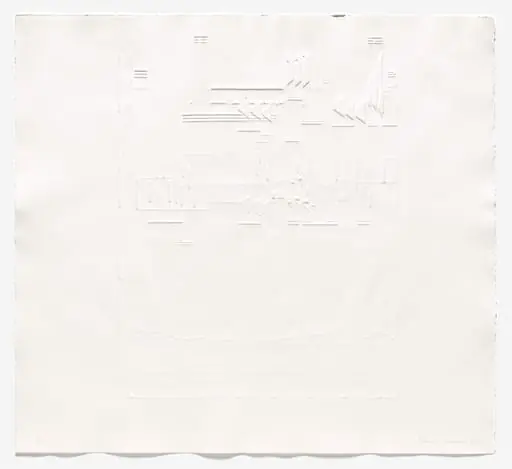
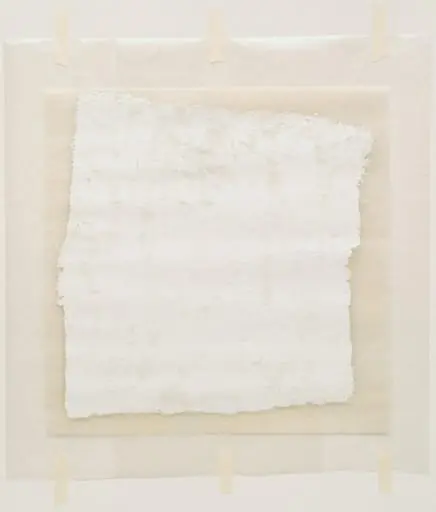
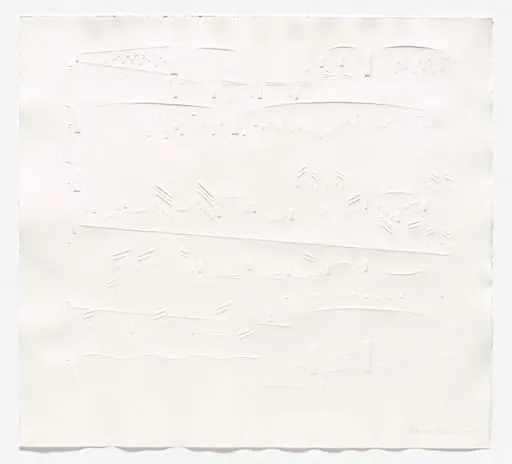
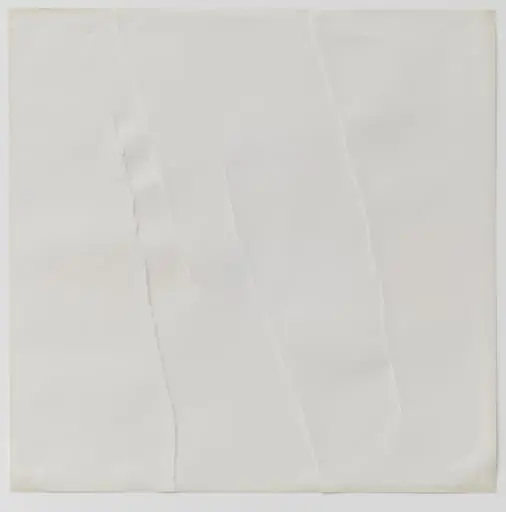
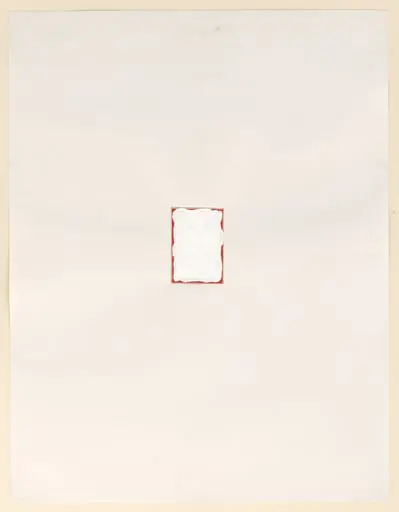
Untitled is a print by Zarina. It dates from 1974 and is held in the collection of the Museum of Modern Art.
About this work
Overview
It belongs to The Museum of Modern Art’s collection as part of its broader engagement with conceptual and material approaches in postwar printmaking.
Created in 1974, this relief print by Zarina combines cut paper and silk cord on paper, forming a minimalist composition. Four small rectangular forms hang suspended from delicate threads against a white ground. The work’s quiet structure emphasizes absence and spatial rhythm, inviting contemplation rather than narrative. It belongs to The Museum of Modern Art’s collection as part of its broader engagement with conceptual and material approaches in postwar printmaking.
Subject & Meaning
The four suspended rectangles evoke empty frames or vacant portals, suggesting loss, displacement, or unoccupied space. Their neutrality resists symbolic interpretation, instead pointing to the emotional weight of what is missing. The cords, thin and taut, imply fragility and tension—perhaps referencing migration, memory, or the impermanence of home. The work’s silence becomes its language, reflecting Zarina’s recurring interest in absence as a form of presence.
Technique & Style
Zarina employed relief printing with hand-cut paper elements and real silk cord, merging printmaking with sculptural intervention. The rectangles are precisely shaped and positioned, their edges crisp against the paper’s smooth surface. The cords, threaded through the paper, extend into physical space, blurring the boundary between flat image and three-dimensional object. The restrained palette and deliberate spacing reflect a meditative precision characteristic of her practice.
History & Provenance
Made in 1974, the work entered The Museum of Modern Art’s collection as part of its growing focus on artists exploring minimalism and personal geography. Zarina, then emerging in New York’s experimental art scene, was developing a visual vocabulary rooted in her experiences of displacement and cultural memory. The piece was not widely exhibited until later, but its quiet intensity aligned with contemporaneous shifts in printmaking toward conceptual and material inquiry.
Context
In the 1970s, many artists moved away from grand narratives toward intimate, material-based expressions. Zarina’s work responded to this trend while also drawing from her South Asian heritage and experiences of migration. Her use of simple forms and handmade elements echoed both Islamic calligraphic traditions and Western minimalism, creating a bridge between cultural aesthetics without overt reference. This piece stands as a quiet counterpoint to the dominant modes of abstraction at the time.
Legacy
Untitled exemplifies Zarina’s enduring focus on space, memory, and the subtle traces of identity. Its influence can be seen in later artists who use minimal forms to evoke displacement and belonging. The work’s restraint and material sensitivity have become touchstones in discussions of postcolonial minimalism and the politics of absence. It remains a quietly powerful example of how understatement can carry deep emotional resonance.
Artist & collection
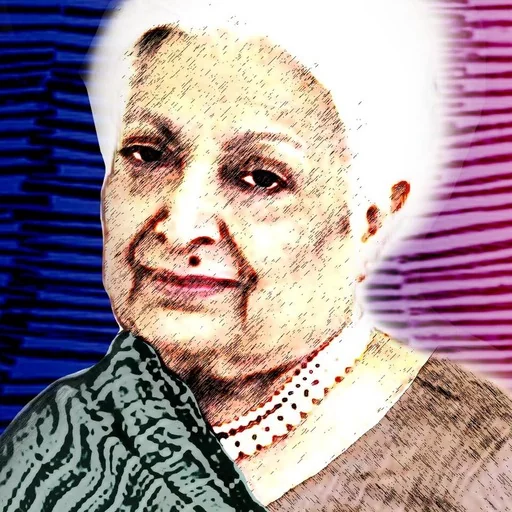
Artist
Zarina is a feminine name derived from the Slavic word “tsar / tzar” (царь), a title used by Slavic monarchs or supreme rulers, plus sometimes the suffix (itsa), the title of a female autocratic ruler (monarch) of…