Artwork
明 張祐 萬古春風圖 軸|Spring Breeze of Myriad Pasts
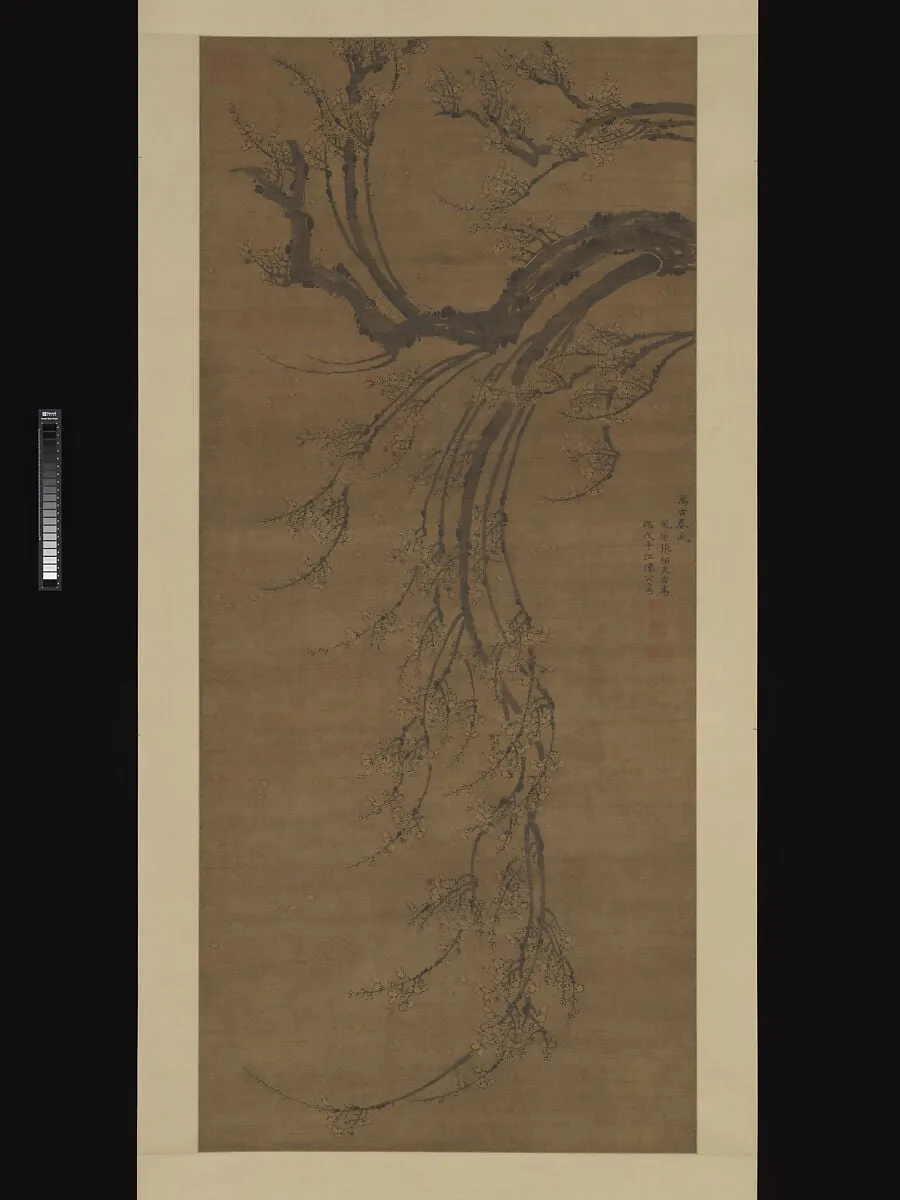
明 張祐 萬古春風圖 軸|Spring Breeze of Myriad Pasts is an ink painting by the Ming dynasty painting artist Zhang You. It dates from 1450 and is held in the collection of the Metropolitan Museum of Art.
About this work
Overview
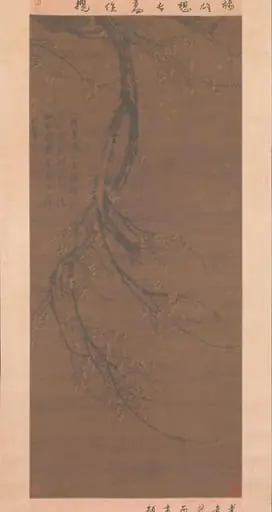
Created around the mid‑15th century, this hanging scroll by the Ming court painter Zhang You presents a solitary pine rendered in ink on silk. The composition occupies a narrow vertical format, with the tree positioned along the right edge and its branches extending outward, suggesting movement within an otherwise empty field.
Subject & Meaning
The lone pine serves as a symbolic focal point, its upward thrust and spreading limbs invoking resilience and continuity across ages. The title’s reference to a “spring breeze of myriad pasts” links the tree’s vitality to the passage of time, while the surrounding void implies the invisible wind that animates the scene.
Technique & Style
Zhang employs delicate brushwork, using light, mist‑like strokes to suggest foliage that remains tactile through subtle, sharper lines for the needles. The extensive negative space is intentional, allowing the silk’s translucence to convey atmosphere and breath, a hallmark of literati ink painting that values suggestion over detail.
History & Provenance
The work dates to circa 1450, during the reign of the Zhengtong Emperor, and is attributed to Zhang You, a noted painter of the Ming court. It has remained in private collections before entering its current museum holdings, where it is displayed as part of the Ming landscape series.
Context
In the Ming period, landscape scrolls often functioned as scholarly objects, reflecting personal cultivation and philosophical contemplation. The emphasis on a single pine aligns with contemporary poetic motifs that associate evergreen trees with steadfastness, while the sparse composition mirrors Daoist ideals of emptiness and natural flow.
Legacy
The scroll exemplifies the restrained elegance of mid‑Ming ink painting and continues to inform studies of brush technique and spatial economy in Chinese art. Its nuanced handling of ink and void remains a reference point for artists exploring the expressive potential of minimalistic composition.
Artist & collection