Artwork
H Beard Print Collection
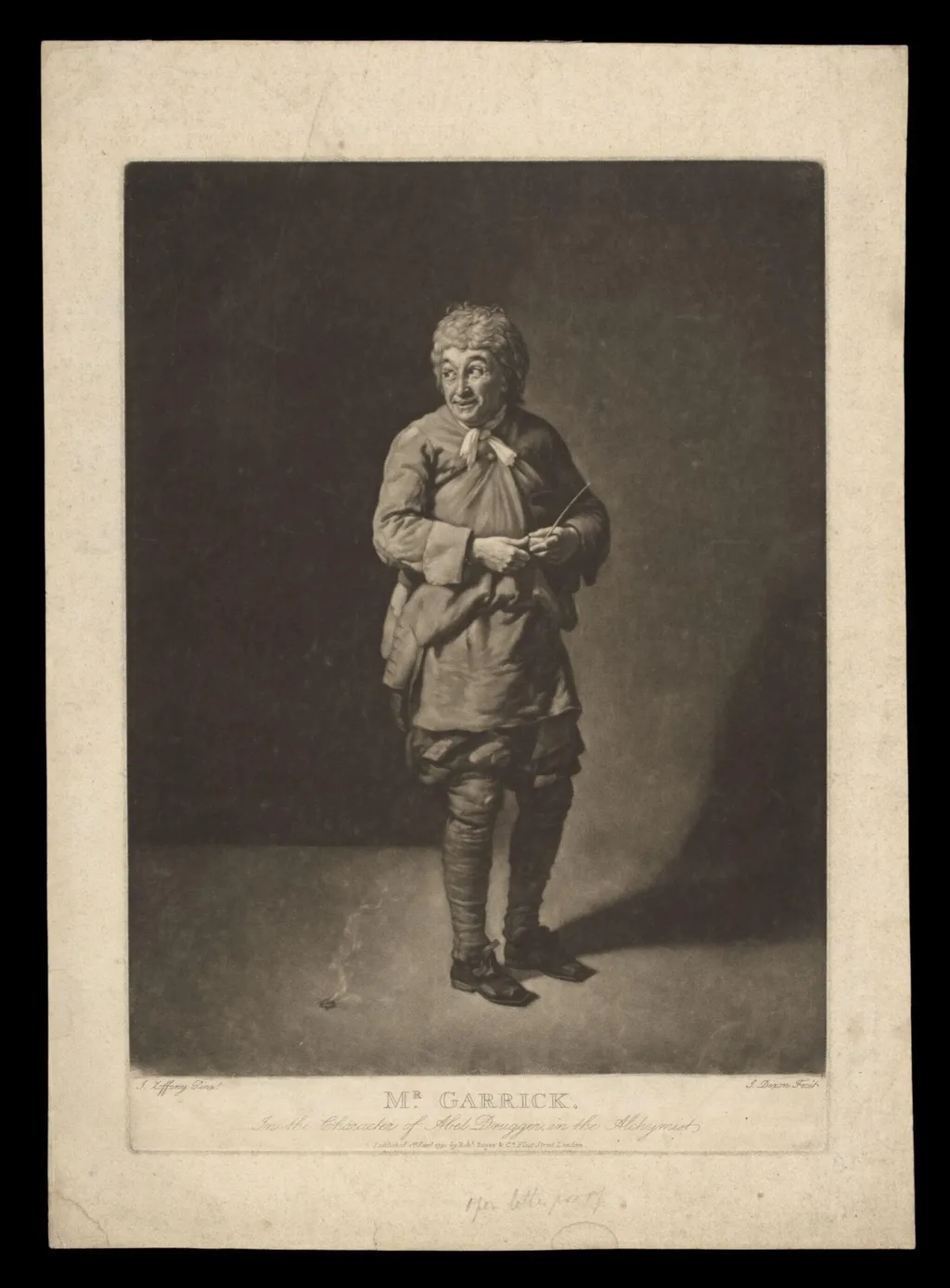
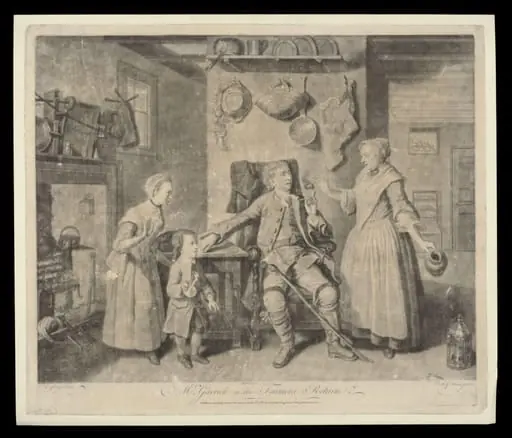
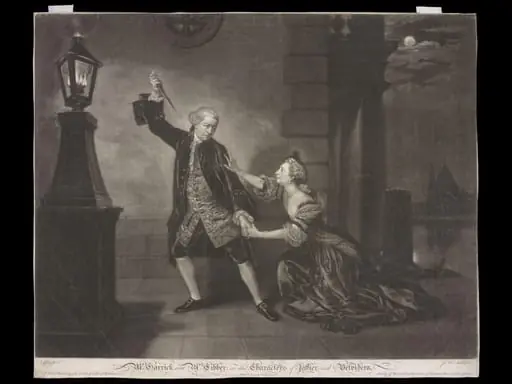
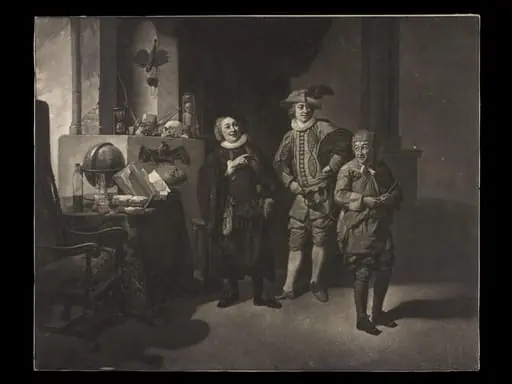
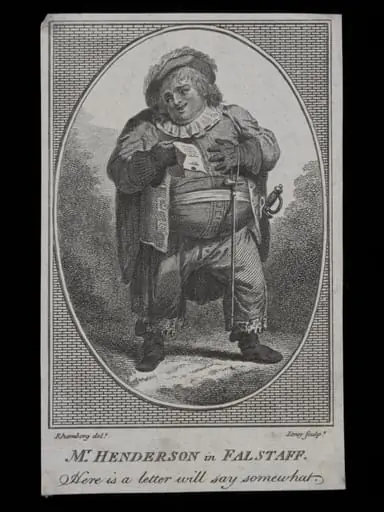
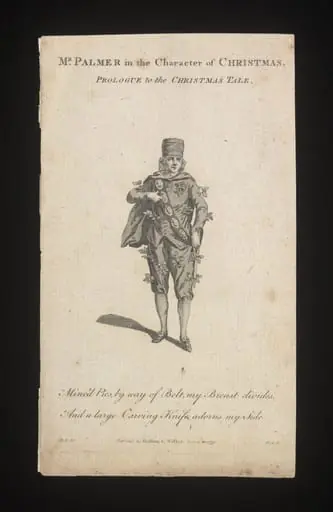
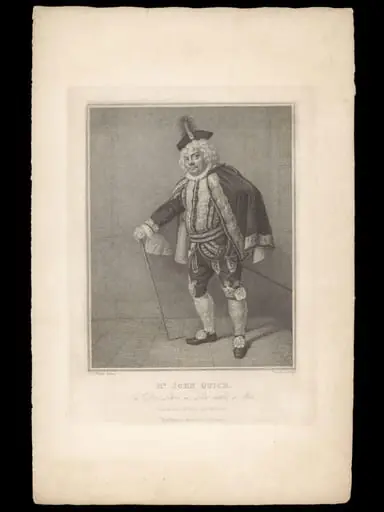
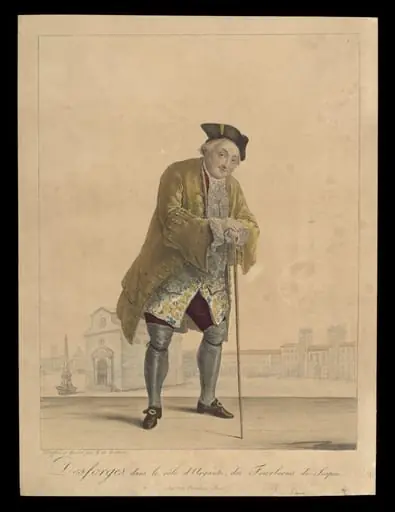
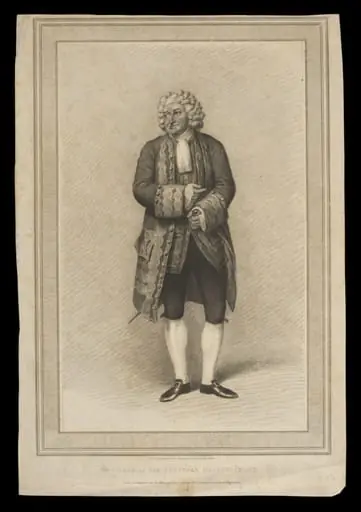
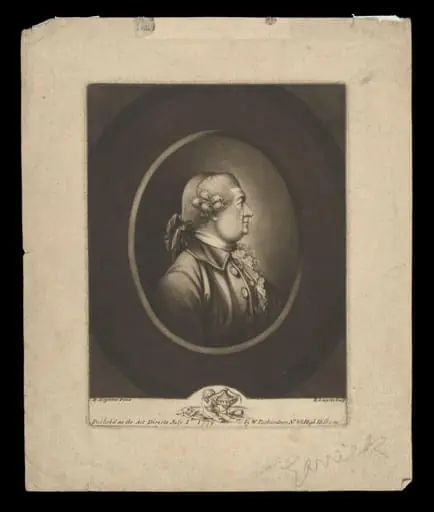
H Beard Print Collection is a print by the Romanticist artist Johan Joseph Zoffany. It dates from 1 and is held in the collection of the Victoria and Albert Museum. A full-length theatrical portrait depicts David Garrick in character as Abel Drugger from Ben Jonson’s comedy The Alchemist.
About this work
This print shows a full-length portrait of David Garrick on stage. He’s playing Abel Drugger in Ben Jonson’s play “The Alchemist.” The work is by Johan Joseph Zoffany, printed in London in 1791.
It’s a Romantic-era print, so expect dramatic flair over exact realism. The portrait captures Garrick in costume, mid-performance, not a posed studio shot.
Check out more prints by Zoffany, Johan Joseph.
Overview
A full-length theatrical portrait depicts David Garrick in character as Abel Drugger from Ben Jonson’s comedy The Alchemist.
A full-length theatrical portrait depicts David Garrick in character as Abel Drugger from Ben Jonson’s comedy The Alchemist. Created by Johan Joseph Zoffany and published in London in 1791 by Robert Sayer, the print captures Garrick mid-performance, emphasizing stage presence over static formality. It belongs to the Romantic era’s trend of dramatizing theatrical life, blending observation with expressive intensity.
Subject & Meaning
Garrick portrays Abel Drugger, a gullible shopkeeper duped by con artists in Jonson’s satire. The print freezes him in a gesture of bewildered earnestness, highlighting the character’s comic vulnerability. Rather than idealizing the actor, the image celebrates his ability to embody flawed, human roles—elevating the actor’s craft as a form of social commentary through performance.
Technique & Style
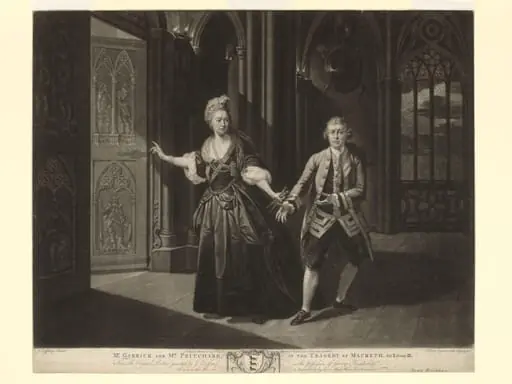
Zoffany rendered the scene with theatrical lighting and exaggerated posture, typical of Romantic-era stage portraiture. Lines are fluid, textures suggested rather than meticulously detailed, and the background remains indistinct to focus attention on Garrick’s costume and expression. The print’s composition prioritizes emotional resonance over topographical accuracy, aligning with contemporary tastes for dramatic immediacy.
History & Provenance
Produced in 1791 by publisher Robert Sayer, the print was part of a series documenting leading actors of the London stage. Zoffany, known for his theater scenes, had previously painted Garrick from life. This engraving circulated widely, preserving Garrick’s legacy after his retirement and reflecting the growing market for celebrity portraiture in late 18th-century Britain.
Context
In the late 1700s, British theater was a central cultural institution, and actors like Garrick were national figures. Prints of performers in character served both as memorabilia and as endorsements of artistic excellence. Zoffany’s work emerged amid rising public interest in the inner life of the stage, bridging the gap between elite drama and popular visual culture.
Legacy
The print remains a key visual record of Garrick’s interpretive style and the aesthetics of 18th-century British theater. Though not an original painting, its reproduction helped disseminate his iconic performances beyond the stage. Zoffany’s approach influenced later theatrical portraiture, cementing the idea that an actor’s essence could be captured in a single, dynamic moment.
Artist & collection
Artist
Dry, finely etched prints of 18th‑century London life fill Zoffany’s work. Look for the crisp outlines and cross‑hatched shadows in prints dated 1766, 1772, and 1776—these scenes capture tailors’ shops, book stalls in…