Artwork
Kylpeviä tyttöjä ulkosalla (Ulkona)
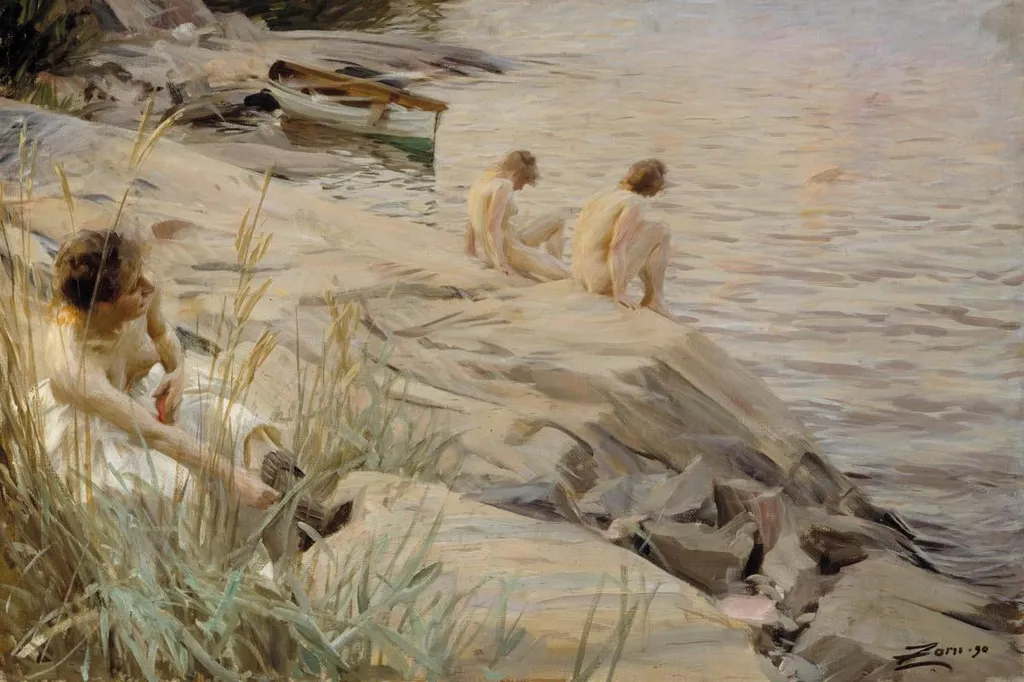
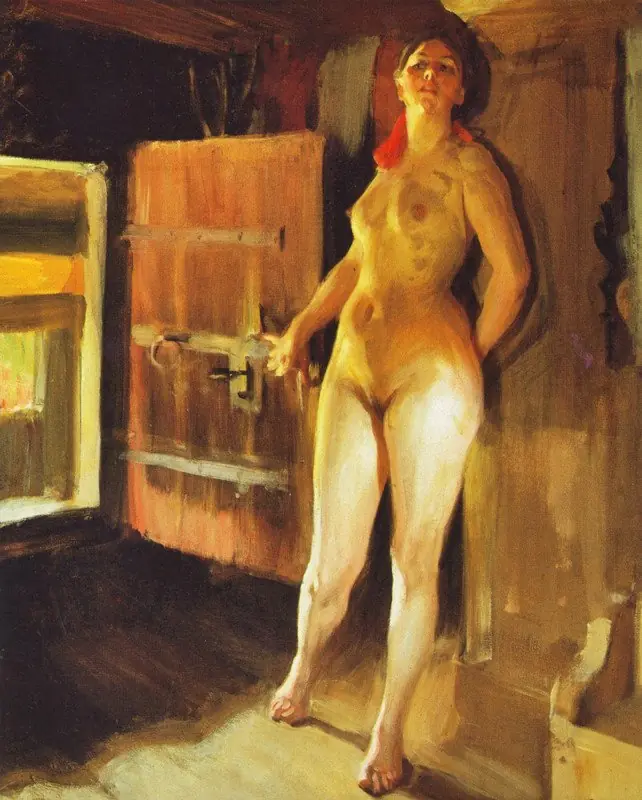
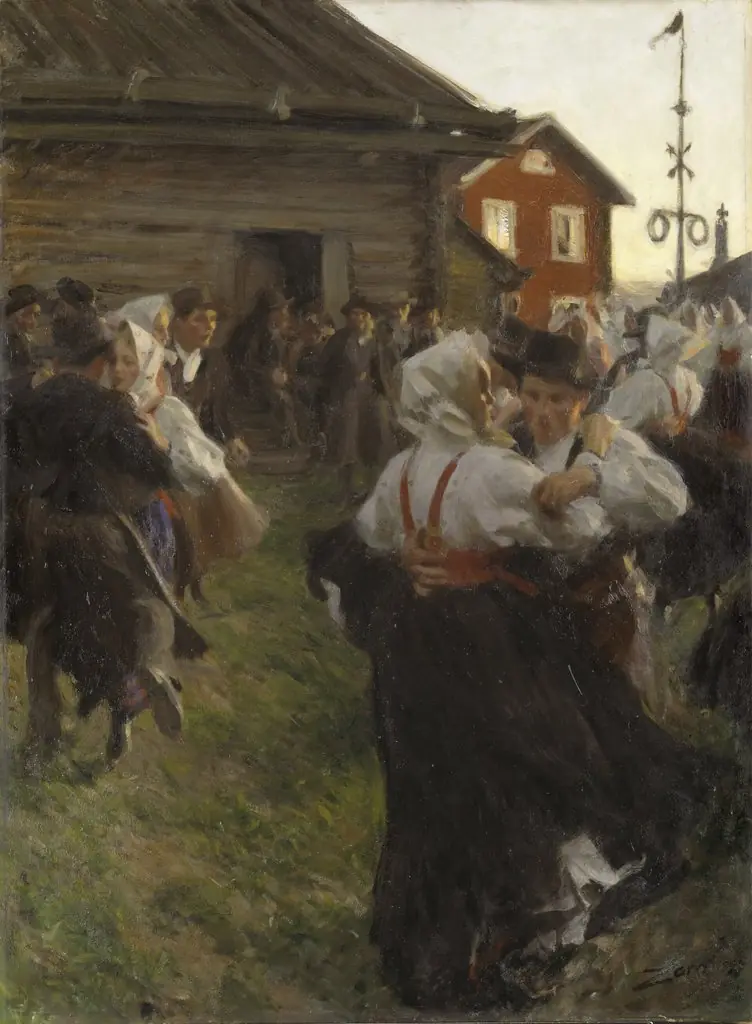
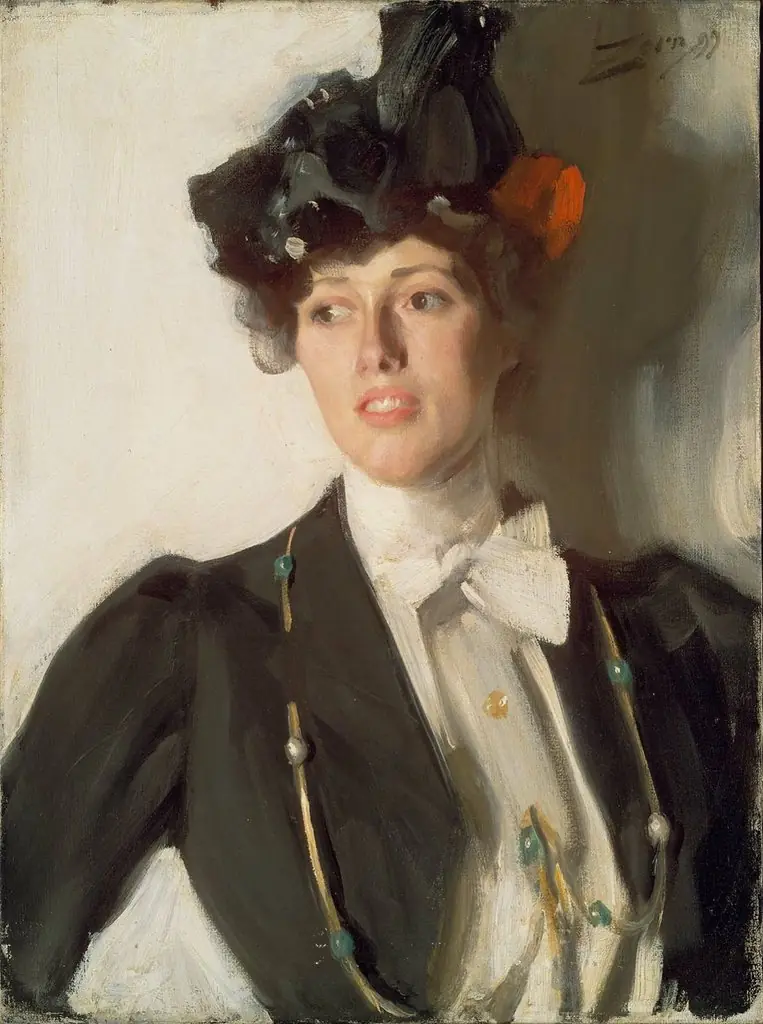
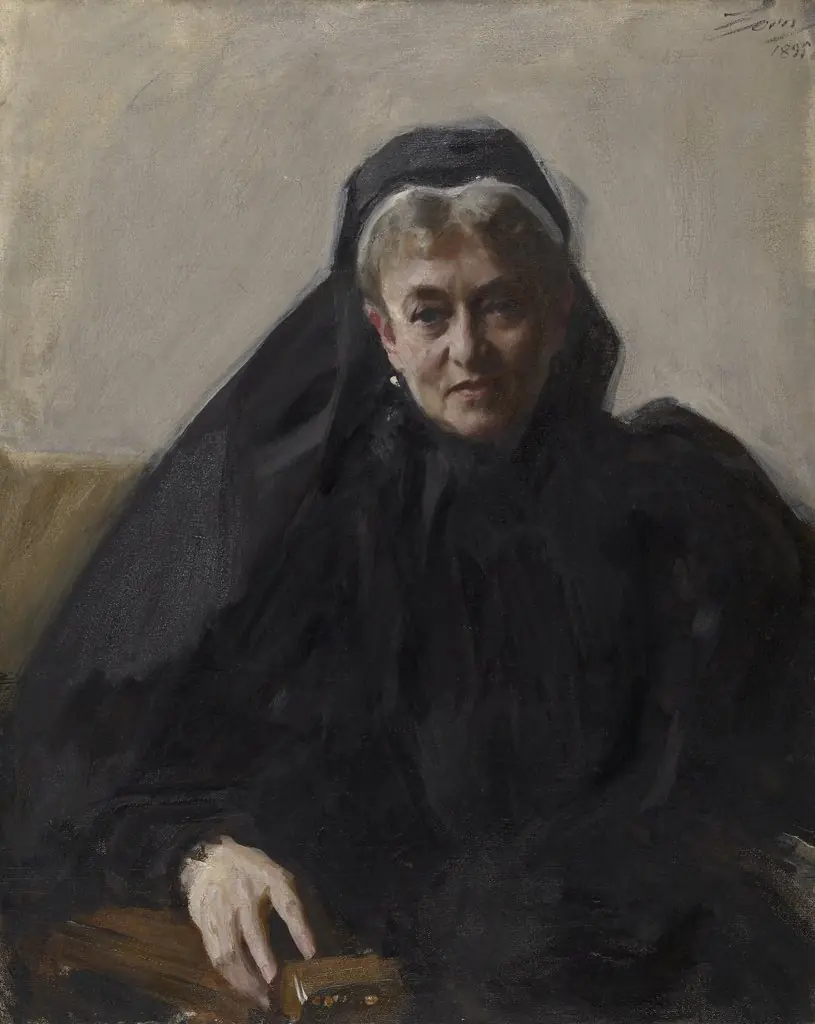
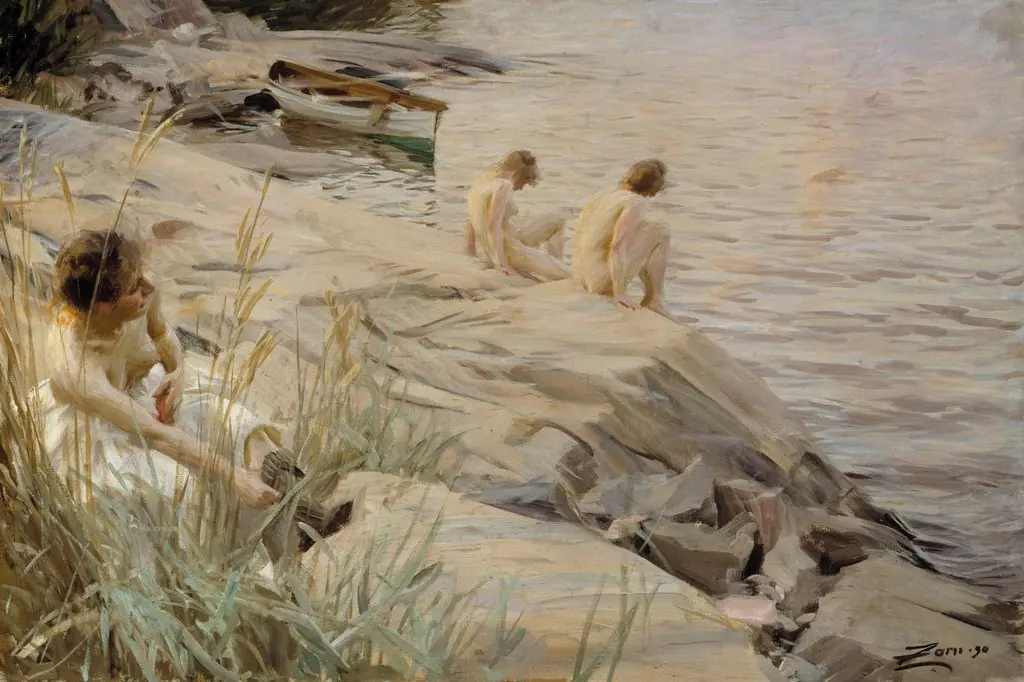
Kylpeviä tyttöjä ulkosalla (Ulkona) is an unspecified painting by the Realist artist Anders Zorn. It dates from 1900 and is held in the collection of the Finnish National Gallery.
About this work
Overview
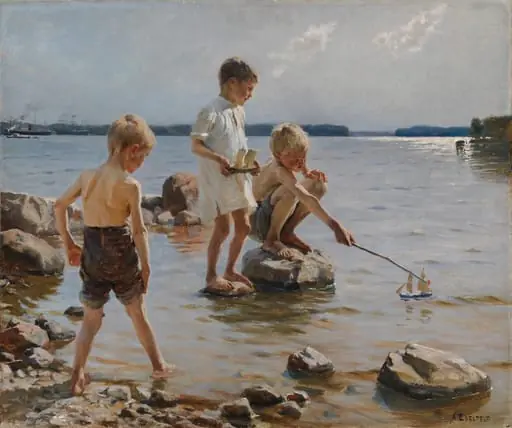
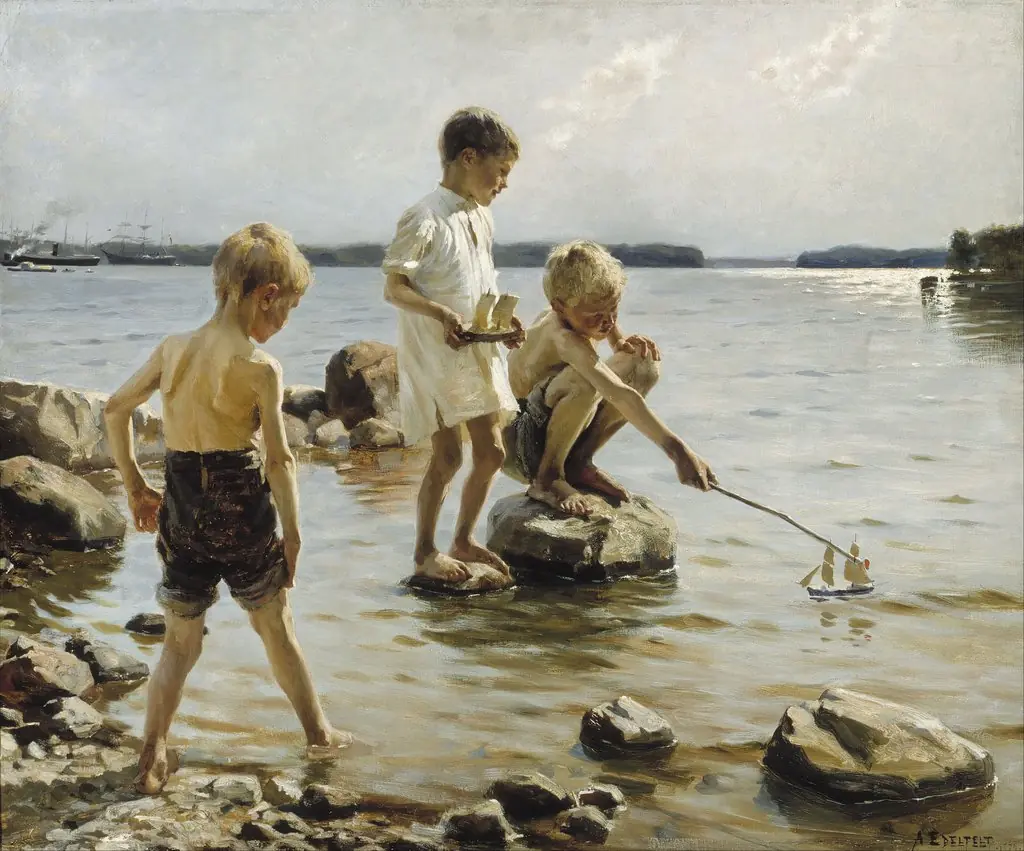
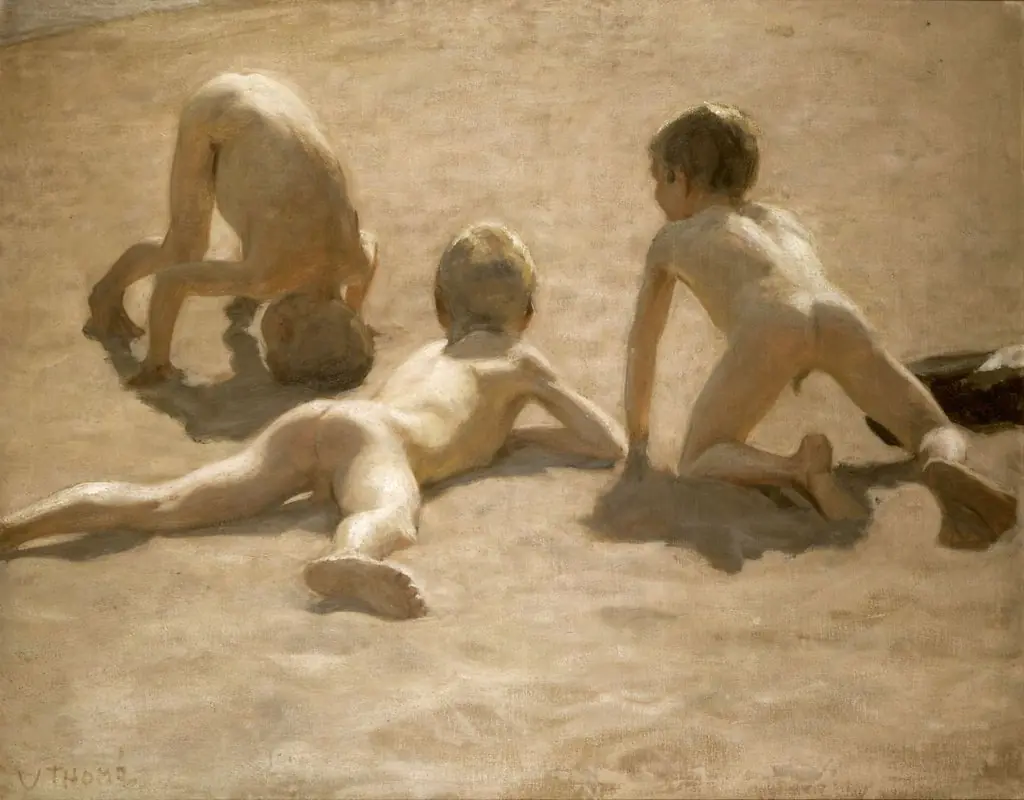
Painted around 1900 by Anders Zorn, this work depicts three nude girls seated on a rocky shoreline, their backs turned to the viewer.
Painted around 1900 by Anders Zorn, this work depicts three nude girls seated on a rocky shoreline, their backs turned to the viewer. The scene unfolds in a secluded natural setting, with calm water reflecting the sky and tall grasses framing the figures. Rendered in a restrained palette of greens, browns, and grays, the painting balances realism with a loose, tactile brushwork that suggests movement and atmosphere without overt drama.
Subject & Meaning
The figures are engaged in a quiet, unselfconscious moment—likely bathing or resting after a swim. Their nudity is presented without eroticism, instead emphasizing innocence and harmony with nature. The composition avoids narrative clarity, focusing instead on stillness and solitude. The absence of faces and the distance from the viewer reinforce a sense of privacy, inviting contemplation rather than interpretation.
Technique & Style
Zorn employed a direct, alla prima approach with visible, energetic brushstrokes that capture texture in grass, rock, and water. The muted tones are achieved through subtle variations in earth pigments, avoiding bright contrasts. Light is rendered not through sharp highlights but through soft transitions, enhancing the hazy, atmospheric quality. The technique reflects his mastery of tonal harmony and his interest in capturing transient natural effects.
History & Provenance
Created during Zorn’s mature period, the painting emerged from his frequent returns to his native Sweden, where he sought inspiration in rural life and landscapes. It was likely painted at his family’s summer residence near Mora. The work remained in private collections for decades before entering a public museum, where it is now preserved as part of Sweden’s national artistic heritage.
Context
In early 20th-century Scandinavia, depictions of the nude in natural settings were increasingly accepted as expressions of health and simplicity, aligned with broader cultural ideals of Nordic identity. Zorn’s approach diverged from academic traditions by rejecting idealized forms in favor of observed reality. This painting reflects a shift toward intimate, unadorned portrayals of everyday moments, resonating with contemporary interest in nature and authenticity.
Legacy
Though not widely exhibited internationally, the work remains a key example of Zorn’s ability to merge realism with poetic restraint. It influenced later Swedish artists who sought to depict rural life with emotional sincerity. Its quiet composition and emphasis on natural light continue to be studied for their understated technical precision and emotional resonance within Nordic art traditions.
Artist & collection

Artist
Anders Leonard Zorn was born in February 1860 in Mora, Dalarna, the illegitimate son of a Bavarian brewer and a Swedish farmer's daughter; his mother died shortly after his birth, and his grandparents raised him.