Museum
Finnish Heritage Agency
Finnish Heritage Agency is a museum.
About Finnish Heritage Agency
Overview & Identity
The Finnish Heritage Agency (Finnish: Museovirasto, Swedish: Museiverket) is a government authority and cultural research institution under the Ministry of Education and Culture in Finland. Previously known in English as the National Board of Antiquities until 2018, the agency is responsible for preserving Finland's material cultural heritage. Its mandate includes collecting, studying, and distributing knowledge regarding the nation's heritage. The agency operates as both a cultural institution and a regulatory body, charged with the protection of archaeological sites, built heritage, and culturally valuable environments in collaboration with other officials and museums.
History & Founding
The roots of the agency date back to 1666, when Sweden-Finland issued directives protecting prehistoric sites and antiquarian monuments. The first specific Finnish administration began with the formation of the Finnish Antiquarian Society in 1870, which influenced the 1883 Decree on the Protection of Ancient Monuments. This decree led to the founding of the Archaeological Bureau in 1884, later renamed the State Archaeological Commission. The agency was reorganized in 1972 to become the National Board of Antiquities. In 2018, its English name was changed to the Finnish Heritage Agency to better reflect its scope. As of January 1, 2026, the Governing Body of Suomenlinna was incorporated into the agency as part of a Ministry of Education and Culture administrative reform.
Building & Architecture
The agency's headquarters are located at Sturenkatu 2a in Helsinki. The building is an excellent example of educational architecture from its era, originally constructed for the Helsinki Home Economics Teacher's College. After the college ceased operations in 2003, the building was briefly occupied by the Academy of Fine Arts. A major renovation and expansion, designed by the architectural firm Arkkitehdit NRT, was completed in 2013 to adapt the facility for the agency's needs. This renovation included the construction of new archive spaces underground. The agency's facilities are situated on the fifth floor of the building.
Collection Highlights & Notable Holdings
The Finnish Heritage Agency maintains extensive archives that serve as a central repository for cultural heritage documentation in Finland. These archives house over 18 million photographs and approximately 500,000 artifacts, alongside various documents and excavation records. The agency also manages the Architectural History Collection, which contains significant media files related to Finnish architectural history. In addition to physical artifacts, the agency holds a specialized scientific library and offers a wide range of services through its professional staff of specialists. The collections are accessible to the general public for research and educational purposes.
Location & Access
The agency's main administrative offices are located at Sturenkatu 2a in Helsinki, with a postal address of P.O. Box 913, 00101 Helsinki. The Collections and Conservation Centre is located at Kanervikkotie 4, 01380 Vantaa. The service point at the headquarters is open by appointment only. Visitors to the Sturenkatu 2a location must fill out a guest pass at the information desk to access the facilities on the fifth floor. The agency provides contact information and arrival instructions for those wishing to consult its archives or collections.
What to see at Finnish Heritage Agency
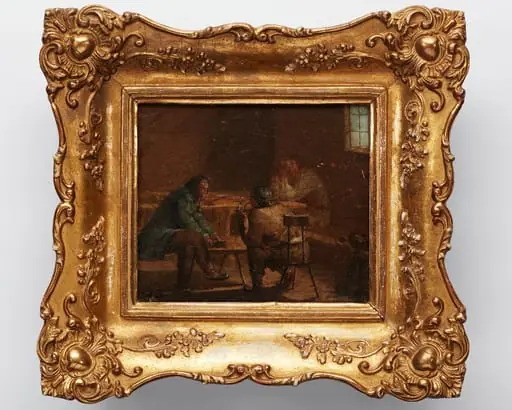
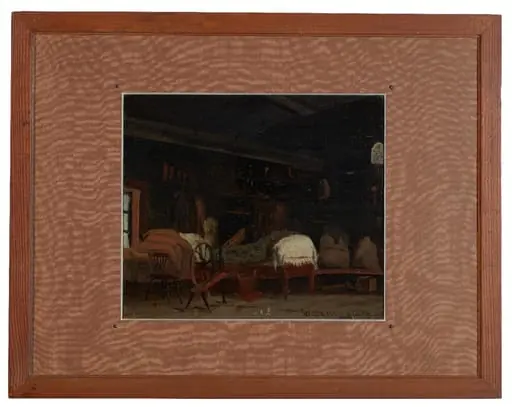
Start with taulu by 1850.

What's on
- The telephone kiosk, 1961
- Handball, 1958
- Miss Summer Hanko, 1957
- The mobile library, 1956
- The Lärkkulla Christian College, 1950
- A vocational school student, 1955
- The vehicle factory, 1962
- The brick factory, 1952
- The Crematorium, 1964
- In the Bank, 1963
- The fire engine, 1958
- The railway is being refurbished, 1959