Artwork
Tupainteriööri
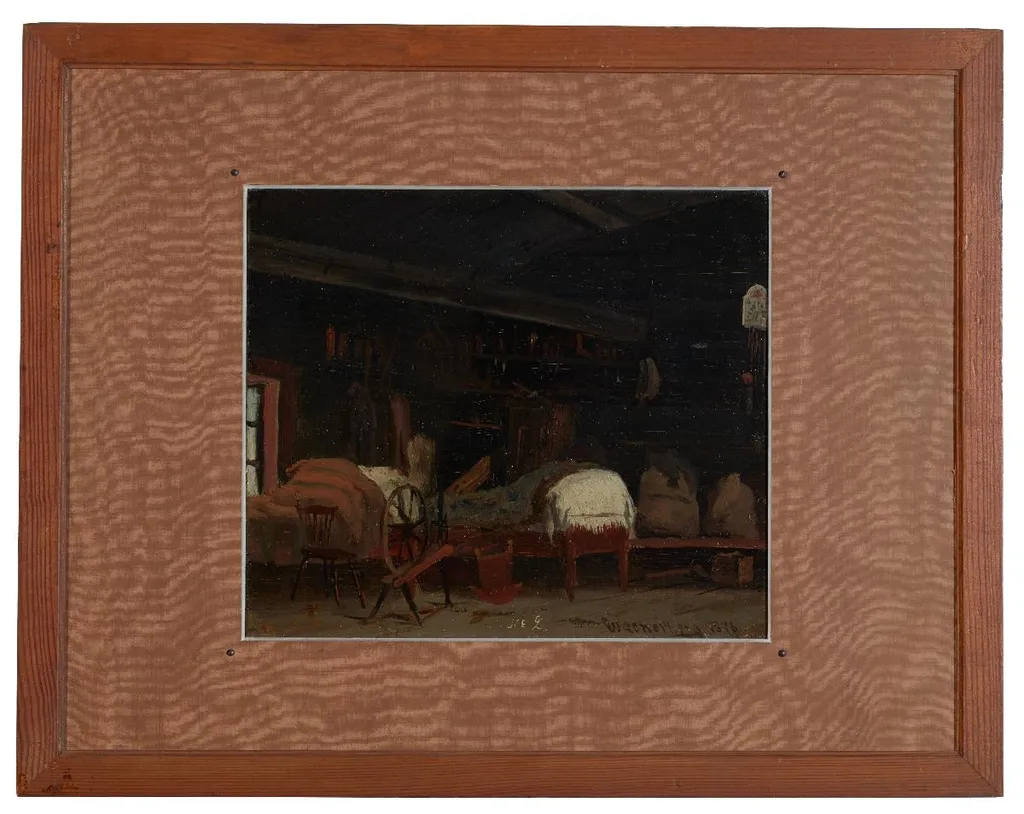
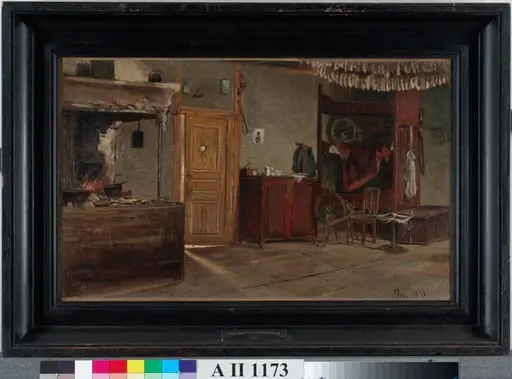
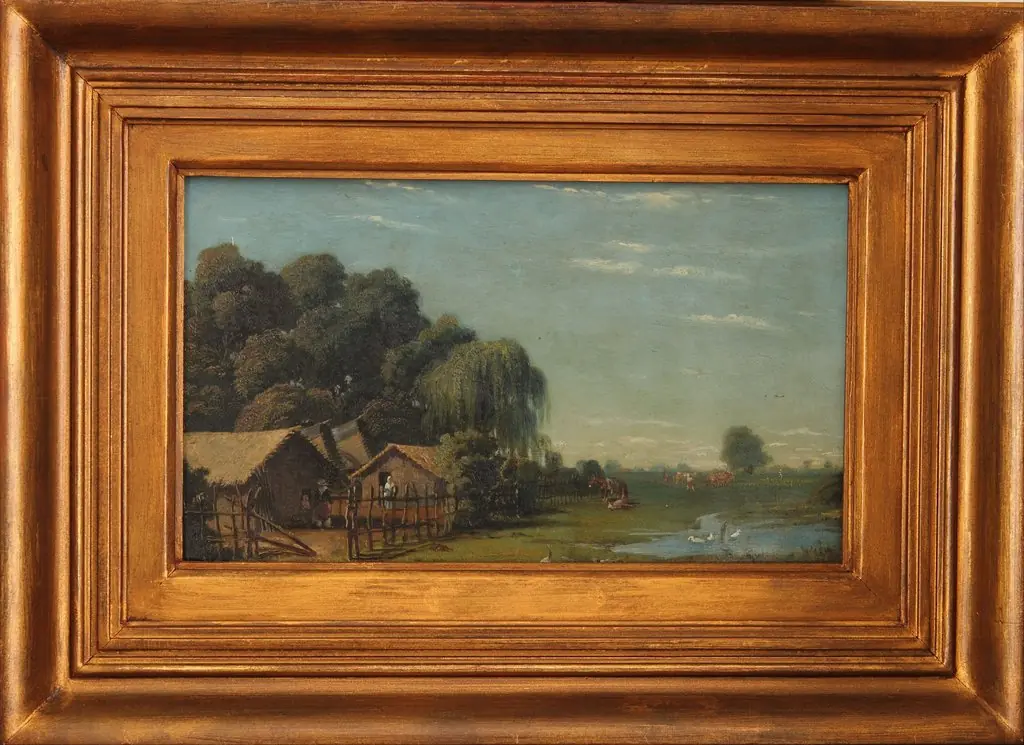
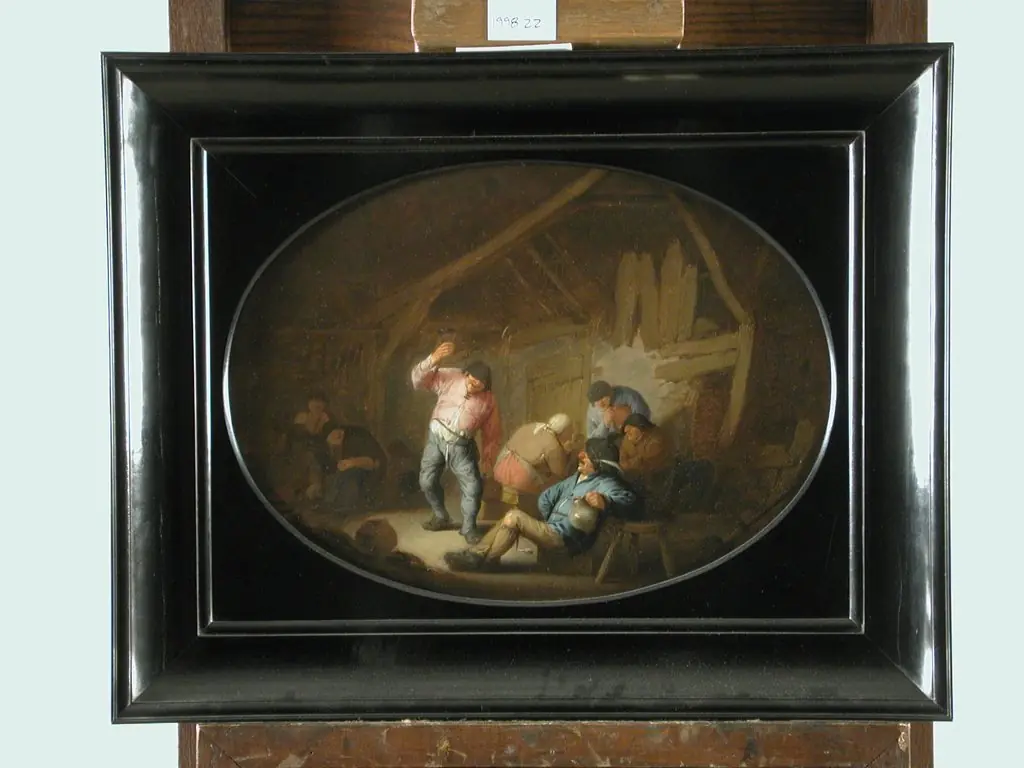
Tupainteriööri is an unspecified painting by Thorsten Waenerberg. It is held in the collection of the Finnish Heritage Agency. This interior scene depicts a modest rural outbuilding, likely a barn or storage shed, rendered in muted tones and restrained detail.
About this work
Overview
This interior scene depicts a modest rural outbuilding, likely a barn or storage shed, rendered in muted tones and restrained detail.
This interior scene depicts a modest rural outbuilding, likely a barn or storage shed, rendered in muted tones and restrained detail. The composition emphasizes quiet stillness through the arrangement of utilitarian objects—wooden wagons, a spinning wheel, and chairs—arranged haphazardly under weak natural light. The atmosphere is one of quiet endurance, shaped by the artist’s deliberate use of shadow and subdued color to convey the weight of daily labor and the passage of time.
Subject & Meaning
The painting presents no human figures, yet the presence of tools and domestic items suggests a life lived in routine. The wagons, spinning wheel, and chairs imply agricultural and textile work, hinting at the rhythms of rural existence. The dimness and clutter evoke a space not staged for display but used, worn, and forgotten between tasks. The absence of people amplifies a sense of quiet abandonment or pause, inviting reflection on the quiet dignity of ordinary things.
Technique & Style
The artist employs chiaroscuro to define form through stark contrasts between shadow and faint illumination. Light enters weakly through a small window, carving out the edges of wooden surfaces and hay bales while leaving corners in deep gloom. Brushwork is restrained, favoring texture over detail—rough walls, grainy dirt floors, and weathered wood are suggested rather than meticulously rendered. This approach prioritizes mood over narrative, grounding the scene in physical reality.
History & Provenance
The painting’s origins are undocumented in public records, and its early ownership remains unclear. It appears to stem from a regional tradition of rural realism, common in late 19th- to early 20th-century Nordic or Eastern European art. No exhibition history or collector lineage is publicly verified, suggesting it may have remained in private hands or local collections, its significance recognized only within limited circles.
Context
Created during a period when industrialization was transforming rural life, the painting reflects a fading way of life. Similar works from the era often turned away from urban progress to document the quiet persistence of agrarian routines. This piece aligns with a broader artistic interest in the dignity of labor and the aesthetic of decay, capturing spaces that were becoming obsolete even as they were being painted.
Legacy
Though not widely exhibited or reproduced, the painting contributes to a quiet lineage of interior realism that values atmosphere over drama. Its influence is subtle, echoed in later works that favor stillness and texture over narrative spectacle. It endures not as a celebrated artifact but as a quiet testament to the visual poetry found in the overlooked corners of everyday life.
Artist & collection
Artist
Thorsten Waenerberg made small paintings of everyday Finnish life in the late 1800s.