Artwork
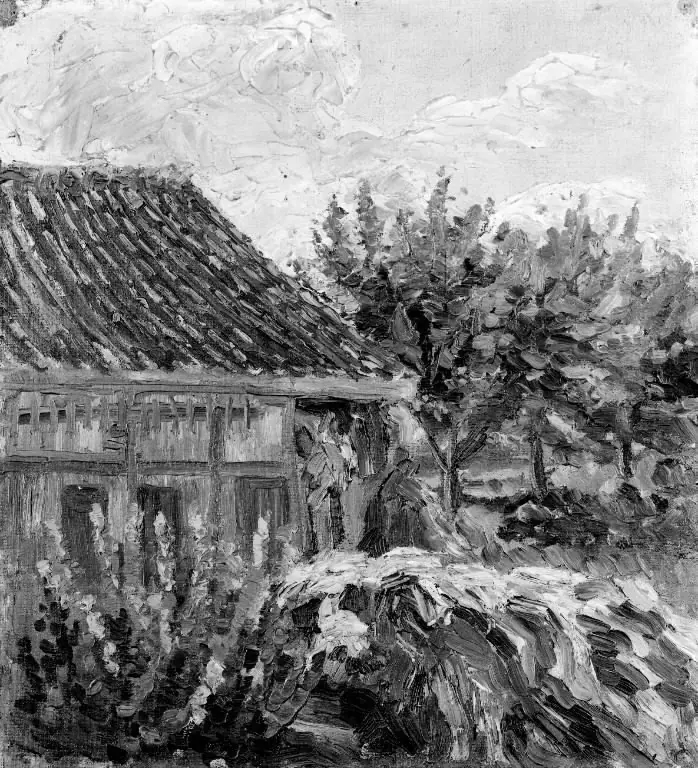
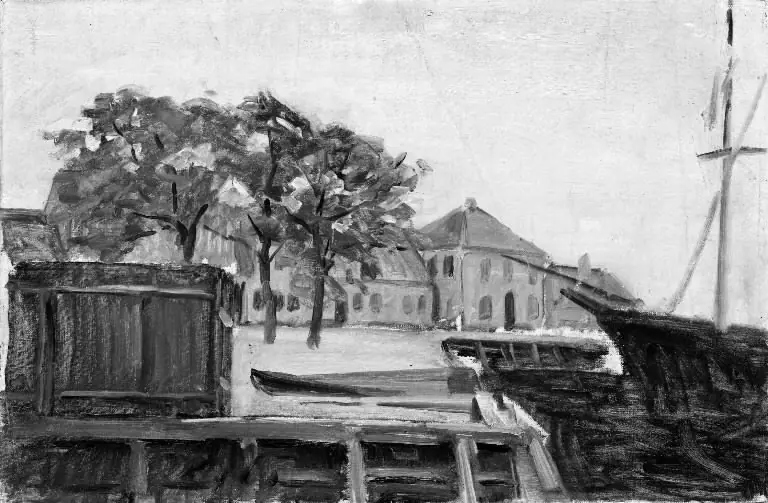
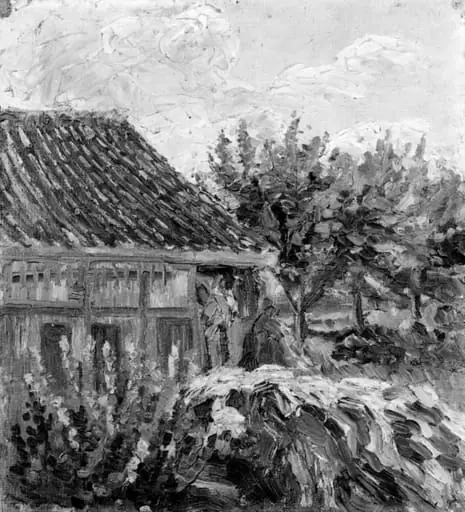
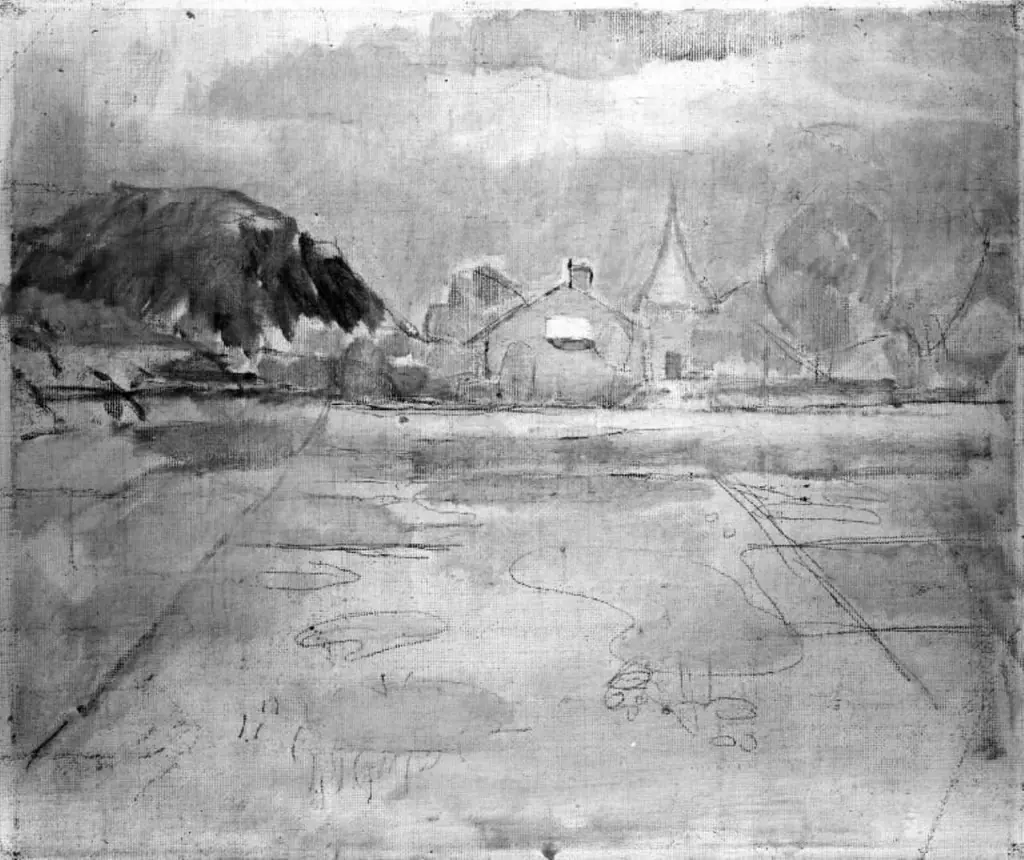
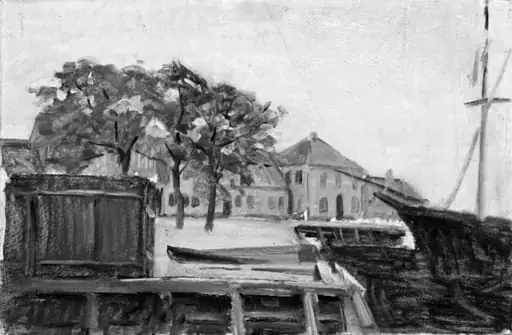
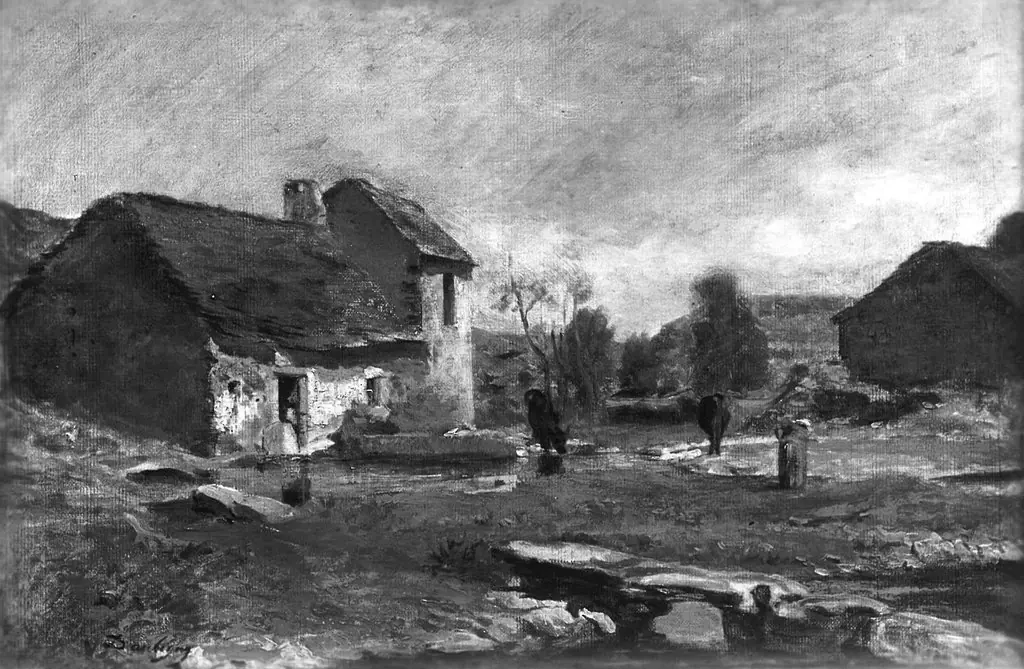
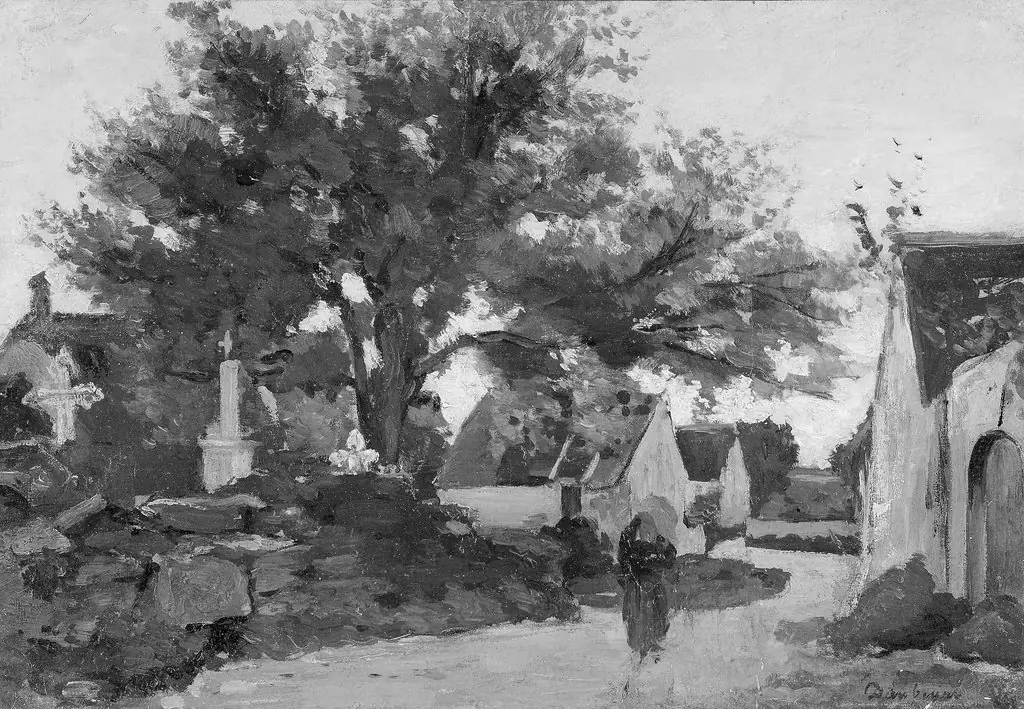
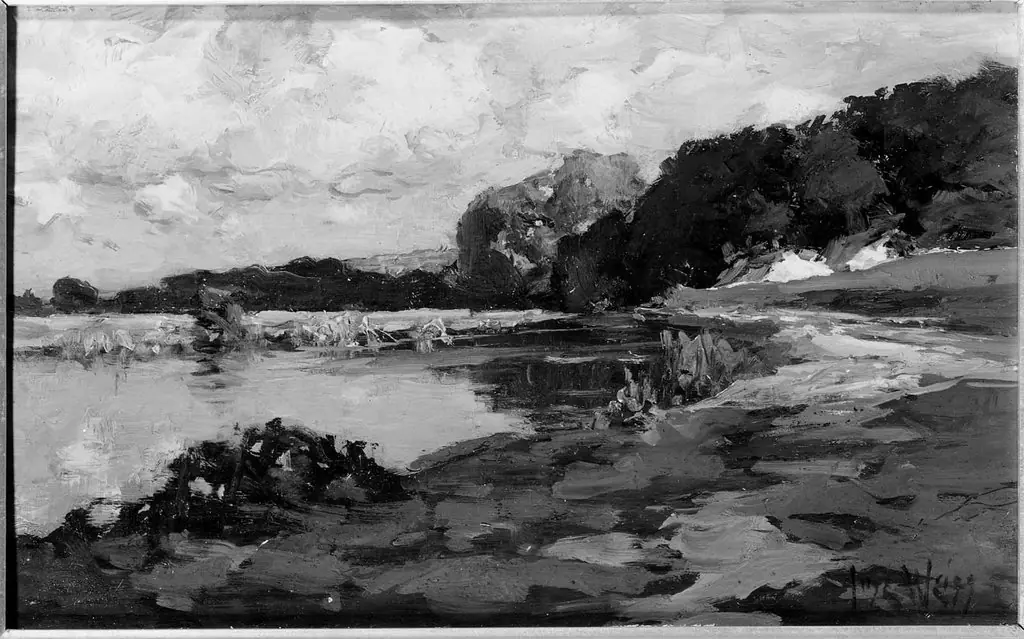
A Farm in Lyngby, Zealand
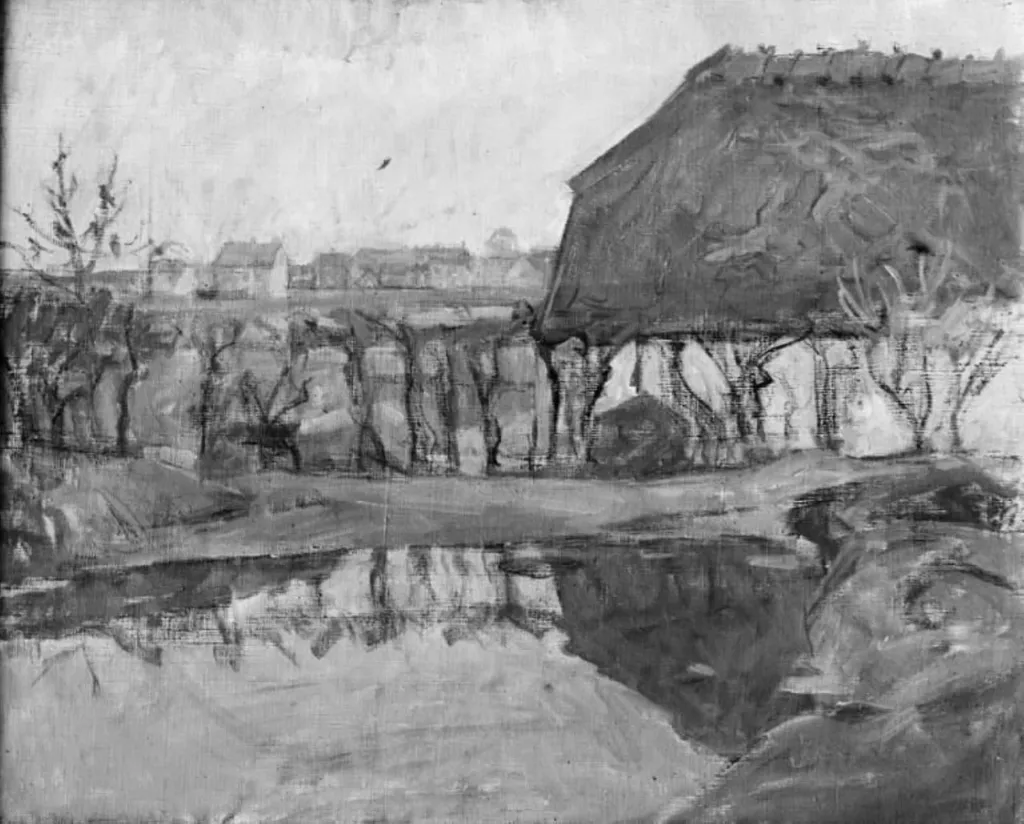
A Farm in Lyngby, Zealand is a photography by Unknown. It dates from 1906 and is held in the collection of the Statens Museum for Kunst.
About this work
Overview
The photograph’s grainy texture and soft focus suggest the limitations of early 20th-century equipment and a spontaneous approach to documentation.
A Farm in Lyngby, Zealand is a black-and-white photograph taken around 1906, capturing a rural scene in Denmark. The image is part of the collection at the Museum of Ethnography. Its composition is unadorned, presenting a modest farmhouse, scattered trees, a distant hill, and a reflective body of water. The photograph’s grainy texture and soft focus suggest the limitations of early 20th-century equipment and a spontaneous approach to documentation.
Subject & Meaning
The photograph depicts a quiet agricultural homestead in Lyngby, reflecting everyday rural life in early 1900s Zealand. There is no human presence, emphasizing solitude and the quiet endurance of the land. The scene carries no overt symbolism, instead offering a straightforward record of place and time, valued for its authenticity rather than narrative drama.
Technique & Style
Rendered in monochrome, the image relies on natural lighting and subtle tonal contrasts to define form. The uneven ground and blurred edges suggest handheld shooting and possibly long exposure. The camera’s limited resolution and the film’s sensitivity produce a soft, textured surface, characteristic of early photographic processes. Shadows fall organically, reinforcing the scene’s unposed character.
History & Provenance
The photograph was likely taken by a local or visiting photographer documenting regional landscapes around 1906. It entered the Museum of Ethnography’s collection as part of a broader effort to preserve visual records of Danish rural life. Its provenance remains undocumented beyond its acquisition by the museum, with no known exhibition history prior to its inclusion in the archive.
Context
In the early 20th century, photography was increasingly used to record vernacular architecture and agricultural practices across Europe. This image aligns with a wave of documentary efforts aimed at preserving vanishing rural traditions. Unlike staged compositions, it reflects a casual, observational mode typical of amateur or ethnographic photographers of the era.
Legacy
The photograph endures as a quiet artifact of Danish rural history, valued for its unembellished realism. It contributes to scholarly understanding of early photographic practices and regional land use. While not widely exhibited, it remains a reference point for researchers studying the intersection of photography and ethnography in Scandinavia.
Artist & collection

 Domestic Scene
 Giacomo and Cardinal Marco, investing Andrea, Abbot of San Zeno, with his Benefice
 The Nymph of Fontainebleau
 Portrait of a Woman
 Madonna and Child with Saints in the Enclosed Garden
 Venus and Minerva
 Family Group of Four on Sofa
 Wall painting from Room H of the Villa of P. Fannius Synistor at Boscoreale