Artwork
I dagvognen. Kunstnerens broderbørn
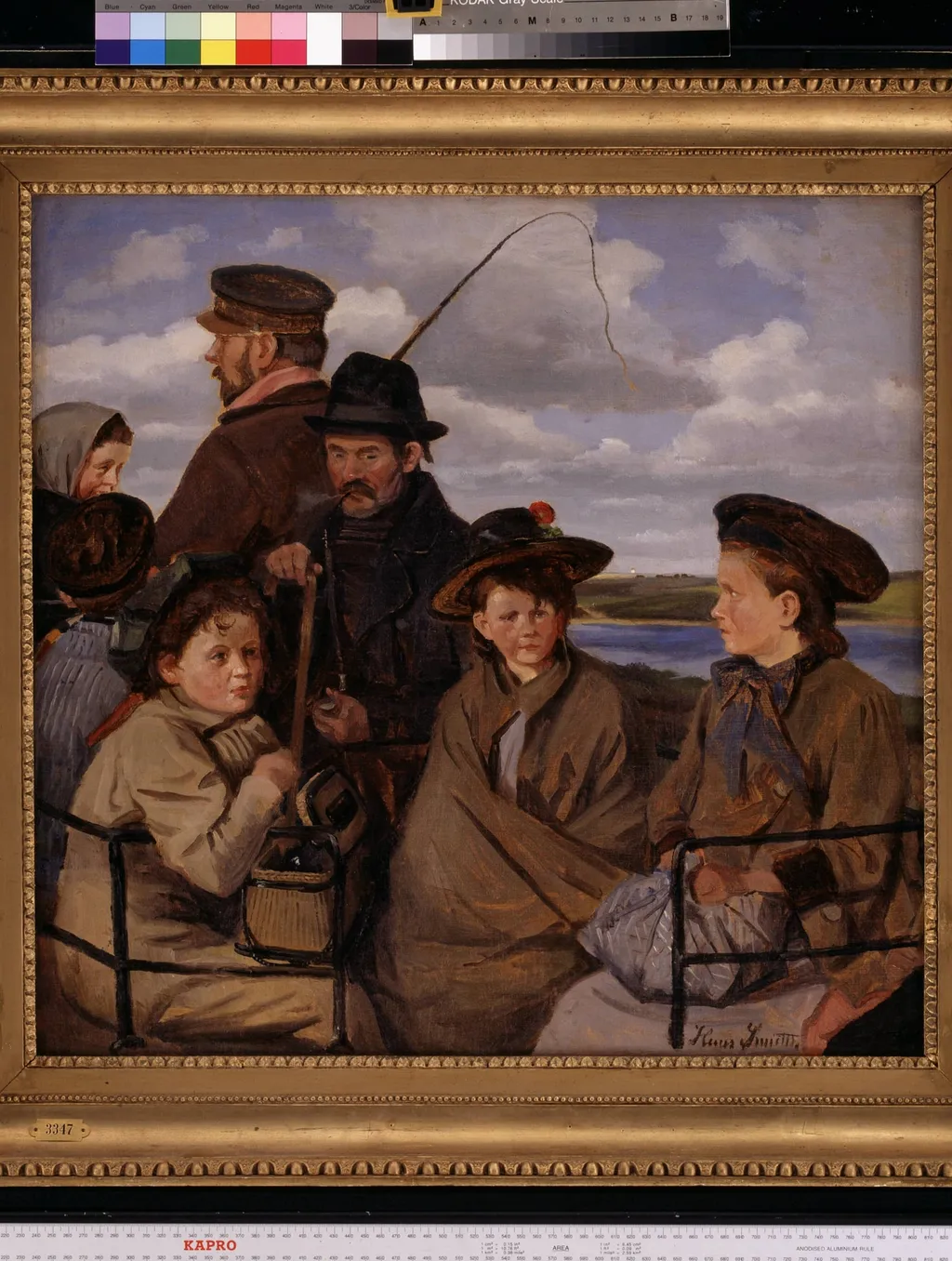
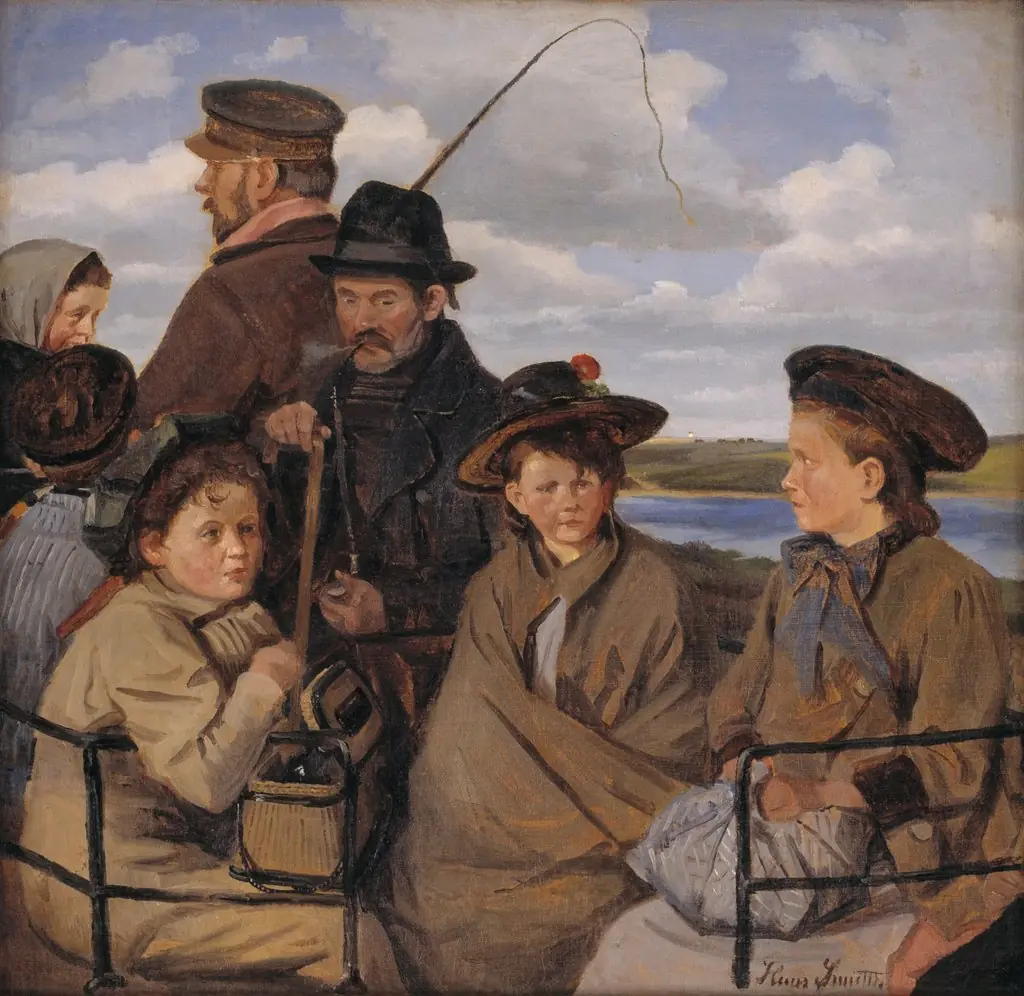
I dagvognen. Kunstnerens broderbørn is a photography by Unknown. It dates from 1900 and is held in the collection of the Statens Museum for Kunst. Created around 1900, this photograph captures a quiet moment inside a horse-drawn wagon.
About this work
Overview
Created around 1900, this photograph captures a quiet moment inside a horse-drawn wagon. The image is part of the Museum of Ethnography’s collection and reflects the everyday life of rural Scandinavia at the turn of the century. The artist, whose name is faintly signed in the lower right, documented family members during a journey, preserving a transient scene with unembellished realism.
Subject & Meaning
Five individuals, identified as the artist’s nieces and nephews, sit inside the wagon, their postures conveying weariness and stillness.
Five individuals, identified as the artist’s nieces and nephews, sit inside the wagon, their postures conveying weariness and stillness. Dressed in layered woolens and head coverings typical of early 20th-century rural dress, they face the camera without expression, suggesting a moment suspended between travel and rest. The image avoids sentimentality, instead offering a candid record of familial life under modest conditions.
Technique & Style
The photograph is rendered in a soft, warm tonality, with subtle fading that enhances its archival quality. Natural light filters through the open sky, casting gentle shadows across the wagon’s wooden interior. The composition is unposed, with figures arranged informally, and the background—distant water and clouds—blurs slightly, directing focus to the subjects’ quiet presence.
History & Provenance
The work entered the Museum of Ethnography’s holdings in the early 20th century, likely through the artist’s family or local cultural collectors. Its preservation reflects an early interest in documenting domestic and regional life beyond formal portraiture. The photograph’s condition—muted tones, minor surface wear—aligns with typical aging of photographic prints from this era.
Context
In early 1900s Scandinavia, horse-drawn wagons remained common for rural transport, especially in areas with limited infrastructure. This image aligns with a broader movement among photographers to record ordinary life before industrialization transformed it. The artist’s choice to depict relatives rather than strangers suggests a personal, intimate approach to ethnographic documentation.
Legacy
Though not widely exhibited, the photograph contributes to a quiet archive of Nordic domestic life. Its value lies in its unadorned depiction of familial bonds and material conditions, offering insight into how ordinary people lived during a period of transition. It remains a reference point for studies of early photographic ethnography in Northern Europe.
Artist & collection

 Domestic Scene
 Giacomo and Cardinal Marco, investing Andrea, Abbot of San Zeno, with his Benefice
 The Nymph of Fontainebleau
 Portrait of a Woman
 Madonna and Child with Saints in the Enclosed Garden
 Venus and Minerva
 Family Group of Four on Sofa
 Wall painting from Room H of the Villa of P. Fannius Synistor at Boscoreale