Artwork
The chalk sellers-In the morning
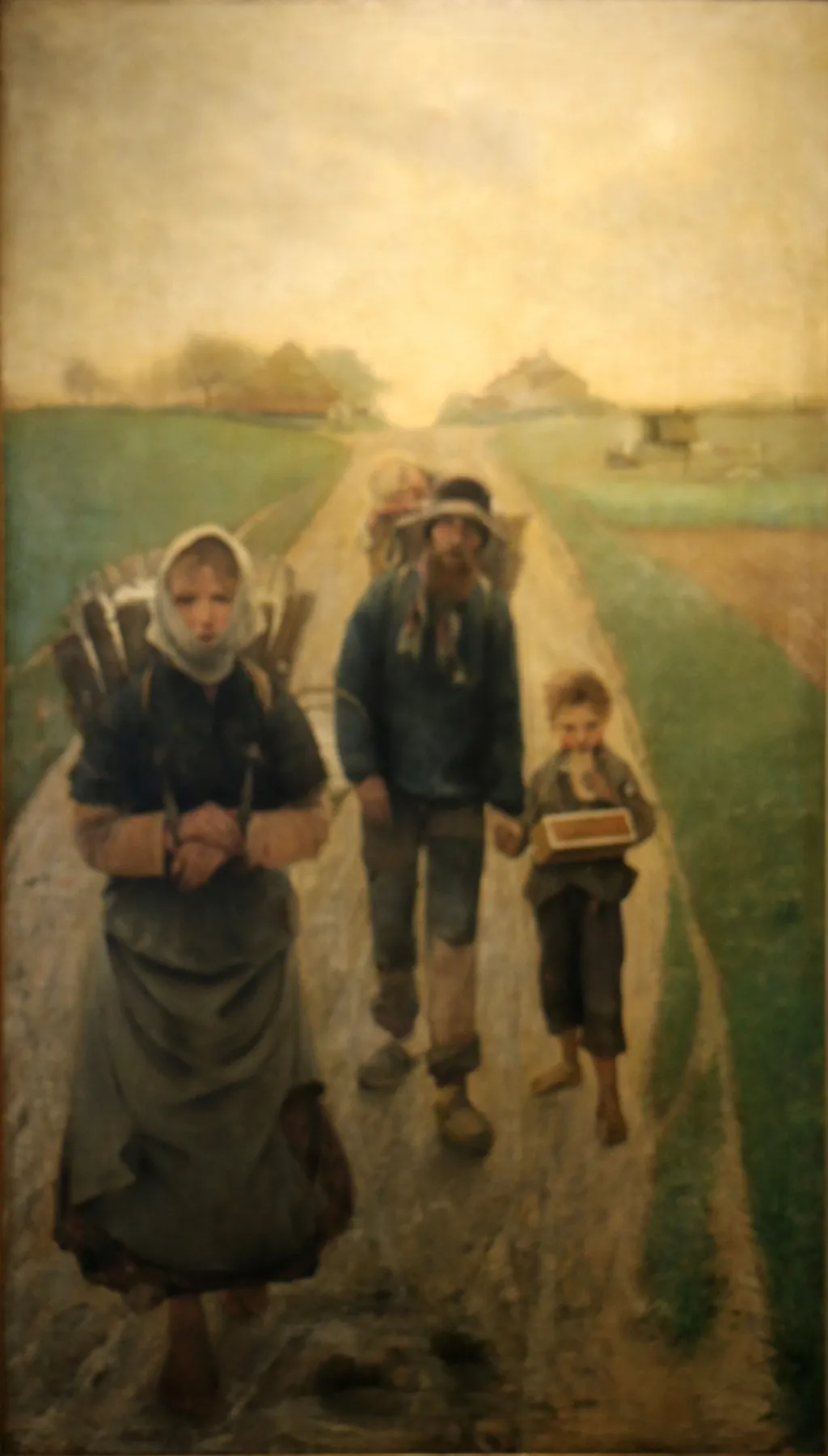
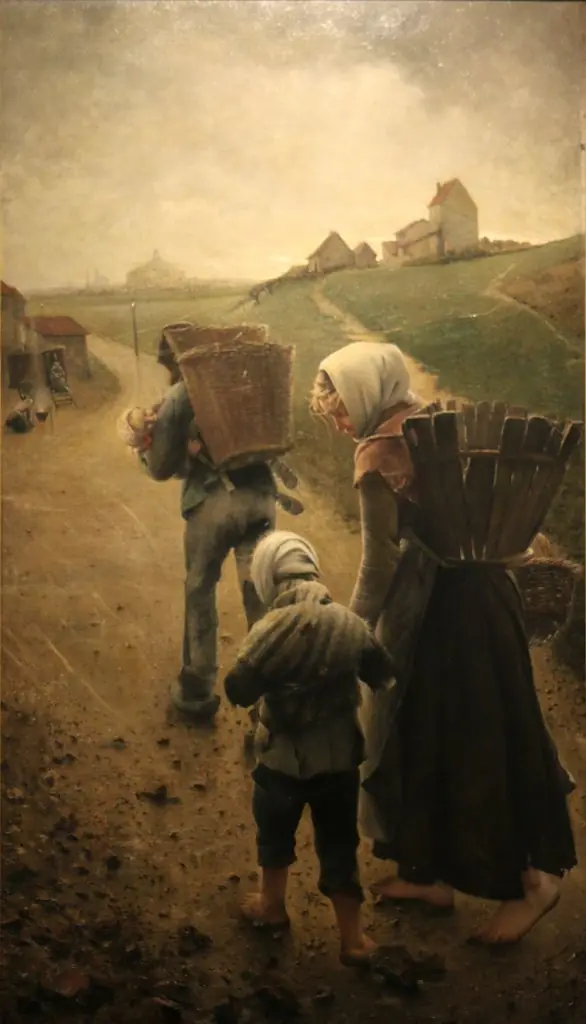
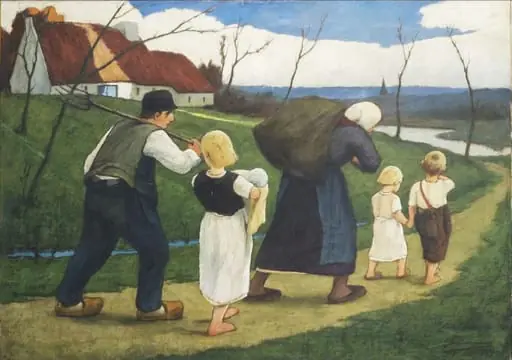
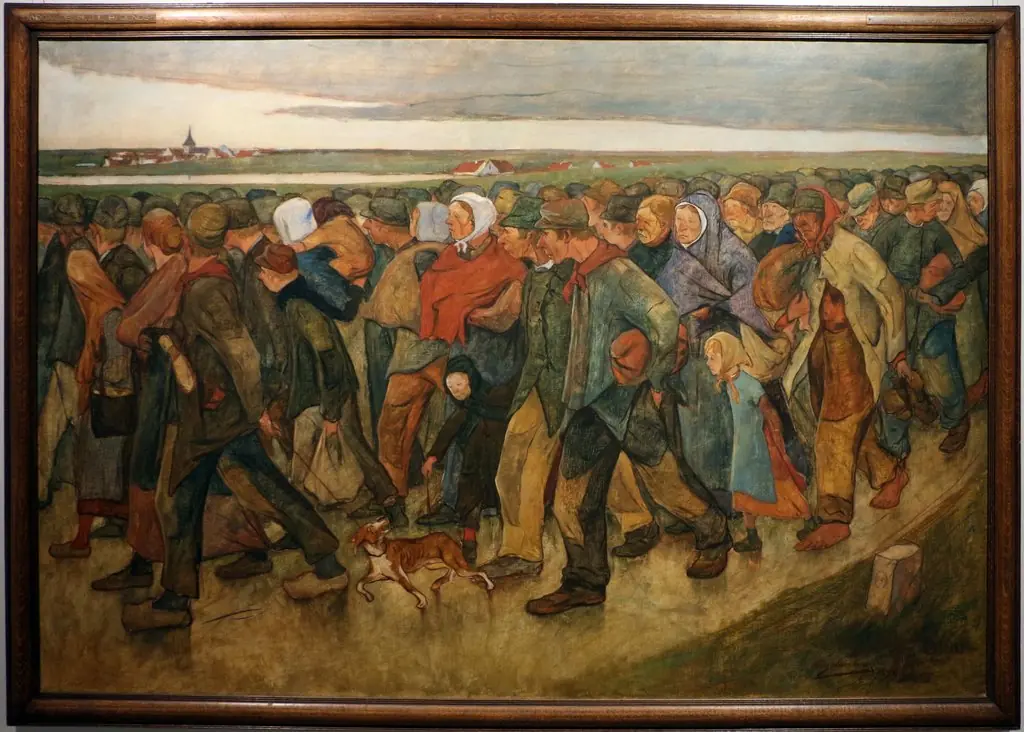
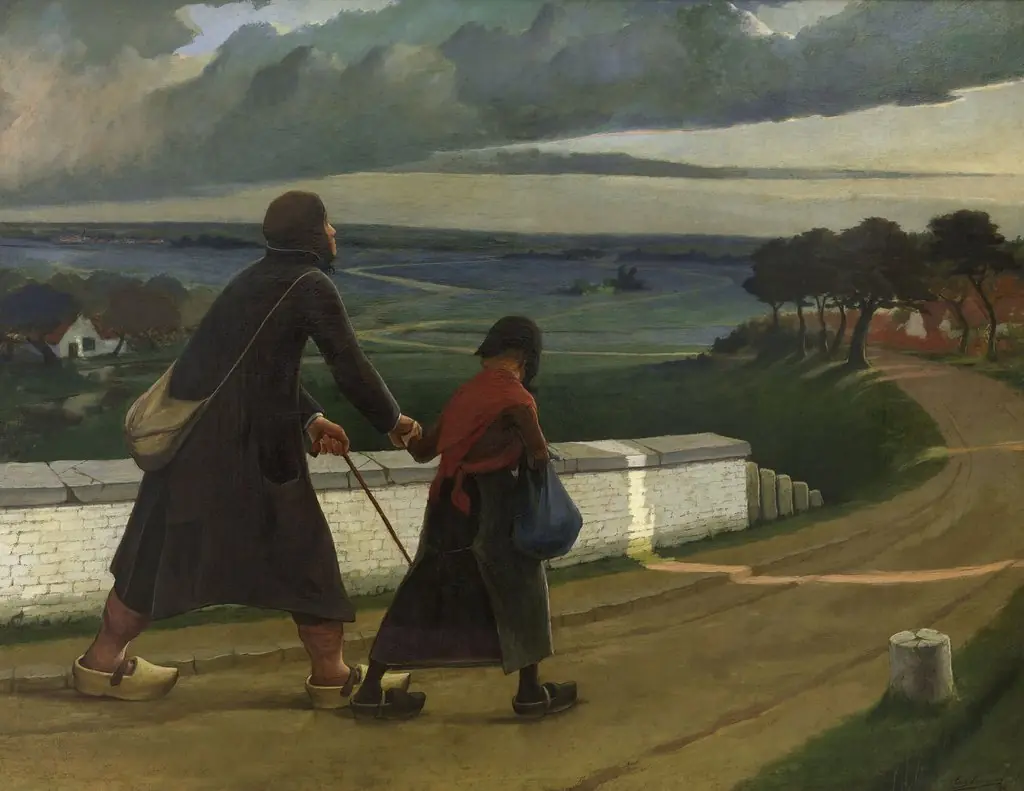
The chalk sellers-In the morning is an oil painting by the Impressionist artist Léon Frédéric. It dates from 1892 and is held in the collection of the Royal Museums of Fine Arts of Belgium.
About this work
Overview
The scene reflects Frédéric’s interest in the dignity of ordinary life, framed within a broader Symbolist sensibility that favors mood over narrative clarity.
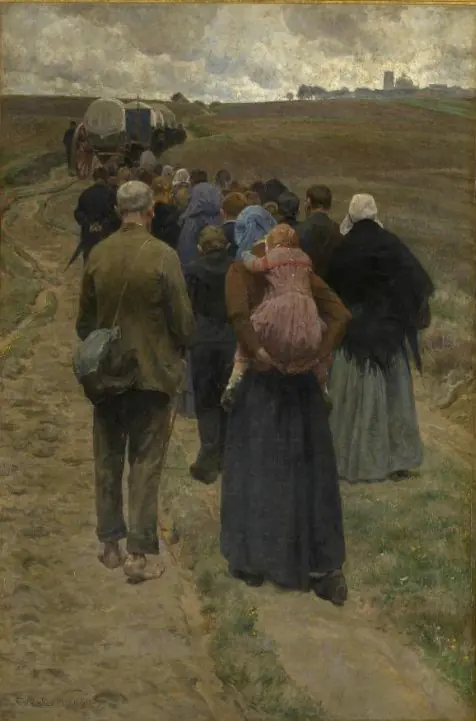
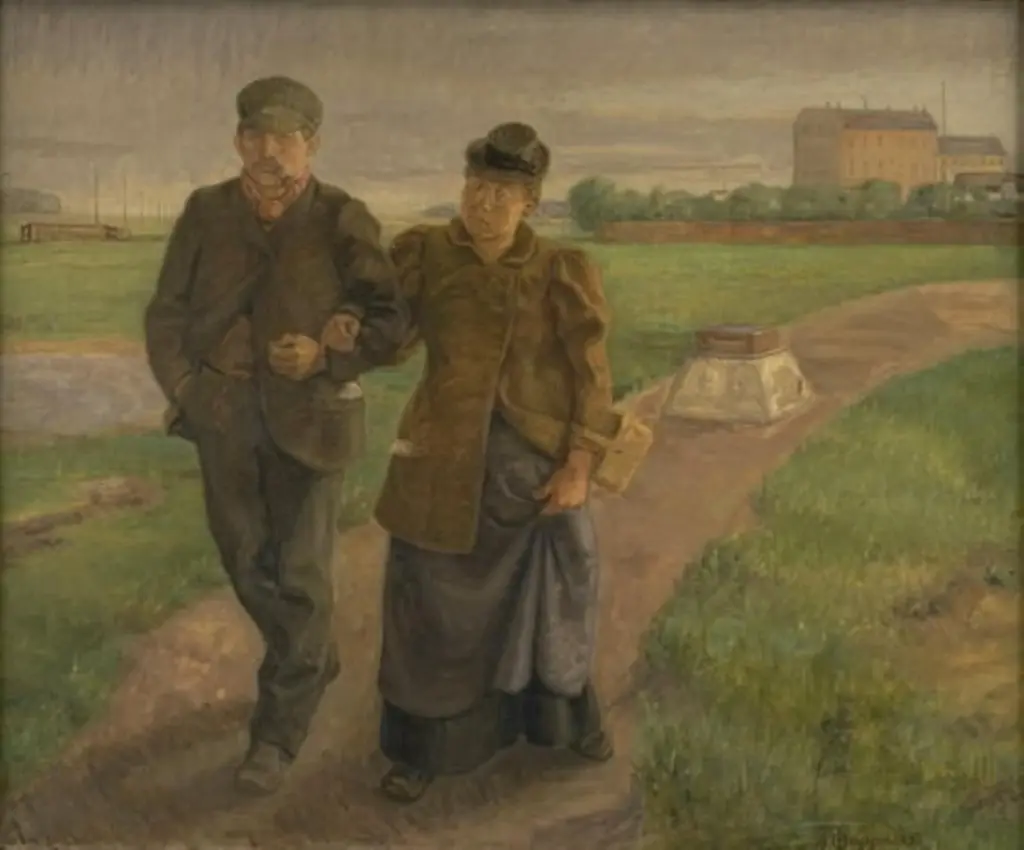
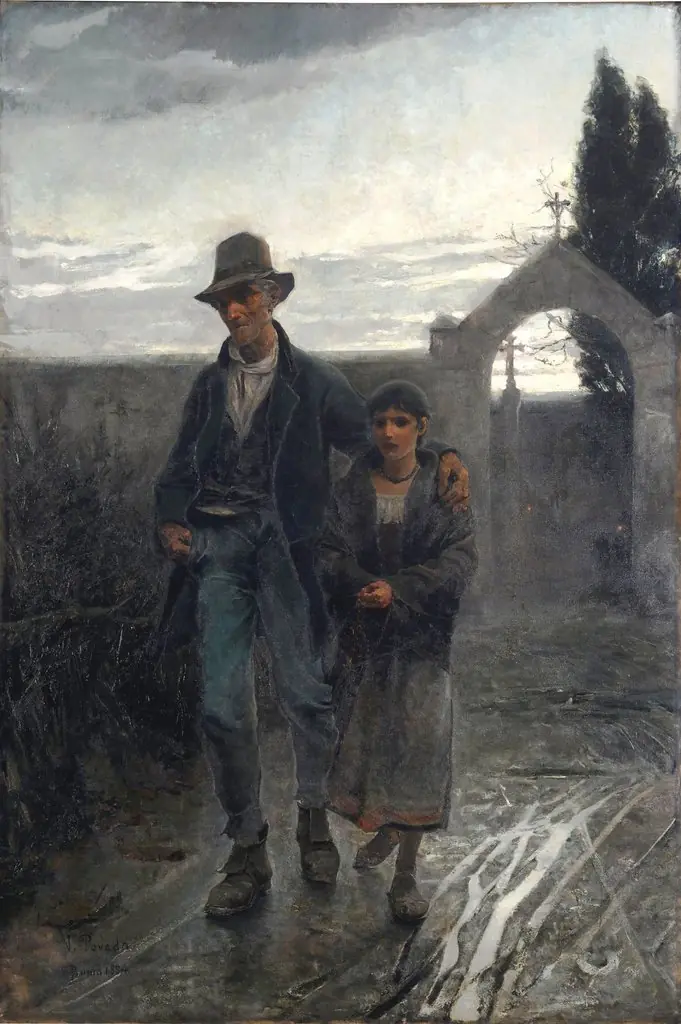
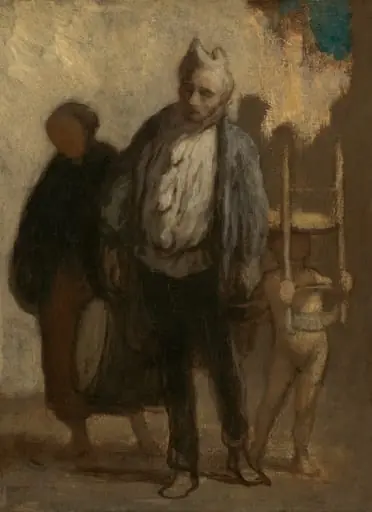
Painted in 1892 by Belgian artist Léon Frédéric, this oil-on-canvas work portrays a rural family moving along a quiet country path at dawn. Though rooted in genre painting, the composition transcends mere documentation, infusing everyday labor with quiet solemnity. The scene reflects Frédéric’s interest in the dignity of ordinary life, framed within a broader Symbolist sensibility that favors mood over narrative clarity.
Subject & Meaning
The figures—a woman, a man, and a child—appear engaged in the quiet routine of selling chalk, likely to schoolchildren. The child’s small book suggests education as a quiet aspiration, while the woman’s obscured face and burdened posture evoke endurance. The group moves as one, their unity implying shared hardship and resilience. The absence of overt drama invites contemplation rather than pity, aligning with Symbolist ideals of inner life over external spectacle.
Technique & Style
Frédéric employs soft, diffused lighting to model forms, blending Impressionist brushwork with the tonal restraint of Flemish tradition. The figures emerge from a muted landscape through subtle chiaroscuro, their clothing catching the morning light while the path and sky recede in hazy greys and greens. Facial features are deliberately blurred, especially the woman’s, emphasizing psychological distance and introspection over individual identity.
History & Provenance
Created in 1892, the painting entered the collection of the Royal Museums of Fine Arts of Belgium, where it remains today. It was produced during a period when Frédéric was deepening his engagement with social realism, though always filtered through a mystical, allegorical lens. Unlike many contemporaries, he avoided overt political messaging, instead cultivating a contemplative atmosphere that resonated with Symbolist circles in Belgium and beyond.
Context
In late 19th-century Belgium, rural poverty and the erosion of traditional livelihoods were growing concerns. Frédéric’s work responds to these shifts without sensationalism, drawing on Renaissance compositional balance and Flemish attention to texture. His approach diverged from urban-focused Realism, instead locating moral weight in the quiet rhythms of country life, aligning him with a quieter, more introspective branch of Symbolist art.
Legacy
Though not widely exhibited outside Belgium, the painting exemplifies Frédéric’s unique synthesis of social observation and spiritual quietude. It influenced later Belgian artists seeking to merge realism with symbolic depth, avoiding both academic idealism and radical modernism. Its enduring presence in the national collection underscores its role as a quiet testament to rural dignity in an era of rapid change.
Artist & collection

Artist
Léon-Henri-Marie Frédéric (26 August 1856 – 27 January 1940) was a Belgian Symbolist painter.

Museum
Royal Museums of Fine Arts of Belgium
Continue through works from the same source collection.