Artwork
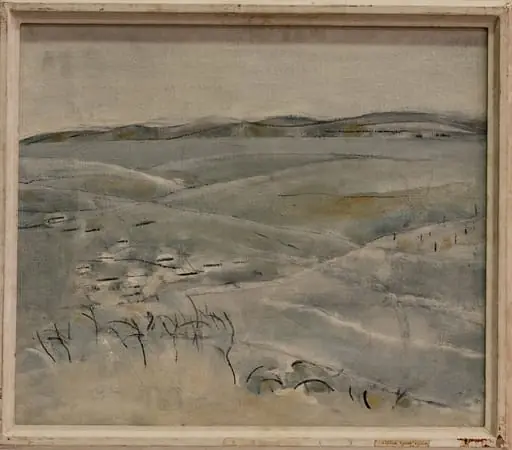
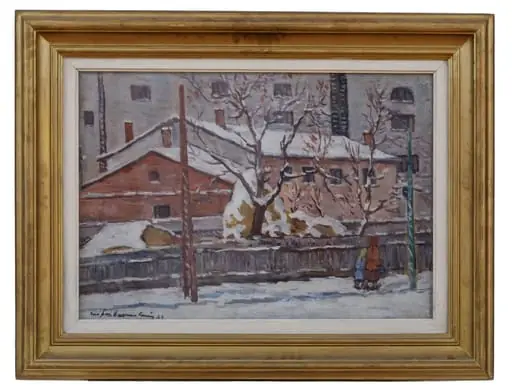
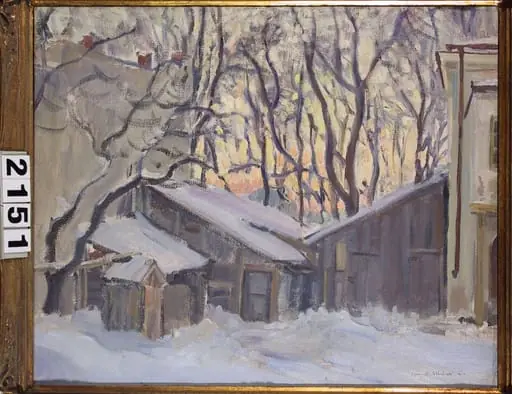
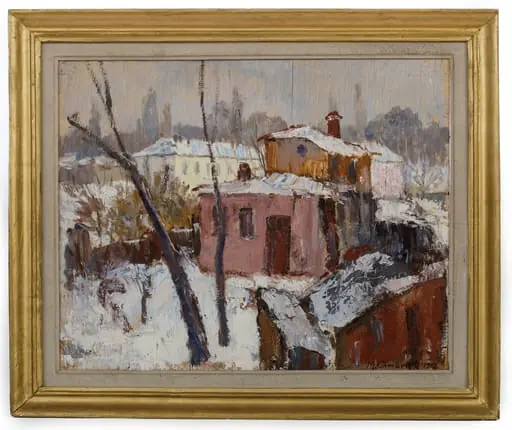
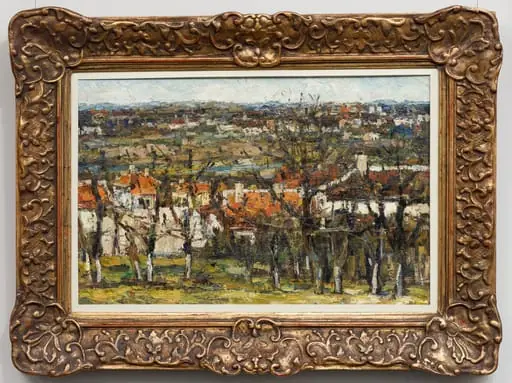
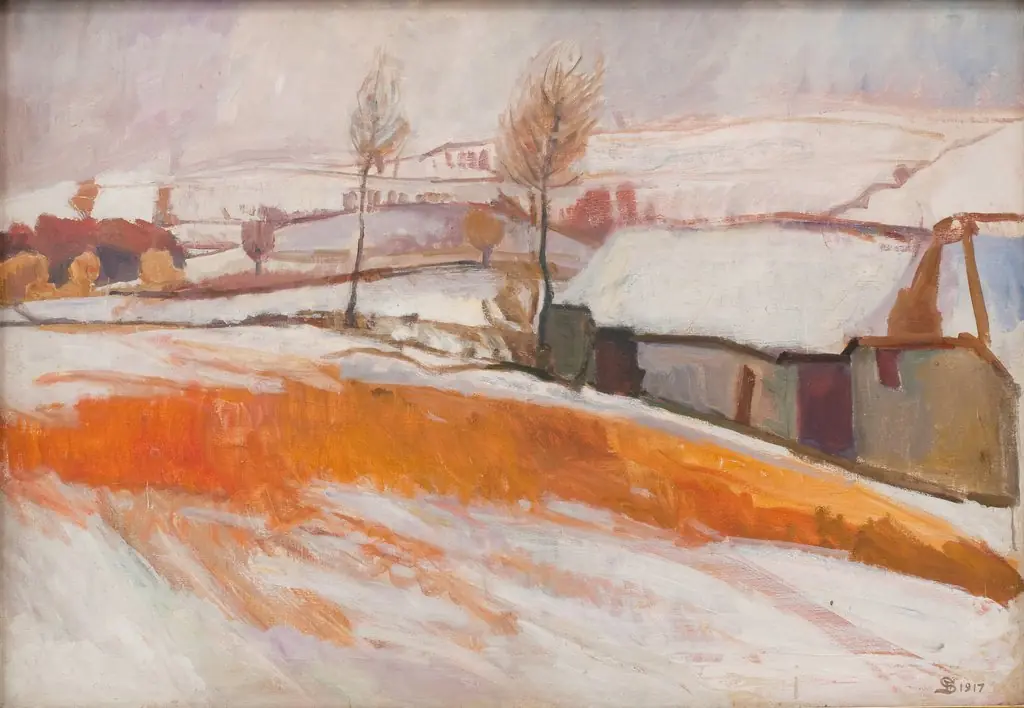
Winter Landscape. Over Kærby Hill.
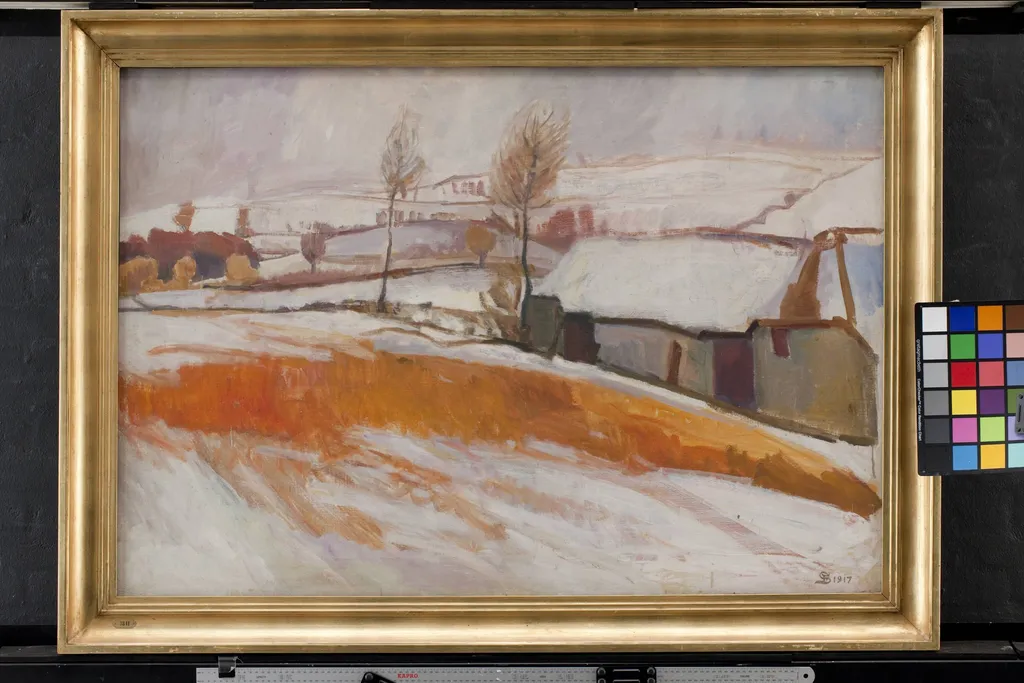
Winter Landscape. Over Kærby Hill. is an unspecified painting by Unknown. It dates from 1917 and is held in the collection of the Statens Museum for Kunst. Painted in 1917, Winter Landscape.
About this work
Overview
The work belongs to the collection of the Museum of Ethnography and reflects the artist’s engagement with seasonal rural environments.
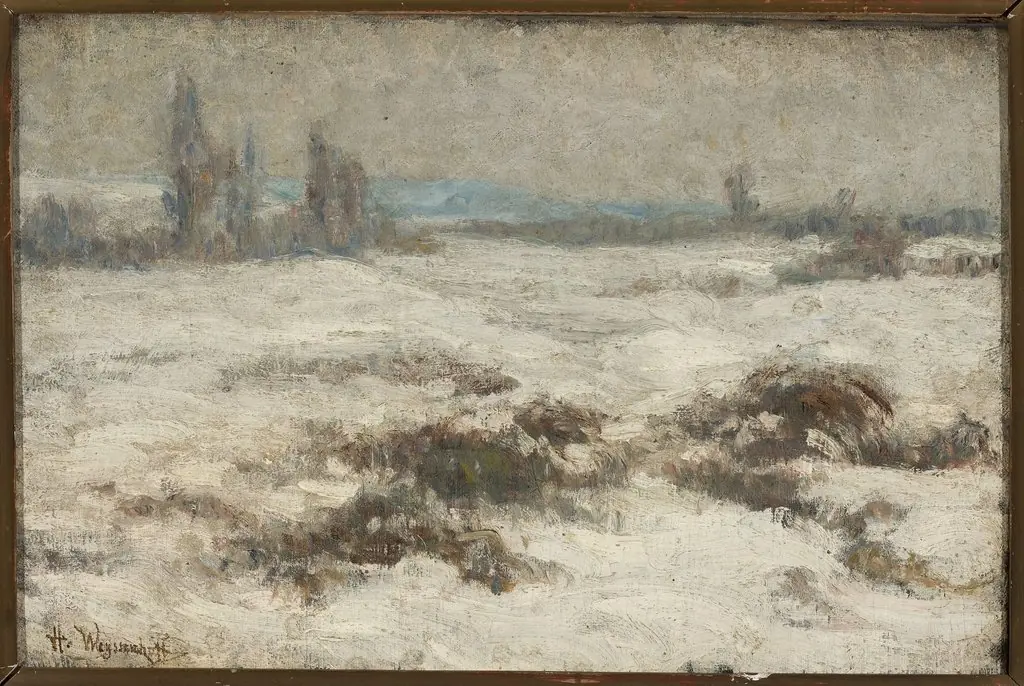
Painted in 1917, Winter Landscape. Over Kærby Hill. is a quiet depiction of a snow-laden terrain viewed from a slight elevation. The work belongs to the collection of the Museum of Ethnography and reflects the artist’s engagement with seasonal rural environments. Its composition centers on a gently rolling hill, minimally interrupted by sparse vegetation and a distant dwelling, conveying a sense of solitude and stillness.
Subject & Meaning
The scene portrays a winter countryside near Kærby Hill, devoid of human activity, emphasizing nature’s quiet endurance. The lone house in the distance suggests habitation but not intrusion, reinforcing themes of isolation and resilience. The absence of movement or narrative implies a contemplative pause, inviting observation rather than interpretation — a meditation on the subdued rhythms of rural winter life.
Technique & Style
The artist employs muted tones of gray, white, and muted brown to evoke the hushed palette of a frozen landscape. Brushwork is deliberate yet energetic, with visible strokes defining snowdrifts and tree contours without fine detail. Light is suggested through subtle shifts in value, modeling forms without harsh shadows, creating a soft, diffused atmosphere that enhances the scene’s tranquil mood.
History & Provenance
The painting entered the Museum of Ethnography’s collection shortly after its creation, likely through direct acquisition or donation. Its placement within an ethnographic institution, rather than a fine arts gallery, suggests an interest in documenting regional life and environmental conditions. No significant alterations or reattributions are recorded, and its provenance remains stable since 1917.
Context
Created during the final years of World War I, the work stands apart from the era’s political turmoil, focusing instead on a personal, localized vision of nature. It aligns with broader Nordic tendencies toward introspective landscape painting, where the environment becomes a vessel for emotional and spiritual reflection, detached from urban or industrial narratives.
Legacy
Though not widely exhibited outside its home institution, the painting remains a representative example of early 20th-century Nordic landscape sensibility. Its quiet aesthetic has influenced later regional artists interested in minimalism and atmospheric tone. It continues to serve as a reference for studies of rural life and seasonal change in Scandinavian visual culture.
Artist & collection

 Domestic Scene
 Giacomo and Cardinal Marco, investing Andrea, Abbot of San Zeno, with his Benefice
 The Nymph of Fontainebleau
 Portrait of a Woman
 Madonna and Child with Saints in the Enclosed Garden
 Venus and Minerva
 Family Group of Four on Sofa
 Wall painting from Room H of the Villa of P. Fannius Synistor at Boscoreale