Artwork
Peisaj
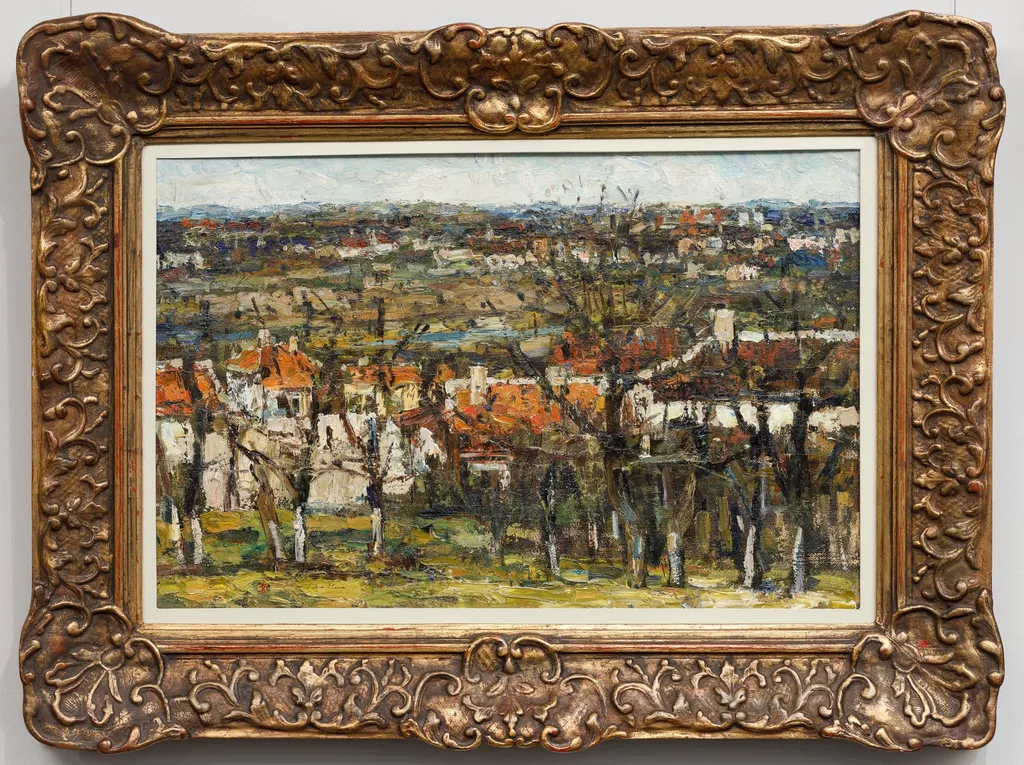
Peisaj is a print by Alexandru Padina Möser. It dates from 1937 and is held in the collection of the National Museum of Art of Romania.
About this work
Overview
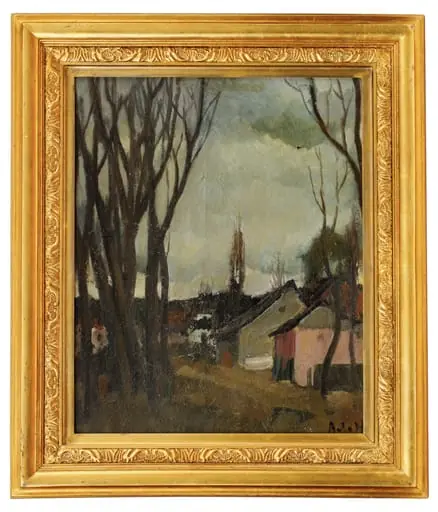
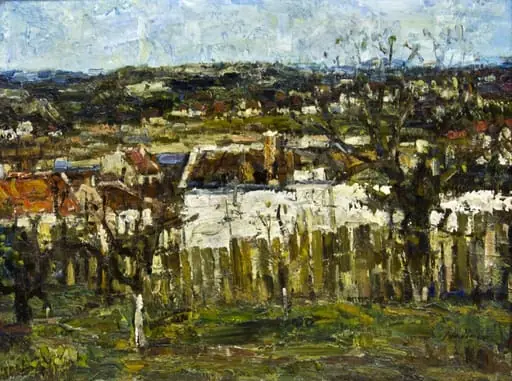
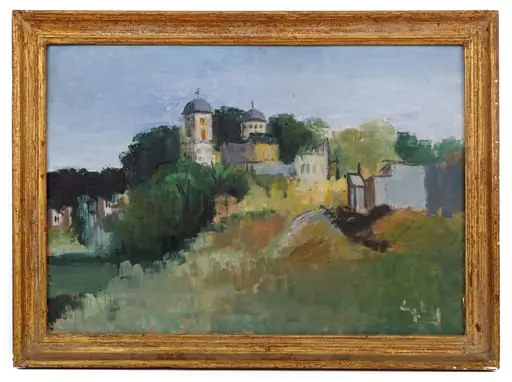
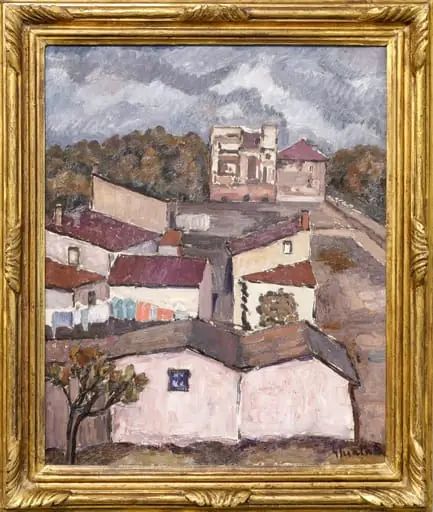
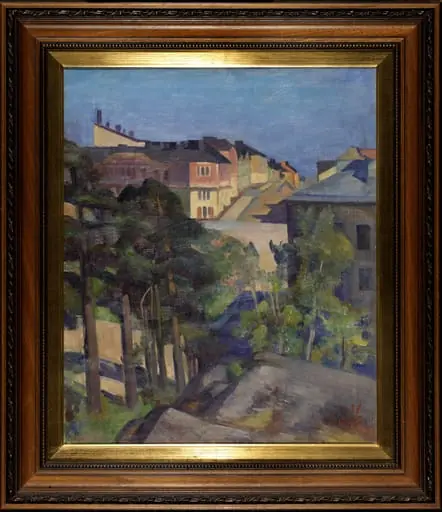
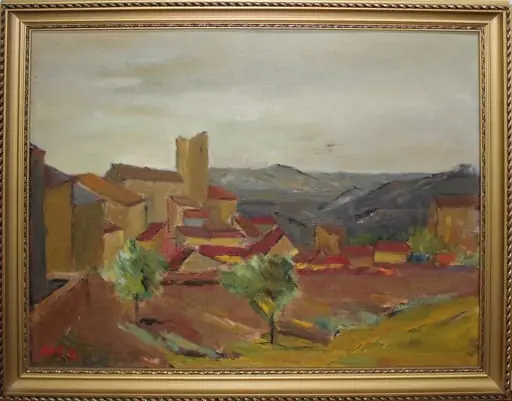
Created around 1937 by Alexandru Padina Möser, Peisaj is a landscape painting that captures a quiet rural scene in Romania. The work is held in the collection of the Museum of Ethnography. Its subdued palette and textured brushwork reflect a deliberate departure from idealized naturalism, favoring instead a grounded, almost tactile representation of the environment.
Subject & Meaning
The painting depicts a small village nestled among bare trees, suggesting a winter or early spring setting. The white and brown dwellings with red roofs imply modest, traditional architecture. The absence of human figures and the stillness of the scene evoke solitude and the quiet rhythm of rural life, without overt narrative or symbolism.
Technique & Style
Padina Möser employs thick, uneven brushstrokes to render the houses and trees, creating a sense of physical texture. The palette is restrained, dominated by earthy browns, muted greens, and faint reds. This approach emphasizes materiality over detail, aligning with regional artistic tendencies that valued emotional resonance over polished realism.
History & Provenance
The painting has remained in the collection of the Museum of Ethnography since its acquisition, likely shortly after its creation. There is no public record of prior ownership or exhibition history beyond its current institutional home, suggesting it was retained locally, possibly as part of a broader effort to document vernacular culture.
Context
In late 1930s Romania, artists increasingly turned to rural subjects as national identity was being redefined. Peisaj reflects this trend, capturing everyday landscapes without romanticization. Its unadorned style contrasts with academic traditions, aligning instead with emerging movements that valued authenticity and regional character.
Legacy
Though not widely exhibited outside institutional settings, Peisaj contributes to the understanding of interwar Romanian art that prioritized local experience over international styles. It remains a quiet example of how artists used landscape to express cultural continuity during a period of rapid social change.
Artist & collection
Artist
Alexandru Padina Möser made prints of Romanian landscapes. Their only identified work here is Peisaj, a landscape print. Peisaj shows a quiet stretch of open fields under a wide sky—simple shapes and soft lines that…