Artwork
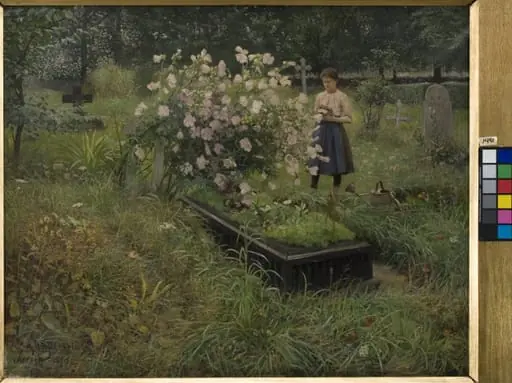
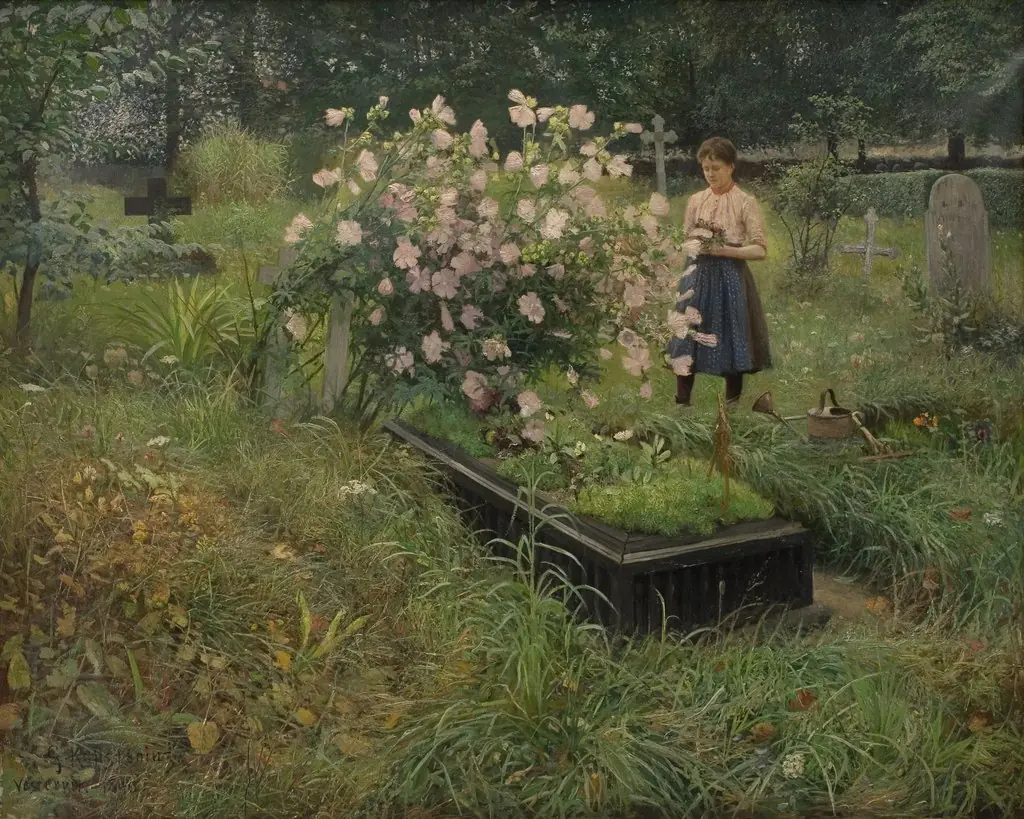
Churchyard at Fløng
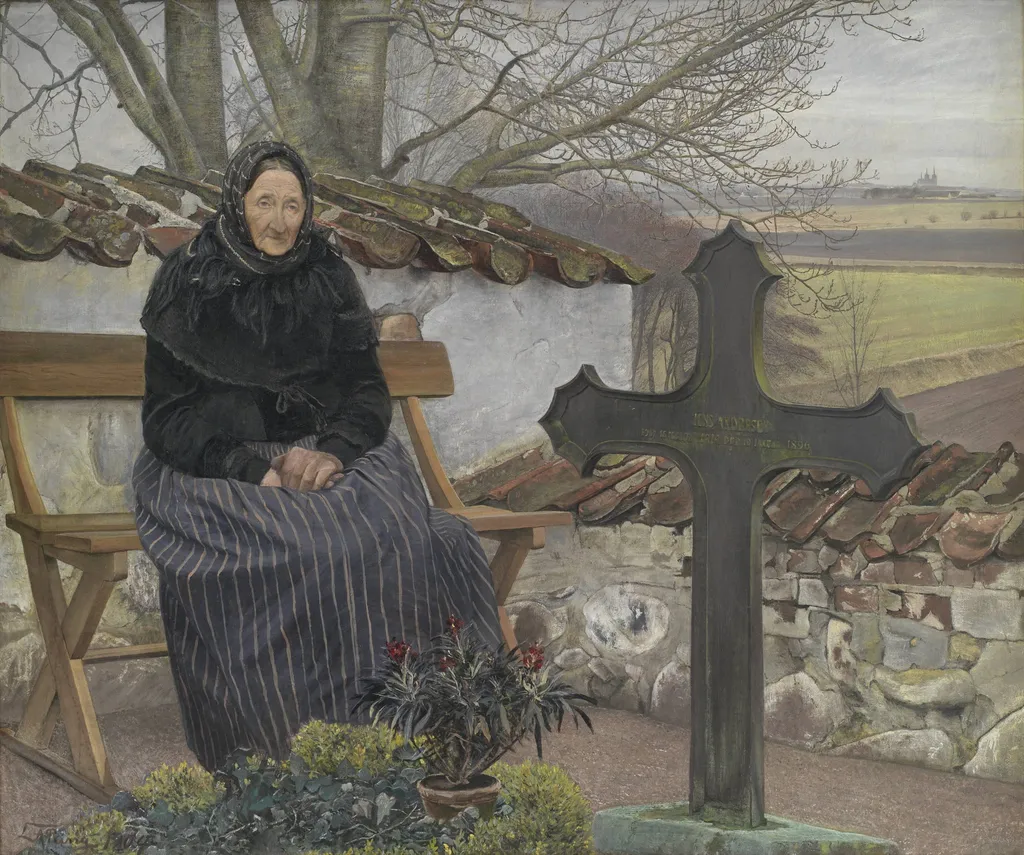
Churchyard at Fløng is a photography by Unknown. It dates from 1904 and is held in the collection of the Statens Museum for Kunst.
About this work
Overview
It presents a solitary figure in a contemplative pose, surrounded by the subdued architecture of a local burial ground.
Created in 1904, this photograph captures a quiet moment in the churchyard at Fløng, Denmark. The image is part of the Museum of Ethnography’s collection, documenting rural life at the turn of the century. It presents a solitary figure in a contemplative pose, surrounded by the subdued architecture of a local burial ground. The composition emphasizes stillness and the passage of time through its restrained details and muted tones.
Subject & Meaning
An elderly woman, wrapped in a dark shawl and striped skirt, sits beside a wooden chair and a small table bearing potted plants. Her clasped hands suggest prayer or reflection. Behind her, a wrought-iron gate opens to a graveyard with weathered tombstones, one inscribed with 'Les Amis.' The scene evokes solitude and memory, possibly hinting at personal loss or communal remembrance within a rural Danish context.
Technique & Style
The photograph employs natural light to shape a quiet chiaroscuro, with soft shadows defining the woman’s form and the texture of the stone wall. The shallow depth of field draws attention to her stillness while the background remains softly blurred. Grain and tonal gradations reflect early 20th-century photographic processes, enhancing the sense of intimacy and temporal distance without artificial embellishment.
History & Provenance
The photograph was taken in 1904 and entered the collection of the Museum of Ethnography shortly thereafter. Its origin as a documentary image suggests it was gathered as part of broader efforts to record folk life in Denmark. No known artist attribution exists, and it likely stems from an ethnographic field project rather than a fine art initiative.
Context
In early 1900s Denmark, rural churchyards served as both sacred spaces and social anchors. The woman’s attire reflects traditional dress still worn in remote areas, contrasting with urban modernization. The presence of 'Les Amis' on a tombstone may indicate French influence, local naming customs, or a personal inscription—its meaning remains ambiguous but adds a layer of quiet mystery to the scene.
Legacy
The image endures as a quiet record of rural Danish life, valued for its unembellished observation. It contributes to historical studies of vernacular culture and mourning practices, offering insight into how ordinary people engaged with death and memory. Its power lies not in spectacle but in its restraint, preserving a moment of private stillness within a public space.
Artist & collection

 Domestic Scene
 Giacomo and Cardinal Marco, investing Andrea, Abbot of San Zeno, with his Benefice
 The Nymph of Fontainebleau
 Portrait of a Woman
 Madonna and Child with Saints in the Enclosed Garden
 Venus and Minerva
 Family Group of Four on Sofa
 Wall painting from Room H of the Villa of P. Fannius Synistor at Boscoreale