Artwork
Cecilie Marie Elisabeth Schouw, f. Bagge, Poul Johan Schouws hustru
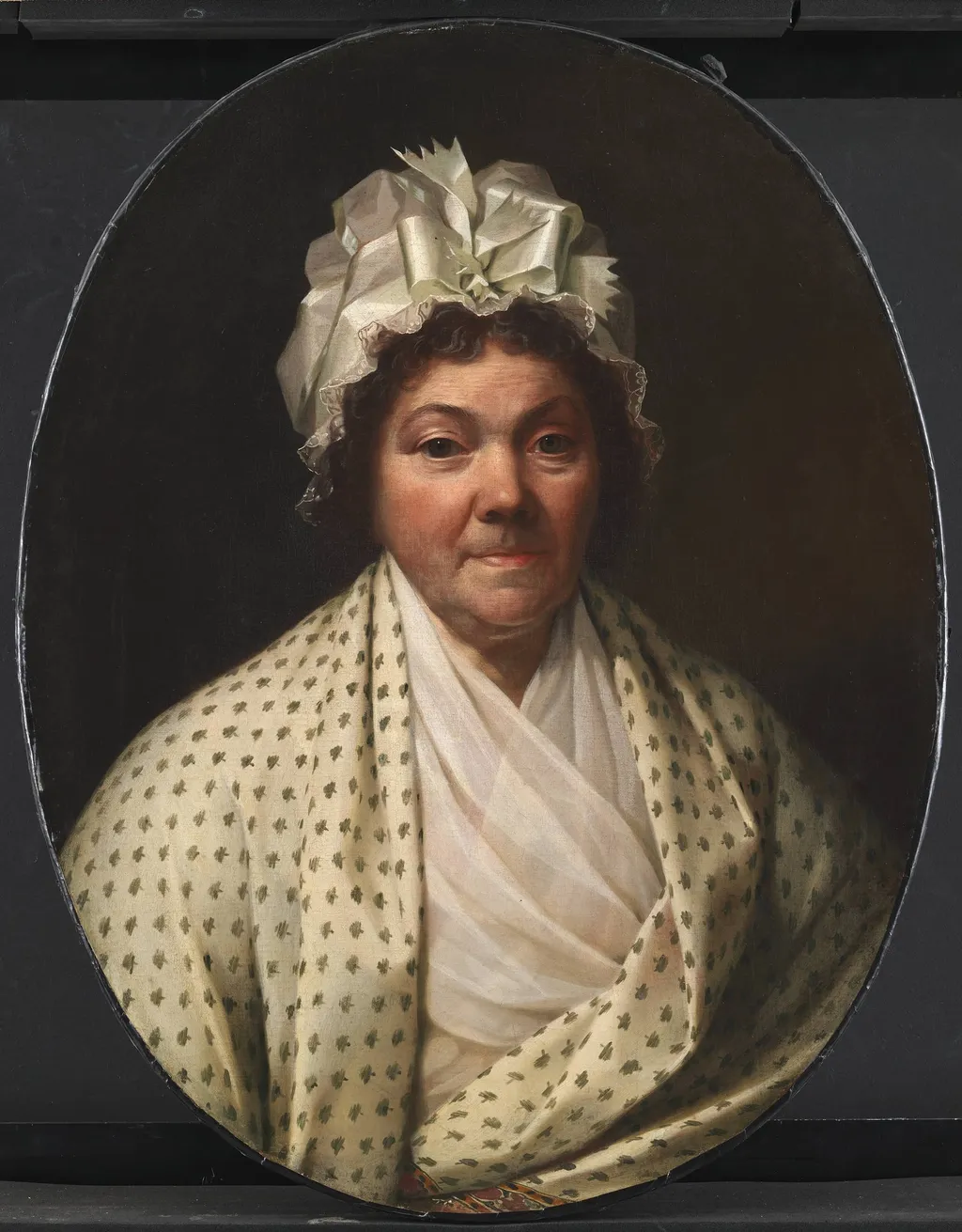
Cecilie Marie Elisabeth Schouw, f. Bagge, Poul Johan Schouws hustru is a photography by Unknown. It dates from 1750 and is held in the collection of the Statens Museum for Kunst. This portrait depicts Cecilie Marie Elisabeth Schouw, née Bagge, wife of Poul Johan Schouw, painted around 1750.
About this work
Overview
This portrait depicts Cecilie Marie Elisabeth Schouw, née Bagge, wife of Poul Johan Schouw, painted around 1750. Executed in a circular format, it presents the sitter in quiet composure against a dark, unadorned background. The work resides in the Museum of Ethnography, where it is preserved as an example of 18th-century Nordic portraiture, notable for its restrained elegance and intimate scale.
Subject & Meaning
Her attire—light fabric with fine dot patterns, a draped shawl, and an ornate hat—signals both refinement and regional identity.
Cecilie Schouw is portrayed with a solemn, composed demeanor, reflecting the social expectations of modesty and dignity among upper-middle-class women of the period. Her attire—light fabric with fine dot patterns, a draped shawl, and an ornate hat—signals both refinement and regional identity. The absence of overt symbols of status suggests a focus on personal presence rather than familial or economic display.
Technique & Style
The artist employs subtle chiaroscuro to model the sitter’s face, using soft transitions between light and shadow to create volume without dramatic contrast. The delicate rendering of fabric textures and the precise depiction of the hat’s floral ornamentation reveal careful observation. The dark background isolates the figure, enhancing the focus on her expression and attire while minimizing contextual distraction.
History & Provenance
The portrait entered the collection of the Museum of Ethnography in the late 19th or early 20th century, likely through donation or acquisition from a private Danish estate. Its attribution to an unidentified artist, referred to only as '1092_person' in records, reflects the common anonymity of portraitists working outside major urban academies during the mid-1700s.
Context
Painted during a period when portraiture in Denmark was increasingly accessible to the merchant and professional classes, this work reflects a shift from aristocratic grandeur to quieter, personal representation. The clothing and hairstyle align with mid-18th-century Nordic fashion, though the style’s simplicity distinguishes it from more elaborate court portraits of the era.
Legacy
As a preserved example of non-noble portraiture from 18th-century Denmark, the image contributes to scholarly understanding of domestic visual culture beyond elite circles. Its preservation in an ethnographic museum underscores its value as a cultural artifact, offering insight into the aesthetics and social norms of its time rather than artistic innovation.
Artist & collection

 Domestic Scene
 Giacomo and Cardinal Marco, investing Andrea, Abbot of San Zeno, with his Benefice
 The Nymph of Fontainebleau
 Portrait of a Woman
 Madonna and Child with Saints in the Enclosed Garden
 Venus and Minerva
 Family Group of Four on Sofa
 Wall painting from Room H of the Villa of P. Fannius Synistor at Boscoreale
 Portrait of a woman in a red scarf
 Porträt der Ye. A. Arkharova
 Brændevinsbrænder Bagges enke
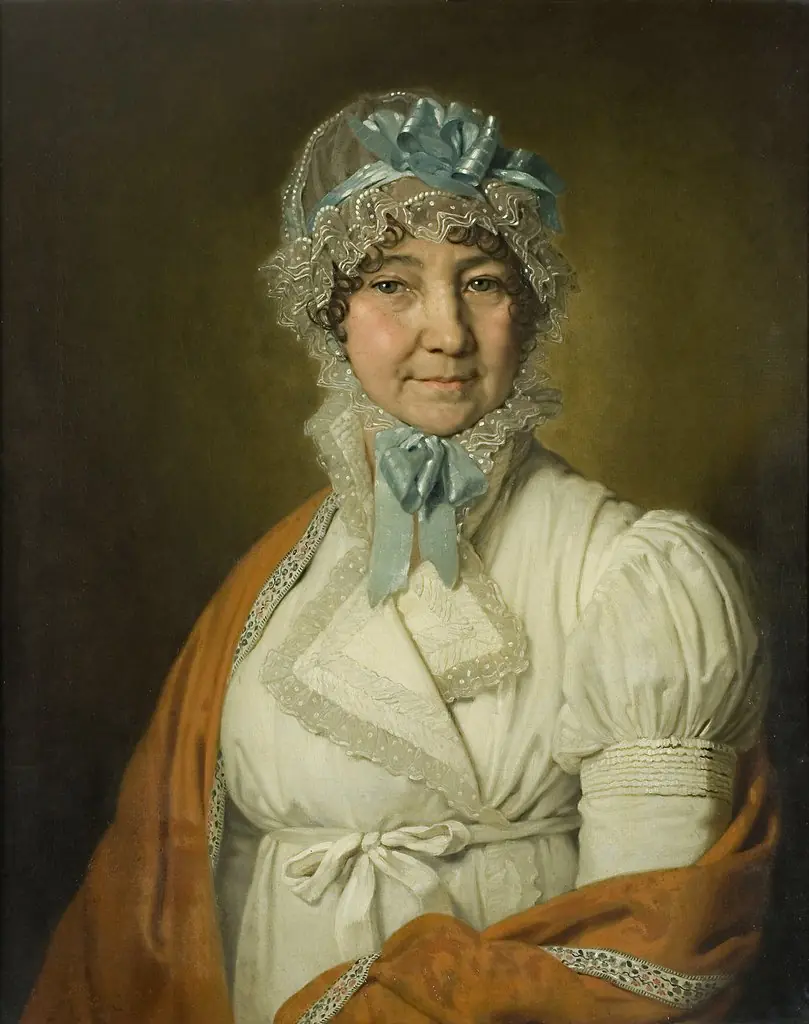 Porträt der Nadezhda Ivanovna Dubovitskaya
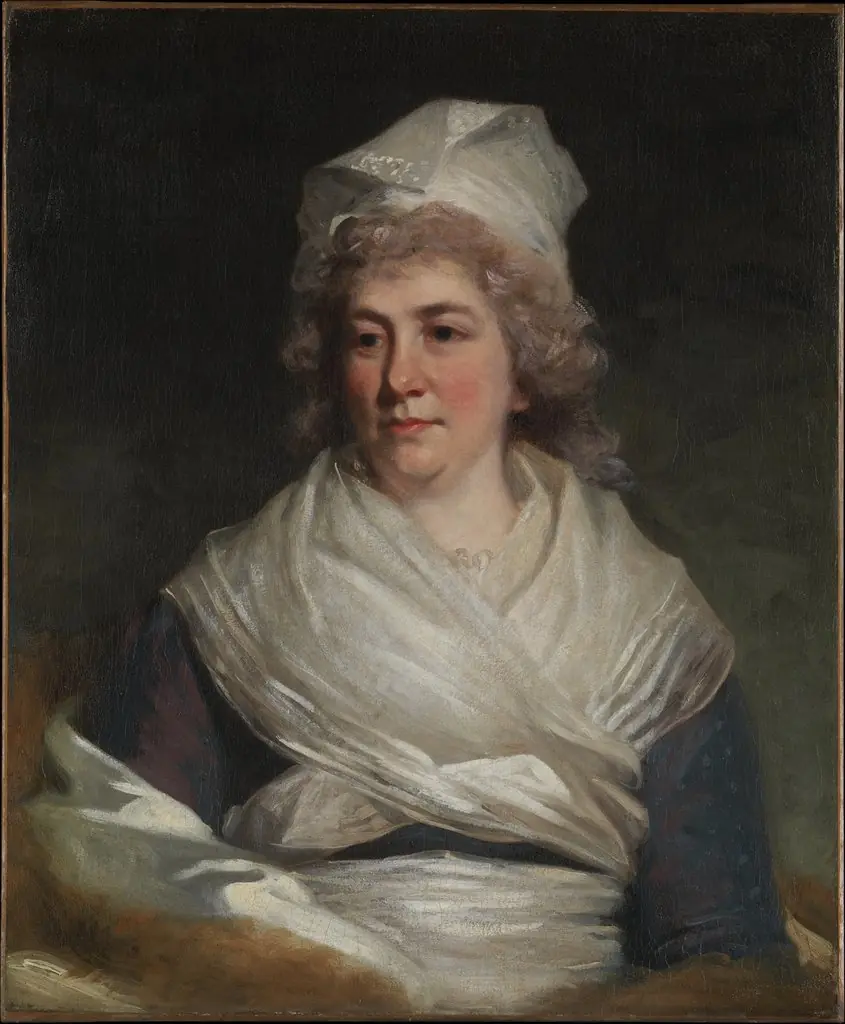 Mrs. Richard Bache (Sarah Franklin, 1743–1808)
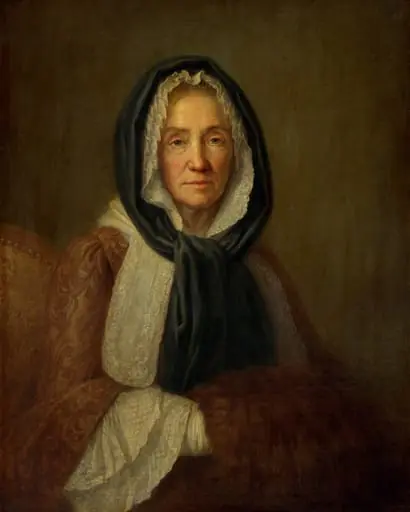 Old Woman with a Muff
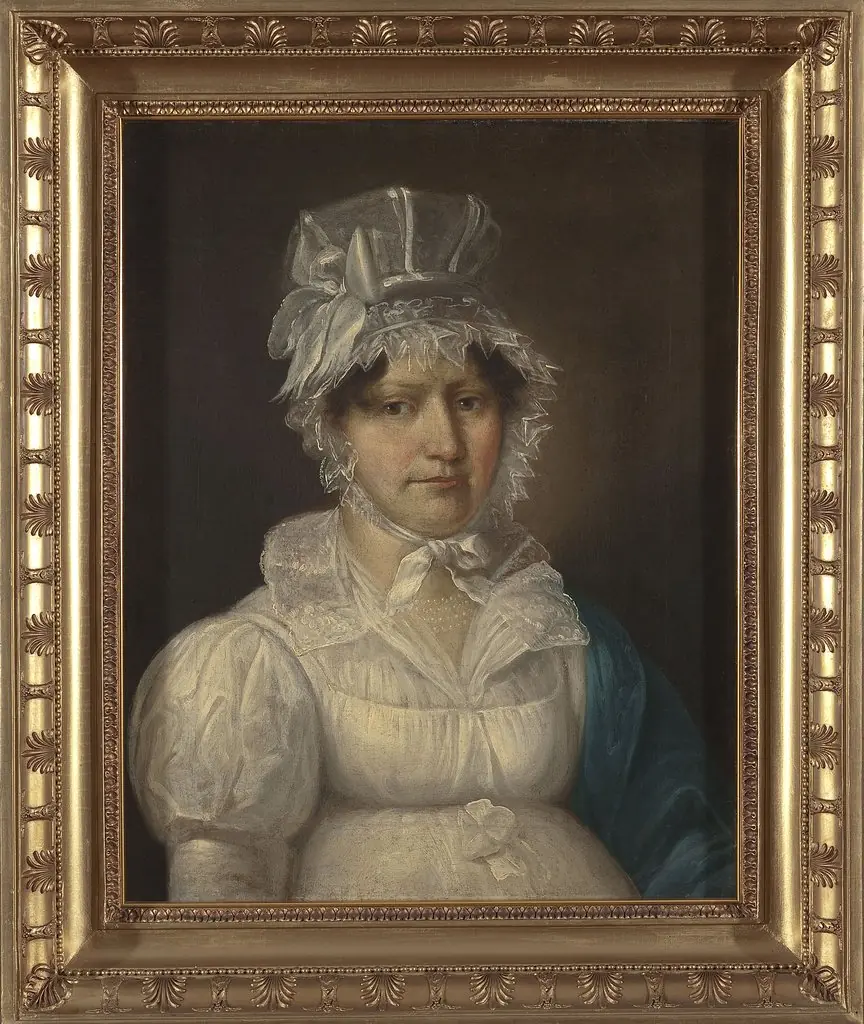 Portrait of Elżbieta Pade (d. 1833), wife of Marcin
 An Elderly Lady in a Mauve Silk Dress
 Portrait of Magdalena Węglińska