Artwork
Portrait of Countess Caroline Schimmelmann(?)
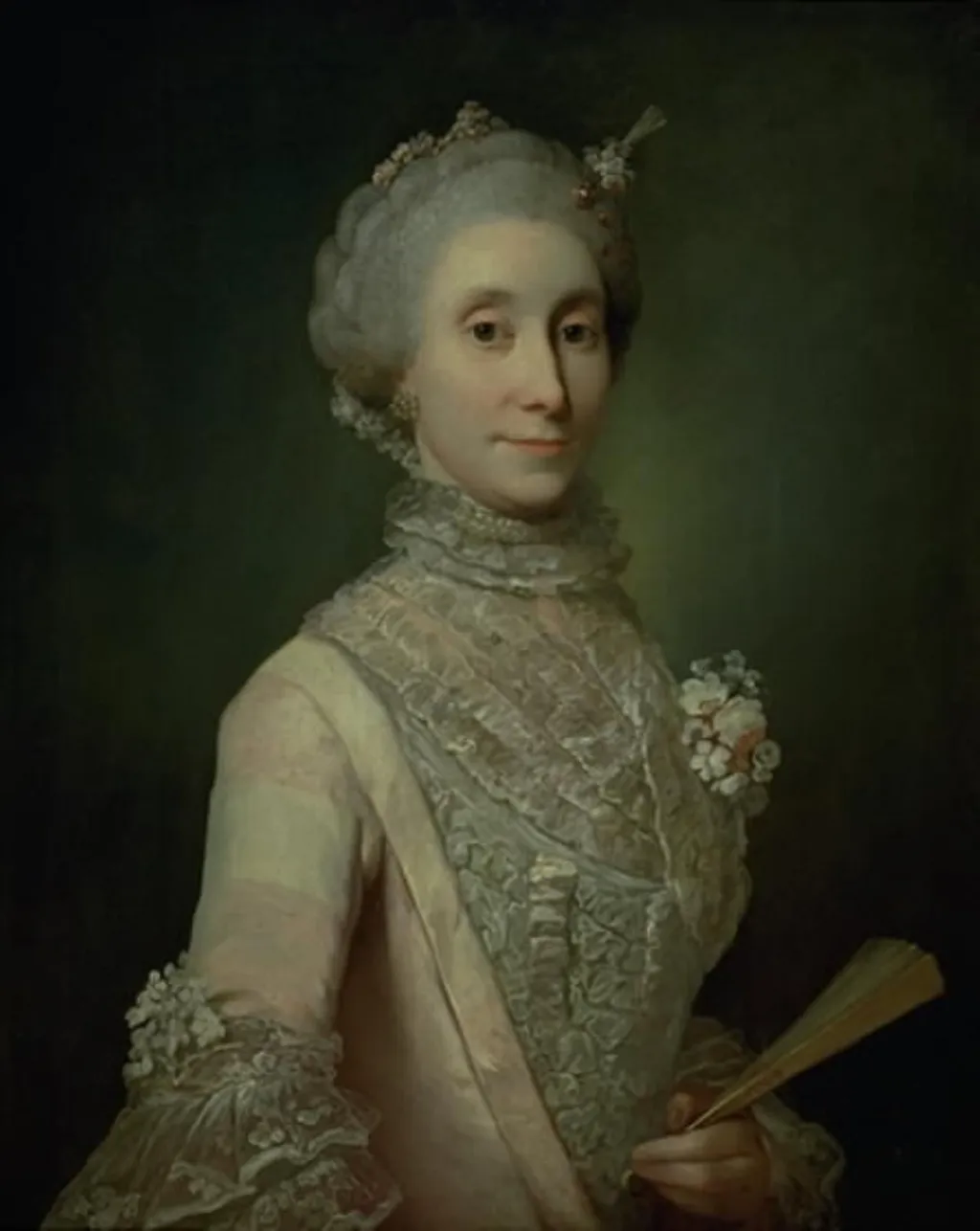
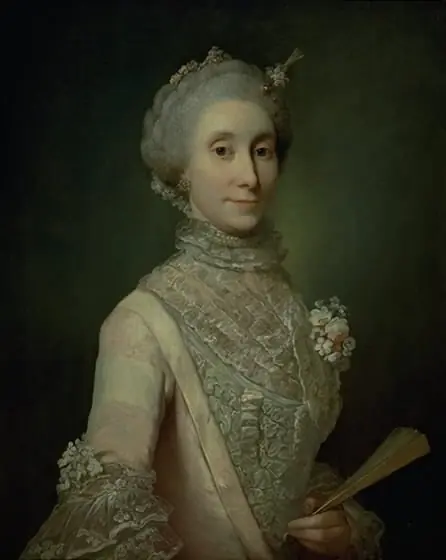
Portrait of Countess Caroline Schimmelmann(?) is an unspecified painting by Unknown. It dates from 1750 and is held in the collection of the Statens Museum for Kunst. This portrait depicts a woman of aristocratic bearing, likely Countess Caroline Schimmelmann, painted around 1750.
About this work
Overview
The work is attributed to an artist identified as 1092_person and is currently housed in the Museum of Ethnography.
This portrait depicts a woman of aristocratic bearing, likely Countess Caroline Schimmelmann, painted around 1750. The work is attributed to an artist identified as 1092_person and is currently housed in the Museum of Ethnography. Rendered with careful attention to texture and form, the image captures the sitter in formal attire typical of mid-18th-century European elite women, set against a dark, neutral backdrop that enhances her presence.
Subject & Meaning
The sitter is portrayed with composed dignity, her half-open fan and delicate floral ornament suggesting refined social grace. The high-necked, embroidered jacket and lace-trimmed sleeves reflect both fashion and status, while the absence of overt symbols of power or lineage points to an emphasis on personal elegance rather than familial or political identity. Her calm gaze invites quiet contemplation, aligning with ideals of feminine poise in Enlightenment-era portraiture.
Technique & Style
The artist employs subtle chiaroscuro to model the sitter’s face and garments, using soft gradations of light to define form without harsh contrasts. The rendering of fabric—particularly the embroidery and lace—demonstrates meticulous brushwork, while the powdered hairstyle is rendered with delicate strokes to suggest volume and texture. The dark background isolates the figure, focusing attention on the interplay of light and surface detail.
History & Provenance
The painting entered the collection of the Museum of Ethnography at an unknown date, with its attribution to Countess Caroline Schimmelmann remaining tentative. Its origins prior to museum acquisition are undocumented, and no records confirm the artist’s identity beyond the catalog designation 1092_person. The work’s journey from private ownership to institutional custody remains unclear.
Context
Created during a period when portraiture among European nobility emphasized personal refinement over heraldic display, this image reflects the cultural shift toward intimate, psychologically nuanced representation. The fashion depicted—powdered hair, lace, and embroidered jackets—was prevalent in Danish and German courts, suggesting possible ties to the Schimmelmann family’s influence in northern Europe during the mid-1700s.
Legacy
Though not widely exhibited or studied, the portrait serves as a quiet example of 18th-century Nordic elite portraiture. Its preservation in an ethnographic museum, rather than a fine arts institution, raises questions about categorization and the boundaries between cultural artifact and artistic expression. It remains a modest but instructive record of material culture and social presentation in its time.
Artist & collection

 Domestic Scene
 Giacomo and Cardinal Marco, investing Andrea, Abbot of San Zeno, with his Benefice
 The Nymph of Fontainebleau
 Portrait of a Woman
 Madonna and Child with Saints in the Enclosed Garden
 Venus and Minerva
 Family Group of Four on Sofa
 Wall painting from Room H of the Villa of P. Fannius Synistor at Boscoreale
 Cathrine Sophie Kirchhoff, f. Christensen
 Portrait of Maria Luisa of Spain
 Princess Kunigunde of Saxony
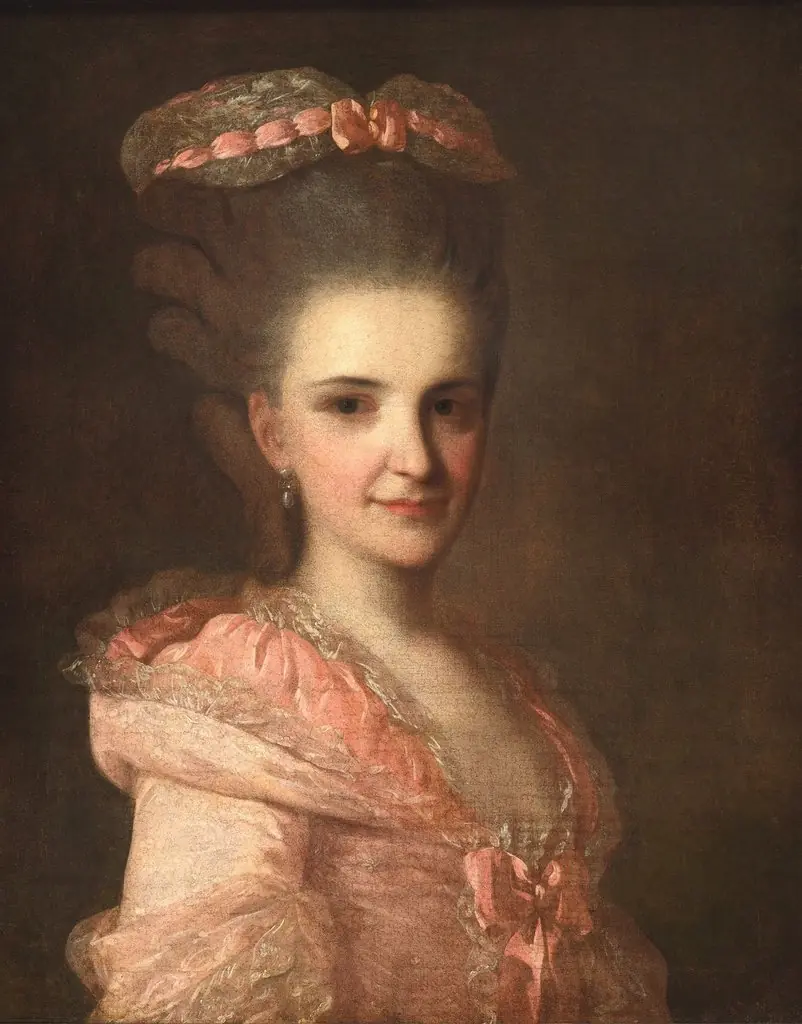 Portrait of an unknown Lady in a pink dress
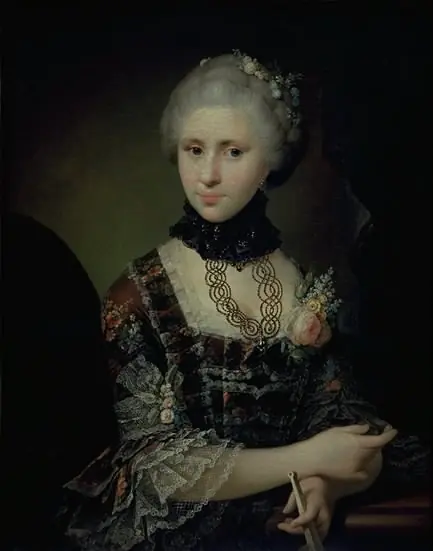 Cathrine Sophie Kirchhoff, f. Christensen
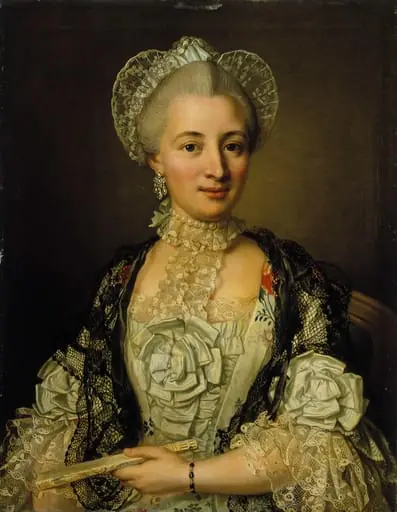 Naisen muotokuva
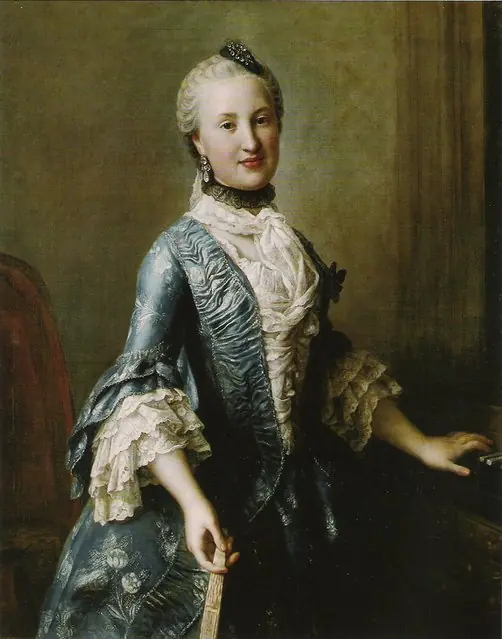 Princess Elisabeth of Saxe
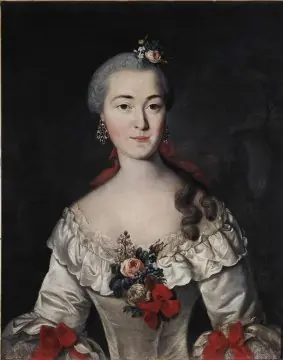 Portrait of M.I. Tatischeva
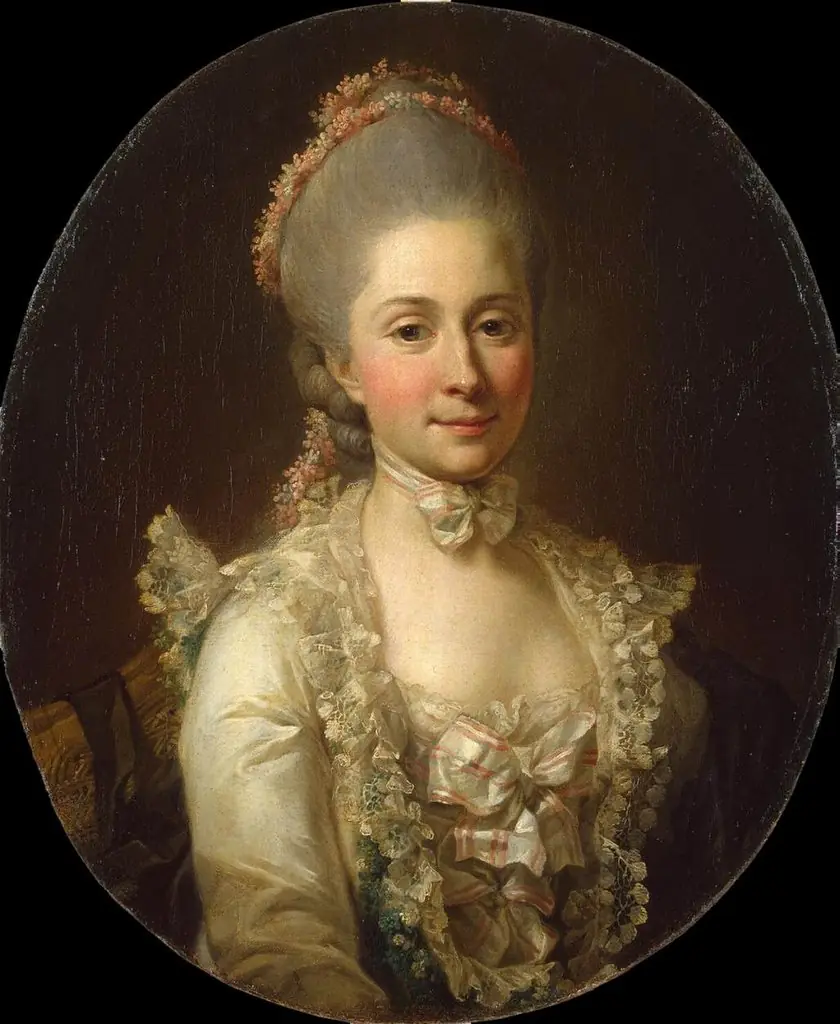 Portrait of a Woman
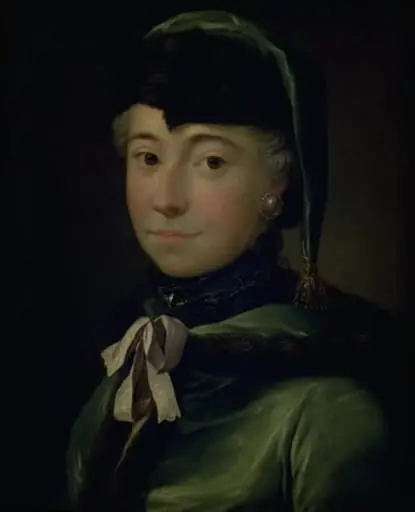 Sophie Birgitta Mathiesen
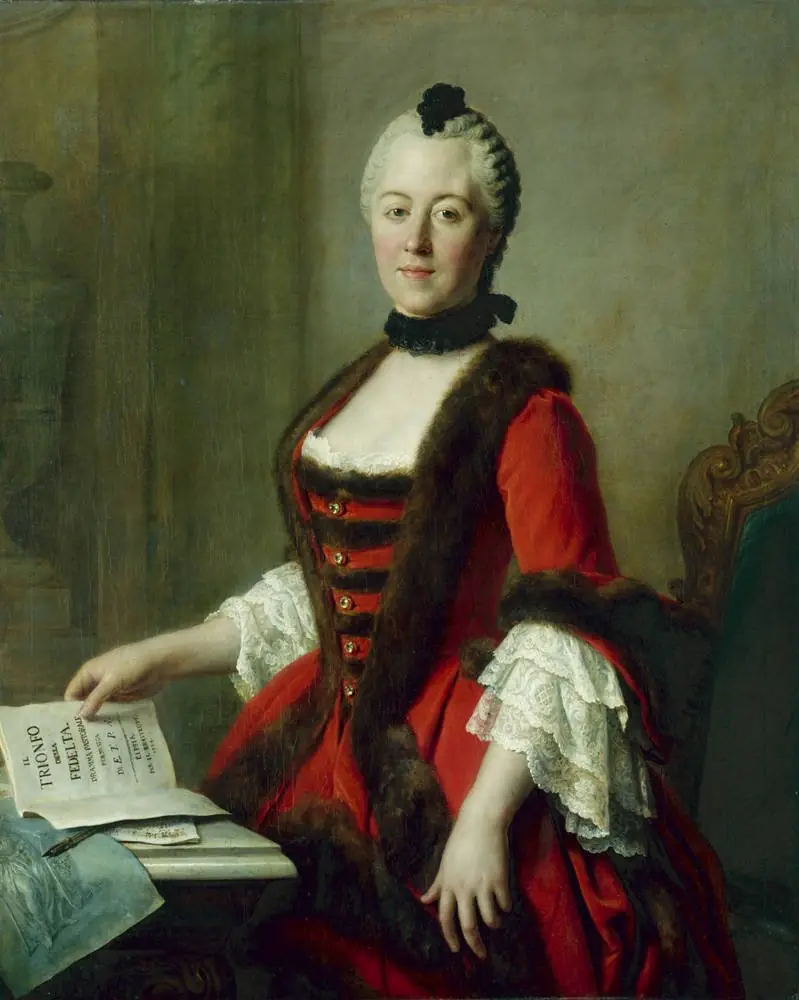 Maria Antonia of Bavaria, spouse of Elector Frederick Christian of Saxony
 Portrait of Countess Caroline Schimmelmann(?)