Artwork
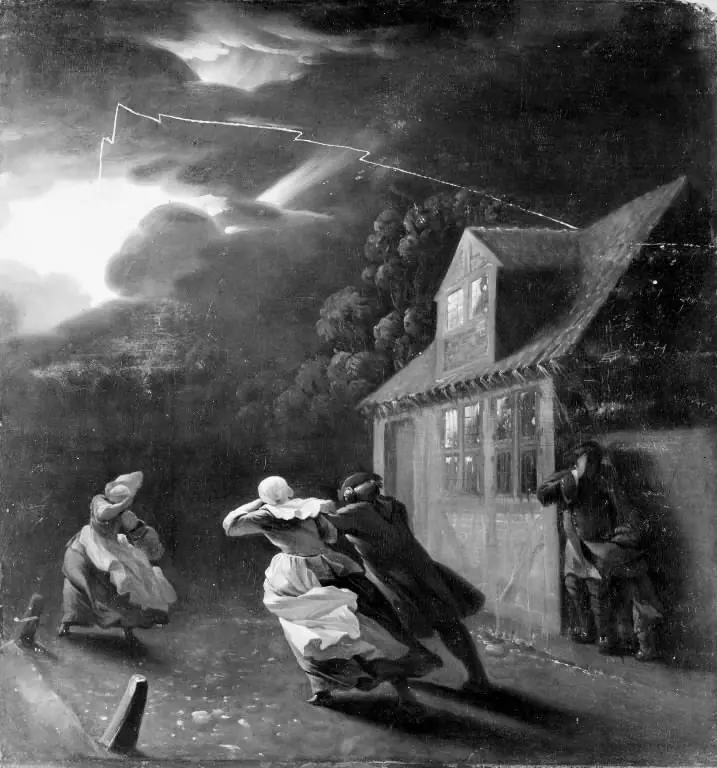
Tordenvejr i udkanten af en by
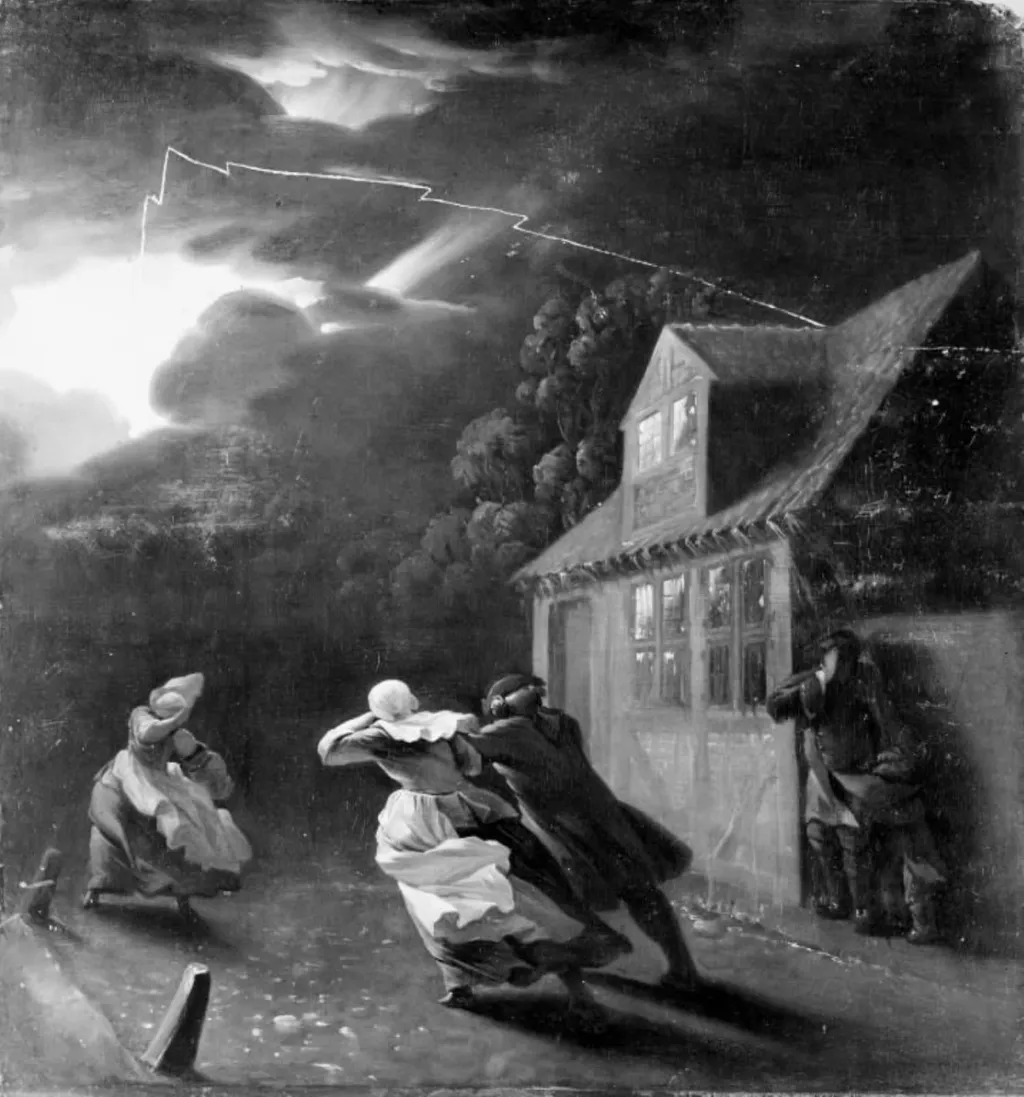
Tordenvejr i udkanten af en by is a photography by Unknown. It dates from 1750 and is held in the collection of the Statens Museum for Kunst.
About this work
Overview
The work is held in the collection of the Museum of Ethnography, where it is studied for its depiction of everyday life under natural duress.
Tordenvejr i udkanten af en by is an 18th-century painting attributed to an artist active around 1750. It portrays a sudden storm overtaking the edge of a rural settlement. The scene captures a moment of urgency as figures flee the elements, their movements rendered with kinetic energy. The work is held in the collection of the Museum of Ethnography, where it is studied for its depiction of everyday life under natural duress.
Subject & Meaning
The painting centers on human vulnerability amid nature’s force. A woman carries a child as others scramble toward shelter, emphasizing instinctive survival. The architecture in the background—a steep-roofed structure with a large window—hints at modest rural dwellings. The scene lacks mythological or religious symbolism; instead, it elevates ordinary people facing a common, uncontrollable event, grounding its emotional weight in realism.
Technique & Style
The artist employs chiaroscuro to heighten tension, contrasting the deep shadows of the storm-lashed ground with sudden bursts of lightning. Brushwork is loose yet deliberate, suggesting movement through wind and rain. The sky dominates the composition, its turbulent clouds rendered in layered grays and blacks, while the figures are minimized in scale to underscore nature’s dominance. This approach aligns with emerging naturalistic trends in Nordic painting of the period.
History & Provenance
The painting’s origins are undocumented prior to its inclusion in the Museum of Ethnography’s collection. No records confirm its commission, ownership, or exhibition history before the 20th century. Its attribution to a single artist remains tentative, as signatures or inscriptions are absent. The work likely entered the museum through regional acquisitions or donations tied to ethnographic studies of rural Danish or Norwegian life.
Context
Created during a period when Nordic artists increasingly turned to secular, everyday subjects, this work reflects a shift away from religious or aristocratic themes. Rural communities were central to cultural identity, and weather events like storms carried both practical and symbolic weight. Similar scenes appear in contemporary folk art and printed broadsheets, suggesting the painting resonated with broader visual narratives of resilience and natural unpredictability.
Legacy
Though not widely reproduced or studied outside institutional circles, the painting contributes to understanding how 18th-century Nordic artists depicted environmental forces in daily life. It stands as a quiet counterpoint to grander European storm scenes, offering a grounded, unidealized view of human response to nature. Its preservation in an ethnographic context underscores its value as a cultural artifact rather than a purely aesthetic object.
Artist & collection

 Domestic Scene
 Giacomo and Cardinal Marco, investing Andrea, Abbot of San Zeno, with his Benefice
 The Nymph of Fontainebleau
 Portrait of a Woman
 Madonna and Child with Saints in the Enclosed Garden
 Venus and Minerva
 Family Group of Four on Sofa
 Wall painting from Room H of the Villa of P. Fannius Synistor at Boscoreale
 A Storm Behind the Isle of Wight
 H Beard Print Collection
 A Storm Behind the Isle of Wight
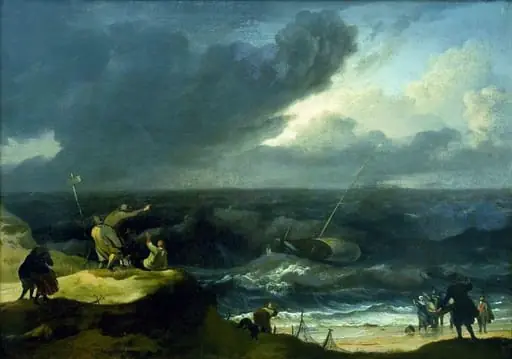 Marină
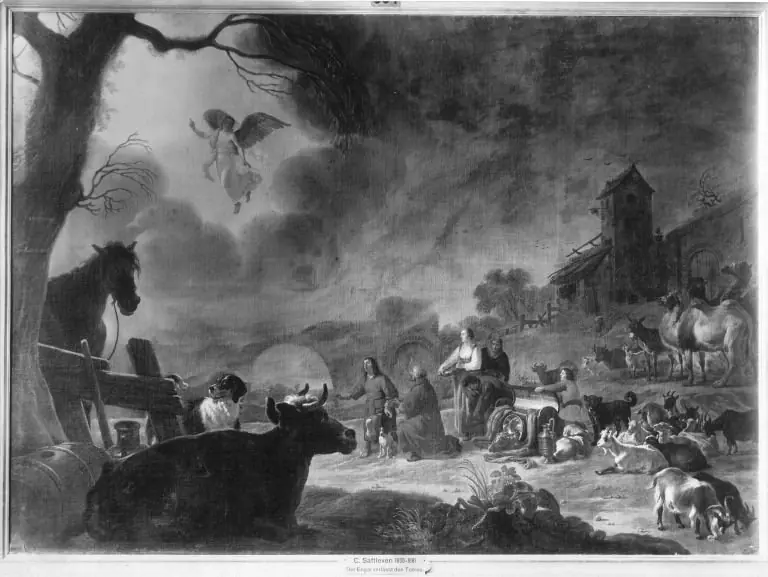 Der Engel verlässt die Familie des Tobias
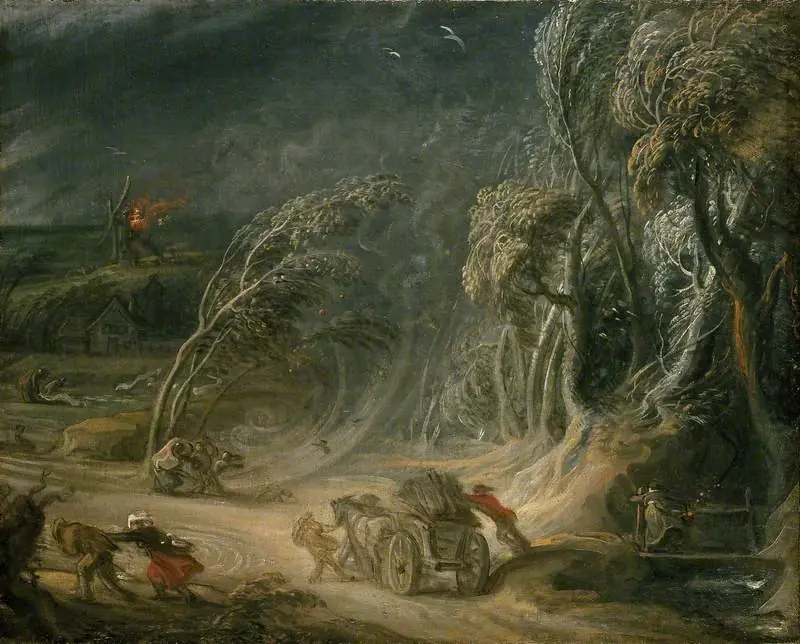 Landscape: A Storm
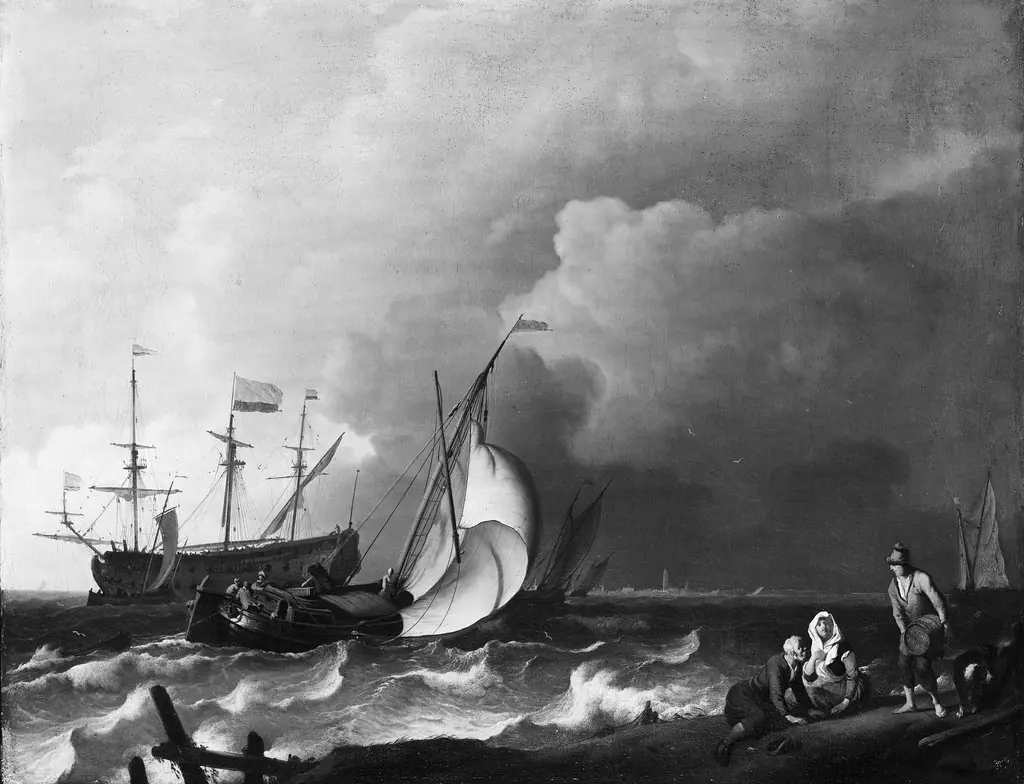 Rough sea with ships
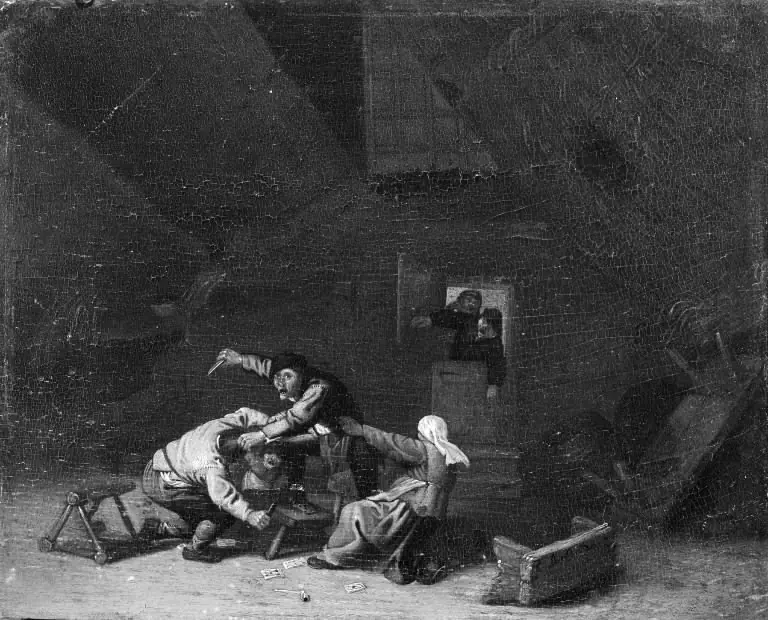 Two Peasants Fighting with Knives
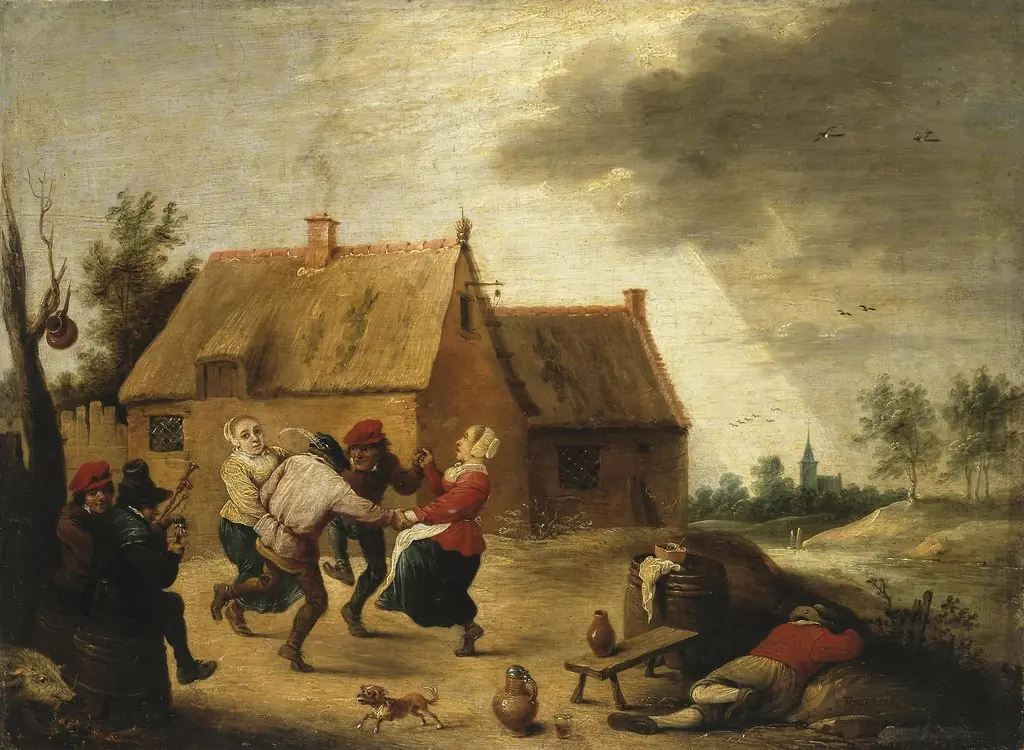 Dancing Peasants
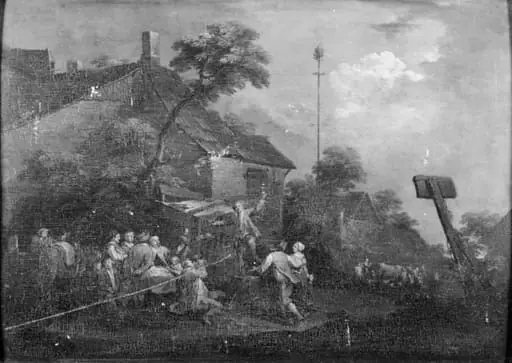 Peasants Merry-Making
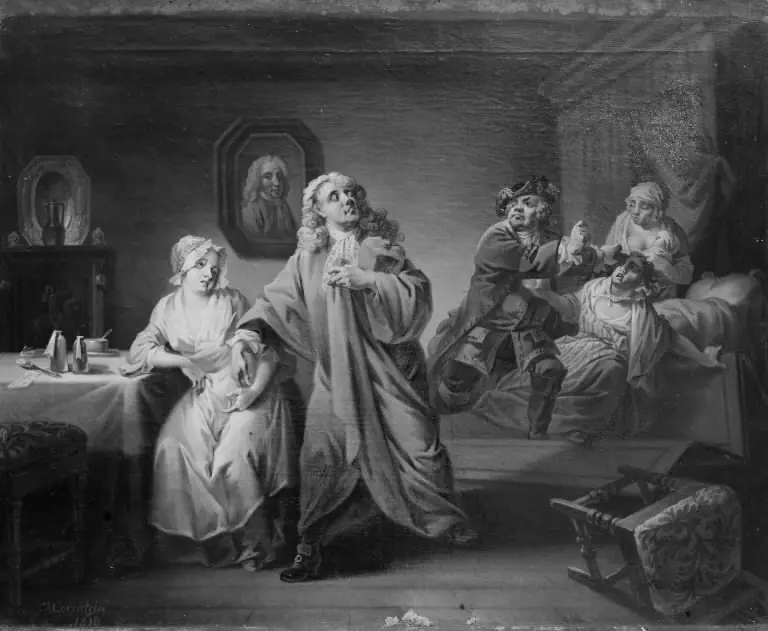 Barselstuen, III akt, 6. scene
 Tordenvejr i udkanten af en by