Artwork
Portræt af den franske maler Alfred Guillou
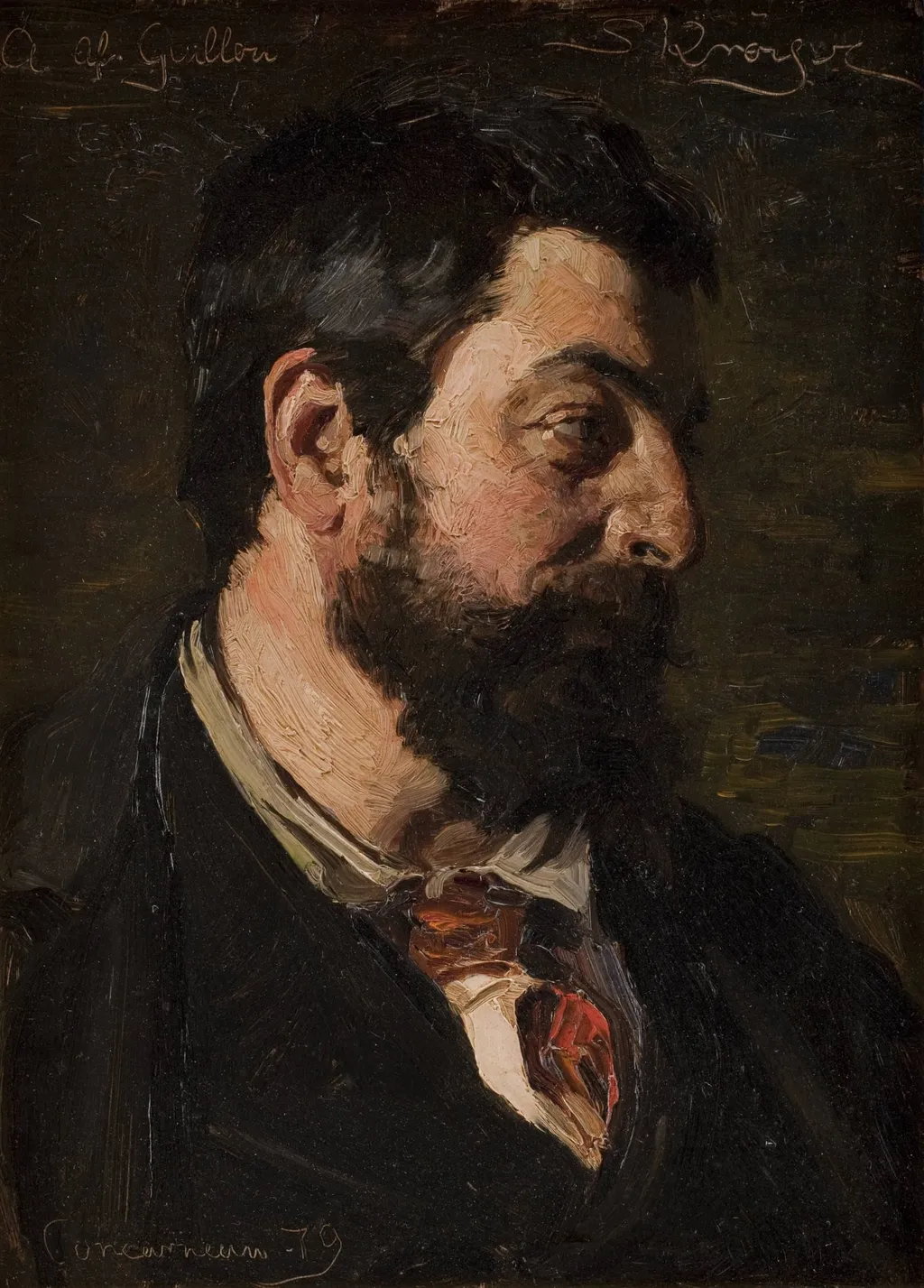
Portræt af den franske maler Alfred Guillou is a photography by the Impressionist artist Unknown. It dates from 1879 and is held in the collection of the Statens Museum for Kunst. This portrait, painted in 1879, depicts the French artist Alfred Guillou.
About this work
Overview
The composition isolates the subject’s upper torso and head against a near-black background, emphasizing his presence through focused illumination.
This portrait, painted in 1879, depicts the French artist Alfred Guillou. Executed in oil on canvas, it is part of the collection at the Museum of Ethnography. The composition isolates the subject’s upper torso and head against a near-black background, emphasizing his presence through focused illumination. The work reflects a deliberate departure from detailed surroundings, centering attention entirely on the figure’s physicality and expression.
Subject & Meaning
Alfred Guillou, a painter associated with the Pont-Aven school, is shown in quiet contemplation. His turned head and lowered gaze suggest introspection rather than direct engagement with the viewer. The red object in his hand—possibly a scrap of fabric or a piece of fruit—adds a subtle point of color and tactile presence, hinting at his artistic practice or daily rituals without overt symbolism.
Technique & Style
The artist employs loose, rapid brushwork to render the face and hands, contrasting with the absence of detail in the background. Strong chiaroscuro effects define the contours of Guillou’s features, with light falling softly across his cheek and beard while deep shadows swallow the rest. This selective illumination creates a sculptural quality, drawing the eye to the texture of skin and the thickness of his facial hair.
History & Provenance
The portrait was completed in 1879 and entered the Museum of Ethnography’s collection shortly thereafter. Its acquisition reflects an early interest in documenting artists of the French regional schools. While the identity of the painter remains unconfirmed, stylistic analysis aligns with contemporaneous practices in Brittany, where Guillou was active during the late 1870s.
Context
Created during a period when French artists were turning away from academic conventions, this portrait aligns with the broader movement toward naturalism and expressive simplicity. Artists like Guillou, working in rural Brittany, often prioritized direct observation over idealized form. The painting’s intimate scale and subdued palette echo the aesthetic values of the Pont-Aven circle, which valued authenticity over ornament.
Legacy
Though not widely exhibited, the portrait remains a quiet testament to the visual language of late 19th-century French regional art. Its emphasis on light and texture over narrative detail influenced later studies of artist portraiture in ethnographic contexts. The work continues to be referenced in scholarly discussions on the intersection of identity, craft, and representation in provincial art communities.
Artist & collection

 Domestic Scene
 Giacomo and Cardinal Marco, investing Andrea, Abbot of San Zeno, with his Benefice
 The Nymph of Fontainebleau
 Portrait of a Woman
 Madonna and Child with Saints in the Enclosed Garden
 Venus and Minerva
 Family Group of Four on Sofa
 Wall painting from Room H of the Villa of P. Fannius Synistor at Boscoreale
 Professor Paul Errera
 Hippolyte Lavoignat
 Captain Folger of Nantucket
 Male Portrait – two-sided painting
 Portrait of Adam Nowina Boznański, Artist's Father
 Bildnis Professor Justus Brinckmann
 Self-Portrait, Aged 21
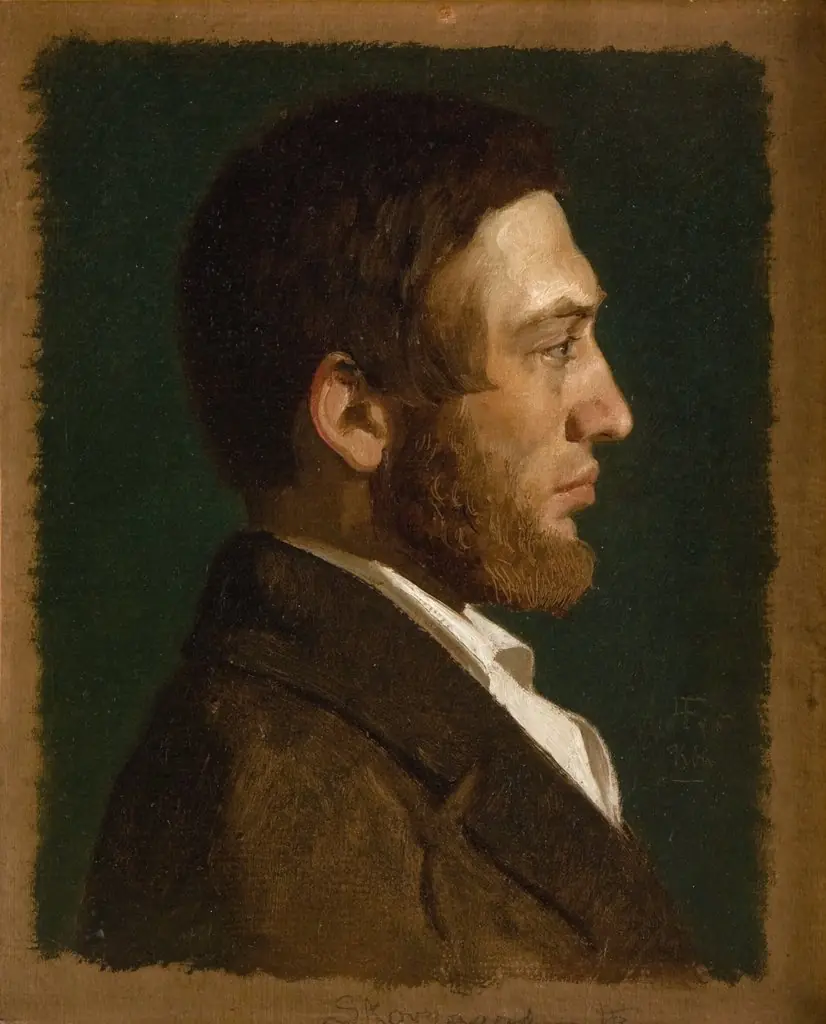 Portrait of the Painter P.C. Skovgaard
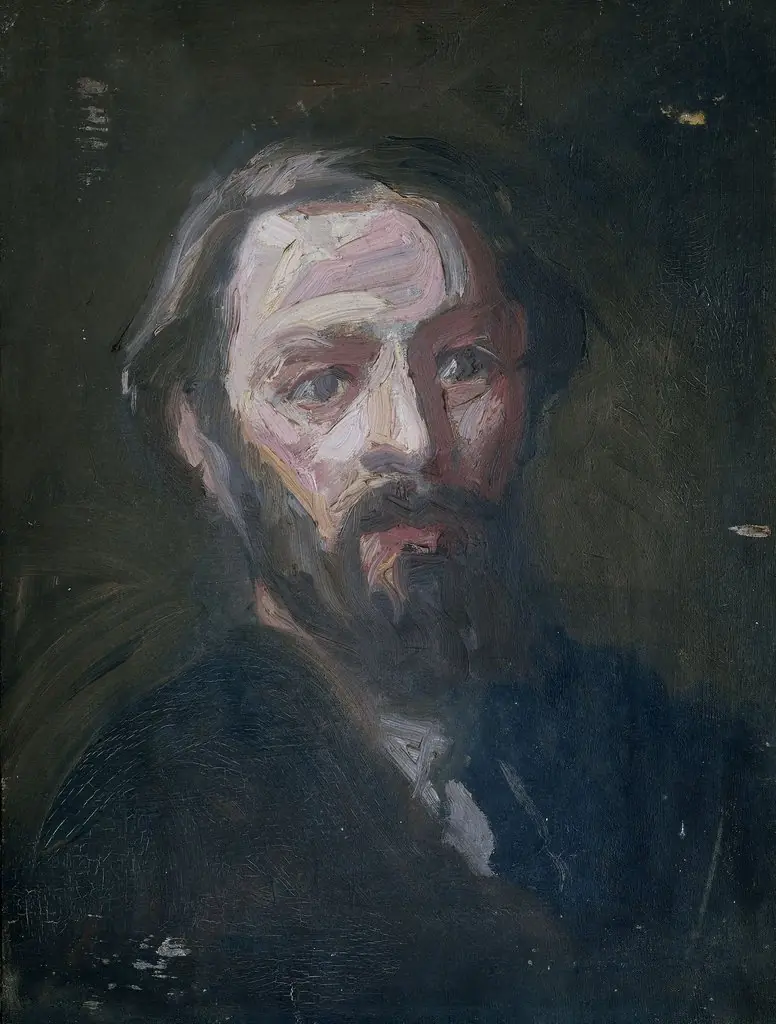 Portret van de beeldhouwer Pier Pander (1864-1919)
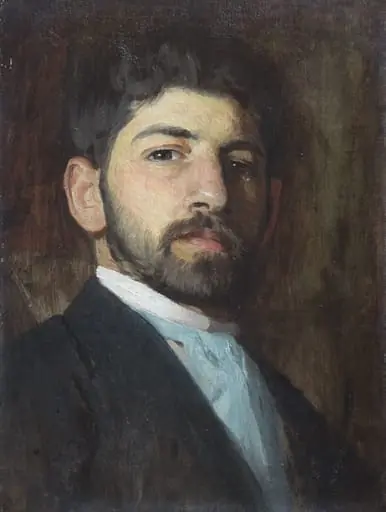 Autoportret
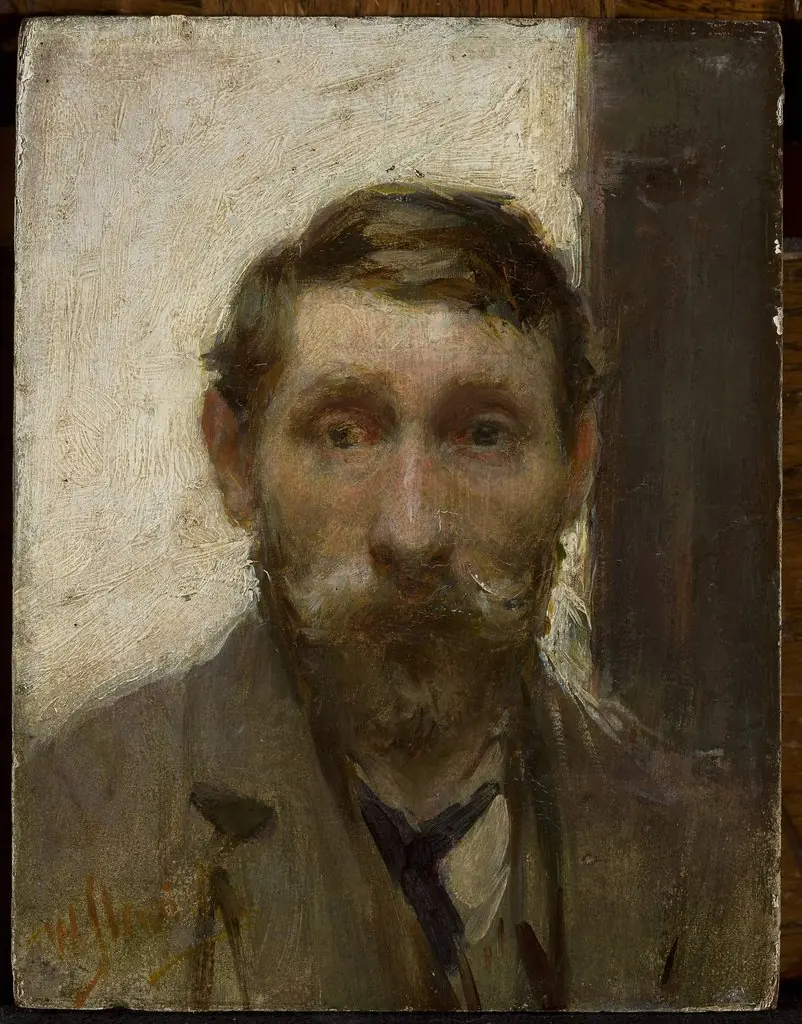 Self-portrait
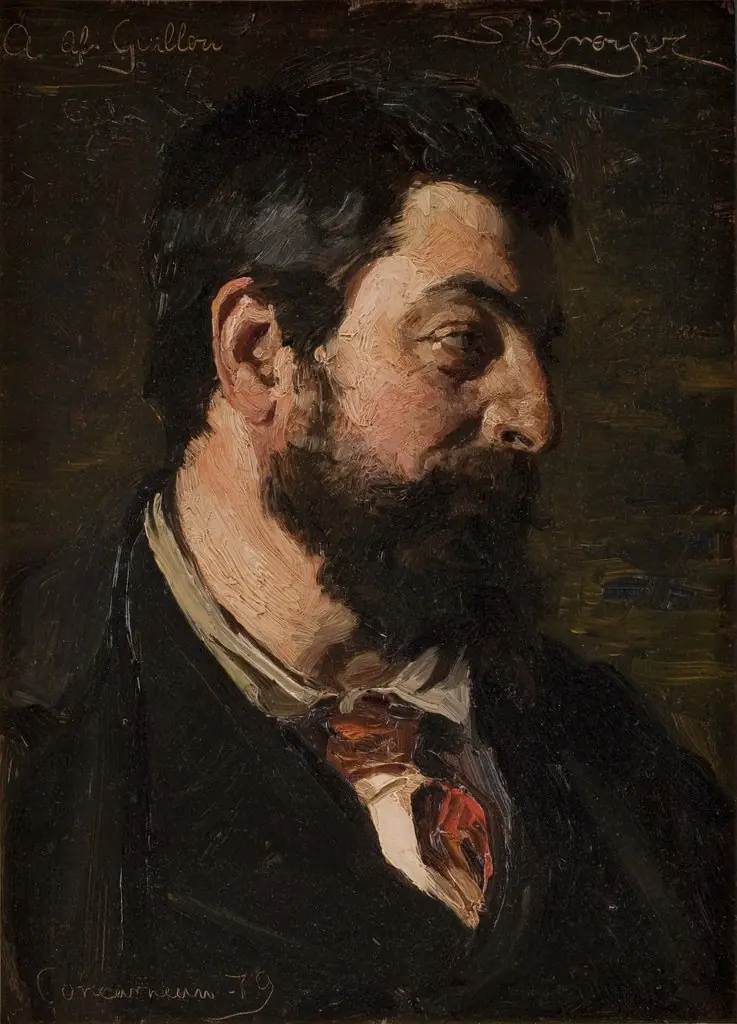 Portrait of the French painter Alfred Guillou