Artwork
Dameportræt
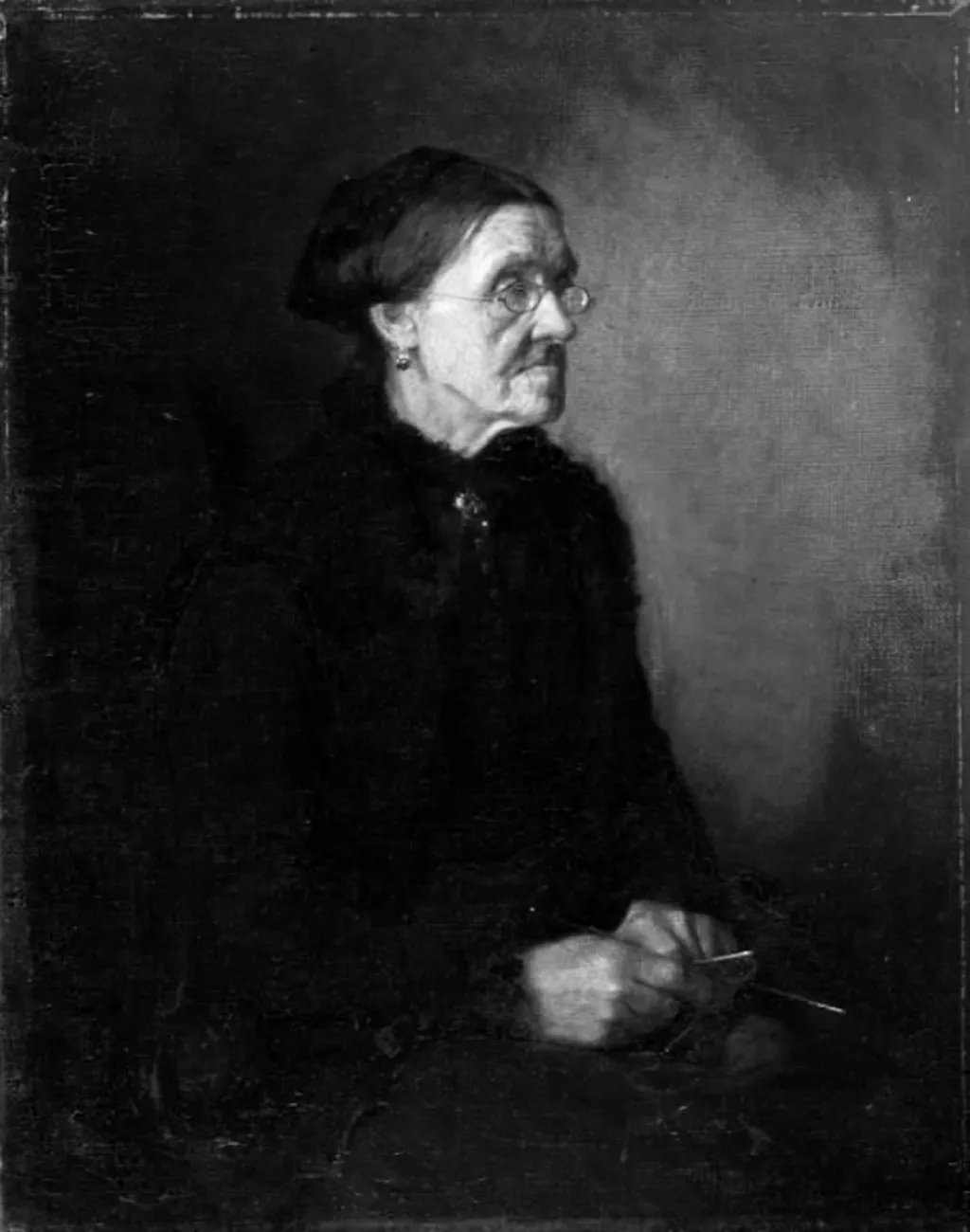
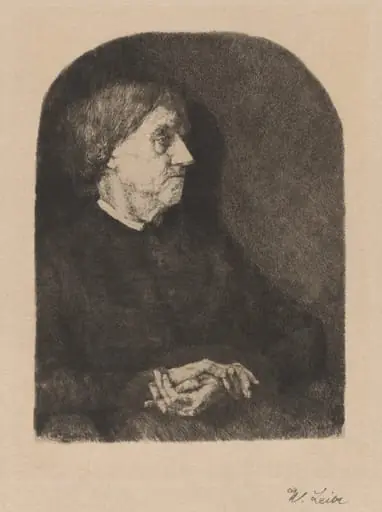
Dameportræt is a photography by the Impressionist artist Unknown. It dates from 1888 and is held in the collection of the Statens Museum for Kunst. This black-and-white portrait, dated 1888, depicts an elderly woman in formal attire.
About this work
Overview
The composition emphasizes the subject’s age and demeanor through restrained lighting and precise rendering.
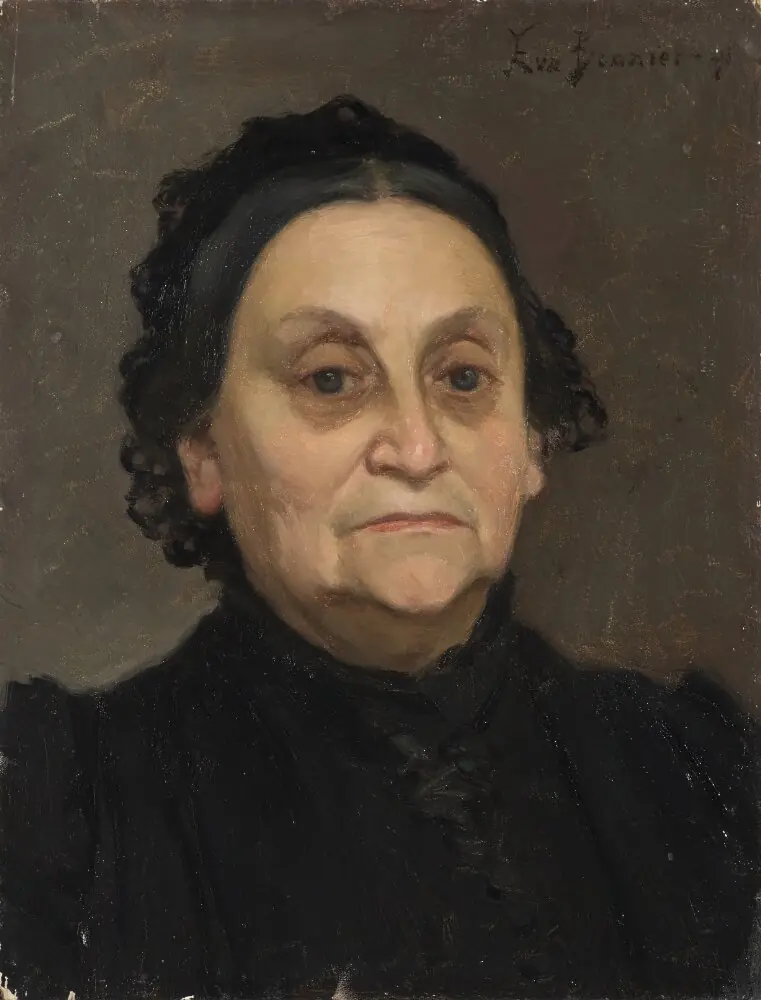
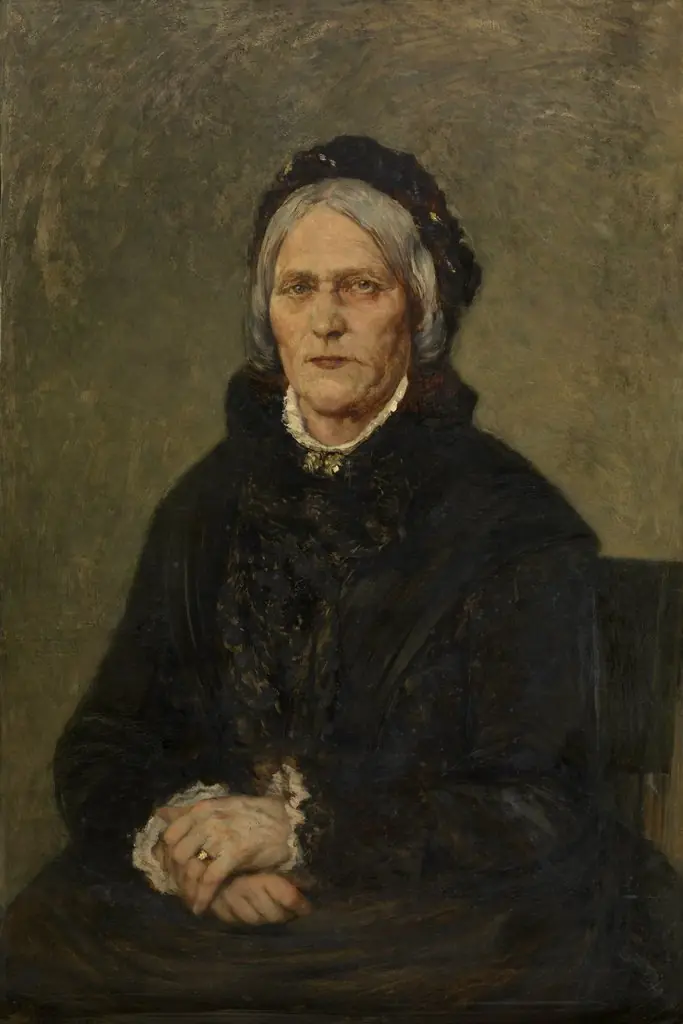
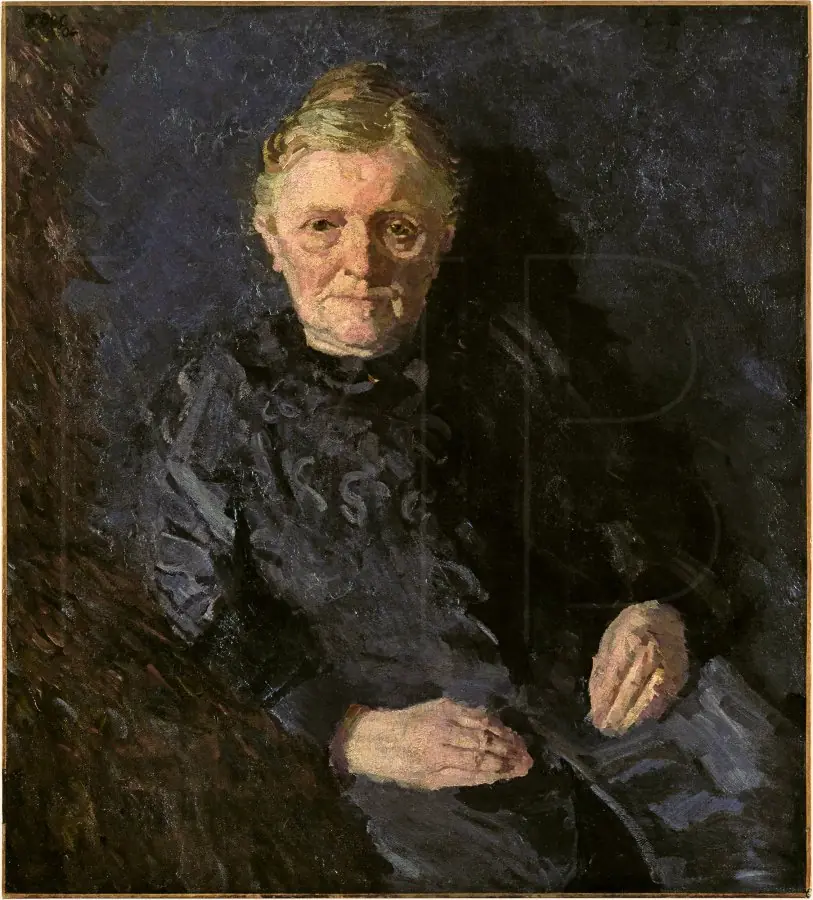
This black-and-white portrait, dated 1888, depicts an elderly woman in formal attire. Created by 1123_person, it is part of the Museum of Ethnography’s collection. The composition emphasizes the subject’s age and demeanor through restrained lighting and precise rendering. The background is uniformly dark, with subtle tonal variation to the right suggesting ambient light. The figure’s hands hold an indistinct object, adding ambiguity to the scene.
Subject & Meaning
The woman, identified only by her presence, appears composed and introspective. Her glasses, pulled-back hair, and earrings suggest a life of dignity and routine. The serious expression and visible wrinkles convey lived experience without sentimentality. The obscured object in her hands resists symbolic interpretation, inviting focus on her gaze and stillness rather than narrative context.
Technique & Style
Rendered in a realistic manner, the portrait employs chiaroscuro to model form and depth. Fine detail is applied to facial wrinkles, fabric folds, and the texture of her hair. The lighting is directional, casting soft shadows that define the contours of her face and shoulders. The monochrome palette enhances the focus on tonal gradation rather than color, aligning with photographic conventions of the era.
History & Provenance
The work was created in 1888 and entered the collection of the Museum of Ethnography at an unknown date. Its origin as a portrait of an individual from a specific cultural context is not documented. The absence of biographical details about the sitter suggests it may have been collected for anthropological study rather than as a personal commemoration.
Context
In the late 19th century, photographic portraiture influenced painted depictions of individuals, particularly in ethnographic settings. This work reflects a trend toward observational accuracy over idealization. Though stylistically aligned with academic realism, its inclusion in an ethnographic museum implies an interest in documenting cultural types rather than artistic expression.
Legacy
The portrait remains a quiet example of late 19th-century observational portraiture within an ethnographic framework. It contributes to the museum’s archive of visual records from a period when cultural documentation often prioritized physical appearance over personal narrative. Its enduring presence underscores the role of portraiture in early anthropological collecting practices.
Artist & collection

 Domestic Scene
 Giacomo and Cardinal Marco, investing Andrea, Abbot of San Zeno, with his Benefice
 The Nymph of Fontainebleau
 Portrait of a Woman
 Madonna and Child with Saints in the Enclosed Garden
 Venus and Minerva
 Family Group of Four on Sofa
 Wall painting from Room H of the Villa of P. Fannius Synistor at Boscoreale