Artwork
Leibl's Mother
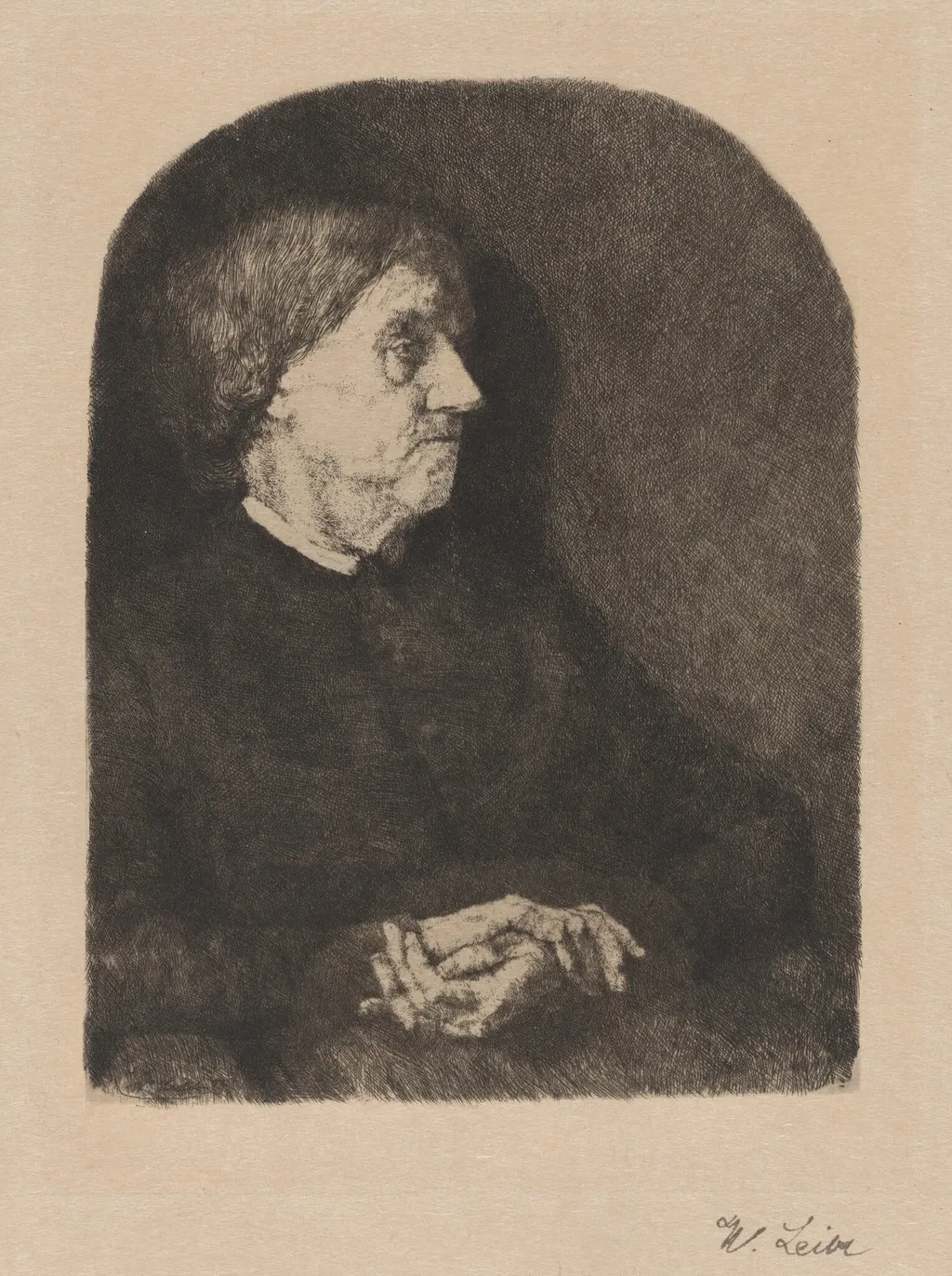
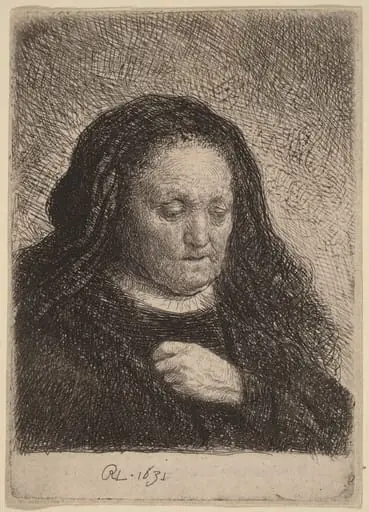
Leibl's Mother is an ink print by the Impressionist artist Wilhelm Leibl. It dates from 1874 and is held in the collection of the National Gallery of Art.
About this work
Overview
Created in 1874, this etching by Wilhelm Leibl depicts his mother in profile, rendered on Japanese paper with a muted tonal range.
Created in 1874, this etching by Wilhelm Leibl depicts his mother in profile, rendered on Japanese paper with a muted tonal range. The work is part of the National Gallery of Art’s collection in Washington, D.C. Its rough paper edges and soft, uneven shading reflect Leibl’s interest in capturing quiet, unidealized moments. Unlike polished academic prints, this piece embraces the tactile qualities of the medium and material.
Subject & Meaning
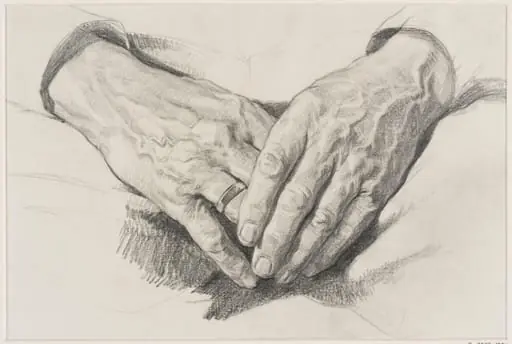
The subject is Leibl’s mother, portrayed with intimate stillness. Her face, partially veiled by a dark shawl, and her hands resting loosely in her lap suggest a moment of private repose. There is no narrative drama or symbolic flourish—only the presence of an ordinary woman, observed with quiet reverence. The focus on her aging features and modest attire underscores Leibl’s commitment to truthful representation over idealization.
Technique & Style
Leibl employed etching to achieve subtle gradations of tone, avoiding sharp lines in favor of soft, blurred transitions. The grain of the Japanese paper interacts with the ink, enhancing the texture of her hair and the folds of fabric. The rough paper edges and uneven ink application were deliberate, rejecting the smooth finish typical of commercial prints. This approach prioritized sensory realism over technical perfection.
History & Provenance
The print was made in 1874 during a period when Leibl was deeply engaged with direct observation and domestic subjects. It remained in the artist’s possession until his death, later entering the National Gallery of Art’s collection through a gift or acquisition. Its survival in relatively original condition reflects its modest reception during Leibl’s lifetime, as it was never widely reproduced or exhibited.
Context
Leibl was part of a German realist movement that rejected historical and mythological themes in favor of everyday life. This etching aligns with his broader practice of portraying family and rural figures with unembellished detail. At the time, etching was experiencing a revival among artists seeking alternatives to painting, and Leibl’s use of the medium reflected both technical curiosity and a philosophical preference for authenticity.
Legacy
Though not widely known outside specialist circles, this work exemplifies Leibl’s influence on late 19th-century realist printmaking. His choice to elevate a simple portrait through raw technique inspired later artists to value the expressive potential of imperfection. The etching stands as a quiet testament to his belief that truth resides in the unadorned observation of the familiar.
Artist & collection


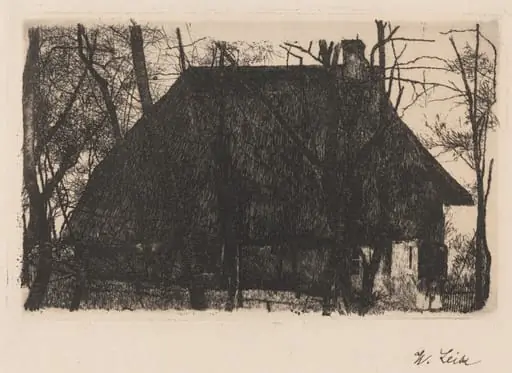
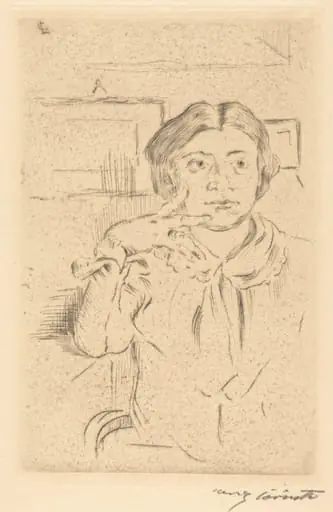 Gattin des Künstlers (Wife of the Artist)
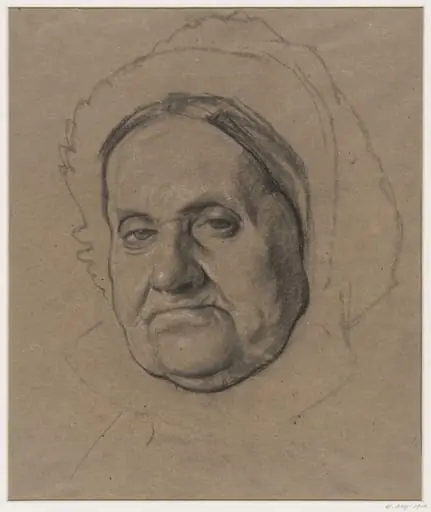 An old market woman.
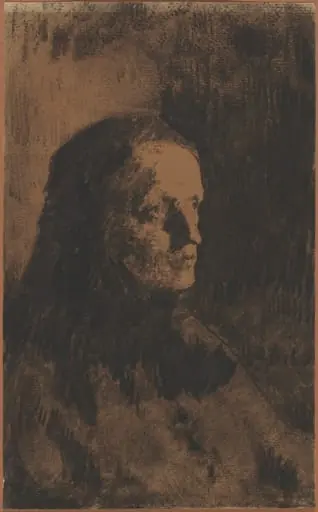 Head of an Old Woman
 Dameportræt
 Dameportræt
 Lace appraiser (L'Experte en Dentelles)
 The Artist's Mother Seated at a Table, Looking Right
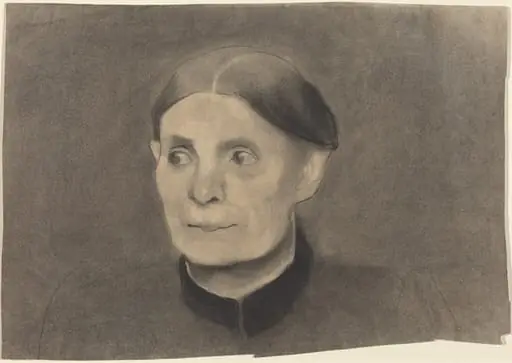 Portrait of a Woman
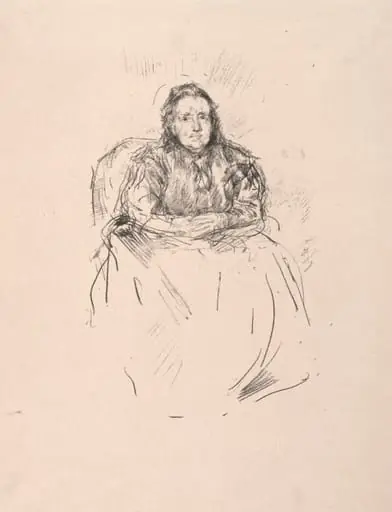 Portrait Study - Mrs. Phillip
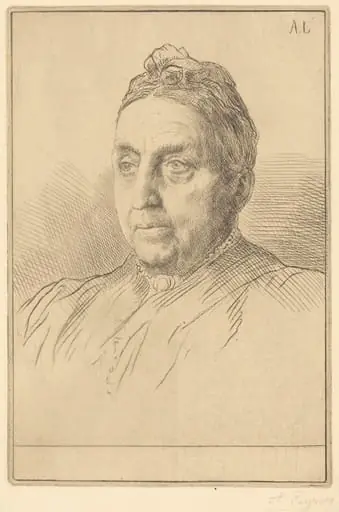 Mme. Kemp, 4th plate
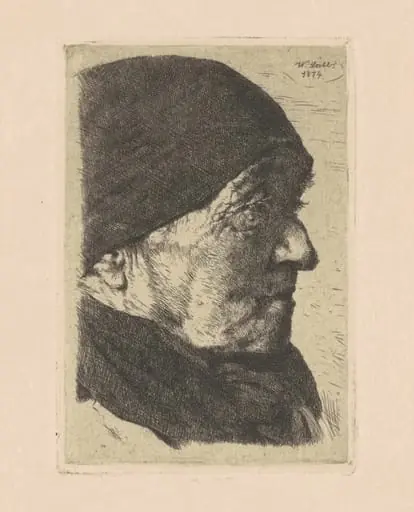 Portrait of an Old Peasant Woman, in Profile to the Right
 The Artist's Mother with Her Hand on Her Chest