Artwork
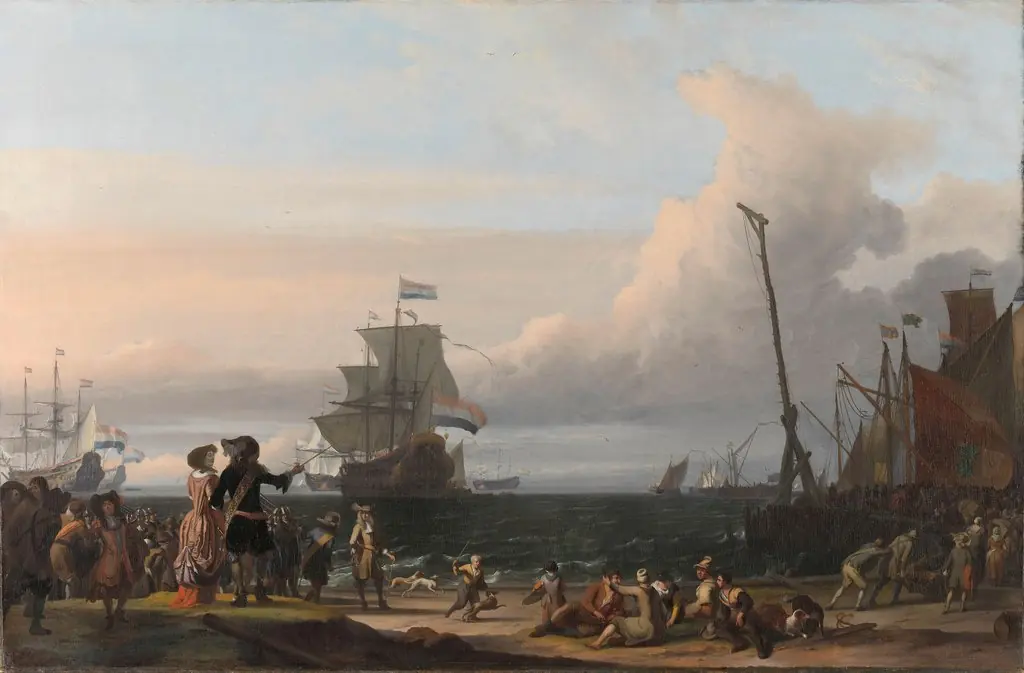
Den hollandske flåde under admiral Opdam passerer Sundet d. 29. oktober 1658 under Svenskekrigen 1657-60
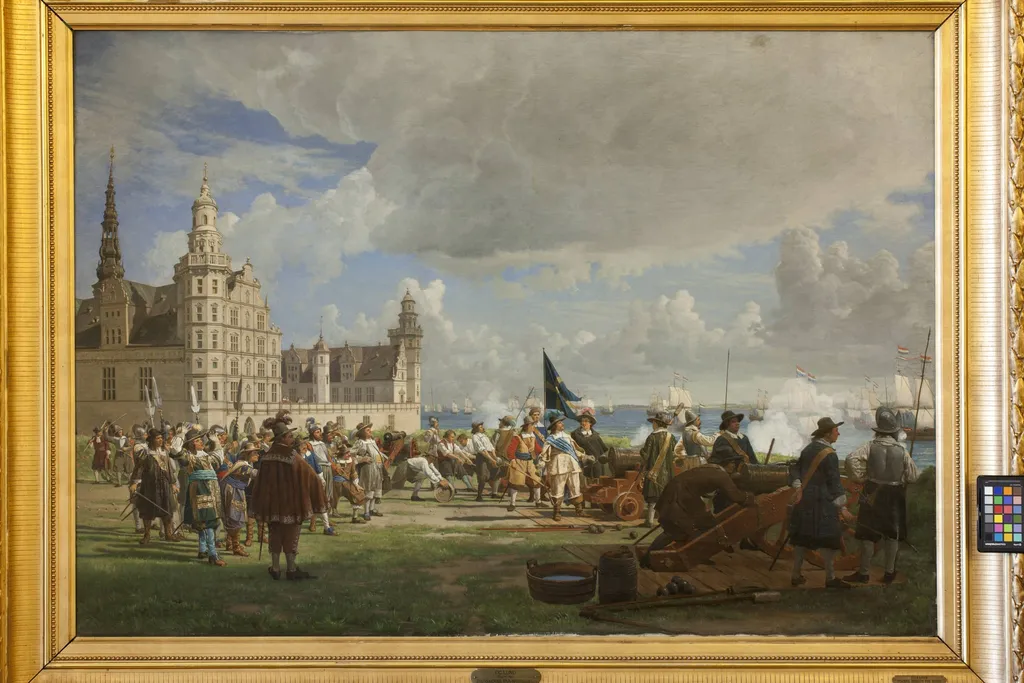
Den hollandske flåde under admiral Opdam passerer Sundet d. 29. oktober 1658 under Svenskekrigen 1657-60 is a photography by the Impressionist artist Unknown. It dates from 1872 and is held in the collection of the Statens Museum for Kunst.
About this work
Overview
Painted in 1872, this work depicts the Dutch fleet commanded by Admiral Opdam passing through the Sound on October 29, 1658, during the Second Northern War. Though the event occurred in the 17th century, the painting was created over two centuries later. It is part of the collection at the Museum of Ethnography, where it serves as a historical visualization rather than a contemporary record.
Subject & Meaning
The composition juxtaposes the ordered fleet with the chaotic human activity, underscoring the intersection of war and daily life.
The scene captures a pivotal naval movement during Sweden’s conflict with Denmark and its allies. Dutch ships, allied with Sweden, transit the strategically vital Øresund Strait. The foreground shows soldiers and civilians mingling on shore, suggesting the civilian impact of military operations. The composition juxtaposes the ordered fleet with the chaotic human activity, underscoring the intersection of war and daily life.
Technique & Style
The artist blends detailed realism in the rendering of ships, armor, and architecture with looser, atmospheric brushwork in the sky and water. Clouds are rendered with soft, luminous strokes, while the castle and cannons retain precise definition. This hybrid approach reflects 19th-century tendencies to merge documentary accuracy with emotional tone, moving beyond strict historical painting conventions.
History & Provenance
Created in 1872, the painting was acquired by the Museum of Ethnography, an institution more commonly associated with cultural artifacts than military art. Its presence there suggests an interest in depicting cross-cultural encounters and global conflict dynamics. The artist’s identity remains unverified in available records, and the work’s early ownership is undocumented.
Context
The Second Northern War (1655–1660) involved shifting alliances across Northern Europe. The Dutch navy’s passage through the Sound was part of a broader effort to support Sweden against Danish control of the strait. By the 1870s, European nations were re-examining their naval histories amid rising nationalism. This painting reflects that era’s fascination with reconstructing past military moments through art.
Legacy
Though not widely exhibited outside its home institution, the painting contributes to a 19th-century trend of reimagining 17th-century naval events with modern techniques. It stands as an example of how historical memory was visually shaped in the age of photography, where artists sought to preserve the spirit of past conflicts before they faded from collective awareness.
Artist & collection

 Domestic Scene
 Giacomo and Cardinal Marco, investing Andrea, Abbot of San Zeno, with his Benefice
 The Nymph of Fontainebleau
 Portrait of a Woman
 Madonna and Child with Saints in the Enclosed Garden
 Venus and Minerva
 Family Group of Four on Sofa
 Wall painting from Room H of the Villa of P. Fannius Synistor at Boscoreale
 Taking of Narva
 The failed Attack on Antwerp by Prince Maurice, 17 May 1605
 Kronborg set fra nordbastionen
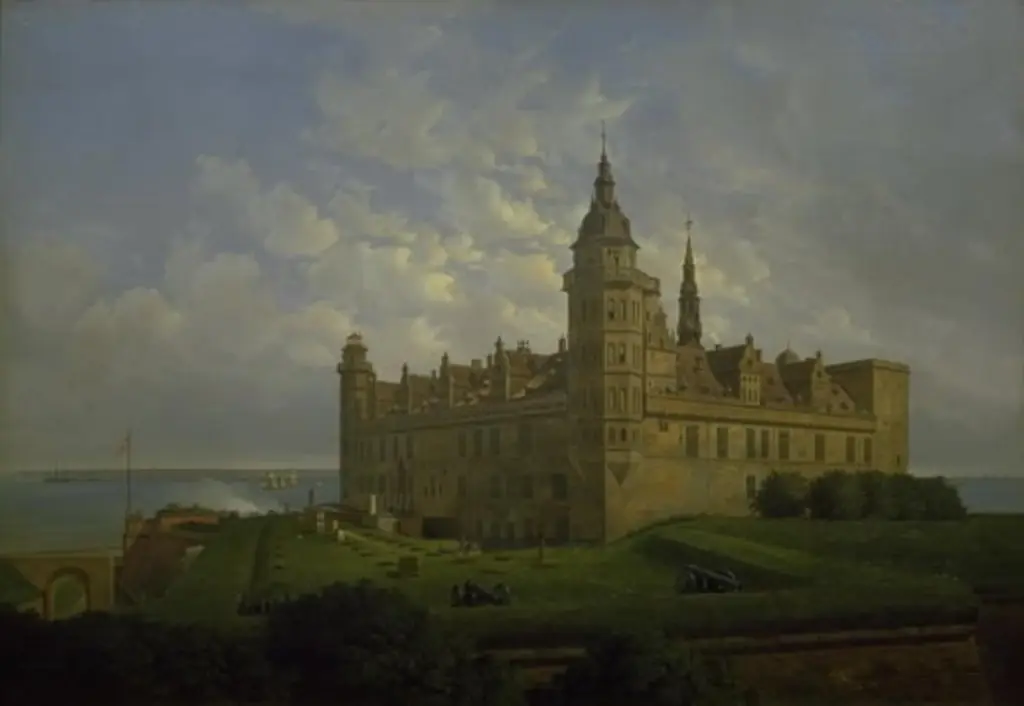 Kronborg set fra nordbastionen
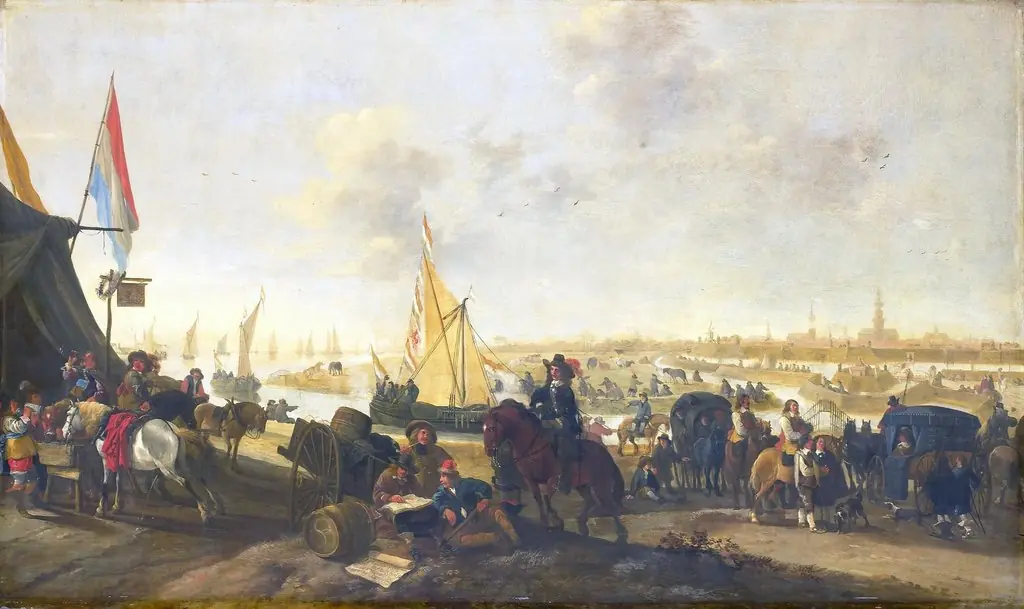 The Siege and Capture of the City of Hulst from the Spaniards, November 5, 1645
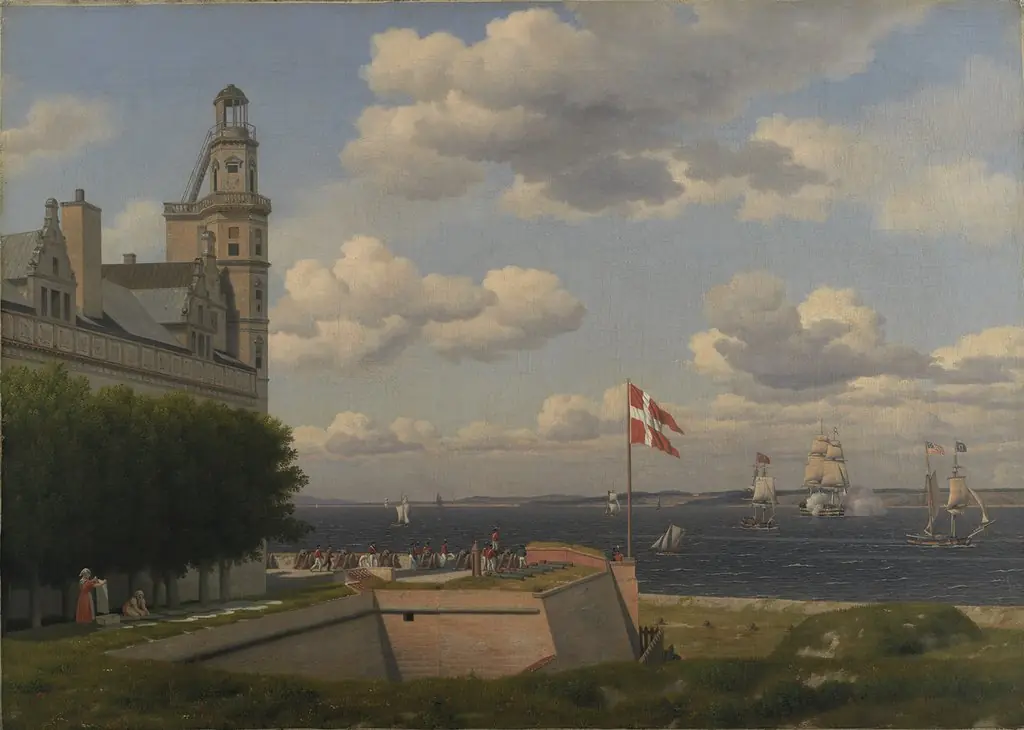 A View towards the Swedish Coast from the Ramparts of Kronborg Castle
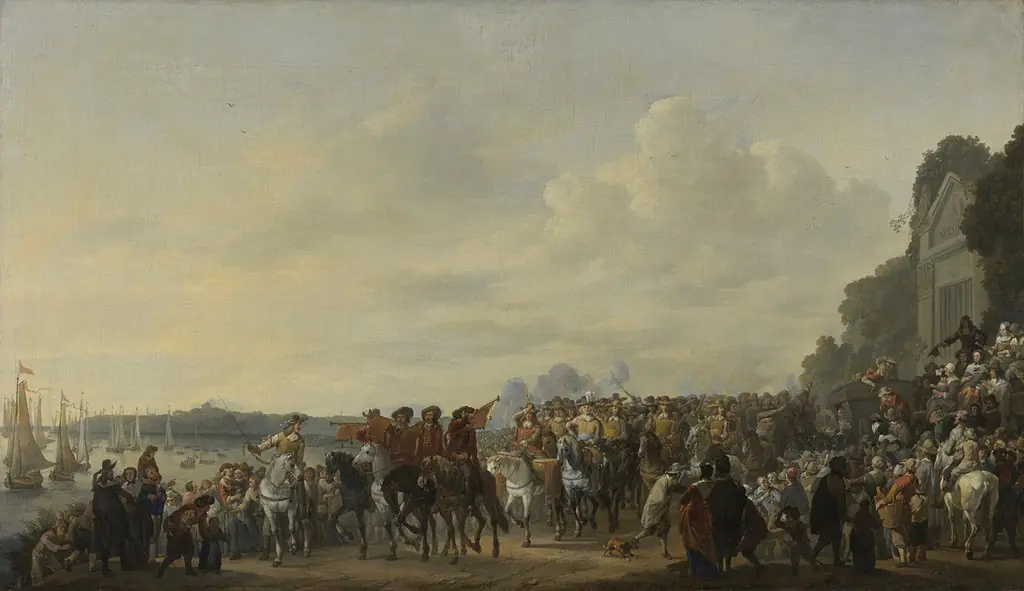 Charles II (1630-1685) stopping at the Estate of Wema on the Rotte on his Journey from Rotterdam to The Hague, 25 May 1660
 Dutch ships in the roads of Texel; in the middle the 'Gouden Leeuw,' the flagship of Cornelis Tromp
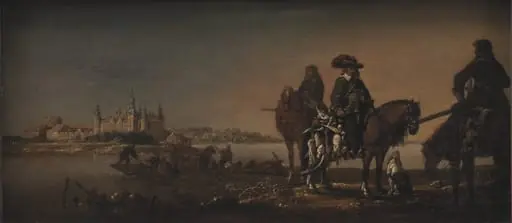 Prince Christian, the Heir Apparent, Hunting Ducks at Nykøbing Castle