Artwork
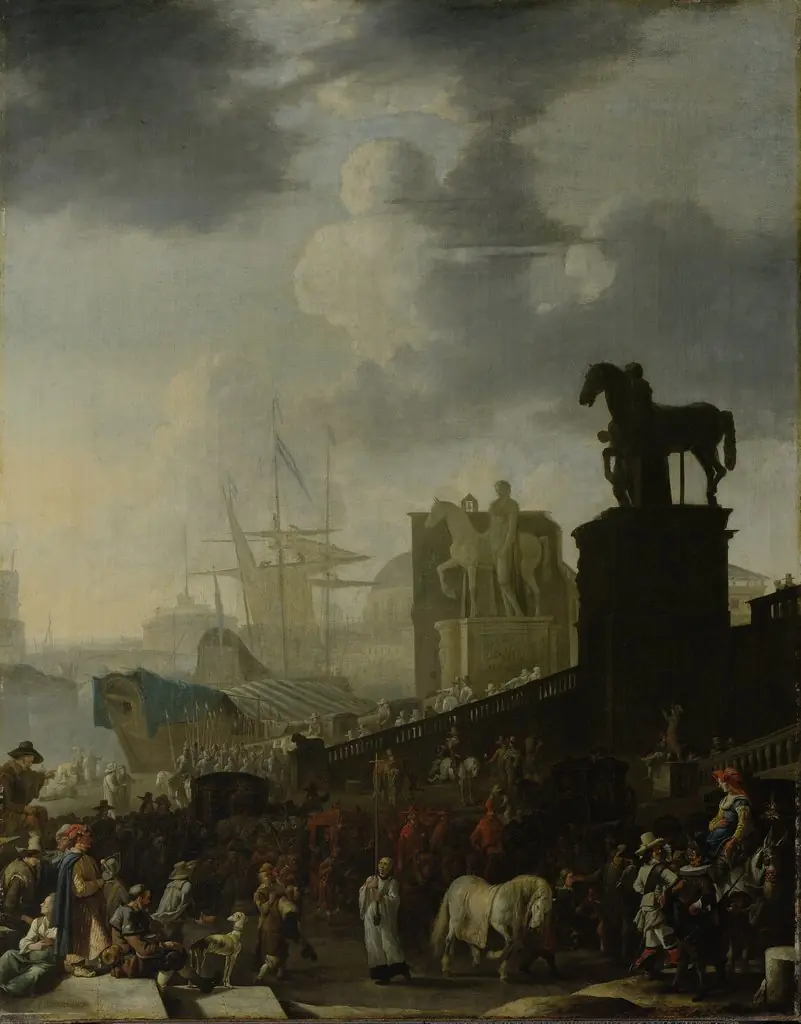
Charles II (1630-1685) stopping at the Estate of Wema on the Rotte on his Journey from Rotterdam to The Hague, 25 May 1660
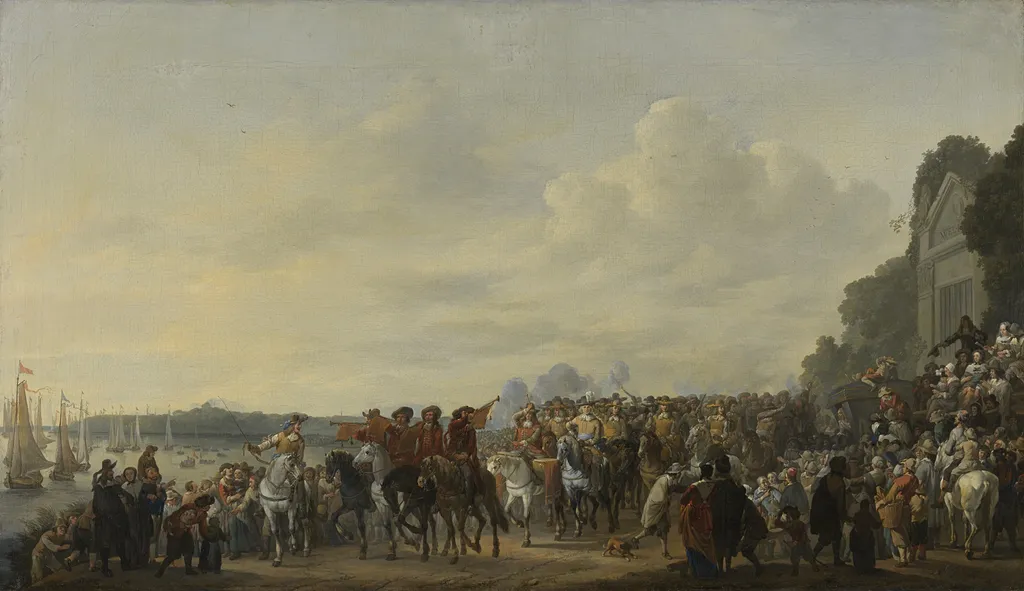
Charles II (1630-1685) stopping at the Estate of Wema on the Rotte on his Journey from Rotterdam to The Hague, 25 May 1660 is an oil painting by the Dutch Golden Age artist Johannes Lingelbach. It dates from 1662 and is held in the collection of the Mauritshuis.
About this work
Overview
This 1662 oil painting by Johannes Lingelbach captures a pivotal moment in the journey of Charles II of England. The work depicts the monarch's brief stop at the Estate of Wema on the Rotte river during his travel from Rotterdam to The Hague on May 25, 1660.
Subject & Meaning
The painting focuses on Charles II, shown mounted and accompanied by a soldier, amidst a bustling Dutch landscape. The scene conveys the king's return to power, symbolizing his restoration through the depiction of movement and activity.
Technique & Style
Lingelbach, associated with the second generation of Bambocciate painters, employs a vibrant color palette ranging from sky blues and whites to earthy tones, characteristic of Dutch Golden Age painting. The composition balances dynamic foreground action with detailed background elements, including a river with boats and a prominent building.
History & Provenance
Created in 1662, the painting is now part of the Mauritshuis collection. Its creation coincides with Lingelbach's activity within the Dutch Golden Age, reflecting his ties to the Bambocciate style, known for capturing everyday life and scenes of movement.
Context
The work's context is rooted in the political climate of 1660, marking Charles II's restoration to the English throne. The painting's Dutch setting reflects the king's journey through the Netherlands, a significant stopover in his return to England.
Legacy
While specific legacy details of this piece are not widely highlighted, it contributes to the broader understanding of 17th-century Dutch art's ability to narrate historical events through vivid, dynamic scenes, characteristic of the Golden Age's storytelling tradition.
Own this work as a print
Artist & collection
Artist
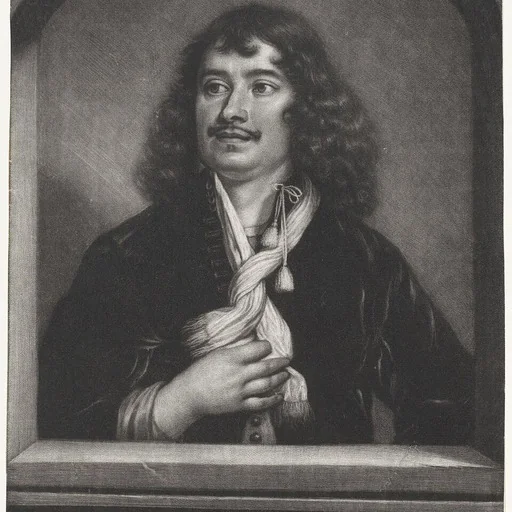
Johannes (or Johann) Lingelbach (1622 – 3 November 1674) was a Dutch Golden Age painter, associated with the second generation of Bambocciate, a group of genre painters working in Rome from 1625–1700.

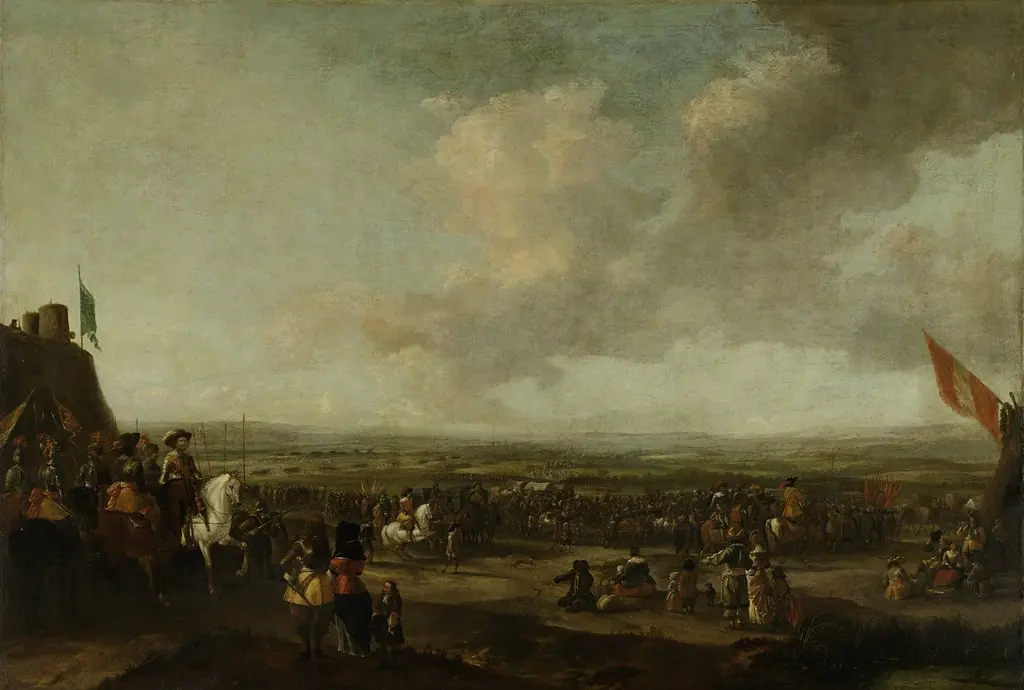 Frederik Hendrik at the surrender of Maastricht, 22 August 1632
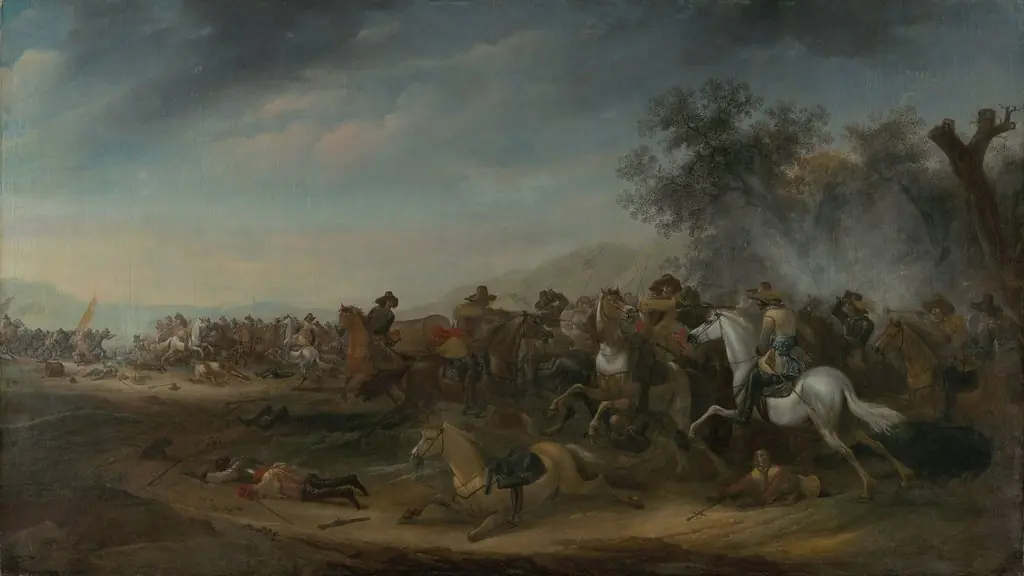 Feldschlacht
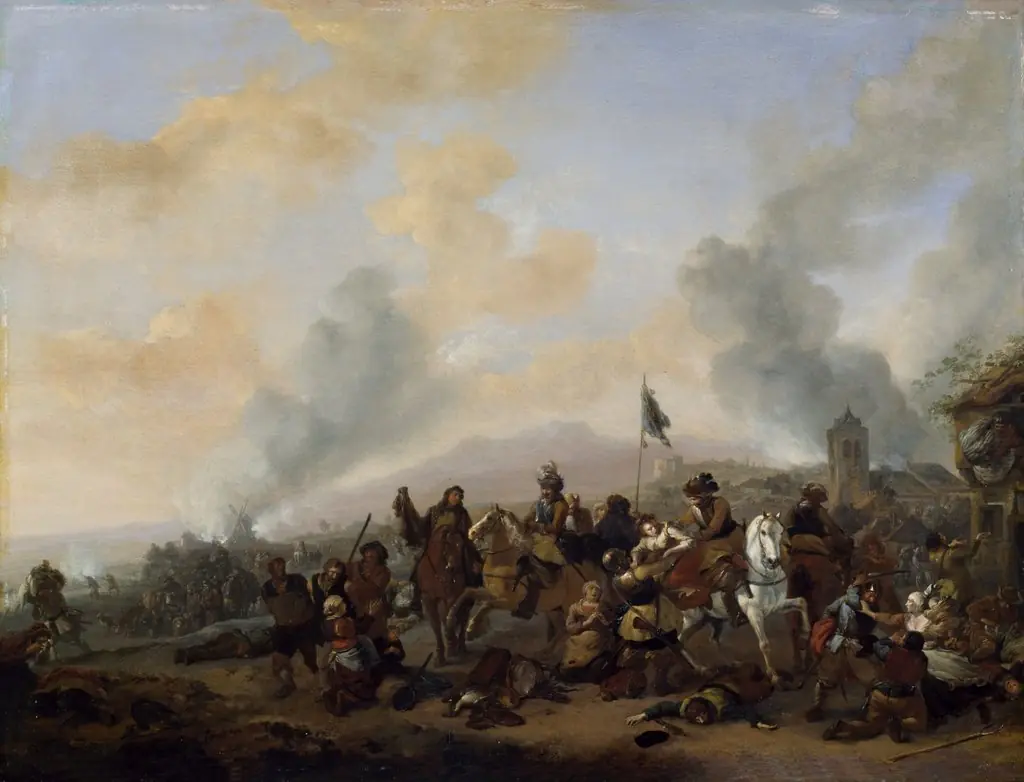 Soldiers Plundering a Village
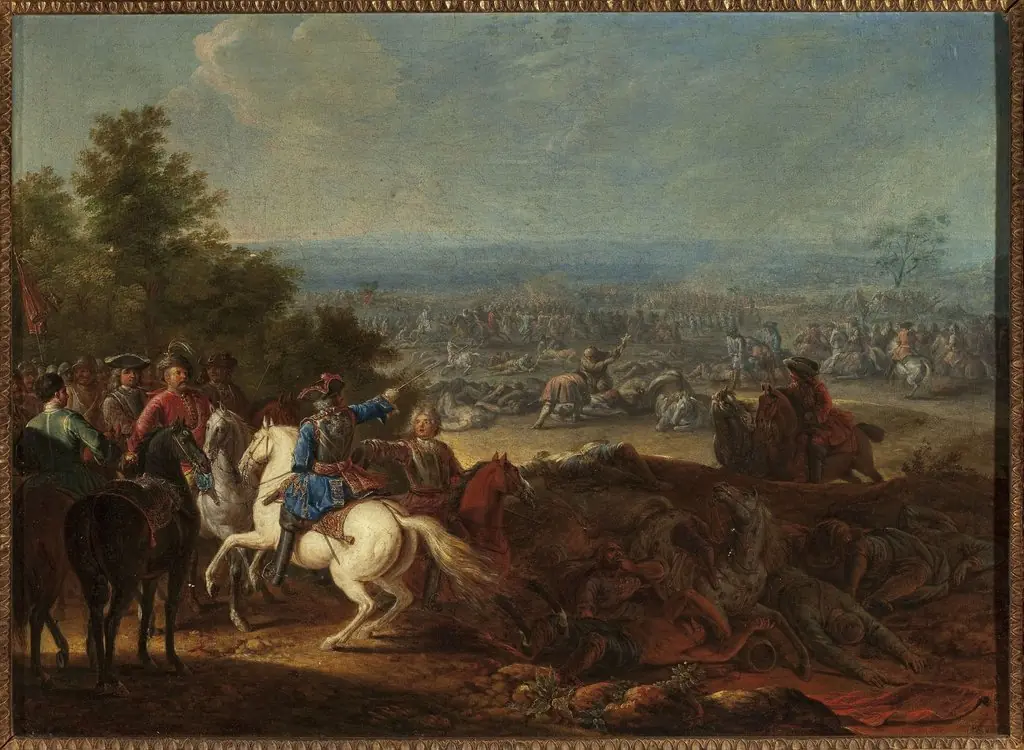 After the battle
 Târgul de cai
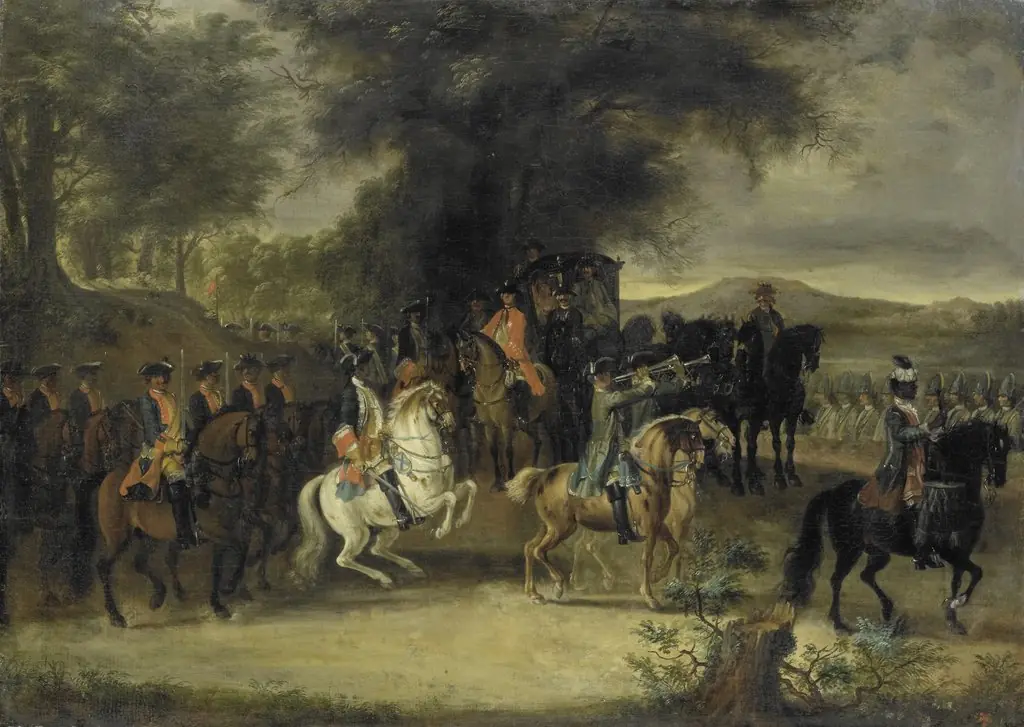 Inspection of a Cavalry Regiment, perhaps by William of Hesse-Homburg
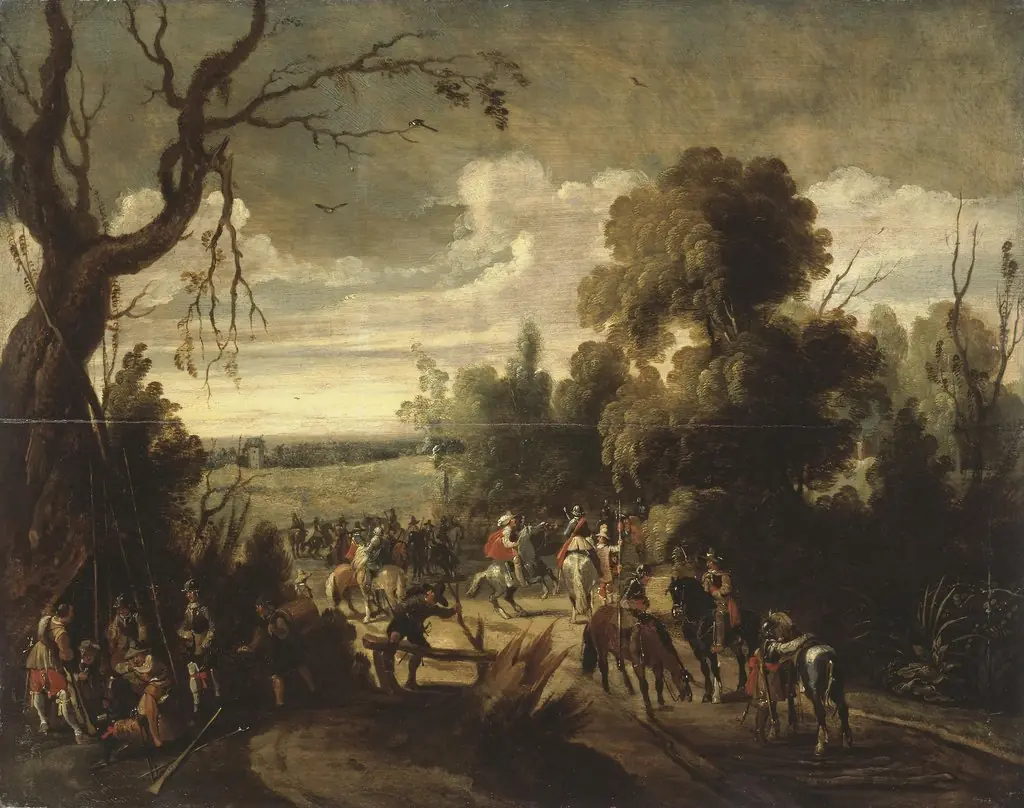 Rest of Cavalrymen
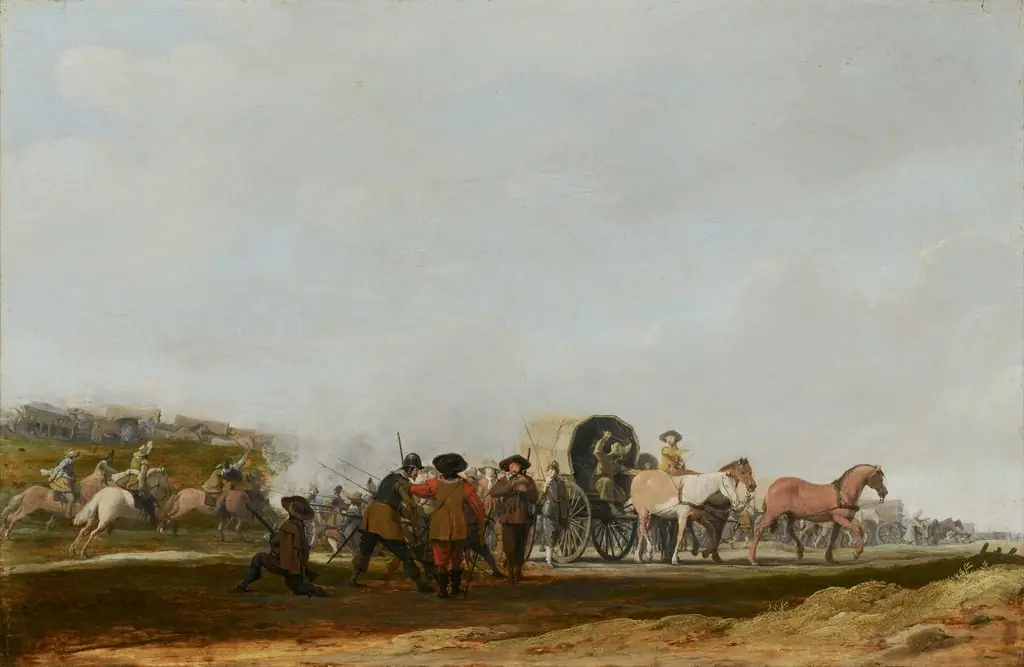 Ambushing an Army Convoy
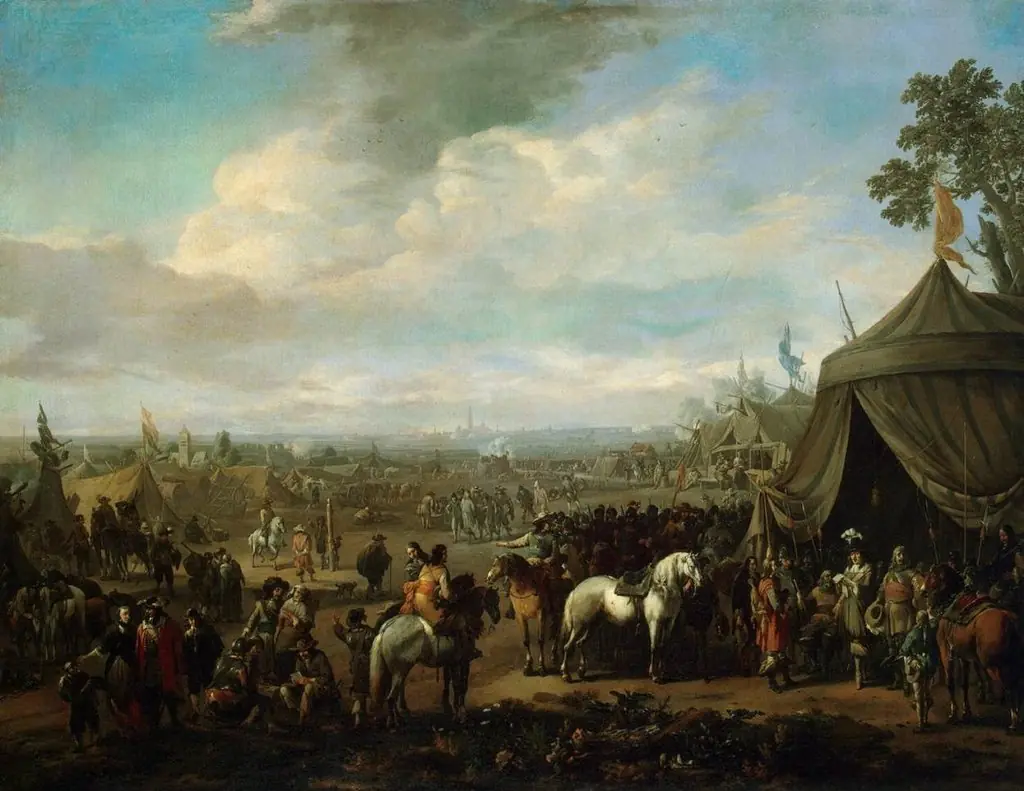 Flemish Town Sieged by the Spanish Soldiers
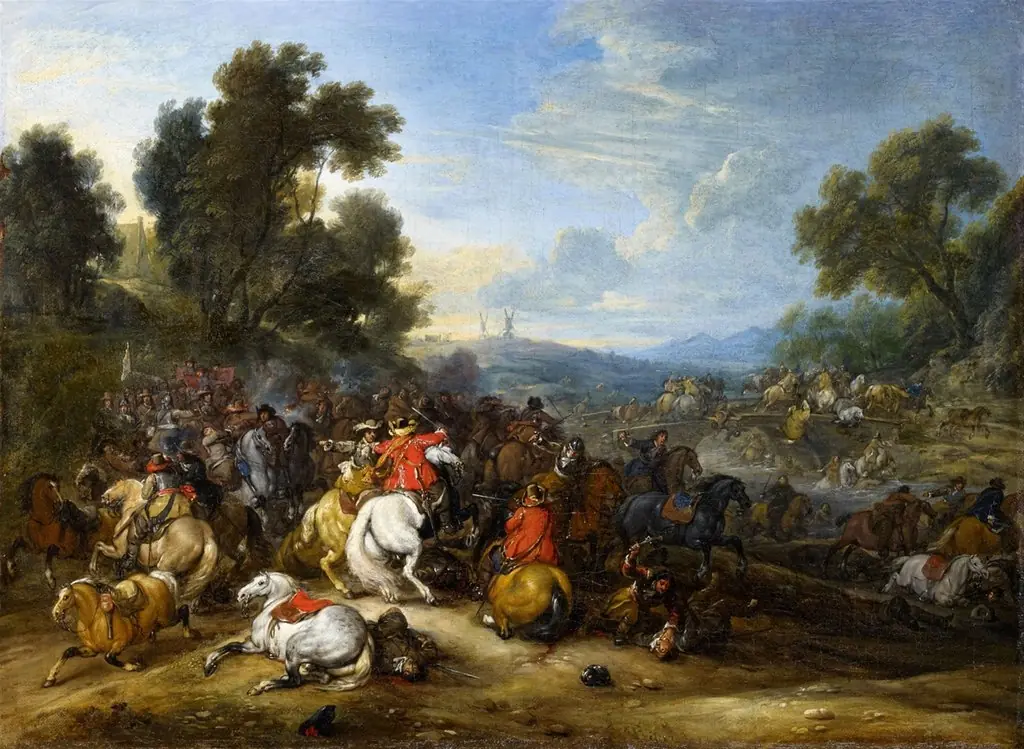 Cavalry engagement