Artwork
Stilleben, Gemüse
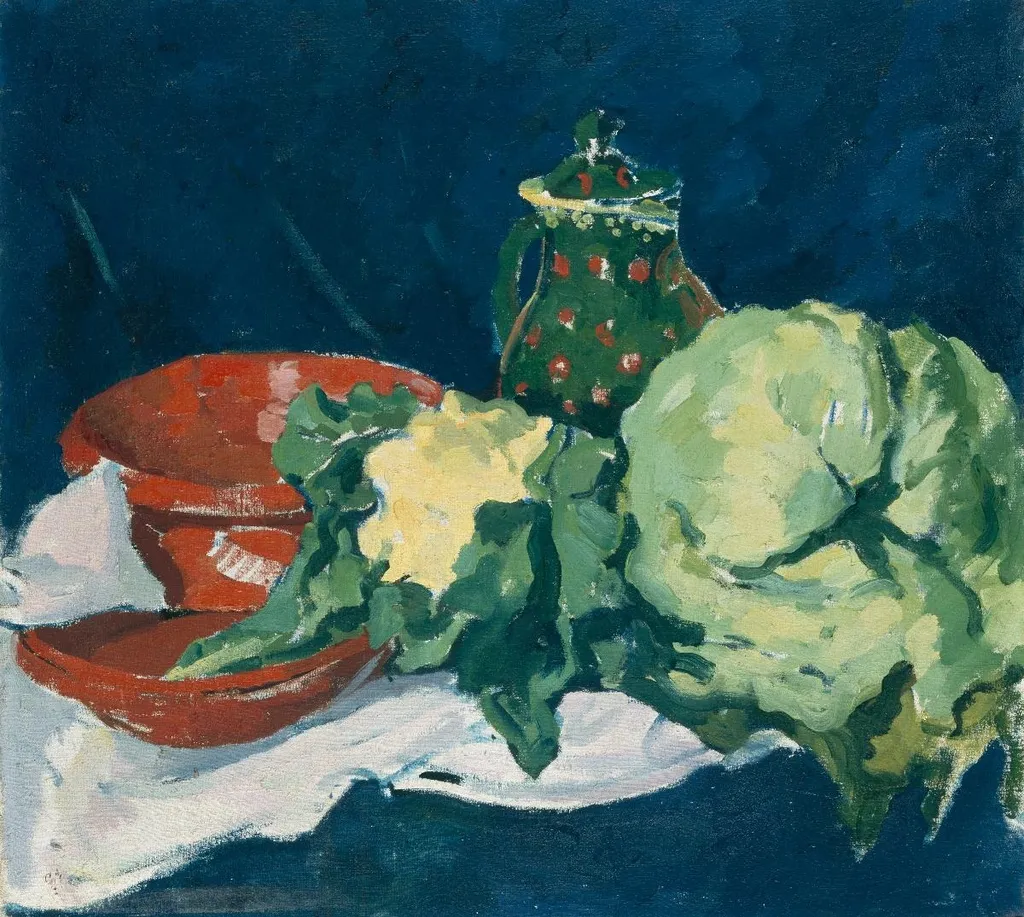
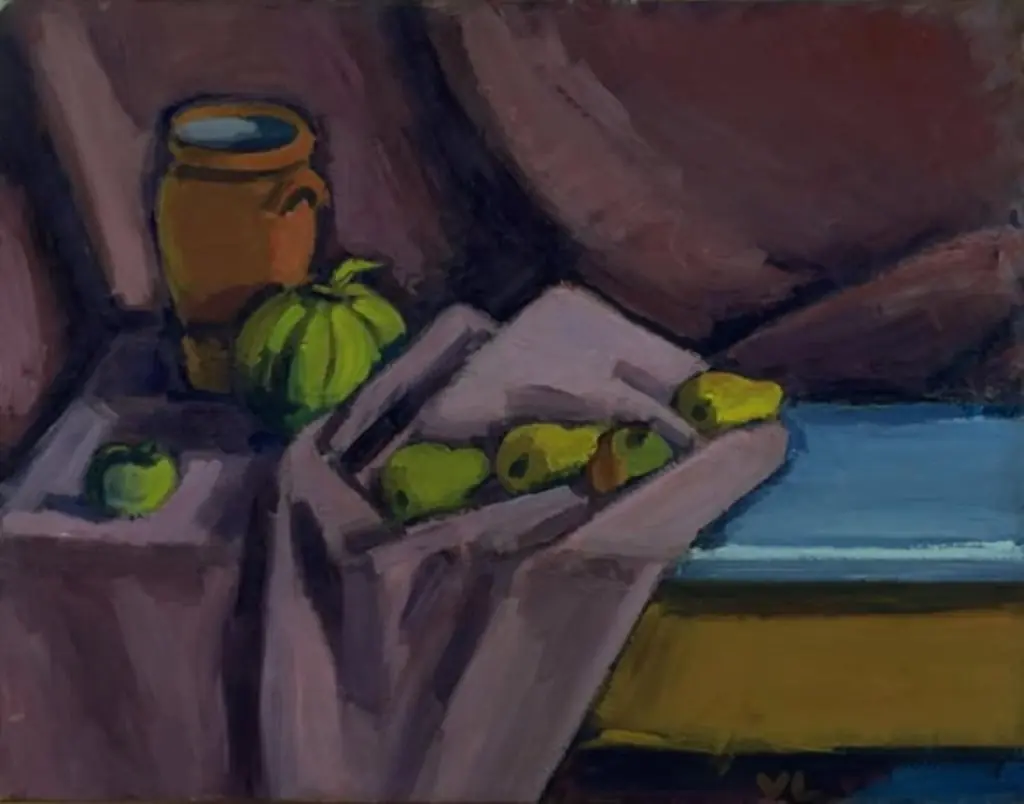
Stilleben, Gemüse is an oil painting by Giovanni Giacometti. It dates from 1918 and is held in the collection of the Kunsthaus Zürich.
About this work
Overview
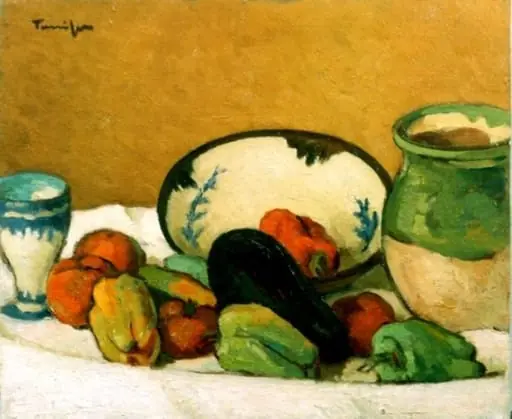
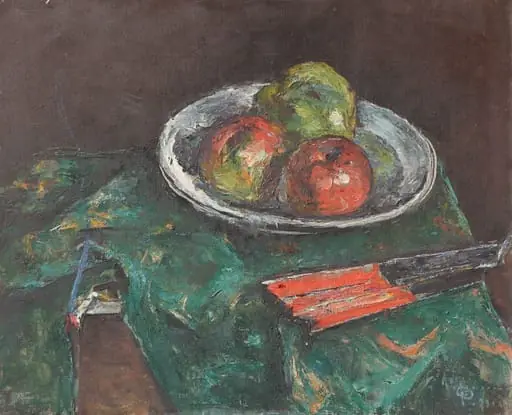
Giovanni Giacometti’s 1918 oil on canvas titled *Stilleben, Gemüse* presents a modest arrangement of everyday kitchen objects—a green jug with a lid, an empty red bowl, and a light‑green cabbage. The composition is rendered with a restrained palette of greens and earth tones, emphasizing the subtle interplay of light across the surfaces. The work is part of the collection of the Kunsthaus Zürich.
Subject & Meaning
The painting focuses on ordinary domestic items, inviting contemplation of their material qualities rather than narrative content. By isolating the jug, bowl, and cabbage, Giacometti highlights the quiet presence of household objects, suggesting a meditation on the simple, utilitarian aspects of daily life.
Technique & Style
Executed with loose, expressive brushwork, the canvas reveals visible strokes that convey texture and the fleeting effects of illumination. Giacometti employs a muted chromatic range, allowing variations of green and brown to articulate form and depth. The handling of light is delicate, creating a sense of atmosphere without detailed realism.
History & Provenance
Created in the immediate post‑World War I period, the work reflects Giacometto’s engagement with Swiss modernism. It entered the holdings of the Kunsthaus Zürich, where it remains on display as part of the museum’s representation of early 20th‑century Swiss painting.
Context
Giacometti worked during a time when Swiss artists were exploring new approaches to light and texture within everyday subjects. His still lifes, including *Stilleben, Gemüse*, align with broader European trends toward expressive realism, while retaining a distinctive sensitivity to the quiet domestic environment of his native country.
Artist & collection
Artist
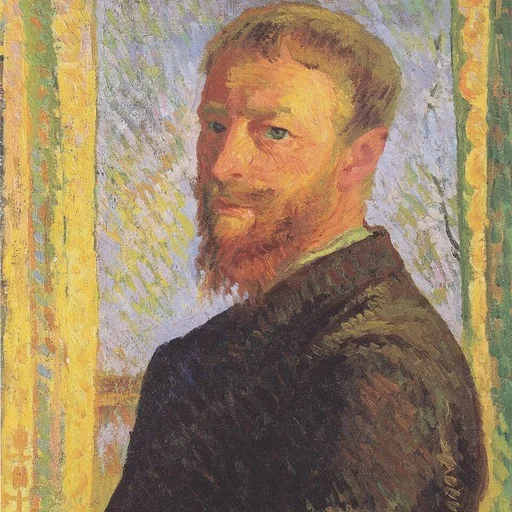
Giovanni Ulrico Giacometti (7 March 1868 – 25 June 1933) was a Swiss painter. He was the father of artists Alberto and Diego Giacometti and architect Bruno Giacometti.