Artwork
The Ruined Temple of Friendship in the Grounds at Stowe
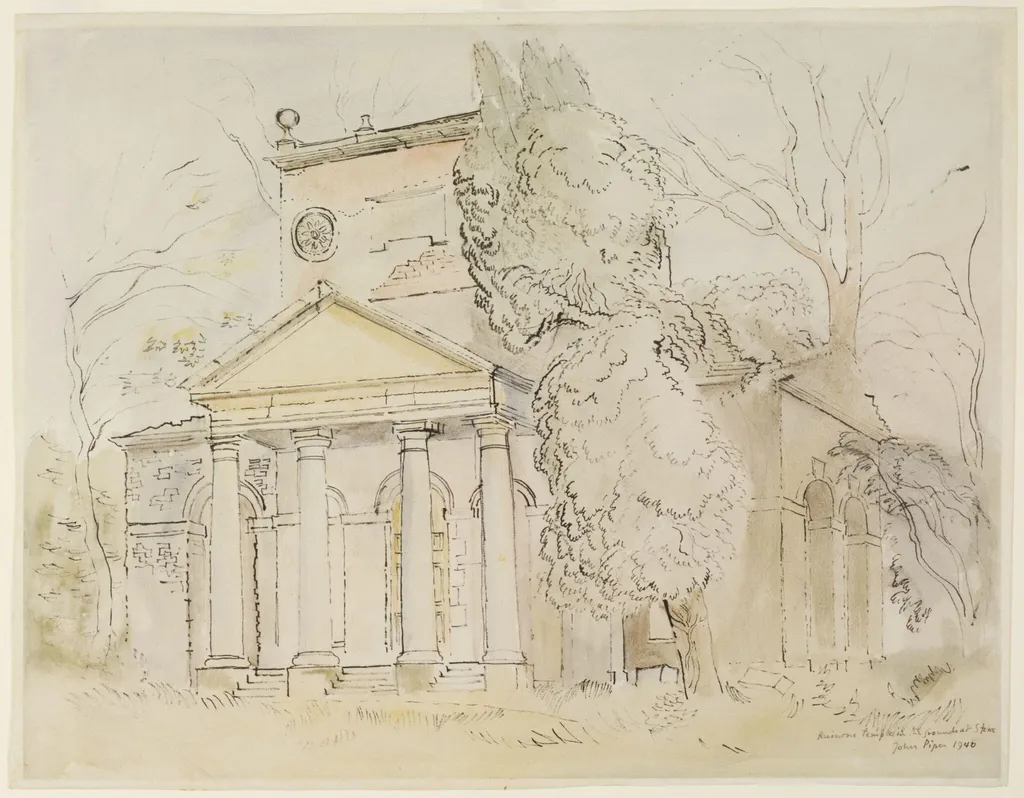
The Ruined Temple of Friendship in the Grounds at Stowe is a watercolor work on paper by the British Romanticist artist Piper. It dates from 1940 and is held in the collection of the Victoria and Albert Museum.
About this work
Overview
John Piper created this watercolour in 1940 as part of the 'Recording Britain' initiative, a wartime effort to document the nation’s architectural heritage.
John Piper created this watercolour in 1940 as part of the 'Recording Britain' initiative, a wartime effort to document the nation’s architectural heritage. The work depicts the Temple of Friendship, an 18th-century ruin within the Stowe landscape. Executed in watercolour, it belongs to a collection of over 1,500 works commissioned by the Pilgrim Trust under Sir Kenneth Clark’s direction, aiming to preserve visual records of sites vulnerable to neglect or conflict.
Subject & Meaning
The Temple of Friendship, a classical folly built in the 1730s, stands in partial decay, its columns and roof damaged by time and weather. Its isolation among overgrown vegetation suggests abandonment, evoking themes of transience and cultural memory. In the context of wartime Britain, the ruin became a quiet symbol of enduring national identity — a reminder of heritage worth preserving even as the country faced upheaval.
Technique & Style
Piper employed transparent watercolour washes to convey the temple’s weathered stone and the softness of surrounding foliage. Subtle tonal contrasts define the crumbling architecture, while the muted grey sky balances the vibrant greens of the trees. Delicate linework outlines architectural details, and the absence of sharp shadows avoids dramatic emphasis, favoring a contemplative, observational tone consistent with the project’s documentary aims.
History & Provenance
Created during Piper’s involvement with the 'Recording Britain' project, the watercolour was acquired by the Victoria and Albert Museum as part of the collection’s original holdings. The initiative, launched in 1939, prioritized sites at risk from development or war damage. Piper’s depiction of Stowe’s temple was one of 63 commissioned works, selected for its architectural significance and emotional resonance within the English landscape tradition.
Context
The 'Recording Britain' project emerged as a cultural response to the uncertainty of wartime. Artists were sent across the country to record vernacular buildings, ruins, and rural scenes deemed vulnerable. The Temple of Friendship, though not a religious or civic monument, represented the aristocratic landscape tradition — a fading aspect of British life. Its depiction served as both archive and elegy.
Legacy
Piper’s watercolour remains a key example of mid-20th-century British topographical art. It contributes to a broader historical record of heritage sites, many of which have since changed or disappeared. The work continues to inform conservation discourse and is studied for its quiet documentation of loss, offering insight into how artists responded to national anxiety through the lens of place.
Artist & collection
Artist
A 1940s British artist known for delicate watercolours of country houses, churches, and riverside views, Piper captured quiet corners of England in soft washes and fine lines.

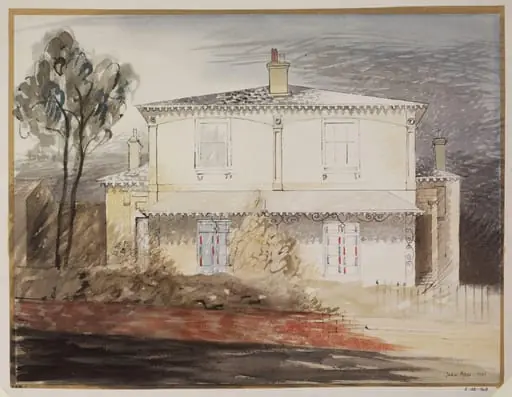 A House, Maidenhead
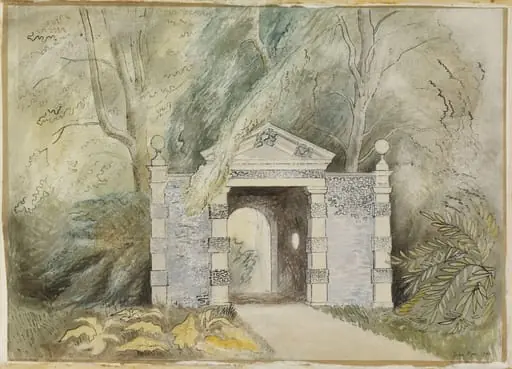 The river approach, Fawley Court
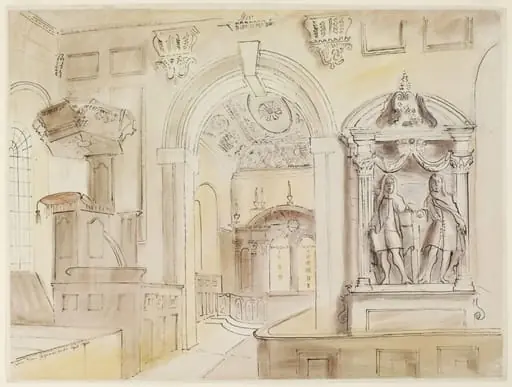 Interior of St. Peter's Church, Gayhurst
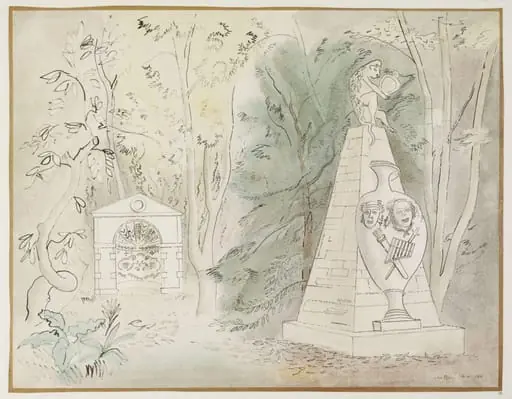 Congreve Monument (designed by Wm. Kent) and Shell Grotto, Stowe
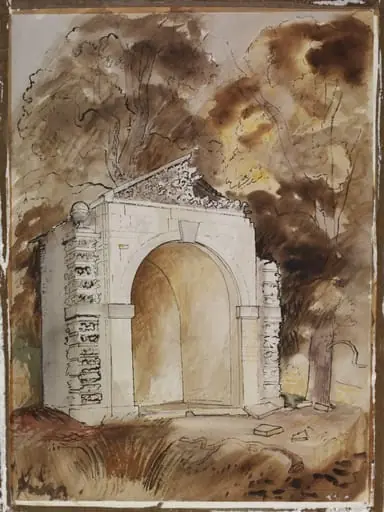 The Duck House in the Park of Buckland House near Faringdon
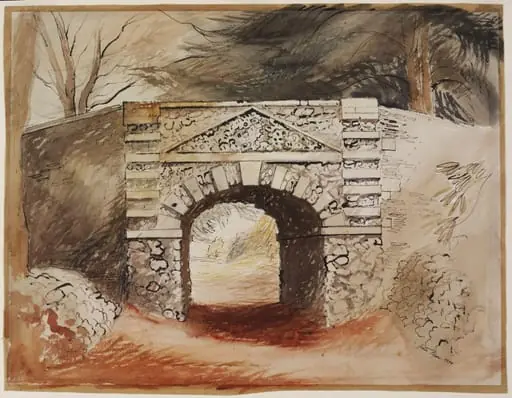 The Tunnel in the grounds of Buckland House, near Faringdon
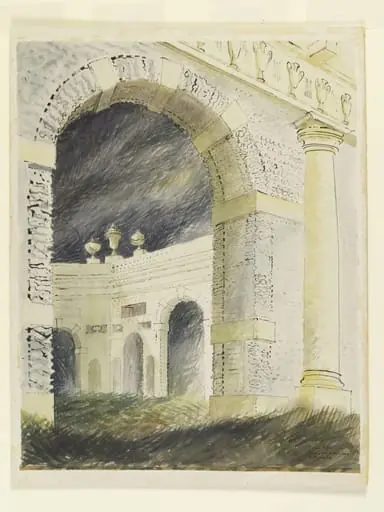 Dashwood Mausoleum, West Wycombe
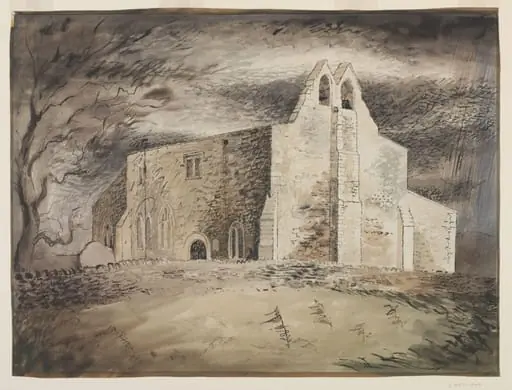 Exterior of the Church of St. Denis, Faxton
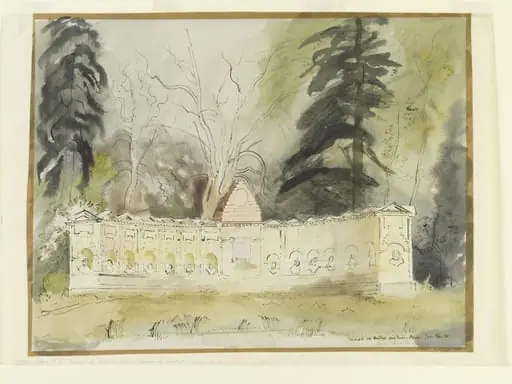 The Temple of British Worthies, Stowe, Gloucestershire
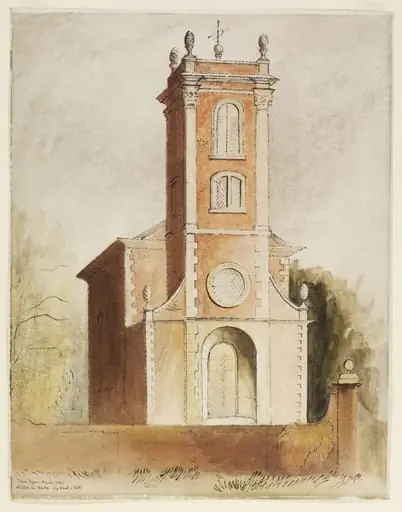 Busby's Church, Willen
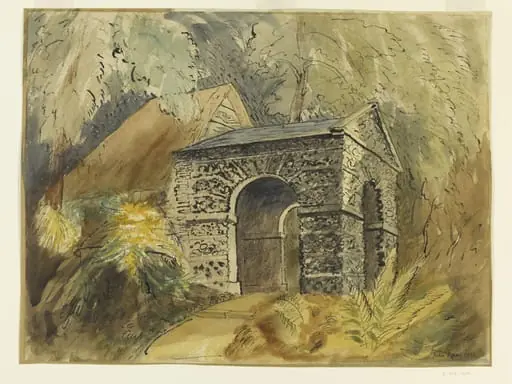 The Ice Store in the grounds of Buckland House near Faringdon
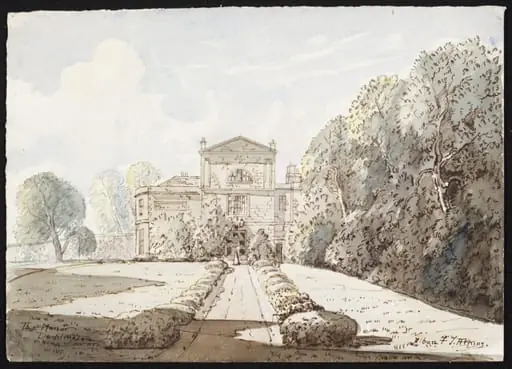 The Manor, Deddington
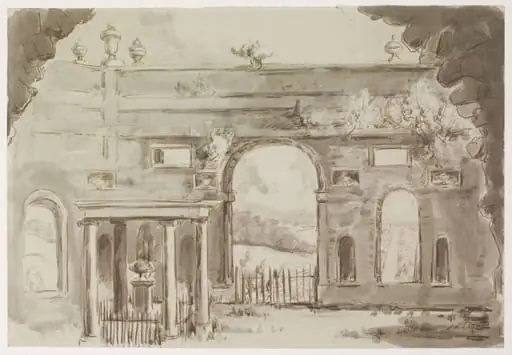 Dashwood Mausoleum West Wycombe, with road to High Wycombe
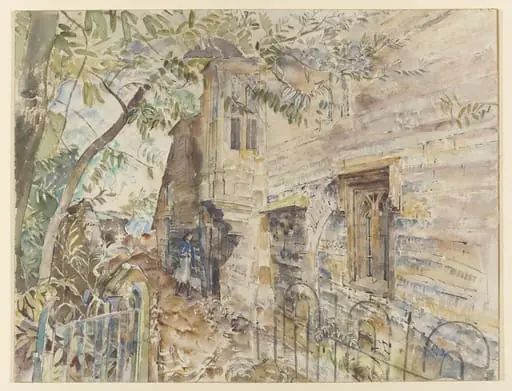 The Guest House, Cerne Abbas
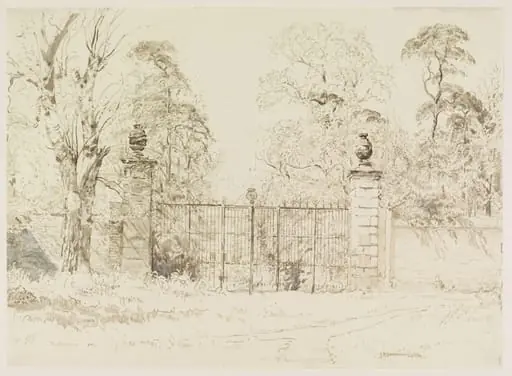 The Old Gates, Ham House
 Untitled
 A house, with trees
 Drawing of St. Cloud