Artwork
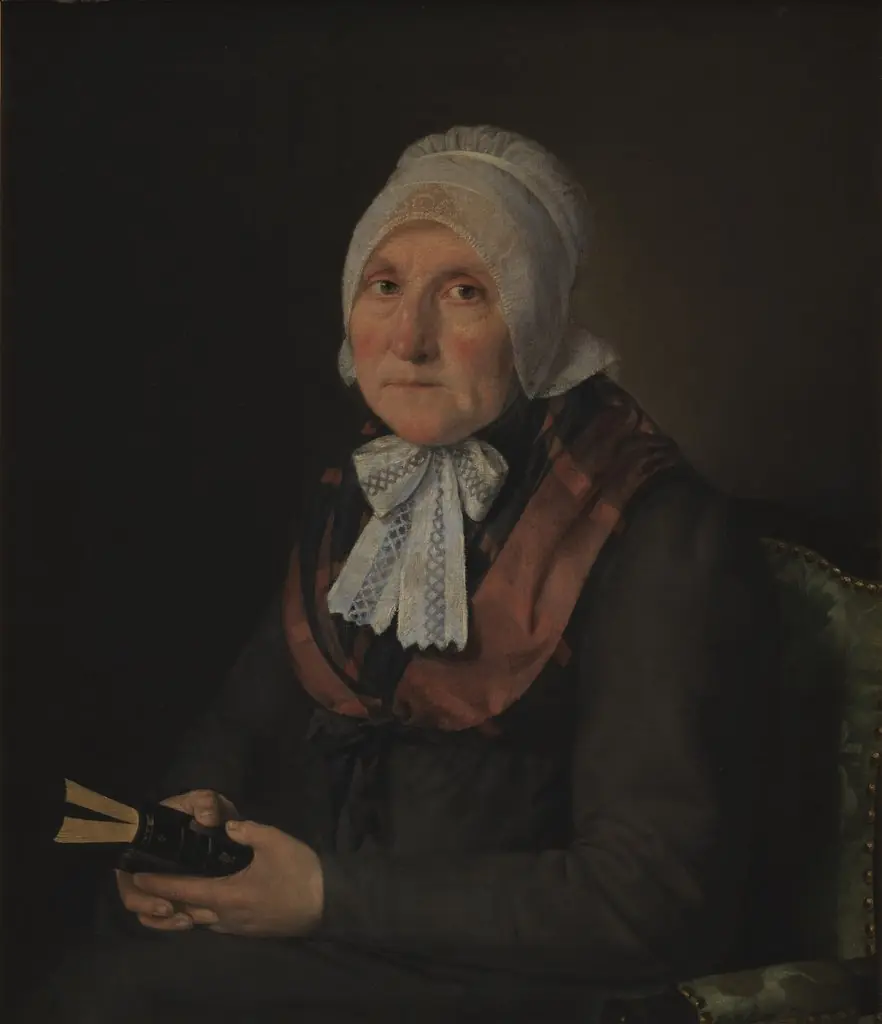
The Artist's Mother, Frederikke Eleonore Cathrine Rørbye, née Stockfleth
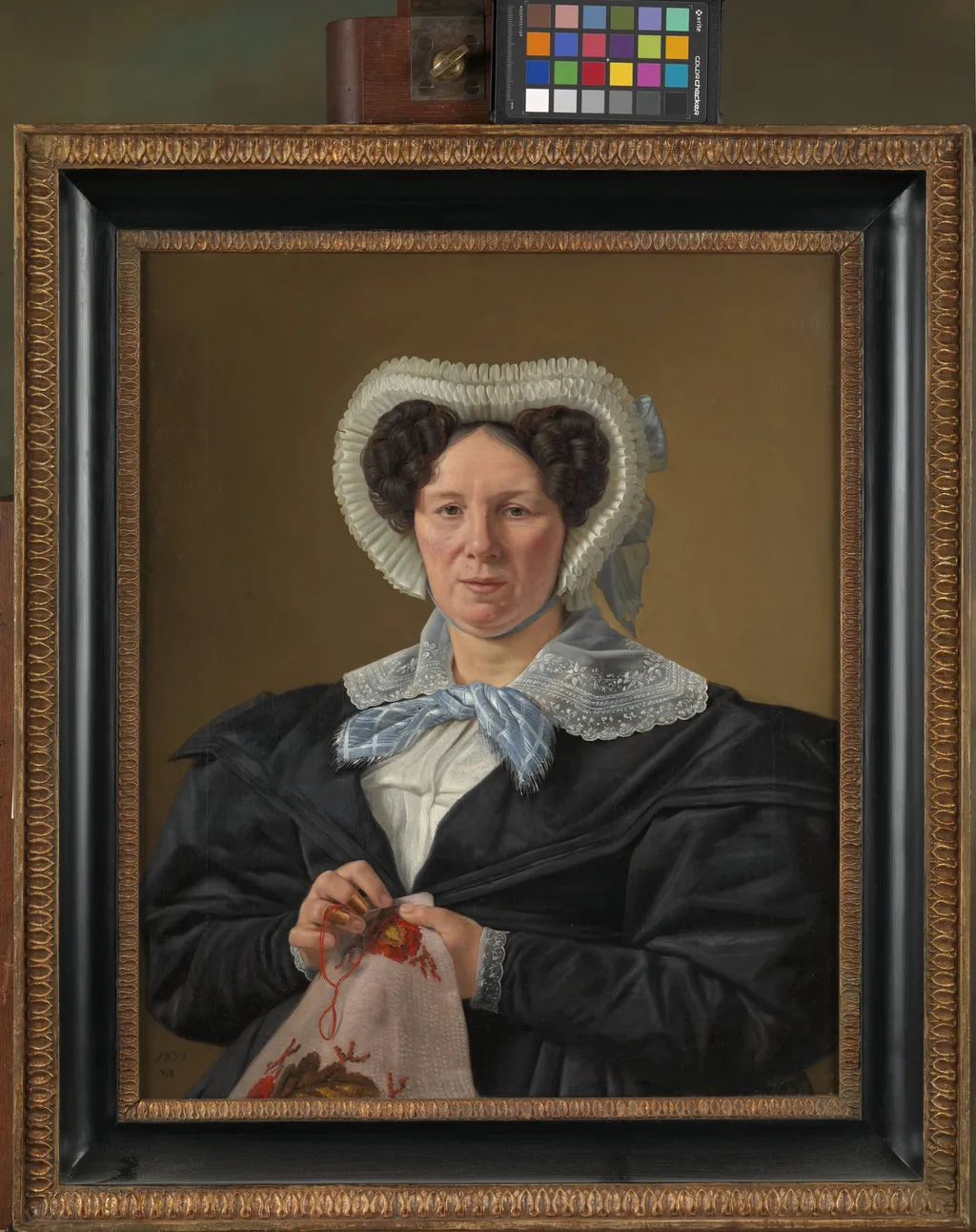
The Artist's Mother, Frederikke Eleonore Cathrine Rørbye, née Stockfleth is a photography by the Romanticist artist Unknown. It dates from 1834 and is held in the collection of the Statens Museum for Kunst. Created in 1834, this portrait depicts Frederikke Eleonore Cathrine Rørbye, the mother of the artist Michael Ancher.
About this work
She wears a dark dress with lace trim at the collar and cuffs, and a white cap with ribbons tied under her chin.
This photo shows a woman holding a small embroidery project in her hands. She wears a dark dress with lace trim at the collar and cuffs, and a white cap with ribbons tied under her chin. The background is plain and dark, keeping all focus on her.
The woman looks calm but serious, her fingers gently gripping the thread. This photo was taken in 1834, making it one of the earliest portraits using a new technology.
Look up Romanticism to see how this style valued emotion and everyday life.
Overview
Created in 1834, this portrait depicts Frederikke Eleonore Cathrine Rørbye, the mother of the artist Michael Ancher. It is among the earliest photographic portraits made using the daguerreotype process, capturing a quiet, intimate moment rather than a formal pose. The image is held in the collection of the Museum of Ethnography, reflecting early photography’s role in documenting personal and domestic life.
Subject & Meaning
The subject, Frederikke Rørbye, is shown engaged in embroidery, a domestic activity that symbolized feminine diligence and quiet labor. Her composed expression and focused gaze suggest introspection rather than performance. The act of needlework, rendered with subtle detail, elevates an ordinary task into a moment of personal dignity, aligning with Romantic ideals that honored everyday sincerity over grandeur.
Technique & Style
Executed as a daguerreotype, the image relies on a highly polished silver surface to produce a sharp, mirror-like detail. The dark, unadorned background isolates the figure, drawing attention to her attire and hands. The lighting is even and soft, preserving fine textures in the lace trim and fabric folds. The medium’s technical limitations favored stillness, reinforcing the portrait’s contemplative tone.
History & Provenance
The portrait was made in Denmark in 1834, shortly after the daguerreotype process was announced to the public. It remained within the artist’s family before entering the Museum of Ethnography’s collection. Its preservation reflects early recognition of photography’s value as a documentary and personal medium, distinct from painted portraiture.
Context
In the 1830s, photography emerged as a scientific innovation with growing cultural resonance. While Romantic painting often idealized nature and emotion, this photograph captured the quiet reality of domestic life with unembellished clarity. Its subject, a woman immersed in needlework, reflects broader societal expectations of women’s roles, rendered with a new visual honesty.
Legacy
This portrait stands as an early example of photography’s capacity to convey psychological depth through stillness and detail. It influenced later artists and photographers who sought to portray ordinary subjects with dignity. Its survival offers insight into the transition from painted to photographic representation in 19th-century Northern Europe.
Artist & collection

 Domestic Scene
 Giacomo and Cardinal Marco, investing Andrea, Abbot of San Zeno, with his Benefice
 The Nymph of Fontainebleau
 Portrait of a Woman
 Madonna and Child with Saints in the Enclosed Garden
 Venus and Minerva
 Family Group of Four on Sofa
 Wall painting from Room H of the Villa of P. Fannius Synistor at Boscoreale
 Frauenportrait
 Johanna Christina Beelenkamp (1820-90). Wife of Cornelis Outshoorn
 Johanna Christina Beelenkamp (1820-90). Wife of Cornelis Outshoorn
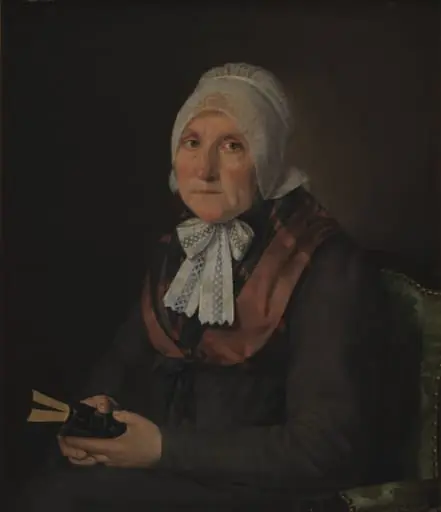 Maria Magdalena Jensen, née Jessen, the Artist's Mother
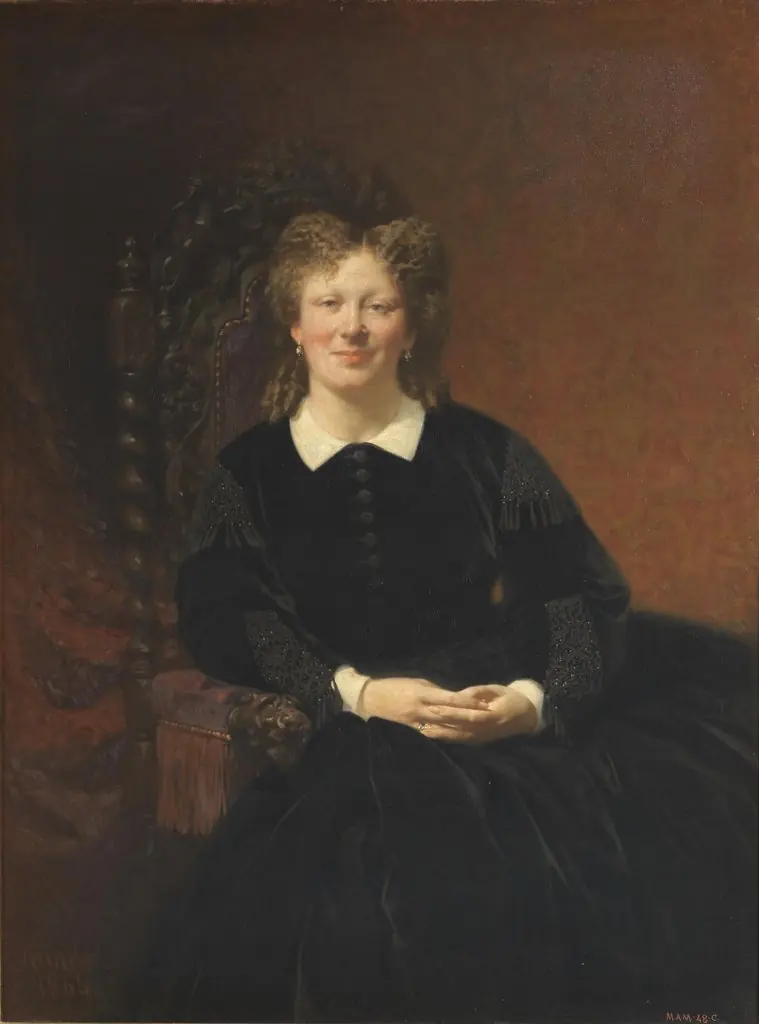 Portrait of a French Woman
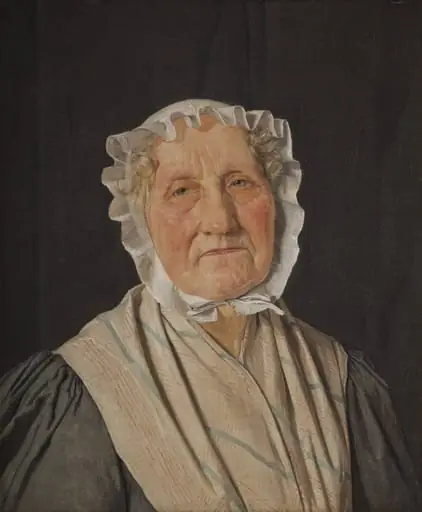 Portrait of Inger Margrethe Høyen, née Schrøder, the Mother of the Art Historian N.L. Høyen
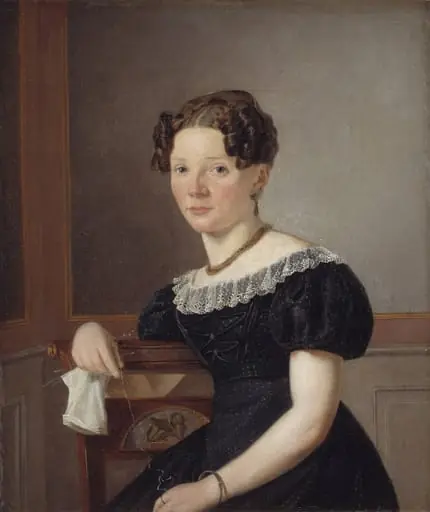 Woman with her Knitting. One of the Artist's Sisters (?)
 Maria Magdalena Jensen, née Jessen, the Artist's Mother
 Portrait of Anna Kurpiewska née Olszakiewicz