Artwork
Stående mandlig model
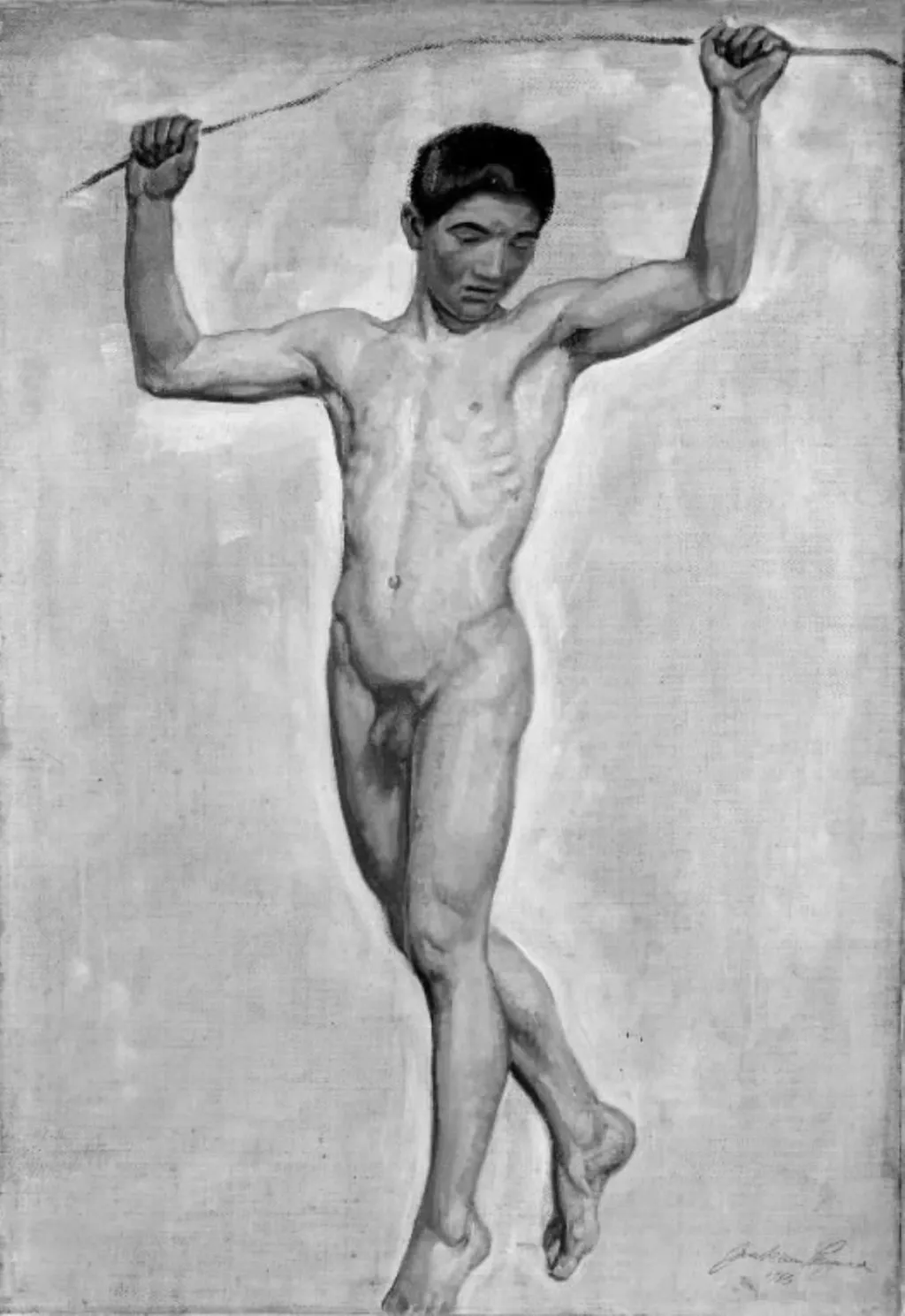
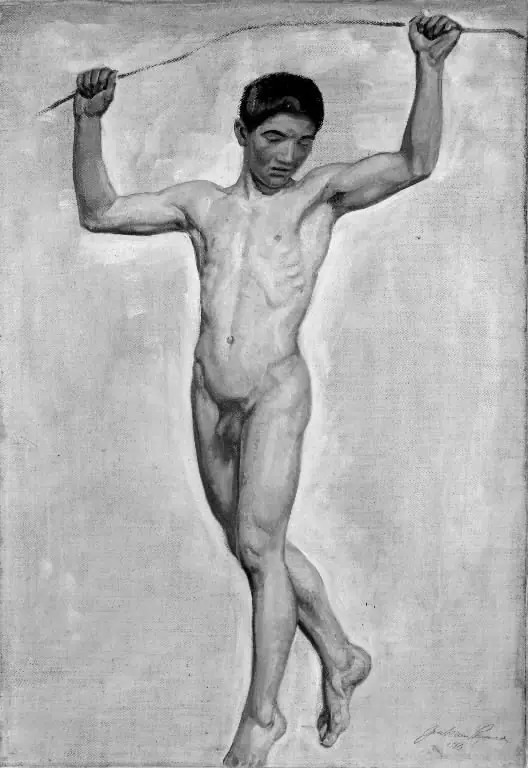
Stående mandlig model is a photography by Unknown. It dates from 1910 and is held in the collection of the Statens Museum for Kunst. Created in 1910, this black-and-white photograph depicts a nude male figure standing upright with arms raised.
About this work
Overview
The composition emphasizes the human form through stark tonal contrasts, capturing the body in a moment of stillness and tension.
Created in 1910, this black-and-white photograph depicts a nude male figure standing upright with arms raised. The image is part of the collection at the Museum of Ethnography. The composition emphasizes the human form through stark tonal contrasts, capturing the body in a moment of stillness and tension. The artist’s focus on posture and lighting suggests an interest in anatomical study rather than narrative.
Subject & Meaning
The figure is depicted without clothing, presenting the body as a subject of formal observation. His raised arms and grip on a thin cord imply a gesture of strain or ritual, though no cultural context is provided. The absence of environment or props directs attention solely to the physique, inviting contemplation of physicality, control, and the human form as an object of study.
Technique & Style
The image employs chiaroscuro to model the body’s contours, using sharp contrasts between light and shadow to suggest volume. Musculature is accentuated by directional lighting, while the background remains dark and undefined. The monochrome palette enhances the sculptural quality of the figure, reducing detail to essential forms and emphasizing texture through gradations of gray.
History & Provenance
The work was produced in 1910 and entered the collection of the Museum of Ethnography, where it remains today. Its origins as a study—possibly for artistic, anthropological, or pedagogical purposes—are not fully documented. The lack of attribution to a named photographer suggests it may have been made as part of a broader institutional archive rather than as a standalone artwork.
Context
In the early 20th century, photographic studies of the nude body were increasingly used in academic and scientific settings to analyze anatomy and movement. This image aligns with such practices, reflecting a period when photography served as a tool for documentation in fields ranging from art education to ethnography, often blurring boundaries between science and aesthetics.
Legacy
The photograph endures as an example of early 20th-century visual anthropology and artistic experimentation with light and form. Though not widely exhibited, it contributes to a broader archive of nude studies that informed both artistic training and anthropological discourse. Its quiet, unadorned presentation continues to invite analysis of how the body is framed and understood through the camera.
Artist & collection

 Domestic Scene
 Giacomo and Cardinal Marco, investing Andrea, Abbot of San Zeno, with his Benefice
 The Nymph of Fontainebleau
 Portrait of a Woman
 Madonna and Child with Saints in the Enclosed Garden
 Venus and Minerva
 Family Group of Four on Sofa
 Wall painting from Room H of the Villa of P. Fannius Synistor at Boscoreale