Artwork
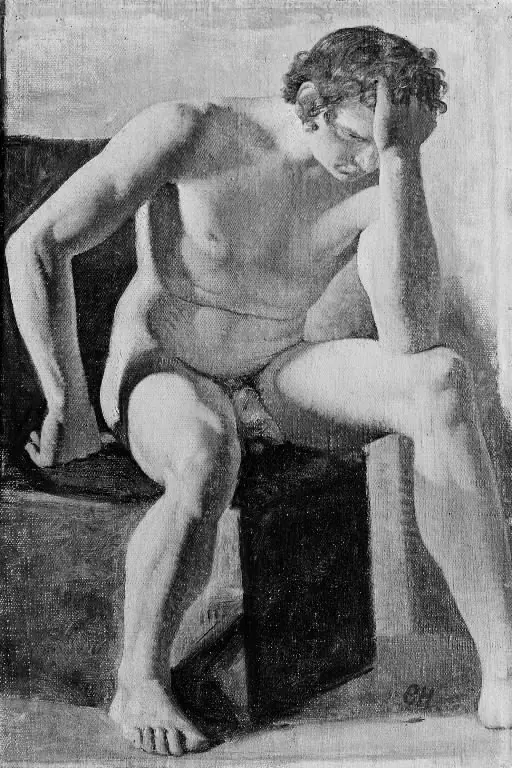
Siddende nøgen mandlig model
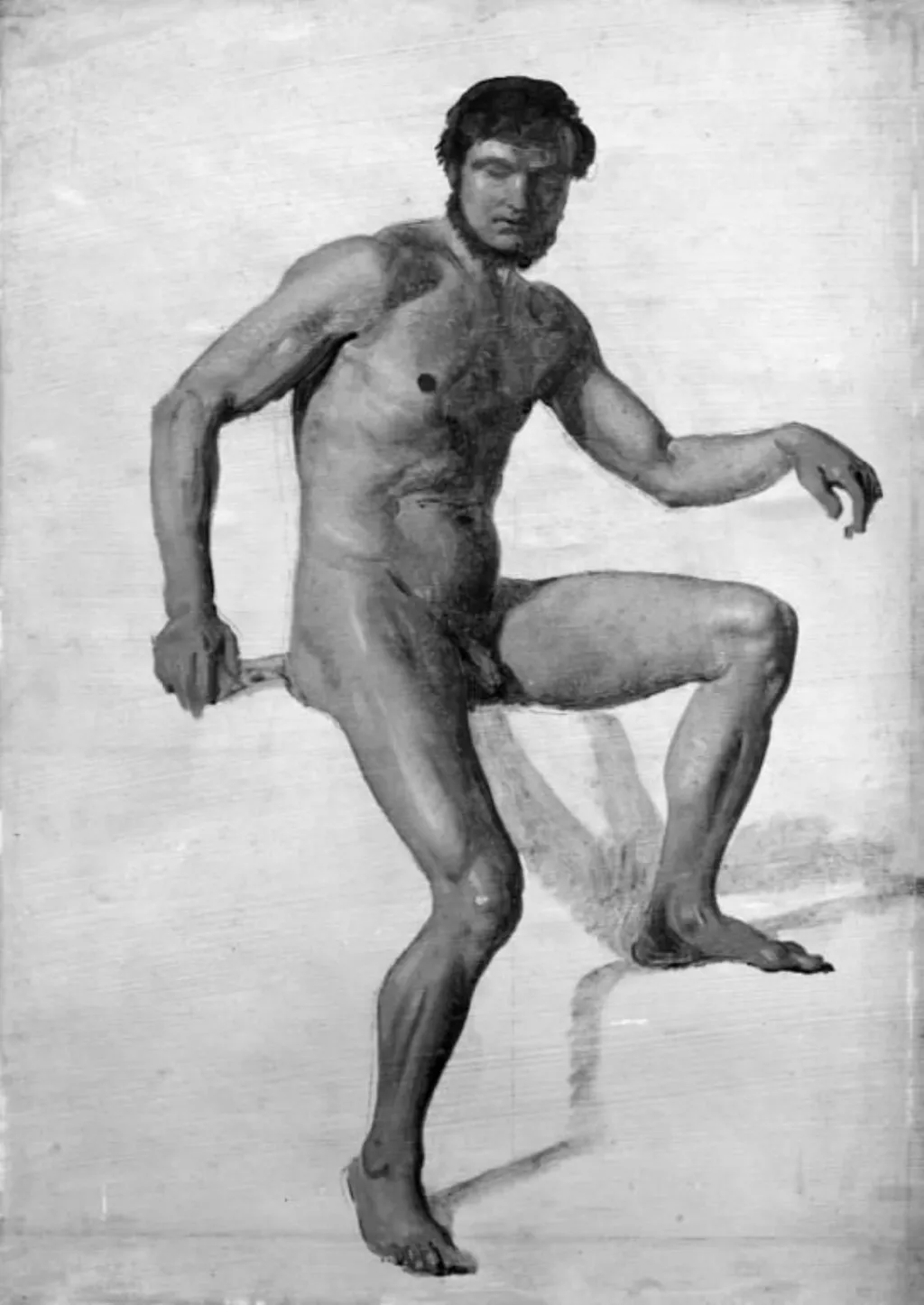
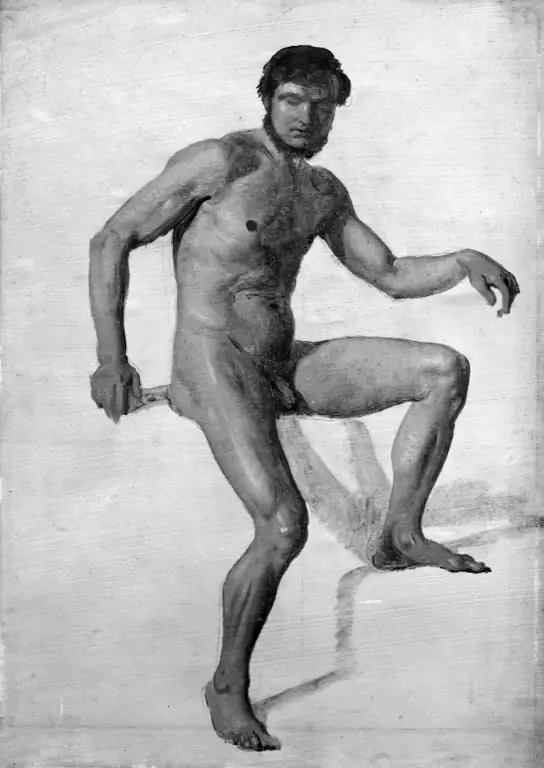
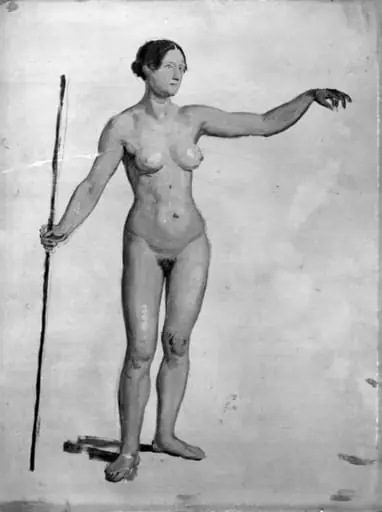
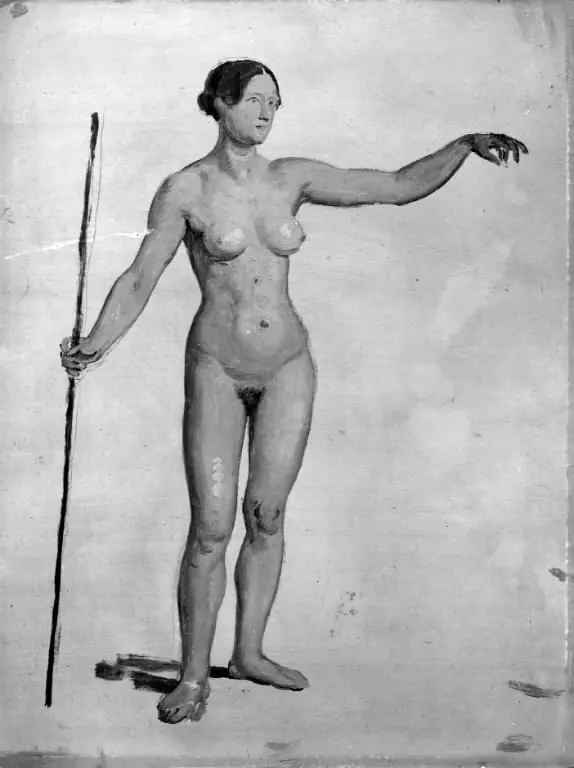
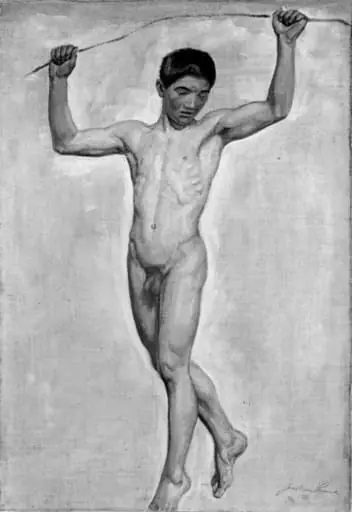
Siddende nøgen mandlig model is a photography by Unknown. It dates from 1849 and is held in the collection of the Statens Museum for Kunst. This black-and-white drawing, dated around 1849, depicts a nude male figure in a relaxed seated pose.
About this work
Overview
This black-and-white drawing, dated around 1849, depicts a nude male figure in a relaxed seated pose. Executed with swift, economical lines, it captures the anatomical structure of the body without decorative detail. The work is held in the collection of the Museum of Ethnography and is part of a broader series of figure studies from the artist’s practice during this period.
Subject & Meaning
The pose—one leg bent, the other suspended—suggests a moment of pause, possibly captured during a life drawing session.
The figure is presented without context or narrative, emphasizing the human form as a subject of observation. The pose—one leg bent, the other suspended—suggests a moment of pause, possibly captured during a life drawing session. The absence of clothing and environment directs focus to posture, weight distribution, and musculature, reflecting a study grounded in anatomical inquiry rather than symbolism.
Technique & Style
The drawing employs minimal linework to define form, with careful attention to bone structure and muscle tension. Shading is subtle, relying on line density rather than tone to suggest volume. The quick, fluid strokes indicate an impromptu sketch, likely made from direct observation. The plain background eliminates distraction, reinforcing the study’s functional purpose as a visual record of the body in space.
History & Provenance
The work entered the Museum of Ethnography’s collection in the late 19th or early 20th century, likely as part of an academic or artistic archive. Its origins trace to the artist’s personal sketchbooks, where figure studies were routinely compiled for pedagogical or preparatory use. No record of public exhibition exists prior to its inclusion in the museum’s holdings.
Context
Created during a period when academic art institutions emphasized anatomical precision, this drawing aligns with the tradition of life drawing in European studios. Unlike finished compositions, such sketches served as training tools, capturing transient poses and structural relationships. The artist’s approach reflects a shift toward direct observation over idealized forms, common among mid-19th century draftsmen.
Legacy
Though not widely published or exhibited, the drawing remains a representative example of 19th-century figure study practices. Its preservation in an ethnographic context underscores its value as a document of visual methodology rather than aesthetic achievement. It continues to inform pedagogical approaches to anatomical drawing in art education.
Artist & collection

 Domestic Scene
 Giacomo and Cardinal Marco, investing Andrea, Abbot of San Zeno, with his Benefice
 The Nymph of Fontainebleau
 Portrait of a Woman
 Madonna and Child with Saints in the Enclosed Garden
 Venus and Minerva
 Family Group of Four on Sofa
 Wall painting from Room H of the Villa of P. Fannius Synistor at Boscoreale