Artwork
Mandlig model
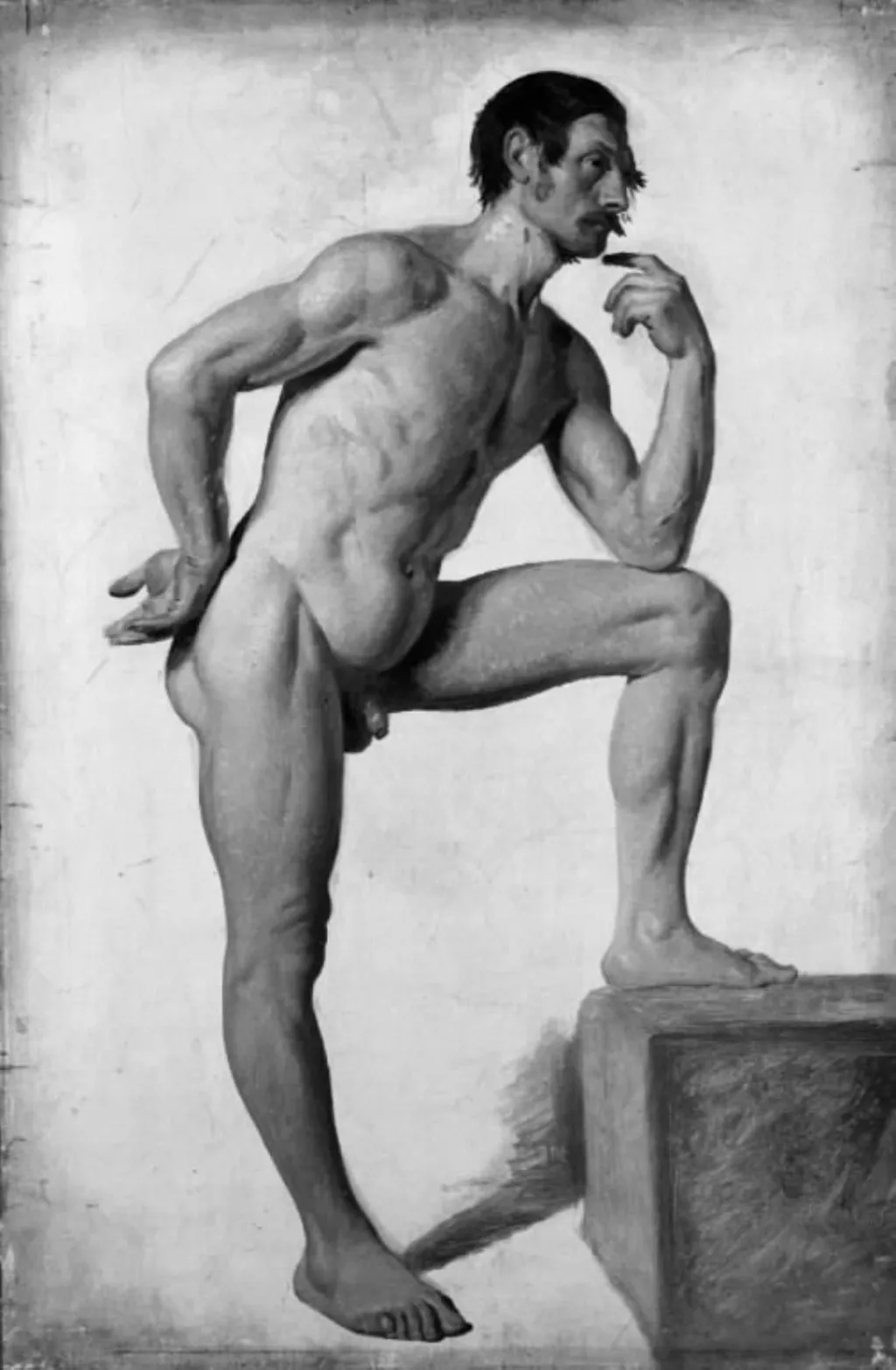
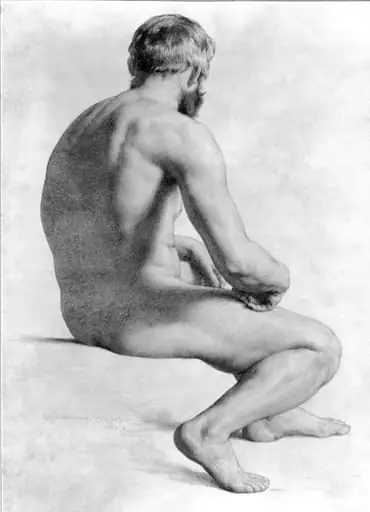
Mandlig model is a photography by Unknown. It dates from 1849 and is held in the collection of the Statens Museum for Kunst. Created around 1849, this black-and-white photograph depicts a shirtless male figure seated on a raised platform.
About this work
Overview
Created around 1849, this black-and-white photograph depicts a shirtless male figure seated on a raised platform. The composition emphasizes the naturalism of the pose and the play of light across the body. Held in the collection of the Museum of Ethnography, the image reflects 19th-century interests in anthropological documentation and the human form as a subject of study.
Subject & Meaning
The figure, unidentified, appears in a relaxed yet attentive posture, one leg bent and grounded, the other hanging freely. He holds a small, indistinct object in his right hand, suggesting a moment of pause rather than performance. The absence of clothing and the direct gaze invite observation, aligning the image with ethnographic efforts to record bodily variation across populations.
Technique & Style
The photograph employs clear, directional lighting to define musculature and bone structure, creating strong contrasts between light and shadow. This use of chiaroscuro enhances the three-dimensionality of the form, revealing an attention to anatomical accuracy. The texture of the skin is rendered with precision, indicating careful exposure and development techniques for the period.
History & Provenance
The work entered the Museum of Ethnography’s collection in the mid-19th century, likely as part of a broader effort to document human diversity through visual means. Its origin as a studio study or field photograph remains unclear, but its preservation suggests it was valued for its scientific or educational potential rather than artistic merit.
Context
In the 1840s, photography was emerging as a tool for anthropology and medicine, replacing hand-drawn illustrations with more objective records. This image aligns with contemporaneous projects that sought to classify physical traits across cultures. The neutral setting and lack of contextual details reflect a desire to isolate the body as a specimen for study.
Legacy
Though not widely exhibited, the photograph contributes to the historical record of how the human body was visually cataloged during the rise of scientific racism and ethnographic collecting. Its restrained aesthetic and focus on anatomy continue to inform discussions about the ethics and methods of early photographic documentation.
Artist & collection

 Domestic Scene
 Giacomo and Cardinal Marco, investing Andrea, Abbot of San Zeno, with his Benefice
 The Nymph of Fontainebleau
 Portrait of a Woman
 Madonna and Child with Saints in the Enclosed Garden
 Venus and Minerva
 Family Group of Four on Sofa
 Wall painting from Room H of the Villa of P. Fannius Synistor at Boscoreale