Artwork
Udkast til freskerne i Viborg Domkirke. Koret
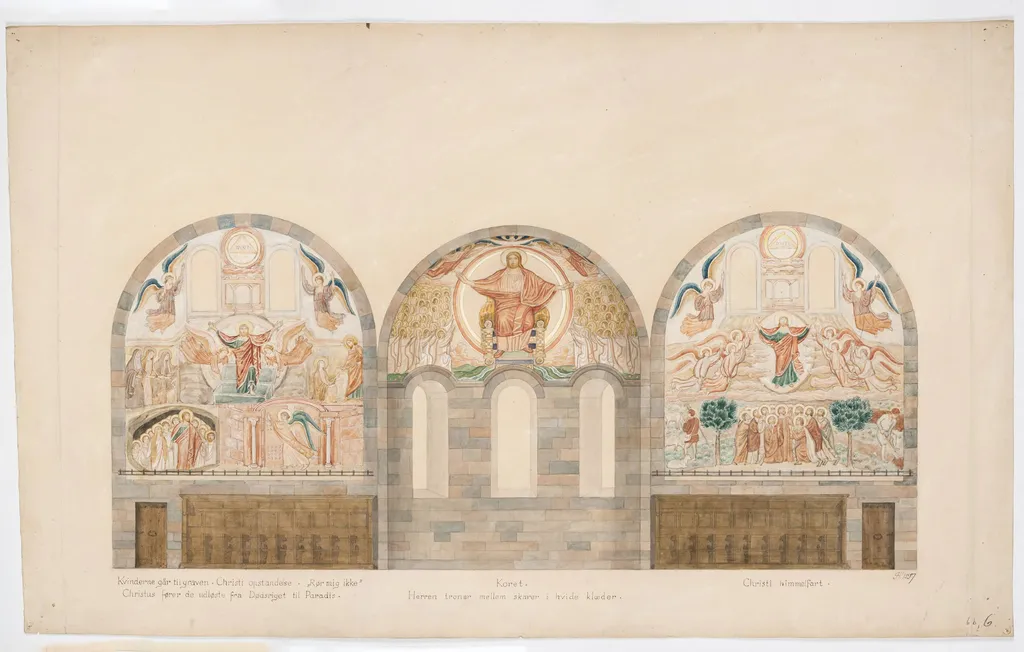
Udkast til freskerne i Viborg Domkirke. Koret is an unspecified painting by the Impressionist artist Unknown. It dates from 1897 and is held in the collection of the Statens Museum for Kunst. This 1897 sketch by 1231_person serves as a preparatory study for frescoes intended for the choir of Viborg Cathedral.
About this work
Overview
Executed in watercolor and ink, it presents three horizontal panels depicting sacred scenes framed by architectural arches.
This 1897 sketch by 1231_person serves as a preparatory study for frescoes intended for the choir of Viborg Cathedral. Executed in watercolor and ink, it presents three horizontal panels depicting sacred scenes framed by architectural arches. The composition is organized with symbolic clarity, each panel illustrating a distinct moment from Christian narrative tradition, accompanied by Danish inscriptions that identify the depicted events.
Subject & Meaning
The three panels illustrate key theological moments: the central image features a raised figure holding an object, likely a chalice or cross, suggesting the Eucharist or Ascension. Flanking scenes show congregations of robed figures, some hovering above clouds, representing saints or angels in adoration. The halos and elevated postures emphasize divine presence, while the Danish text anchors each scene in liturgical context, reinforcing their function as devotional imagery.
Technique & Style
The sketch employs delicate washes of pink, blue, and gold to suggest ethereal light and celestial space. Figures are rendered with simplified contours, their drapery flowing in soft folds that guide the eye toward the central axis. The use of halos and floating forms reflects a stylized, symbolic approach rather than naturalistic representation, aligning with late 19th-century ecclesiastical revival aesthetics that favored spiritual suggestion over realism.
History & Provenance
Created as a model for a never-completed fresco cycle, the sketch remained in the artist’s possession before entering the collection of the Museum of Ethnography. Its preservation there reflects institutional interest in religious art as cultural artifact rather than liturgical object. The work’s survival underscores its role as a document of artistic intent, offering insight into the planning of ecclesiastical decoration in Denmark during the late 1800s.
Context
In the late 19th century, Denmark witnessed a revival of interest in medieval church art, prompting efforts to restore and redecorate historic cathedrals. This sketch emerged within that movement, responding to a broader European trend of reviving religious imagery through stylized, symbolic forms. Though the frescoes were never executed, the study reflects contemporary efforts to reconnect national identity with pre-Reformation sacred traditions.
Legacy
Though the intended frescoes were never realized, the sketch remains a significant record of ecclesiastical artistic planning in Denmark. It illustrates how artists engaged with historical models while adapting them to modern sensibilities. The work continues to inform scholarly understanding of religious art’s role in national cultural renewal, serving as a bridge between medieval inspiration and late Victorian aesthetic priorities.
Artist & collection

 Domestic Scene
 Giacomo and Cardinal Marco, investing Andrea, Abbot of San Zeno, with his Benefice
 The Nymph of Fontainebleau
 Portrait of a Woman
 Madonna and Child with Saints in the Enclosed Garden
 Venus and Minerva
 Family Group of Four on Sofa
 Wall painting from Room H of the Villa of P. Fannius Synistor at Boscoreale
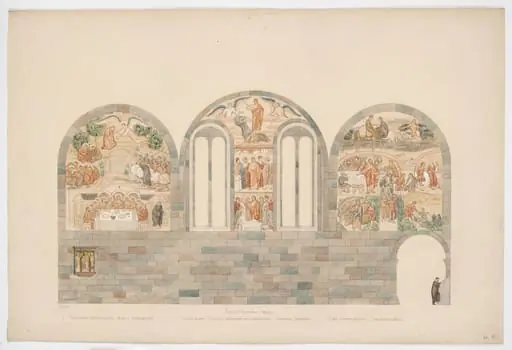 Udkast til freskerne i Viborg Domkirke. Søndre korsarms vægge
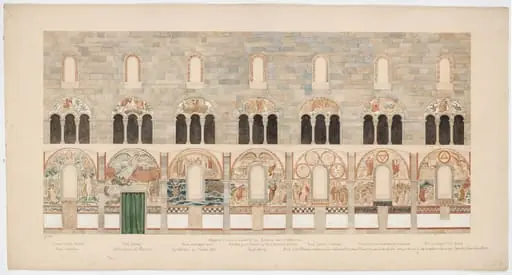 Udkast til freskerne i Viborg Domkirke. Væggene. Nordre sideskib og felterne over Triforierne
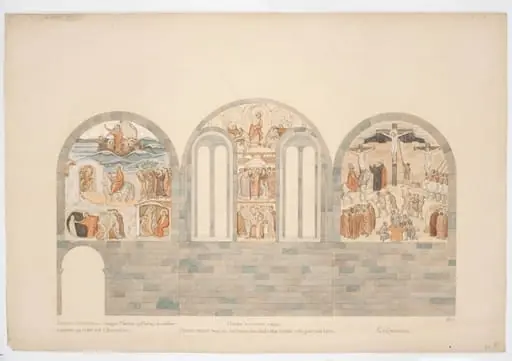 Udkast til freskerne i Viborg Domkirke. Nordre korsarms vægge
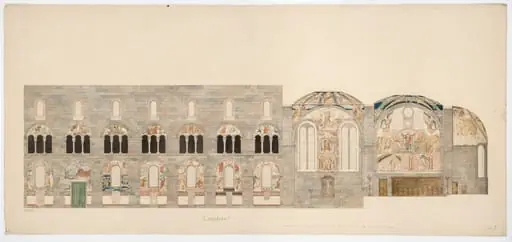 Udkast til freskerne i Viborg Domkirke. Længdesnit, med målestok
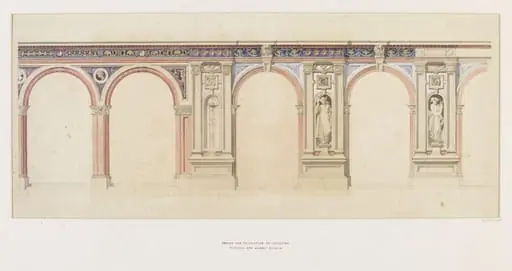 Arcade Decoration
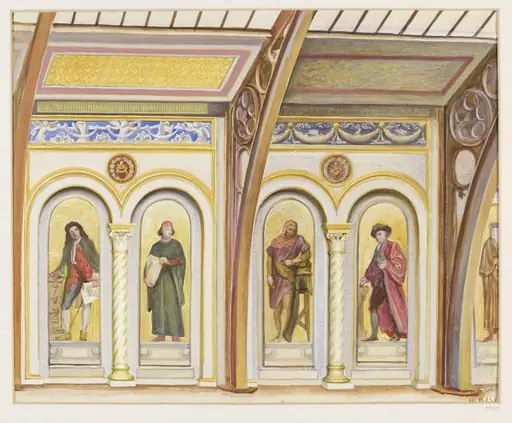 Interior of the South Court
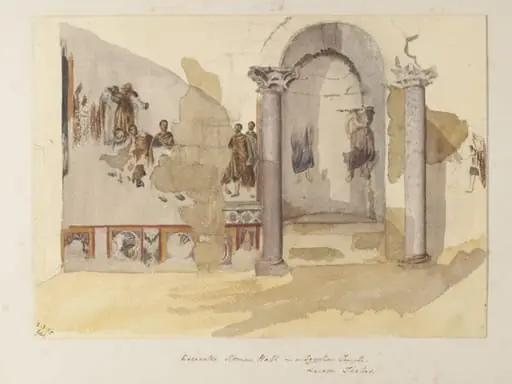 `Excavated Roman Hall in an Egyptian Temple - Luxor. Thebes'