Artwork
`Excavated Roman Hall in an Egyptian Temple - Luxor. Thebes'
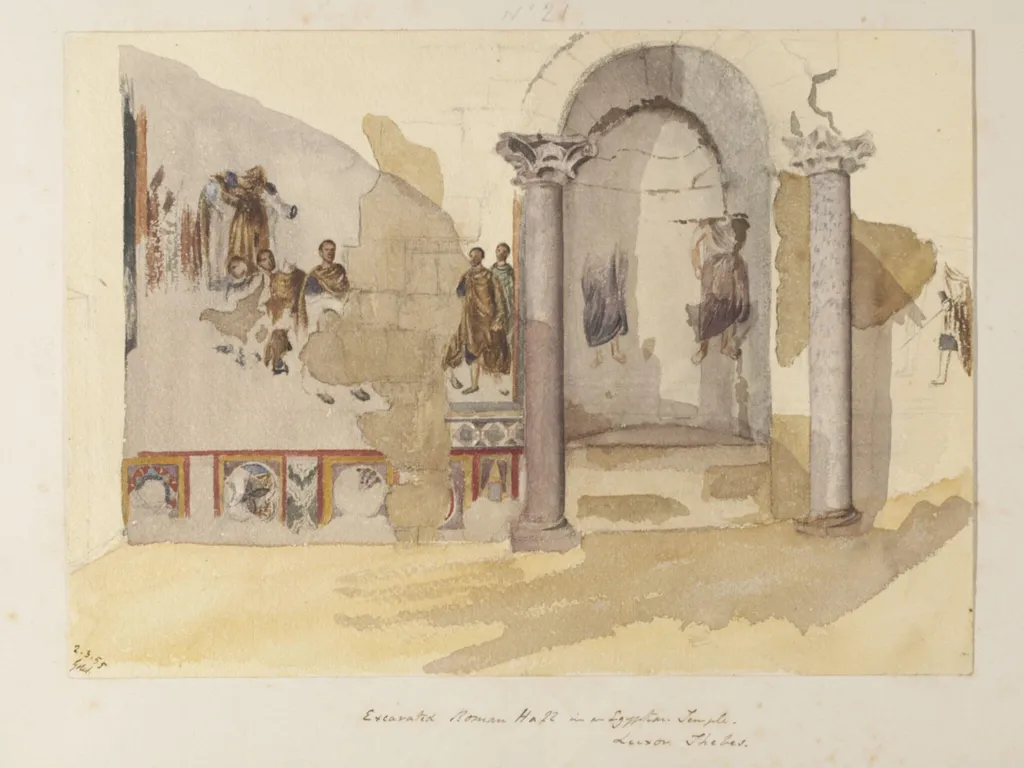
`Excavated Roman Hall in an Egyptian Temple - Luxor. Thebes' is a watercolor work on paper by the Impressionist artist George de Sausmarez. It dates from 1855 and is held in the collection of the Victoria and Albert Museum. The watercolour illustrates a partially ruined hall of Roman design set within an Egyptian temple complex at Luxor.
About this work
Overview
The watercolour illustrates a partially ruined hall of Roman design set within an Egyptian temple complex at Luxor.
The watercolour illustrates a partially ruined hall of Roman design set within an Egyptian temple complex at Luxor. Central to the scene are two standing columns topped by a broken arch, while figures in flowing garments occupy the space, some gazing toward an open doorway where a suspended, ethereal figure hovers. Cracked walls and faded surfaces frame the composition, with modest painted panels at the lower edge.
Subject & Meaning
The image captures the layered architectural history of Luxor, where Roman construction was later incorporated into an older Egyptian sacred site. The floating presence, ambiguous between deity and apparition, underscores the site's spiritual resonance and the interplay of cultural narratives that accumulated over centuries.
Technique & Style
Executed in watercolour on paper, the work belongs to a series of 45 sketches mounted on 35 sheets. The artist employs delicate washes to render the weathered stone and translucent sky, while fine line work defines the columns and figures. Subtle colour modulation conveys the texture of cracked walls and the muted palette of the archaeological setting.
History & Provenance
The drawing was produced during or shortly after a Nile expedition in 1855, with the artist working both upriver and downriver. It later became part of a half‑bound crimson morocco music binder, stamped "EGYPT" on the cover, which housed the entire album of watercolours.
Context
Mid‑nineteenth‑century European travelers frequently documented ancient sites along the Nile, merging artistic observation with emerging archaeological interest. This sketch reflects that tradition, recording the coexistence of Roman and Egyptian architectural elements at a time when systematic excavation was still in its infancy.
Artist & collection
Artist
George de Sausmarez painted watercolors of Egypt’s Nile in the 1850s, recording river scenes and landmarks with quick, transparent washes.

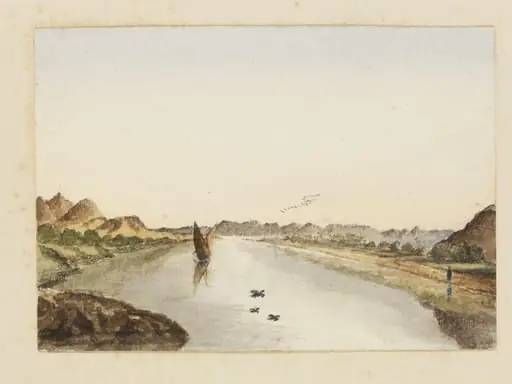 View of the Nile
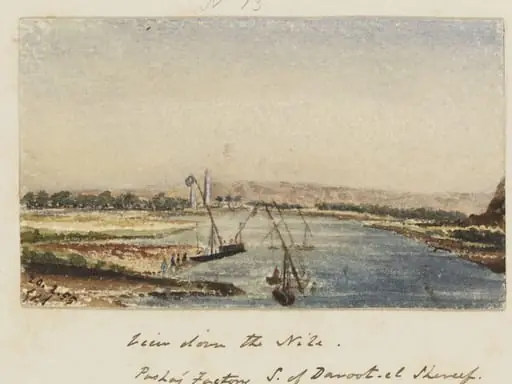 `View down the Nile. Pasha's Factory S.of Daroot-el Shereef. Upper Egypt'
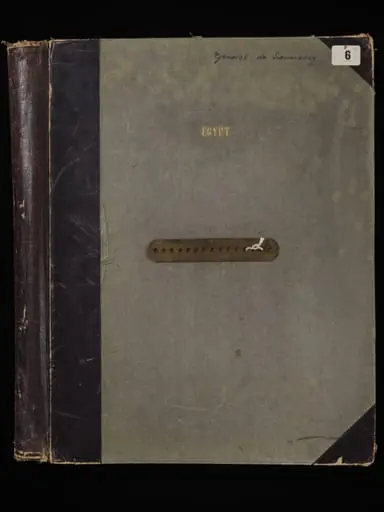 Album
Album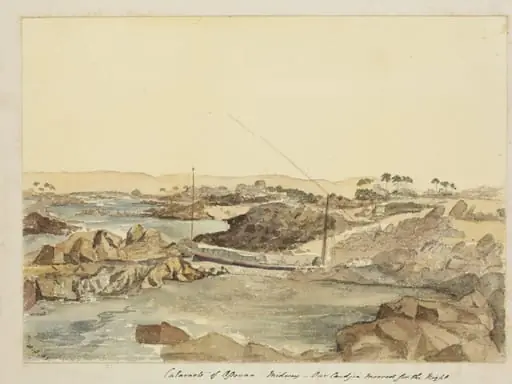 `Cataracts of Assouan. Midway. - Our Candjia Moored for the Night - On the Nile'
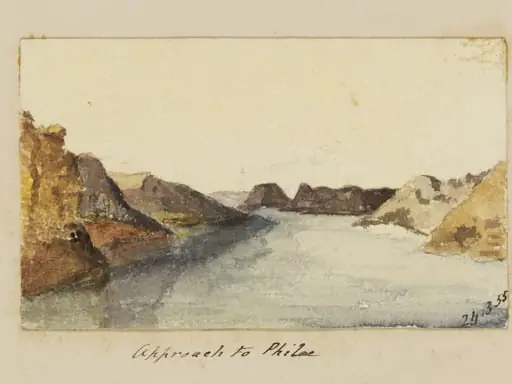 `Approach to Philae'
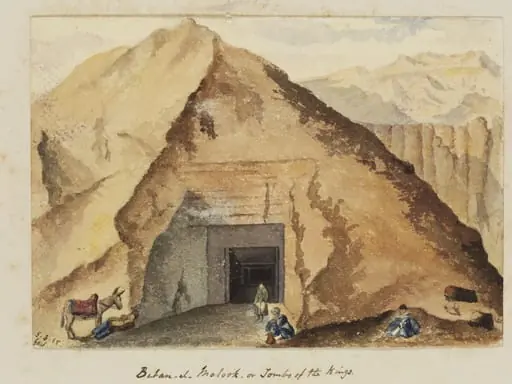 Biban-el-Molook, or Tombs of the Kings. Belzoni's Tomb. Thebes
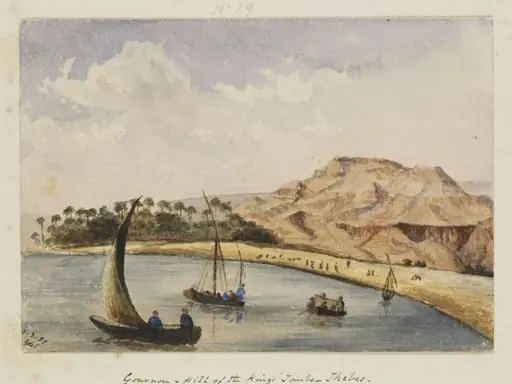 `Gournou & Hill of the Kings' Tombs - Thebes'
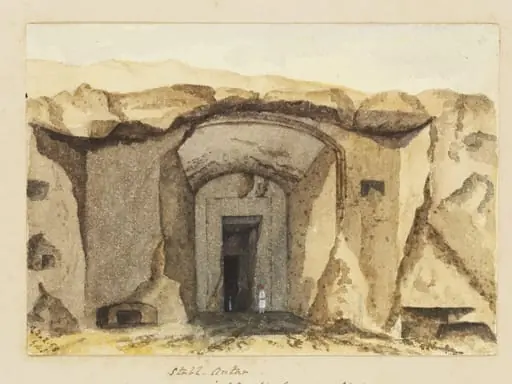 `Stabl-Antar. Ancient Egyptian Cave near Siout. Upper Egypt'
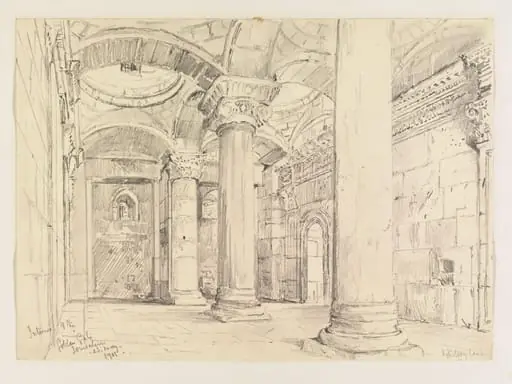 Interior of the Golden Gate Jerusalem
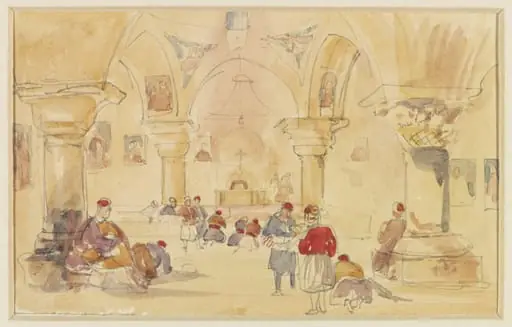 Chapel of St. Helena, Crypt of the Holy Sepulchre, Jerusalem
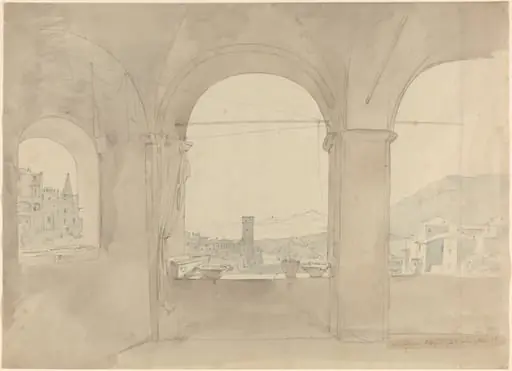 Panorama of Tivoli from a Loggia
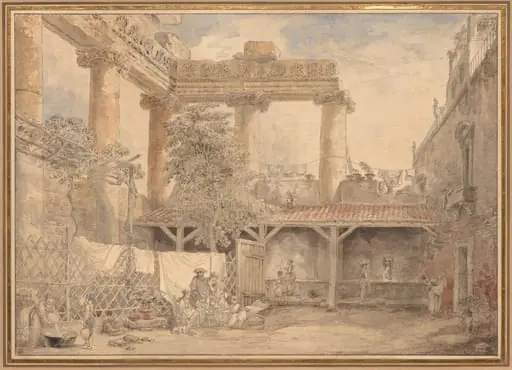 Roman Ruins, Villa Pamfili
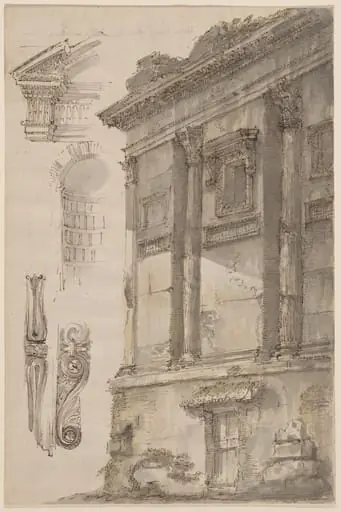 Studies of the Cenotaph of Annia Regilla
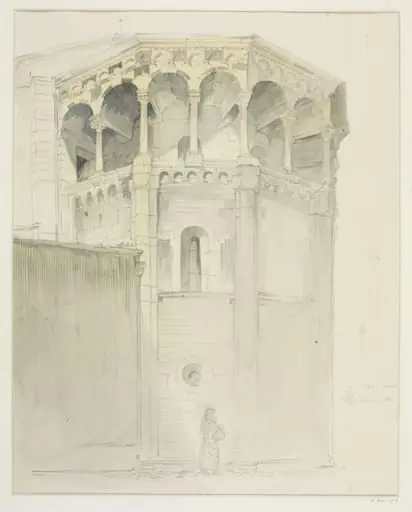 Architectural drawing
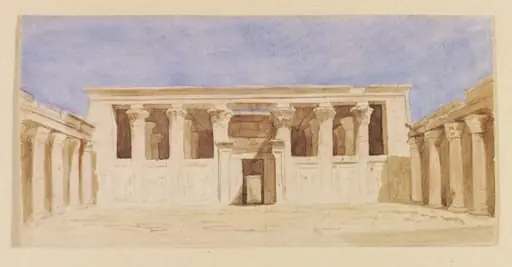 Temple of Edfoo
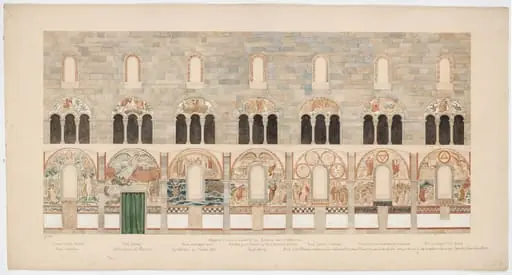 Udkast til freskerne i Viborg Domkirke. Væggene. Nordre sideskib og felterne over Triforierne
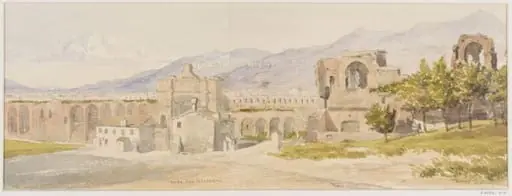 Porta San Giovanni and Porta Asinaria, Rome
![A Terrace and Garden on Capri [recto], by François-Édouard Bertin](https://artifactworldgallery.com/img/francois-edouard-bertin--a-terrace-and-garden-on-capri-recto--8bd3839591b56d81-w320.webp) A Terrace and Garden on Capri [recto]
A Terrace and Garden on Capri [recto]