Artwork
Interior of the South Court
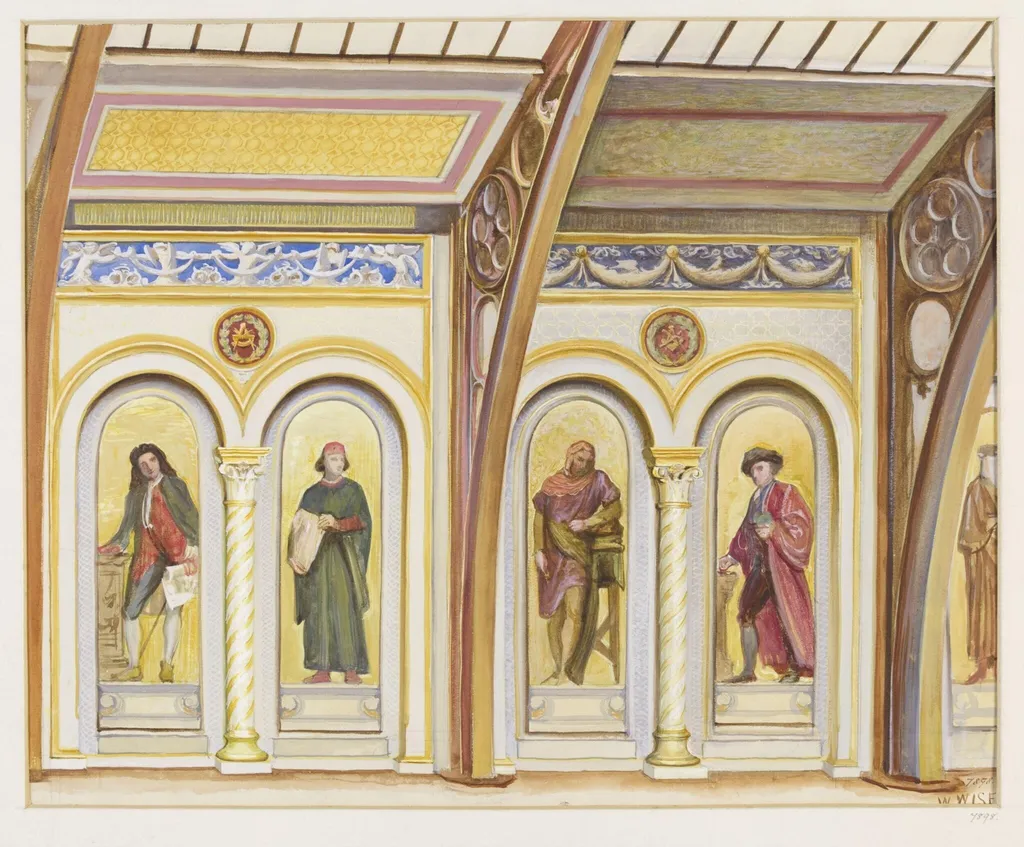
Interior of the South Court is a watercolor work on paper by the Impressionist artist W. Wise. It dates from 22 and is held in the collection of the Victoria and Albert Museum. Created in 1871 by W.
About this work
Overview
Wise, this watercolour captures a section of the South Court at the Victoria and Albert Museum, a double-height gallery designed for temporary exhibitions.
Created in 1871 by W. Wise, this watercolour captures a section of the South Court at the Victoria and Albert Museum, a double-height gallery designed for temporary exhibitions. The work documents the interior’s original decorative scheme before later alterations. Its precise detail and tonal contrast reveal the fading of the ceiling’s original pigments, offering a rare visual record of a design later obscured in the 1940s.
Subject & Meaning
The scene centers on the Kensington Valhalla—a series of mosaic portraits of renowned artists arranged in paired niches, framed by twisted columns. Above, the ceiling features a hexagonal pattern in brown, gold, and pink, likened by contemporaries to a hearthrug. The painting highlights the deterioration of these colours within eight years of installation, underscoring the fragility of decorative schemes meant to convey cultural permanence.
Technique & Style
Wise employed transparent watercolour washes to render the architectural details with clarity and subtle gradation. The technique allowed for precise depiction of mosaic textures and the uneven light falling across the surfaces. While not aligned with Impressionism, the work exhibits a documentary precision typical of Victorian topographical drawing, prioritizing accuracy over atmospheric effect.
History & Provenance
The South Court’s original decoration, including the ceiling’s hexagonal pattern and mosaic panels, was installed in the 1860s. By 1871, discoloration was evident, prompting Wise’s recording of the contrast between cleaned and faded areas. The scheme was eventually painted over in the 1940s, making this watercolour one of the few surviving visual records of the space’s initial appearance.
Context
The South Court was conceived as a grand, light-filled space to display loaned objects, reflecting the museum’s mission to educate through accessible art. Its ornate design echoed the Victorian fascination with historical reference and craftsmanship. The rapid deterioration of its pigments revealed practical challenges in sustaining elaborate interiors under public use and changing conservation standards.
Legacy
Wise’s watercolour remains a key archival source for understanding the museum’s early aesthetic intentions. It informs restoration research and scholarly analysis of 19th-century display practices. Though the original decoration is lost, the drawing preserves the visual language of a space once intended to celebrate artistic heritage through immersive environment.
Artist & collection
Artist
Welsh artist W. Wise painted a single watercolour on paper in 1871: Interior of the South Court, showing the glass-roofed court inside a public building. The sheet is small, precise, and mostly monochrome, with careful…

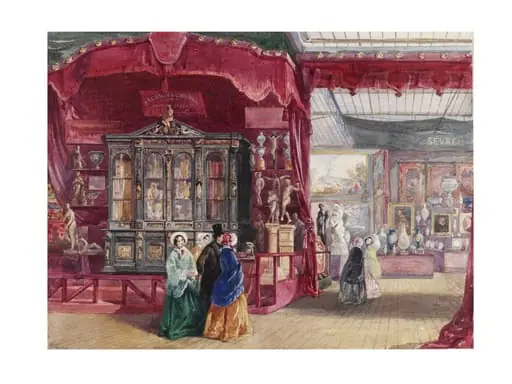 Part of the French Court, no. 1 (Sevres)
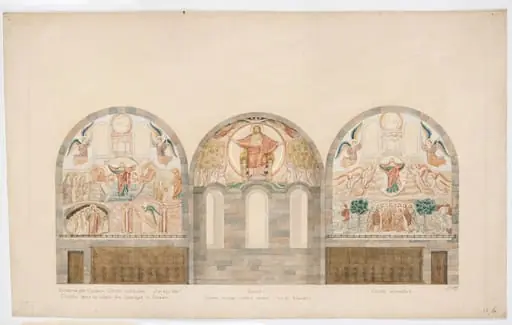 Udkast til freskerne i Viborg Domkirke. Koret
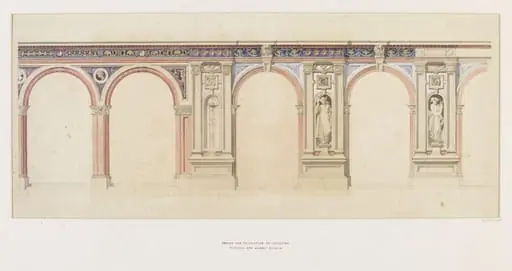 Arcade Decoration
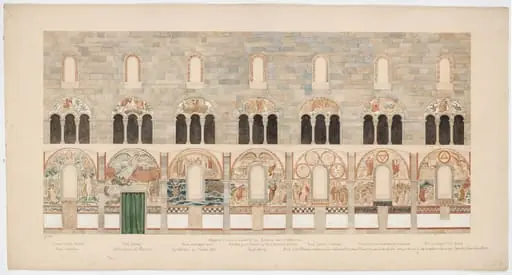 Udkast til freskerne i Viborg Domkirke. Væggene. Nordre sideskib og felterne over Triforierne
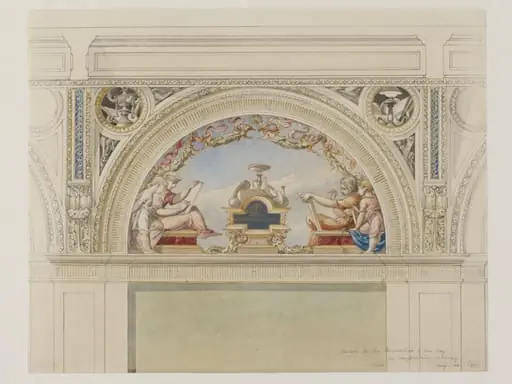 Design for decorative lunette: 'Model Drawing'
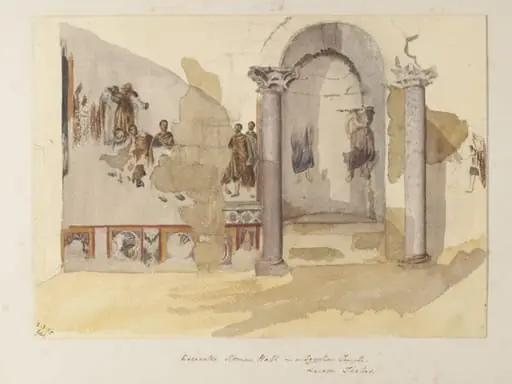 `Excavated Roman Hall in an Egyptian Temple - Luxor. Thebes'
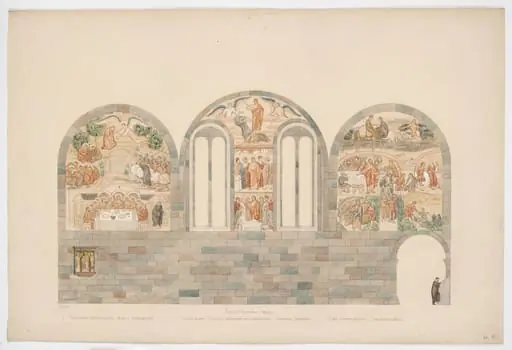 Udkast til freskerne i Viborg Domkirke. Søndre korsarms vægge
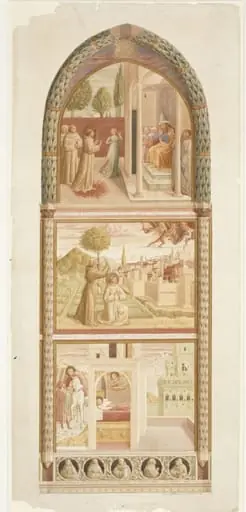 Copy after the cycle of the <i>Life of St Francis</i> (north wall section), Benozzo Gozzoli in San Francesco, apsidal chapel, Montefalco
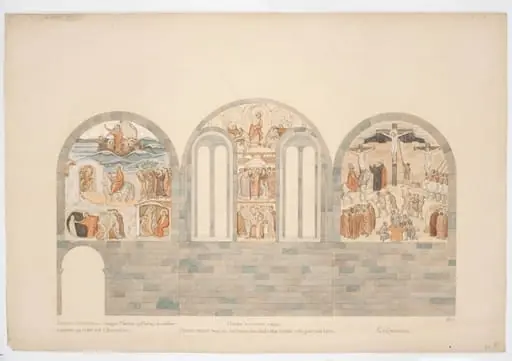 Udkast til freskerne i Viborg Domkirke. Nordre korsarms vægge
![Design for a Wall of a Music Room [recto], by Italian 18th Century](https://artifactworldgallery.com/img/italian-18th-century--design-for-a-wall-of-a-music-room-recto--1582534309a804bd-w320.webp) Design for a Wall of a Music Room [recto]
Design for a Wall of a Music Room [recto]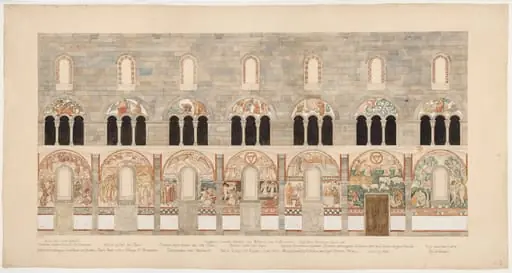 Udkast til freskerne i Viborg Domkirke. Væggene. Søndre sideskib og felterne over Triforierne
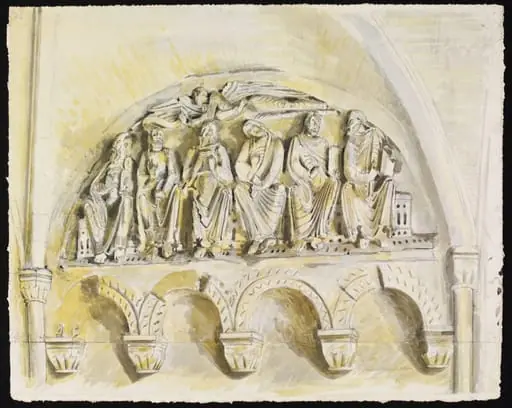 Tympanum, Abbey Porch, Malmesbury