Artwork
Dansende kvinde. Megara
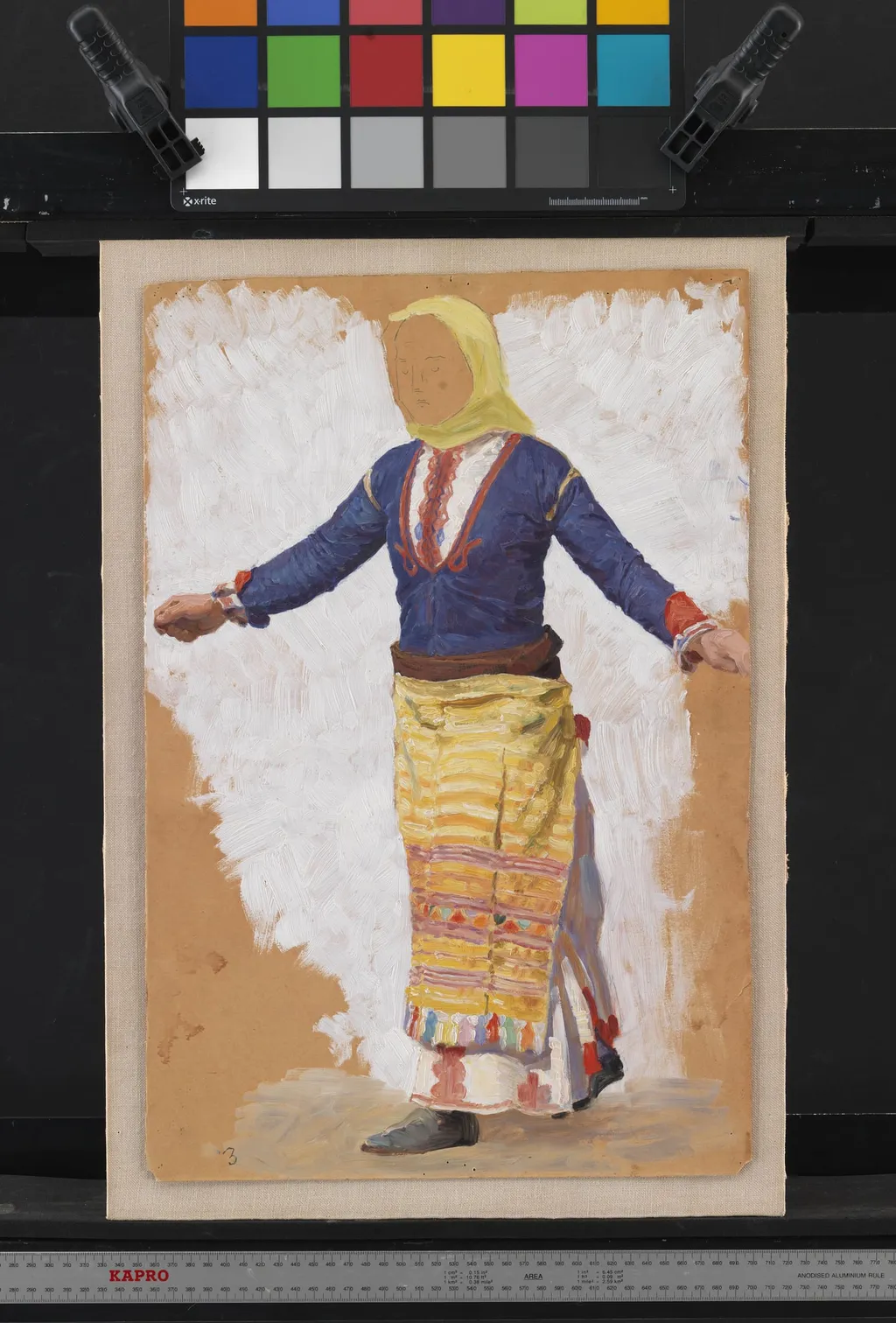
Dansende kvinde. Megara is a photography by Unknown. It dates from 1910 and is held in the collection of the Statens Museum for Kunst. Dansende kvinde.
About this work
Overview
Dansende kvinde. Megara is a painted portrait of a woman in motion, completed in 1910 by an artist associated with the Danish modernist circle. The work resides in the Museum of Ethnography, where it is cataloged as part of a collection focused on cultural representation through visual art. Its composition emphasizes movement and textile detail, rendered with deliberate physicality in paint.
Subject & Meaning
The figure is depicted mid-dance, dressed in a striped long skirt, a fitted blue top, a yellow headscarf, and red slippers.
The figure is depicted mid-dance, dressed in a striped long skirt, a fitted blue top, a yellow headscarf, and red slippers. She holds a small, indistinct object in her right hand, suggesting ritual or performance. The plain background isolates her, drawing attention to her posture and attire. The work appears to capture a moment of cultural expression, possibly tied to folk traditions of the Mediterranean region.
Technique & Style
The artist employs thick, visible brushstrokes, particularly along the folds of the skirt and sleeves, using impasto to build texture and luminosity. Colors are applied with intensity, enhancing the vibrancy of the garment without blending into realism. The technique prioritizes tactile presence over fine detail, giving the figure a sculptural quality that emerges from the surface of the canvas.
History & Provenance
Created in 1910, the painting entered the collection of the Museum of Ethnography shortly after its completion. Its origins trace to the artist’s engagement with non-Western dress and movement, likely informed by travels or ethnographic studies of the period. The work has remained in institutional custody since acquisition, with no documented private ownership.
Context
This piece emerged during a time when European artists increasingly looked beyond their own cultures for subject matter, often drawing from Mediterranean and North African traditions. While not a documentary record, it reflects a broader interest in representing non-elite, performative identities through expressive, non-naturalistic styles common in early 20th-century modernism.
Legacy
Dansende kvinde. Megara remains a quiet example of early modernist ethnographic painting, valued for its formal experimentation and cultural specificity. It contributes to ongoing scholarly discussions about representation, appropriation, and the role of folk motifs in modern art. The work is studied more for its stylistic choices than for its narrative content.
Artist & collection

 Domestic Scene
 Giacomo and Cardinal Marco, investing Andrea, Abbot of San Zeno, with his Benefice
 The Nymph of Fontainebleau
 Portrait of a Woman
 Madonna and Child with Saints in the Enclosed Garden
 Venus and Minerva
 Family Group of Four on Sofa
 Wall painting from Room H of the Villa of P. Fannius Synistor at Boscoreale
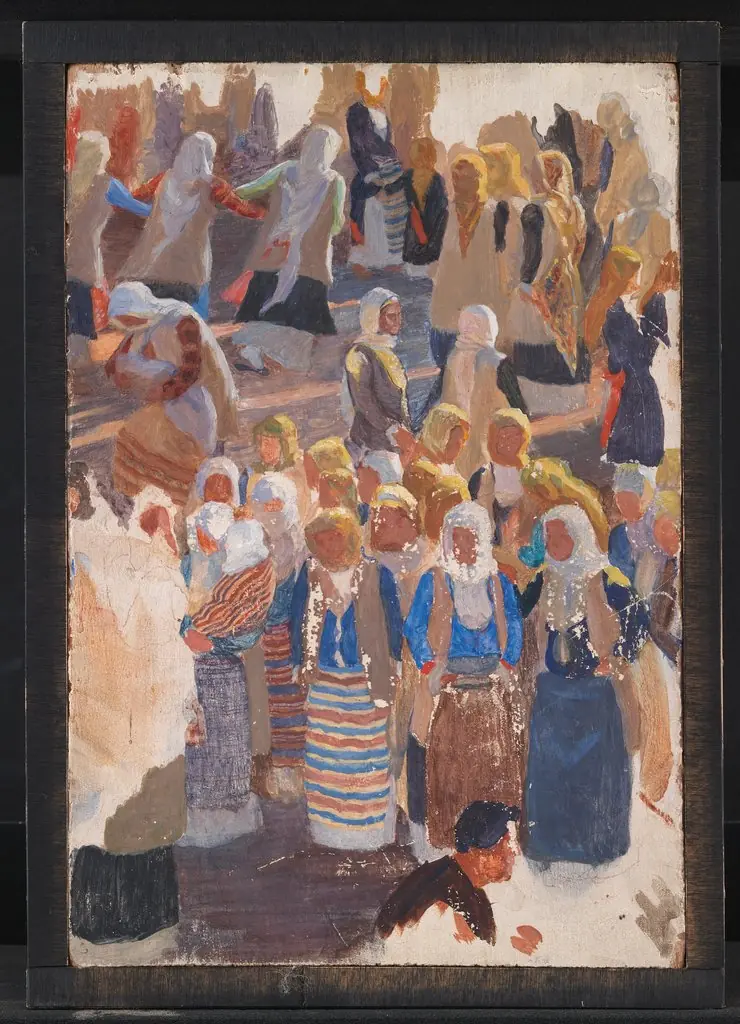 Grupper af dansende kvinder. Megara
 Grupper af dansende kvinder. Megara
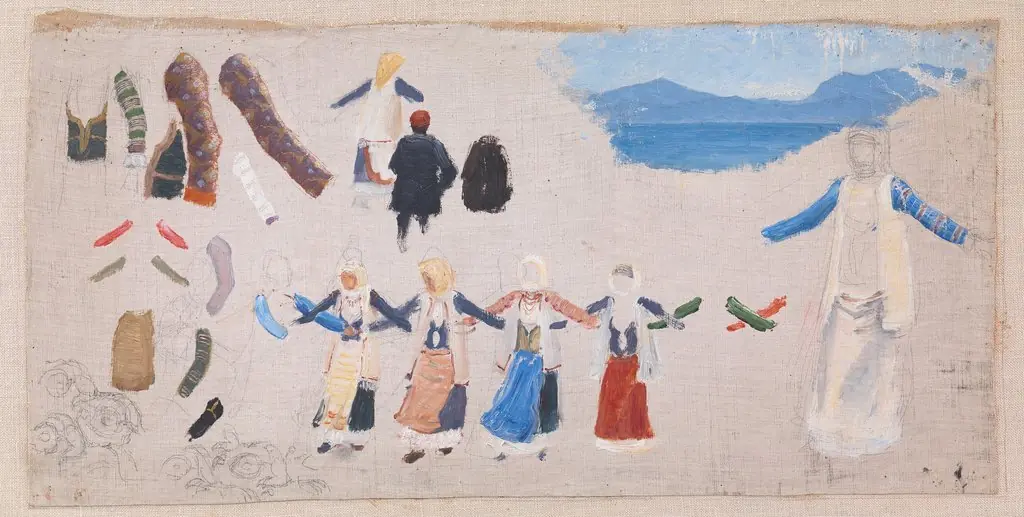 Dansende kvinder, dragtdetailler og et landskab
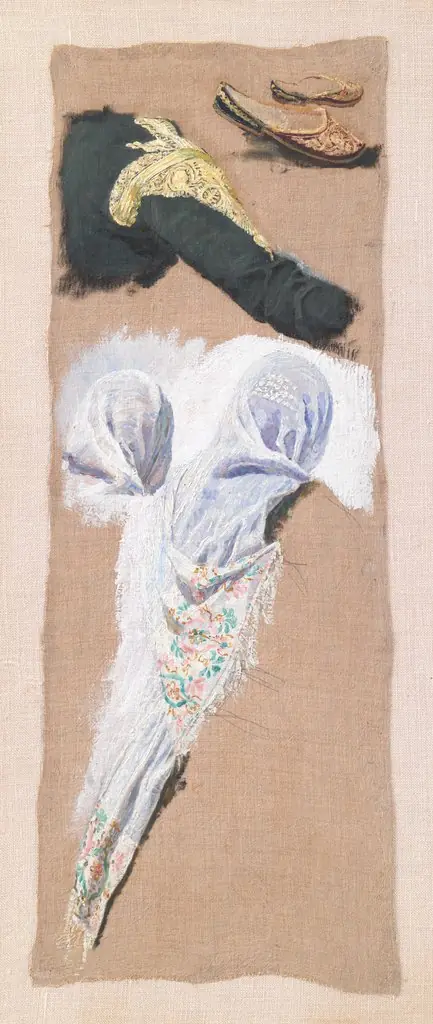 Dragtstudier. Megara
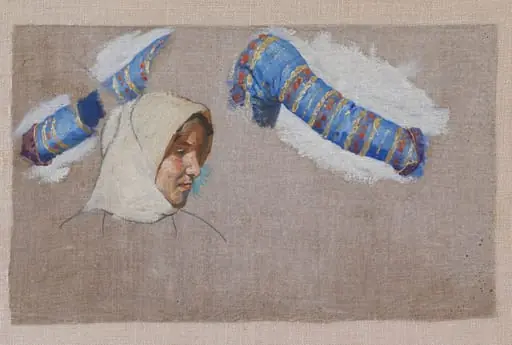 Dragtstudier og studie af et kvindehovede. Megara
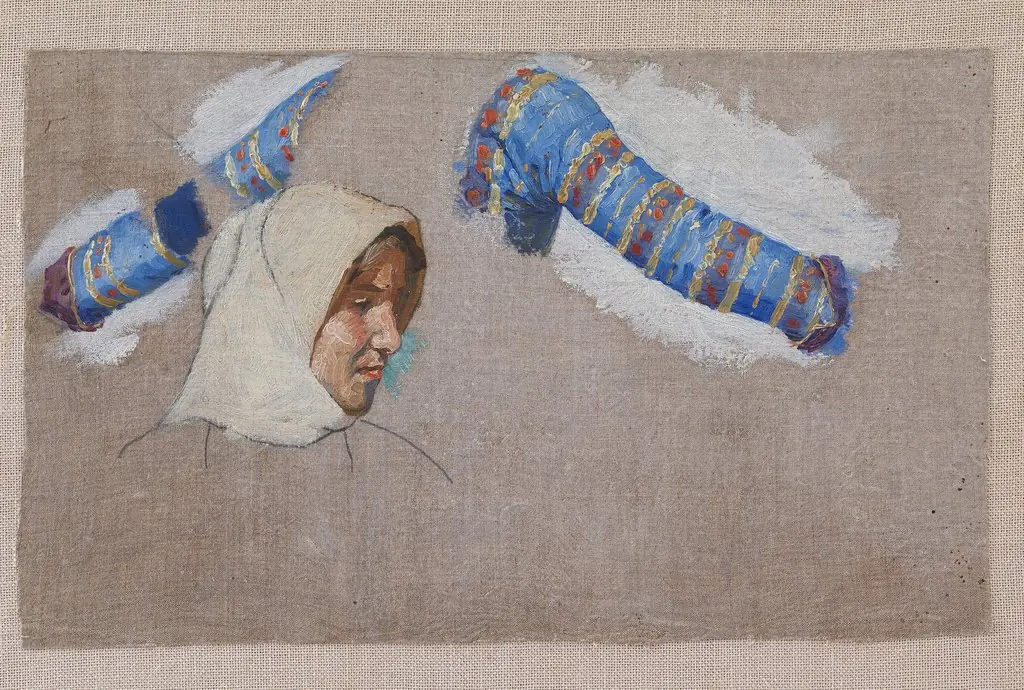 Dragtstudier og studie af et kvindehovede. Megara
 Dragtstudier. Megara
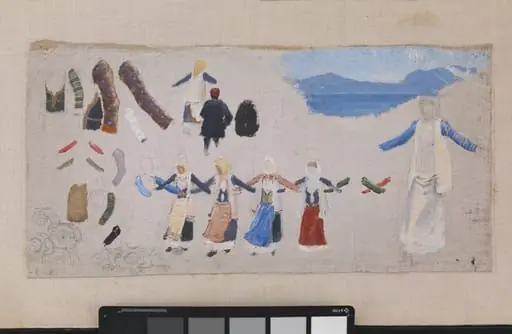 Dansende kvinder, dragtdetailler og et landskab