Artwork
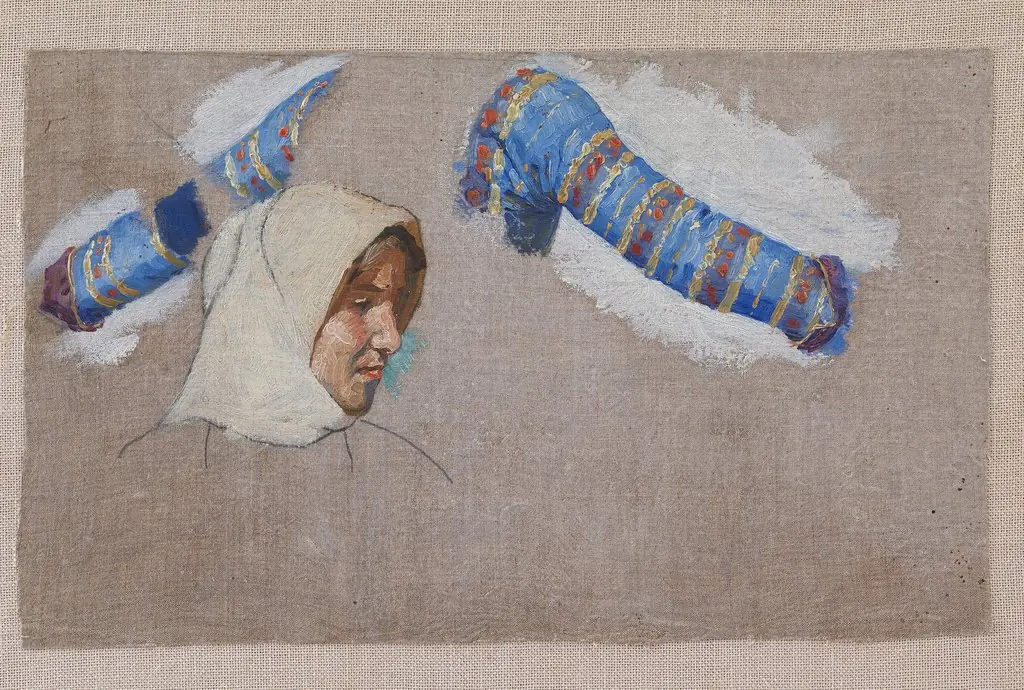
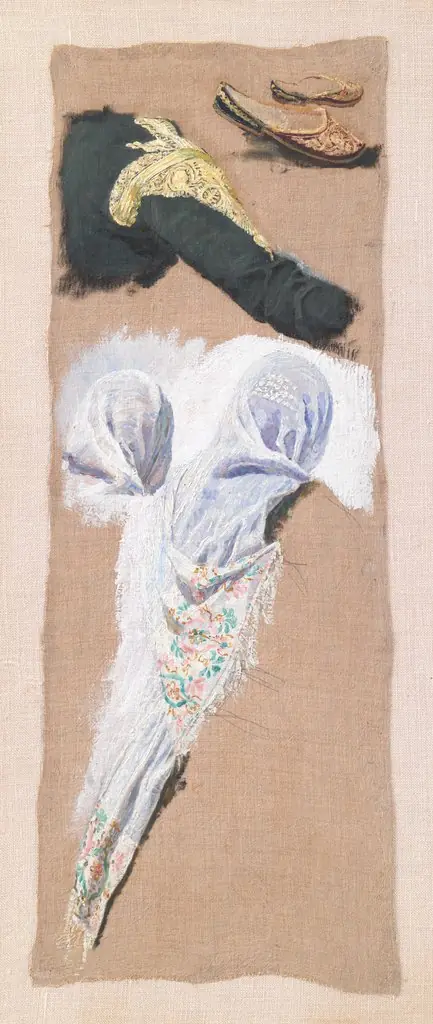
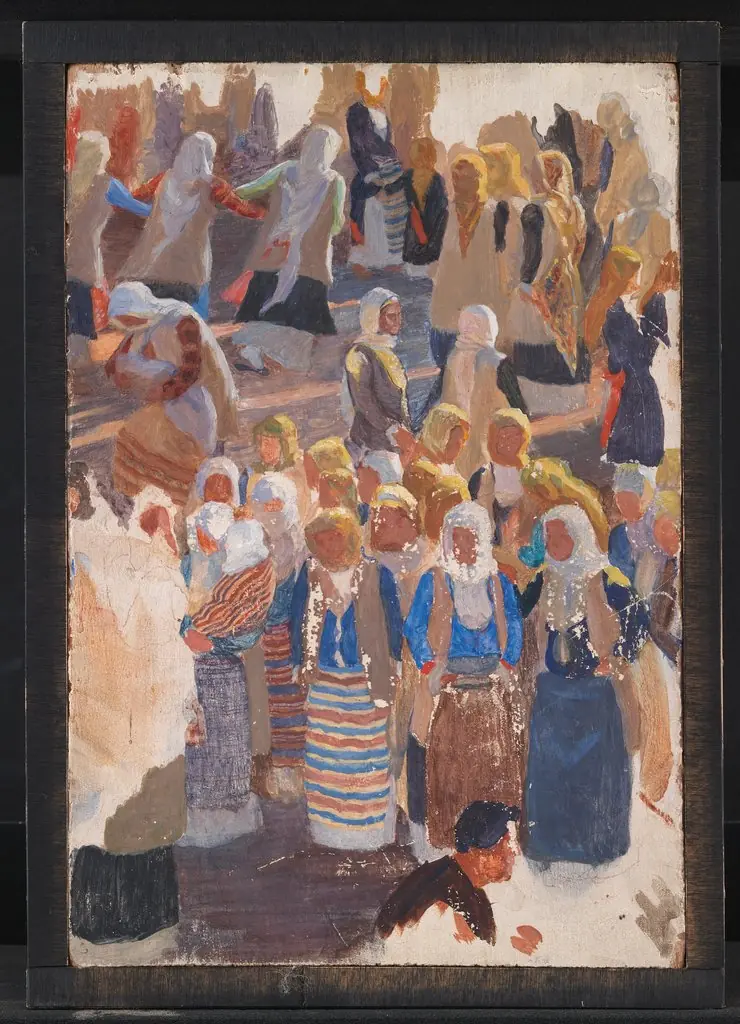
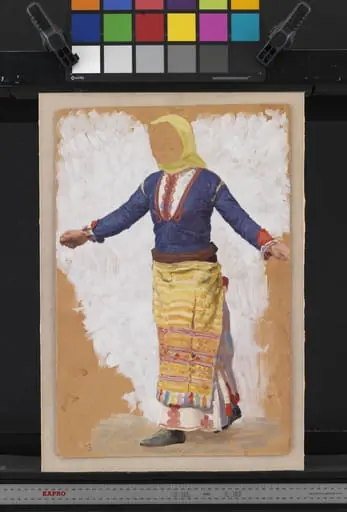
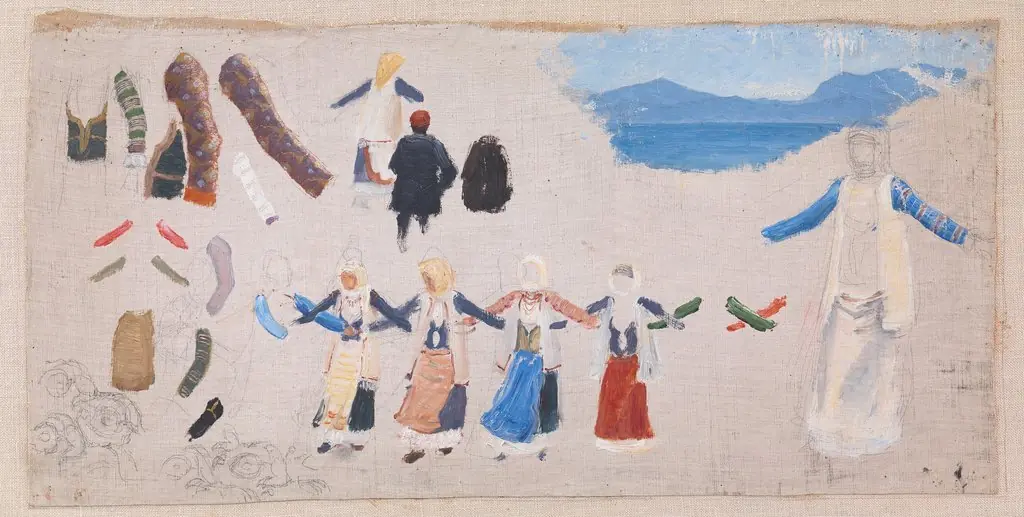
Dragtstudier og studie af et kvindehovede. Megara
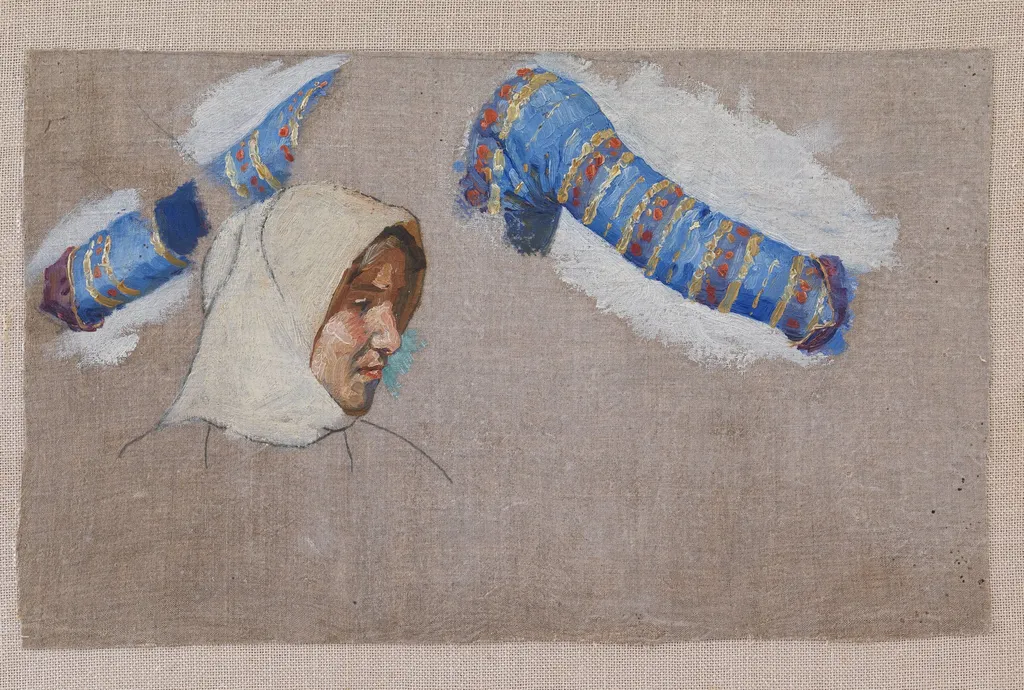
Dragtstudier og studie af et kvindehovede. Megara is a photography by the Impressionist artist Unknown. It dates from 1896 and is held in the collection of the Statens Museum for Kunst. Created in 1896 by the Danish artist Martinus Rørbye, this work combines figure study with ethnographic observation.
About this work
Overview
Created in 1896 by the Danish artist Martinus Rørbye, this work combines figure study with ethnographic observation. It is held in the collection of the Museum of Ethnography in Copenhagen. The piece presents a partial portrait of a woman, rendered with attention to costume and posture, reflecting the artist’s interest in cultural detail during his travels in the Mediterranean region.
Subject & Meaning
The subject is a woman’s head, partially obscured by a white headscarf, suggesting regional dress from the eastern Mediterranean.
The subject is a woman’s head, partially obscured by a white headscarf, suggesting regional dress from the eastern Mediterranean. The visible sleeves—blue with red and gold trim—hint at textile traditions of the area. The composition avoids narrative, focusing instead on the quiet presence of the figure and the textures of her attire, aligning with ethnographic documentation rather than idealized portraiture.
Technique & Style
Rørbye employed loose brushwork and muted tonalities, echoing Impressionist and Realist approaches. The background is a soft, earthy brown, allowing the figure and fabric to emerge with subtle contrast. The rendering of the sleeves suggests movement, captured through swift strokes. Though photography was emerging as a documentary tool, this work remains a painted study, not a photographic reproduction.
History & Provenance
The painting was produced during Rørbye’s later years, following his extensive travels in North Africa and the Levant. It entered the Museum of Ethnography’s collection shortly after its creation, likely as part of the institution’s effort to document material culture through art. Its provenance remains unbroken within Danish public collections since the late 19th century.
Context
In the late 19th century, Scandinavian artists increasingly turned to ethnographic themes, influenced by colonial-era expeditions and growing interest in non-European cultures. Rørbye’s work reflects this trend, blending artistic observation with anthropological curiosity. Unlike exoticizing portrayals common elsewhere, his studies emphasize quiet authenticity over dramatic spectacle.
Legacy
Though not widely exhibited outside Denmark, the work contributes to understanding how Nordic artists engaged with cultural difference during a period of expanding global awareness. It stands as a quiet example of how painting could serve ethnographic ends without sacrificing aesthetic sensitivity, influencing later generations of Danish artists interested in everyday life and regional dress.
Artist & collection

 Domestic Scene
 Giacomo and Cardinal Marco, investing Andrea, Abbot of San Zeno, with his Benefice
 The Nymph of Fontainebleau
 Portrait of a Woman
 Madonna and Child with Saints in the Enclosed Garden
 Venus and Minerva
 Family Group of Four on Sofa
 Wall painting from Room H of the Villa of P. Fannius Synistor at Boscoreale