Artwork
Grupper af dansende kvinder. Megara
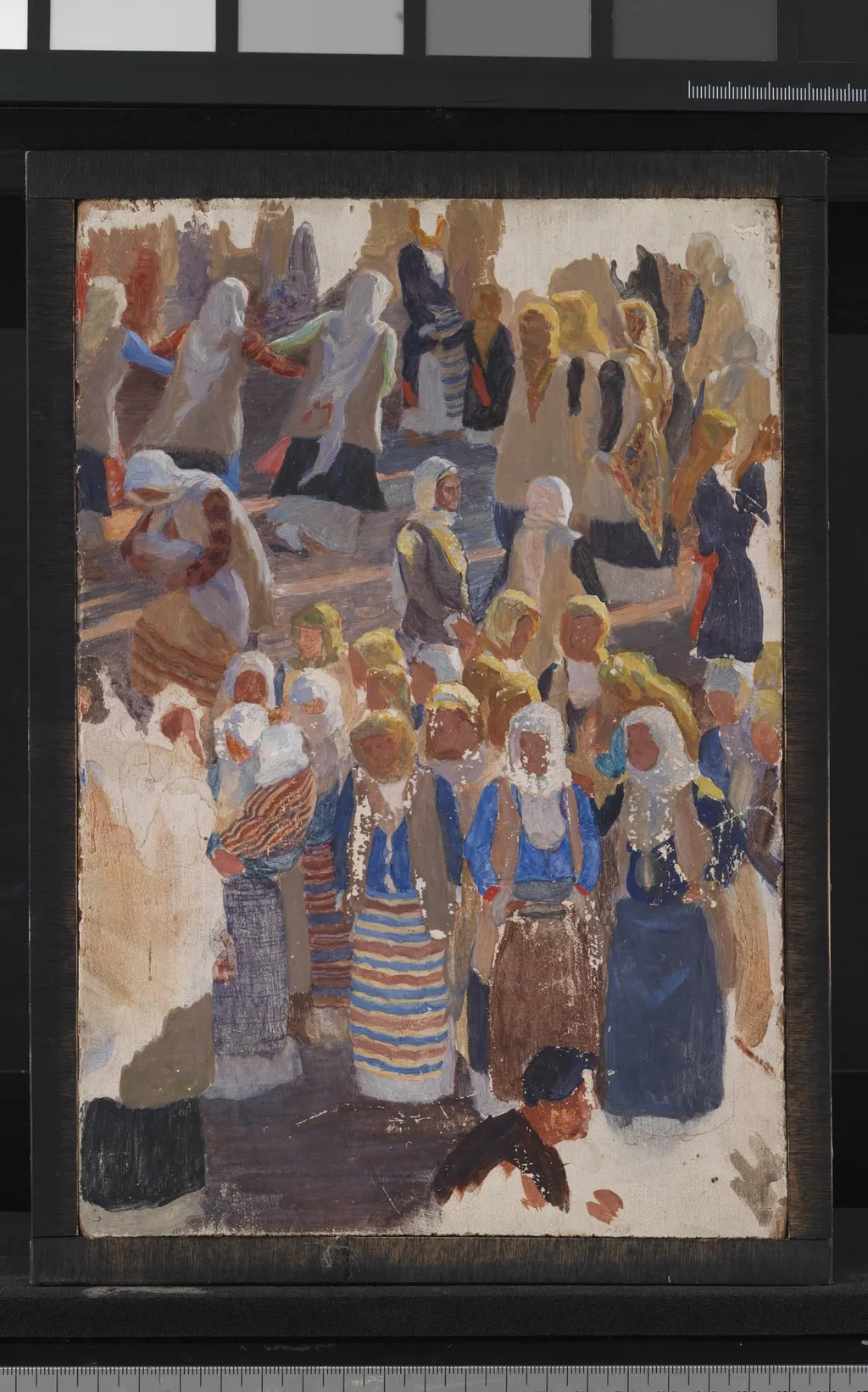
Grupper af dansende kvinder. Megara is a photography by the Impressionist artist Unknown. It dates from 1896 and is held in the collection of the Statens Museum for Kunst. Created in 1896 by the Danish artist Anna Ancher, Grupper af dansende kvinder.
About this work
Overview
Created in 1896 by the Danish artist Anna Ancher, Grupper af dansende kvinder.
Created in 1896 by the Danish artist Anna Ancher, Grupper af dansende kvinder. Megara depicts a group of women engaged in a communal dance. The work is held in the collection of the Museum of Ethnography in Copenhagen. Rendered with loose brushwork and vivid, unblended hues, the painting captures a moment of informal celebration rather than a formal ritual, emphasizing motion and atmosphere over idealized form.
Subject & Meaning
The painting portrays a gathering of women in traditional regional attire, their movements suggesting a spontaneous, rhythmic dance. Dressed in striped garments and headscarves, they are shown in varying positions—some grounded, others in motion—conveying a sense of collective energy. The scene reflects everyday rural life in Denmark, valuing authenticity over theatricality, and highlights the social bonds expressed through shared movement.
Technique & Style
Ancher employed loose, visible brushstrokes and a palette of warm ochres and cool blues to build depth and rhythm. Colors are applied side by side without smooth blending, enhancing the vibrancy and immediacy of the scene. The textured surface and lack of fine detail reinforce an impressionistic approach, prioritizing the sensory experience of light and motion over precise delineation.
History & Provenance
Painted during Ancher’s mature period, the work was acquired by the Museum of Ethnography shortly after its completion. It was not exhibited widely in its early years, but its quiet realism and focus on local customs aligned with emerging interests in Scandinavian folk culture. The museum’s collection preserved it as an example of domestic life in late 19th-century Denmark.
Context
Ancher worked within the broader Impressionist movement, though her subject matter remained rooted in Danish rural communities rather than urban scenes. Unlike French Impressionists, she avoided overt political or social commentary, instead capturing quiet moments of daily life. Her focus on women in domestic and communal settings reflected both personal observation and a broader cultural interest in regional identity.
Legacy
The painting remains a key example of Danish Impressionism’s quiet, observational approach. It influenced later generations of Nordic artists who sought to document folk traditions with sincerity rather than romanticism. While not widely known outside Scandinavia, it is studied for its nuanced depiction of gender, community, and the everyday as worthy artistic subjects.
Artist & collection

 Domestic Scene
 Giacomo and Cardinal Marco, investing Andrea, Abbot of San Zeno, with his Benefice
 The Nymph of Fontainebleau
 Portrait of a Woman
 Madonna and Child with Saints in the Enclosed Garden
 Venus and Minerva
 Family Group of Four on Sofa
 Wall painting from Room H of the Villa of P. Fannius Synistor at Boscoreale
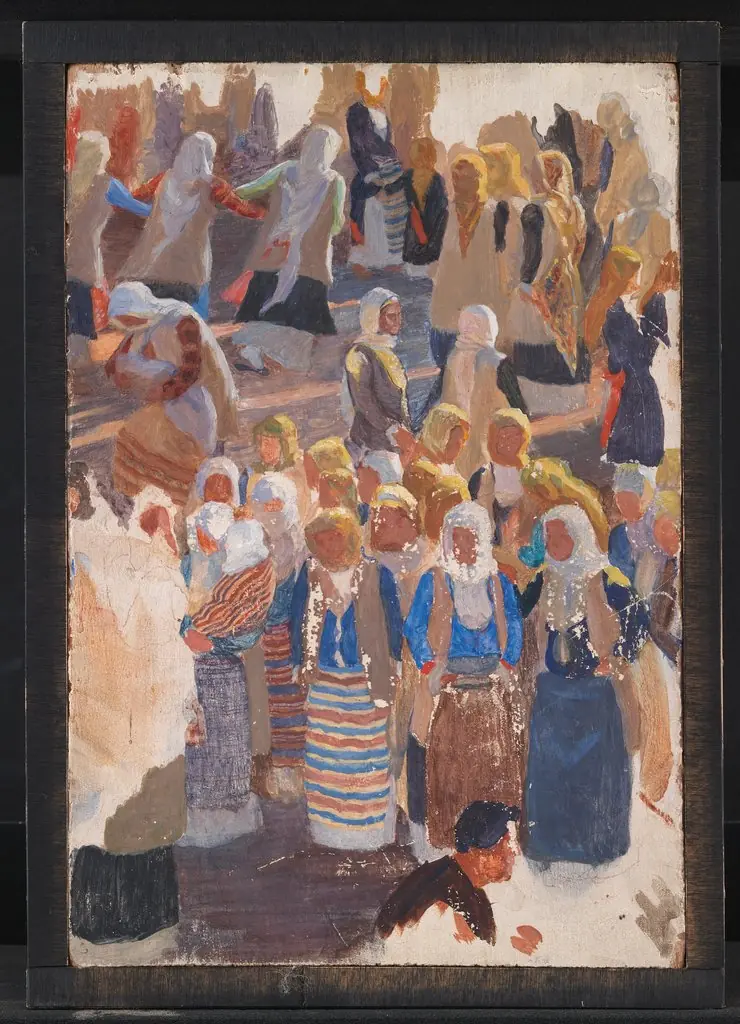 Grupper af dansende kvinder. Megara
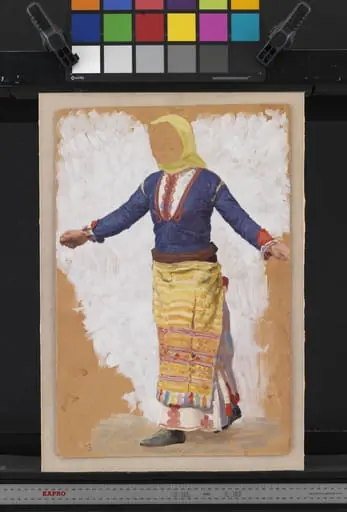 Dansende kvinde. Megara
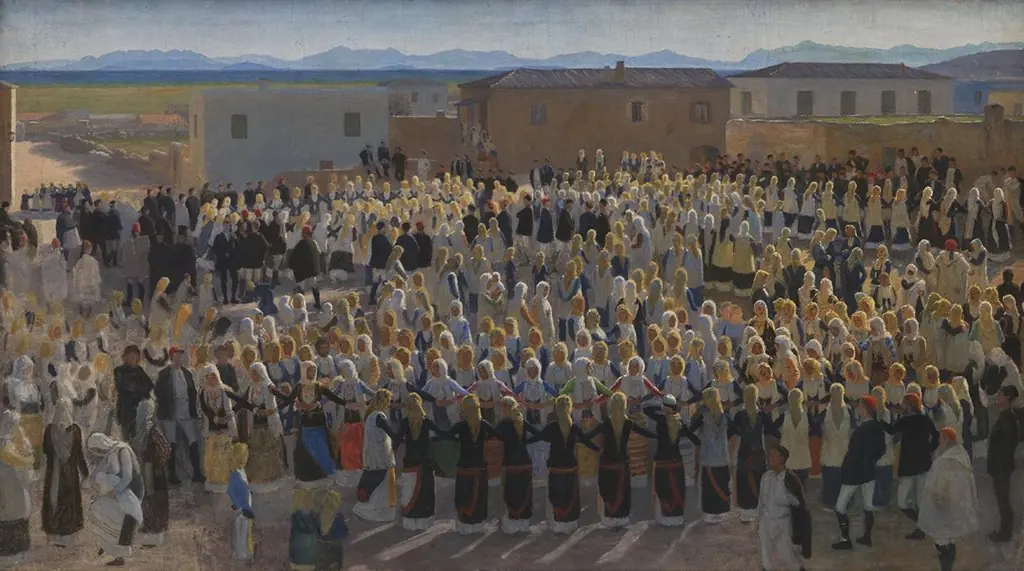 Kvindedansen i Megara
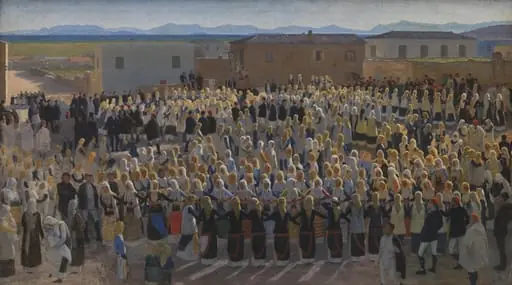 Kvindedansen i Megara
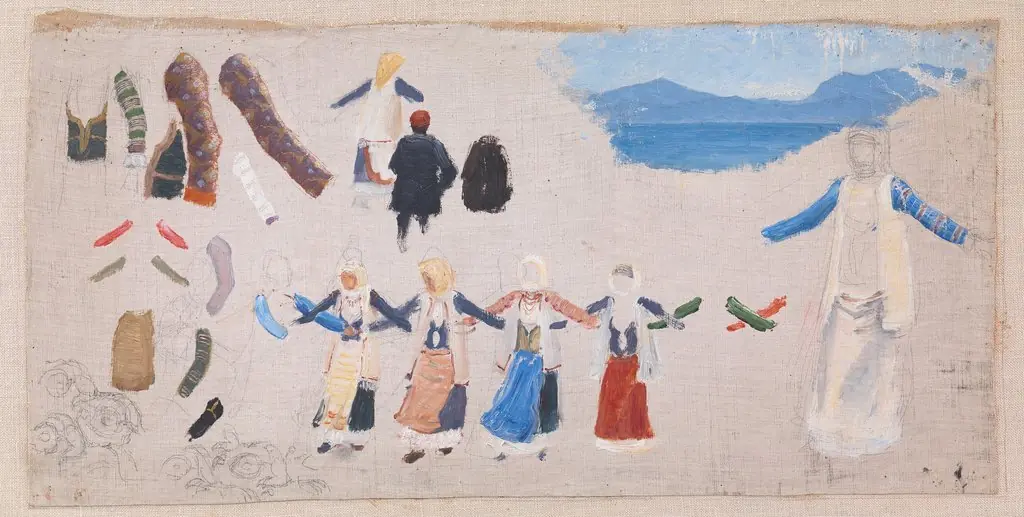 Dansende kvinder, dragtdetailler og et landskab
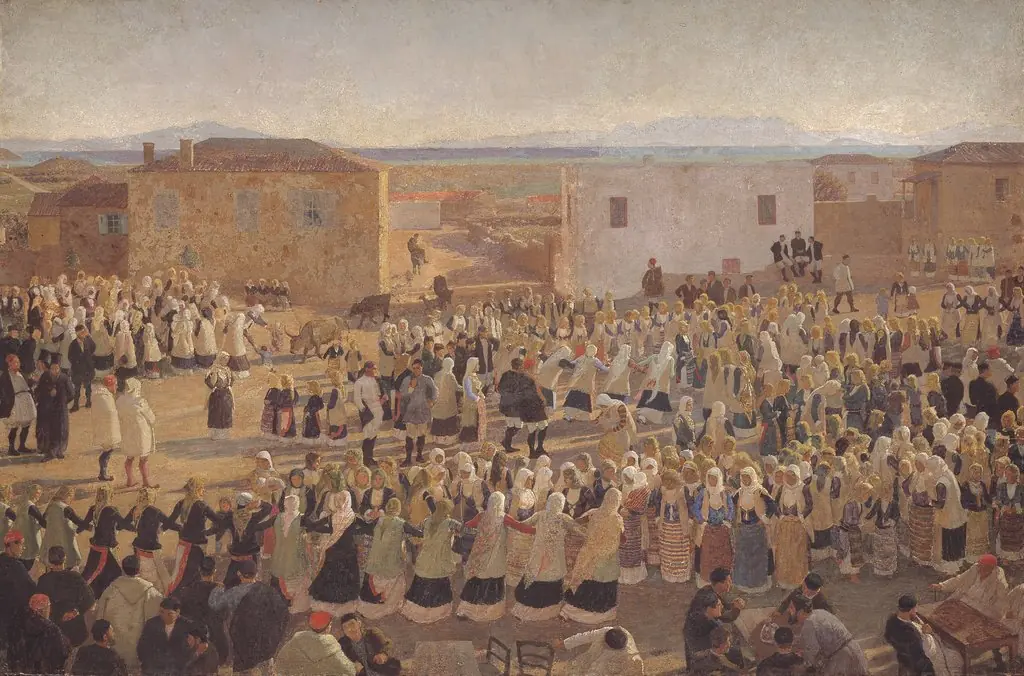 Kvindedansen i Megara
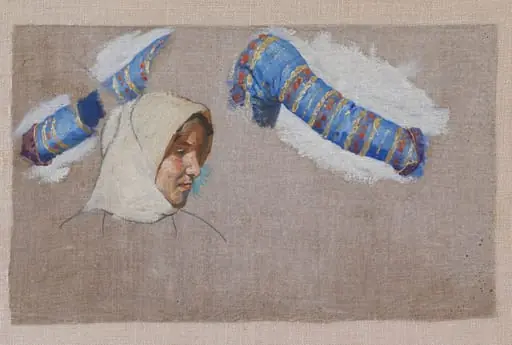 Dragtstudier og studie af et kvindehovede. Megara
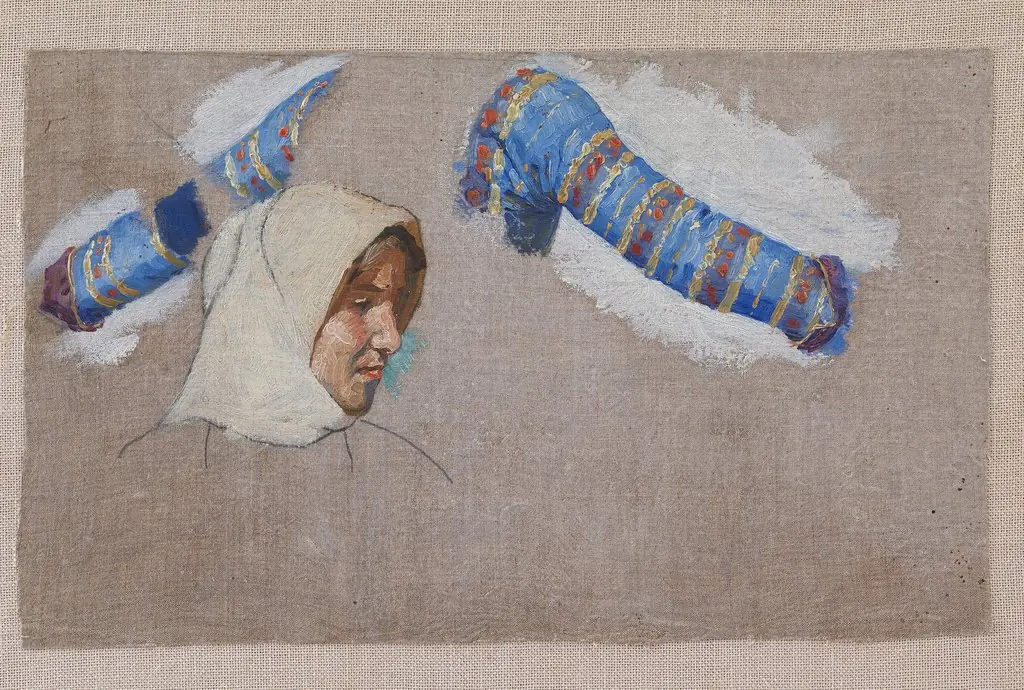 Dragtstudier og studie af et kvindehovede. Megara
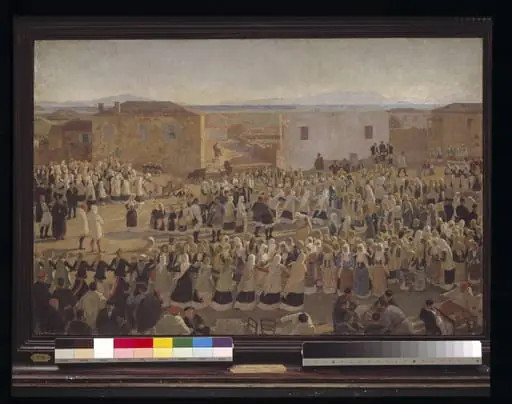 Kvindedansen i Megara
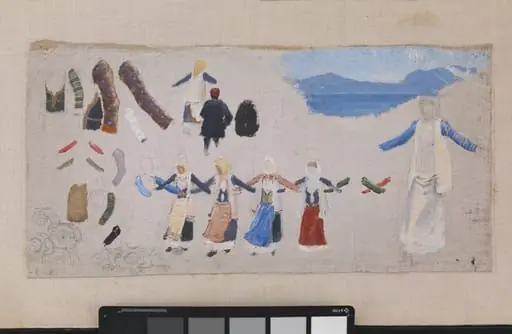 Dansende kvinder, dragtdetailler og et landskab