Artwork
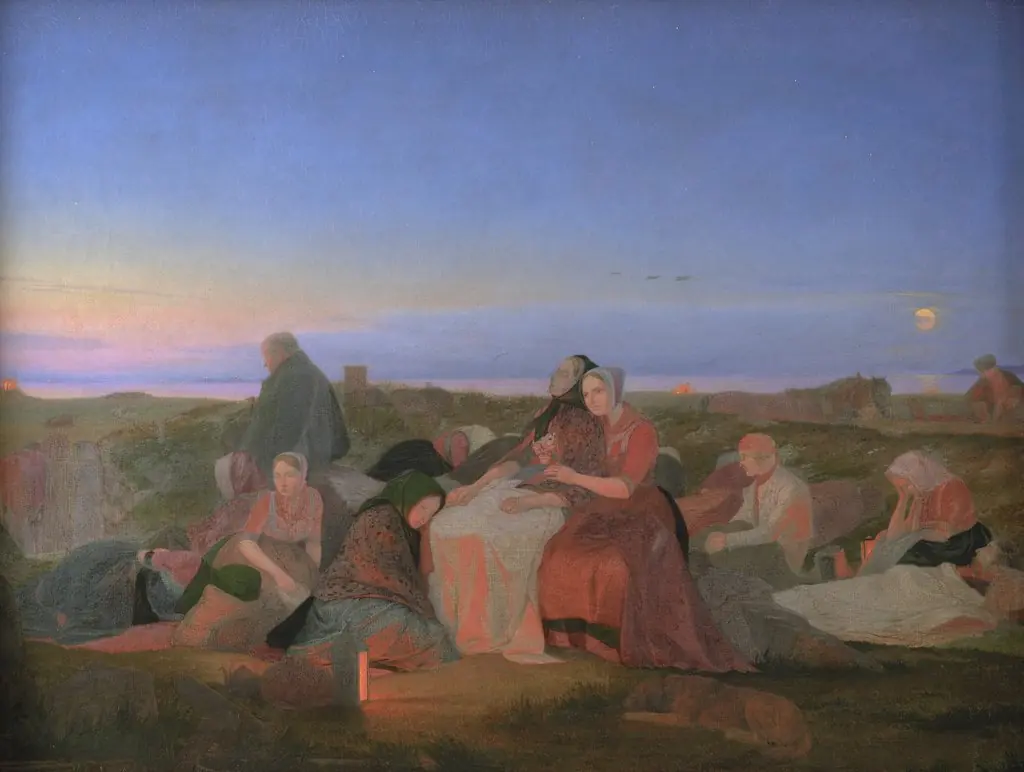
Midsummer's Eve. Sick People Asleep upon the Grave of St. Helena at Tisvilde
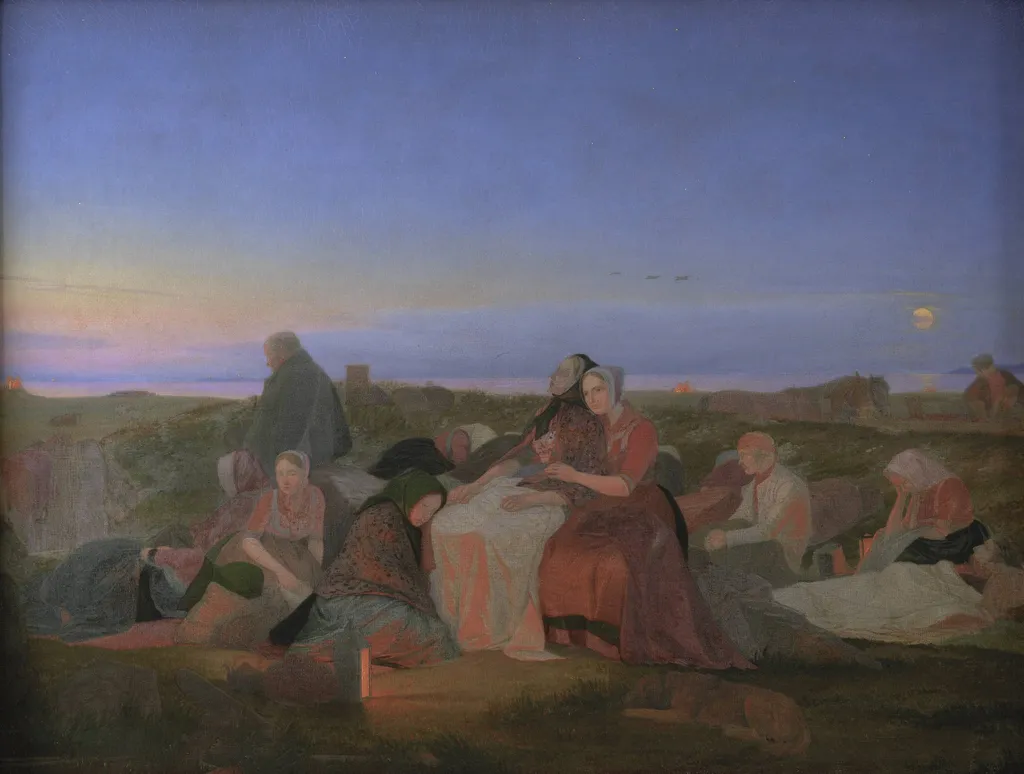
Midsummer's Eve. Sick People Asleep upon the Grave of St. Helena at Tisvilde is a photography by the Romanticist artist Unknown. It dates from 1847 and is held in the collection of the Statens Museum for Kunst.
About this work
Overview
Painted in 1847, this work depicts a quiet scene of the sick resting near the grave of Saint Helena in Tisvilde, Denmark, on Midsummer’s Eve.
Painted in 1847, this work depicts a quiet scene of the sick resting near the grave of Saint Helena in Tisvilde, Denmark, on Midsummer’s Eve. The composition centers on figures lying still on the grass, their stillness contrasting with the soft movement of birds in the sky. Rendered in subdued tones, the painting conveys a contemplative mood, blending natural elements with a sense of spiritual stillness.
Subject & Meaning
The scene reflects a folk belief that sleeping near the grave of a saint on Midsummer’s Eve could bring healing. The figures, dressed in period attire, are shown in deep repose, suggesting both physical exhaustion and hope for divine intervention. The placement of the grave at the center of the composition underscores its symbolic role as a threshold between the earthly and the sacred.
Technique & Style
The artist employs a restrained palette of muted blues, pinks, and earth tones to evoke tranquility. Brushwork is soft and blended, avoiding sharp definition to enhance the dreamlike quality of the moment. The sky, gently graded from pale pink to blue, and the distant horizon of water and buildings create a sense of spatial depth without dramatic emphasis.
History & Provenance
The painting entered the collection of the Museum of Ethnography shortly after its creation, likely due to its documentation of regional customs. Its preservation reflects early scholarly interest in folk practices tied to religious sites. No significant changes in ownership are recorded, and it has remained in the museum’s care since the 19th century.
Context
Created during the height of Romanticism in Denmark, the work aligns with a broader cultural fascination with nature, spirituality, and rural traditions. While not overtly religious, it draws on local beliefs that merged Christian sites with pre-Christian seasonal rituals, offering a quiet counterpoint to the era’s more dramatic historical or mythological subjects.
Legacy
Though not widely exhibited beyond regional collections, the painting remains a quiet testament to 19th-century Danish ethnographic observation. It contributes to the understanding of how artists engaged with folk medicine and sacred geography, preserving a moment where physical suffering and spiritual hope intersected in everyday life.
Artist & collection

 Domestic Scene
 Giacomo and Cardinal Marco, investing Andrea, Abbot of San Zeno, with his Benefice
 The Nymph of Fontainebleau
 Portrait of a Woman
 Madonna and Child with Saints in the Enclosed Garden
 Venus and Minerva
 Family Group of Four on Sofa
 Wall painting from Room H of the Villa of P. Fannius Synistor at Boscoreale
 Konfirmations-søndag. Dragør
 Konfirmations-søndag. Dragør
 The Weeders
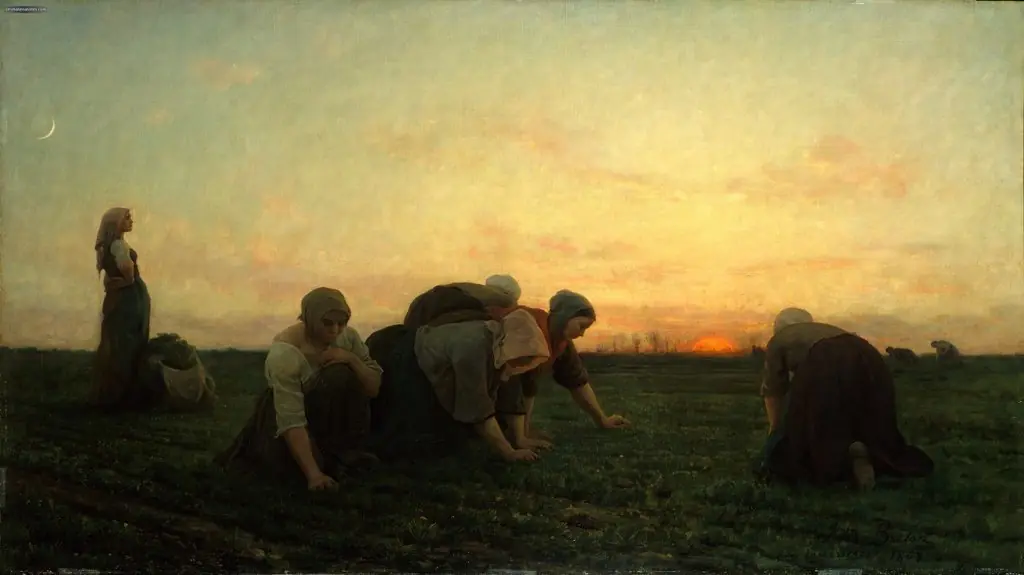 The Weeders
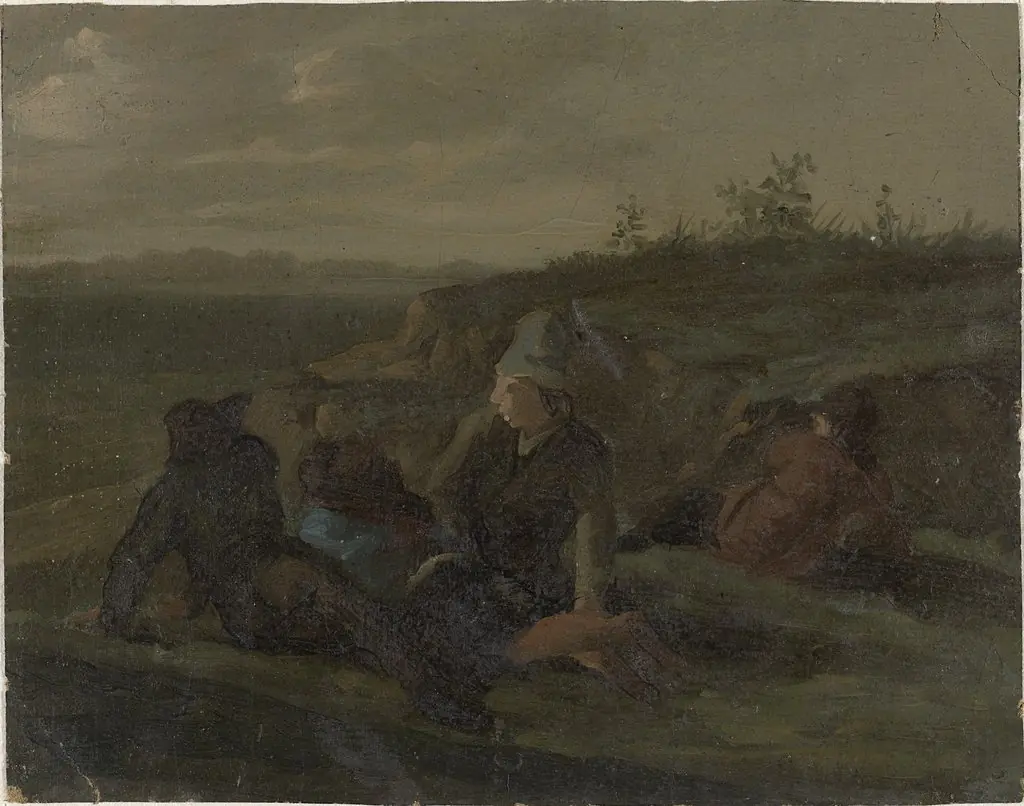 Resting Countrymen in a Meadow
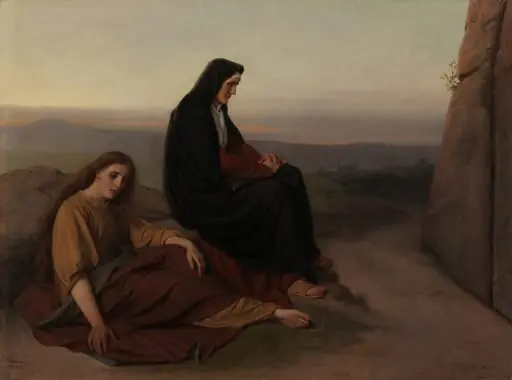 Surevia naisia Kristuksen haudalla
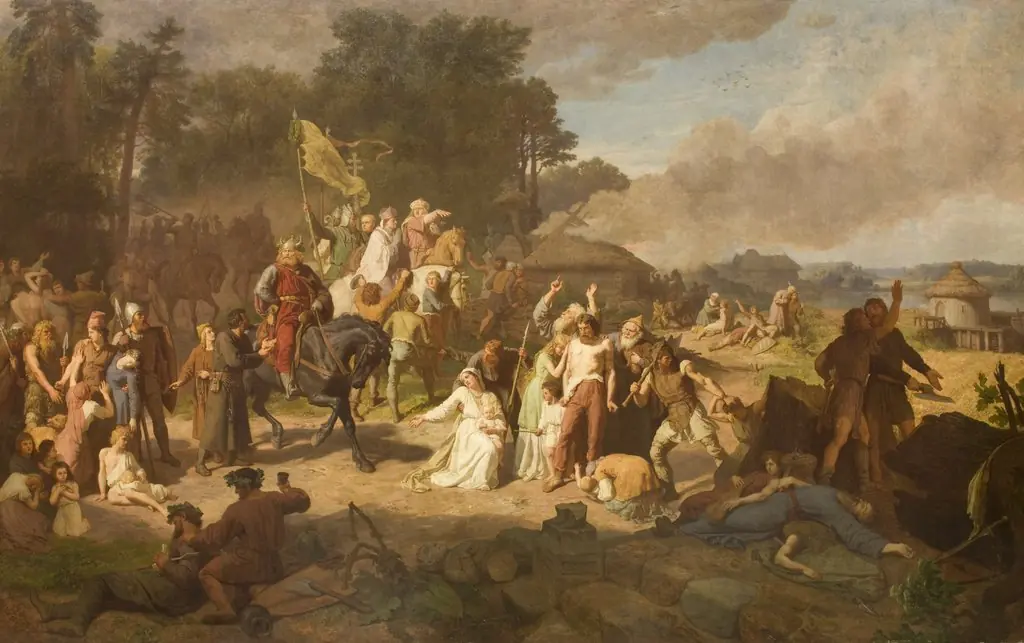 Opłakane apostolstwo
 Returning from the Plot
 Morning star
 Washerwomen
 En gammel fisker der om aftenen sætter sine garn ud
 Midsummer's Eve. Sick People Asleep upon the Grave of St. Helena at Tisvilde