Artwork
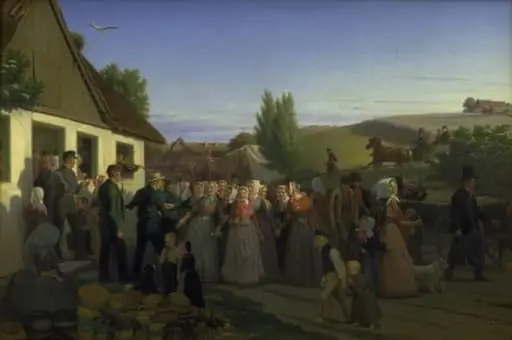
Konfirmations-søndag. Dragør
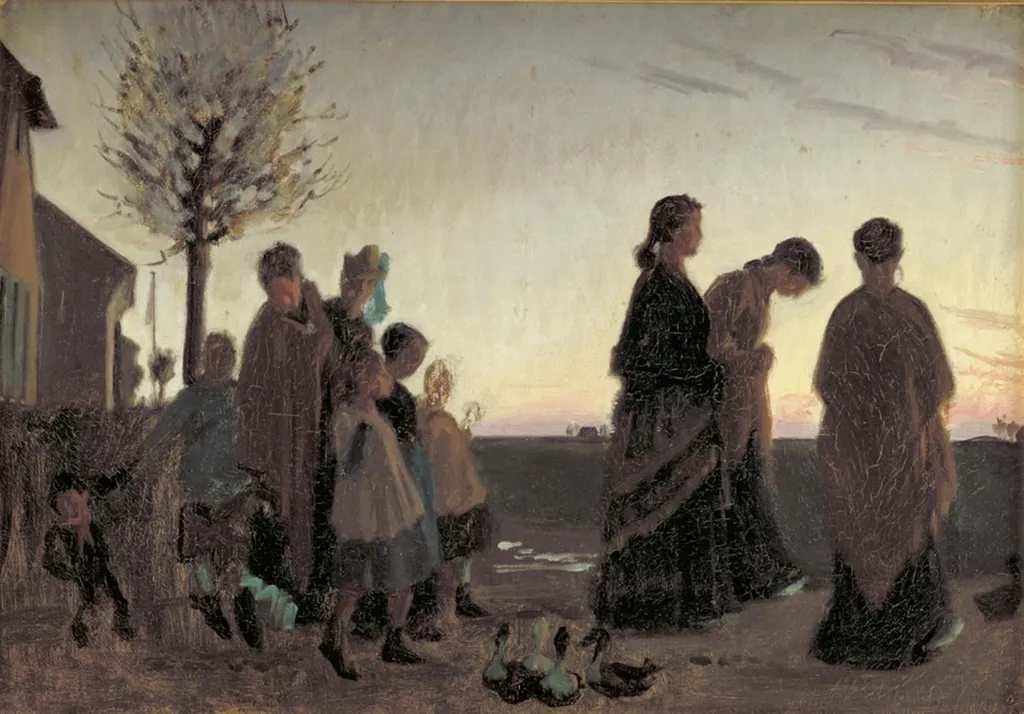
Konfirmations-søndag. Dragør is a photography by Unknown. It dates from 1878 and is held in the collection of the Statens Museum for Kunst. Painted around 1878, Konfirmations-søndag.
About this work
Overview
The painting is held in the collection of the Museum of Ethnography, where it is valued for its unidealized portrayal of local life.
Painted around 1878, Konfirmations-søndag. Dragør captures a quiet moment in the Danish coastal town of Dragør. The scene shows a group of individuals moving along a narrow street, their forms rendered with loose, fluid brushwork. The composition avoids dramatic focal points, instead emphasizing the rhythm of daily movement. The painting is held in the collection of the Museum of Ethnography, where it is valued for its unidealized portrayal of local life.
Subject & Meaning
The title references Confirmation Sunday, a Lutheran rite of passage. The figures, dressed in dark, uniform clothing, suggest a communal procession, likely after a religious service. Their faces are obscured, shifting focus from individual identity to collective ritual. Scattered objects on the ground—perhaps discarded items or fallen flowers—hint at the quiet aftermath of ceremony, reinforcing a tone of solemn reflection rather than celebration.
Technique & Style
The artist employs loose, expressive brushstrokes that convey motion and immediacy without fine detail. Chiaroscuro is used subtly to model forms and suggest spatial depth, particularly in the way light falls across the street and building facades. Color is restrained, dominated by muted grays and browns, enhancing the painting’s contemplative mood. The lack of sharp definition in figures and architecture supports an impressionistic approach, prioritizing atmosphere over precision.
History & Provenance
The work was created in the late 1870s, during a period when Danish artists increasingly turned to everyday scenes over historical or mythological subjects. It entered the Museum of Ethnography’s collection in the early 20th century, likely as part of a broader effort to document regional customs and vernacular life. Its attribution to the artist remains consistent in institutional records, though little is documented about its early ownership or exhibition history.
Context
In late 19th-century Denmark, rural and small-town life became a subject of growing artistic interest, especially among painters influenced by naturalism and early impressionism. Dragør, a fishing village near Copenhagen, was a favored locale for its preserved traditions and distinctive architecture. This painting reflects a wider cultural shift toward observing ordinary rituals with empathy, rather than romanticizing them.
Legacy
Though not widely exhibited outside institutional settings, Konfirmations-søndag. Dragør stands as a quiet example of Danish genre painting’s turn toward psychological subtlety. Its restrained palette and focus on communal ritual influenced later artists interested in the emotional weight of everyday moments. The work remains a reference point in studies of Nordic visual culture and the representation of religious practice in art.
Artist & collection

 Domestic Scene
 Giacomo and Cardinal Marco, investing Andrea, Abbot of San Zeno, with his Benefice
 The Nymph of Fontainebleau
 Portrait of a Woman
 Madonna and Child with Saints in the Enclosed Garden
 Venus and Minerva
 Family Group of Four on Sofa
 Wall painting from Room H of the Villa of P. Fannius Synistor at Boscoreale
 Funeral of a Pauper in Germany
 Midsummer's Eve. Sick People Asleep upon the Grave of St. Helena at Tisvilde
 Midsummer's Eve. Sick People Asleep upon the Grave of St. Helena at Tisvilde
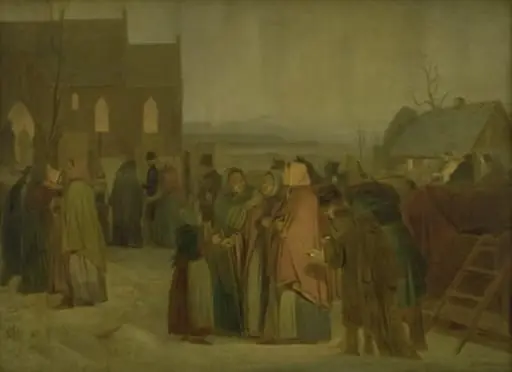 Peasants outside the Church on a Christmas Morning
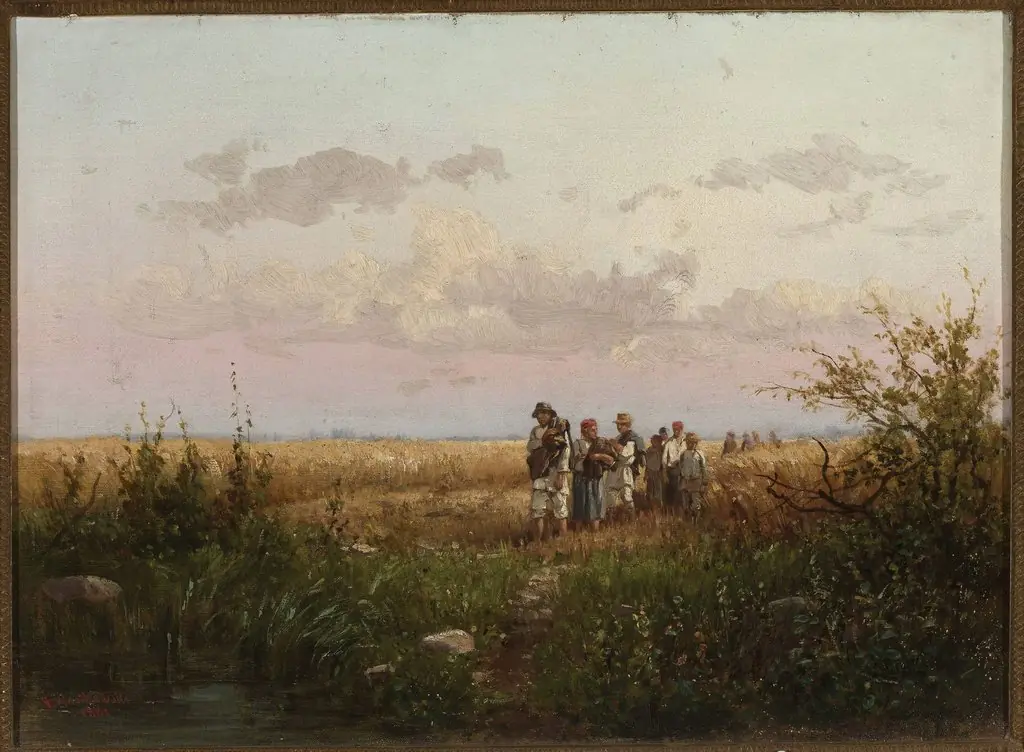 Harvesters returning from the fields
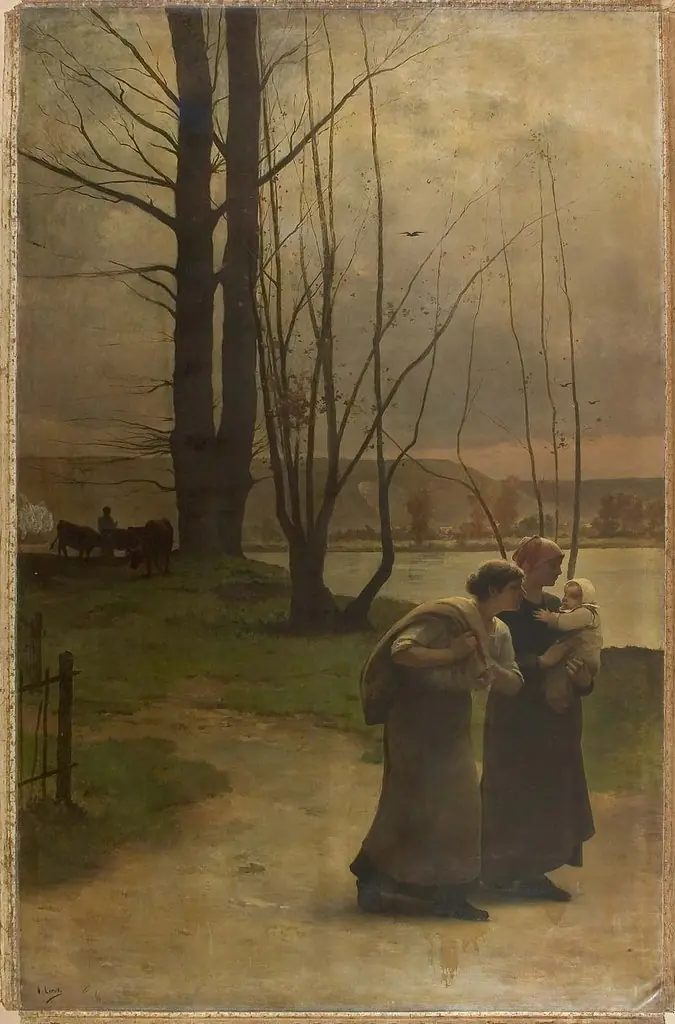 By the Riverside
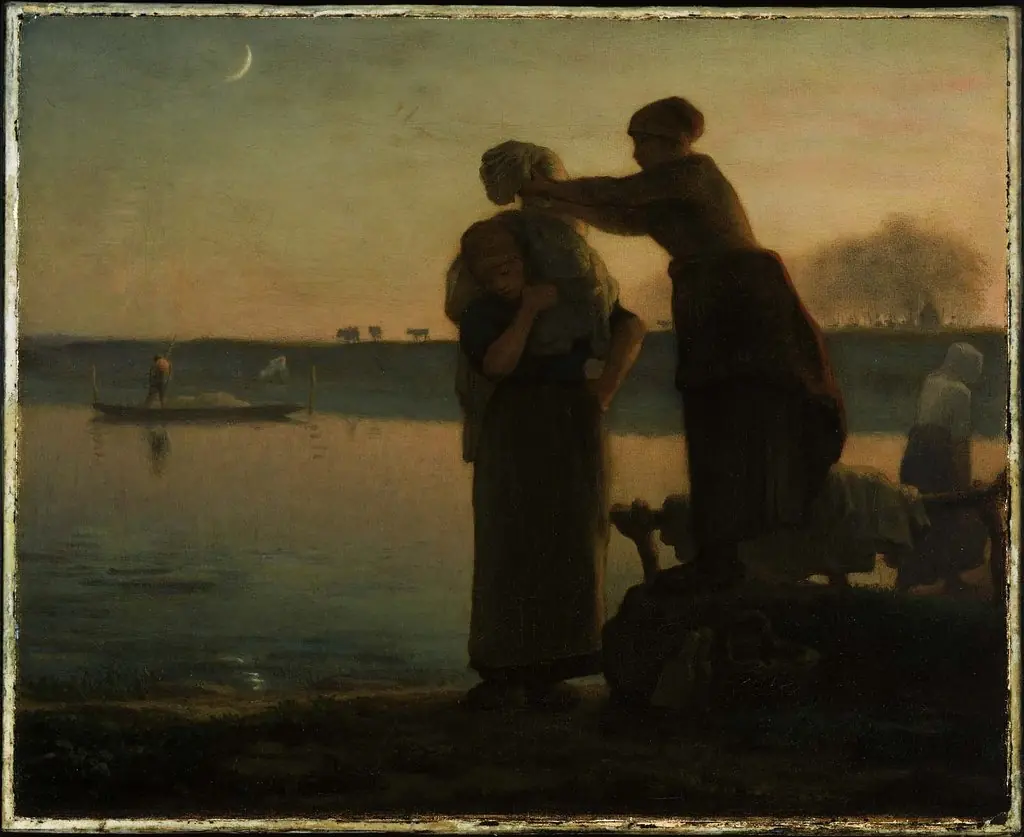 Washerwomen
 St. Hansfest i Tisvilde
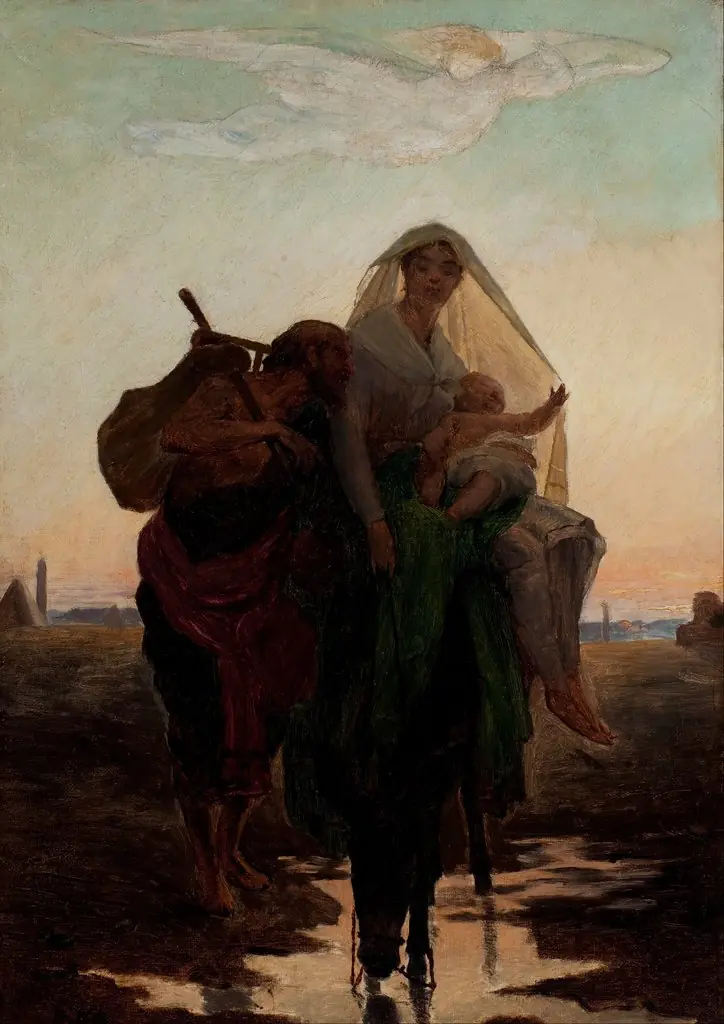 Study for "Flight of the Holy Family to Egypt"
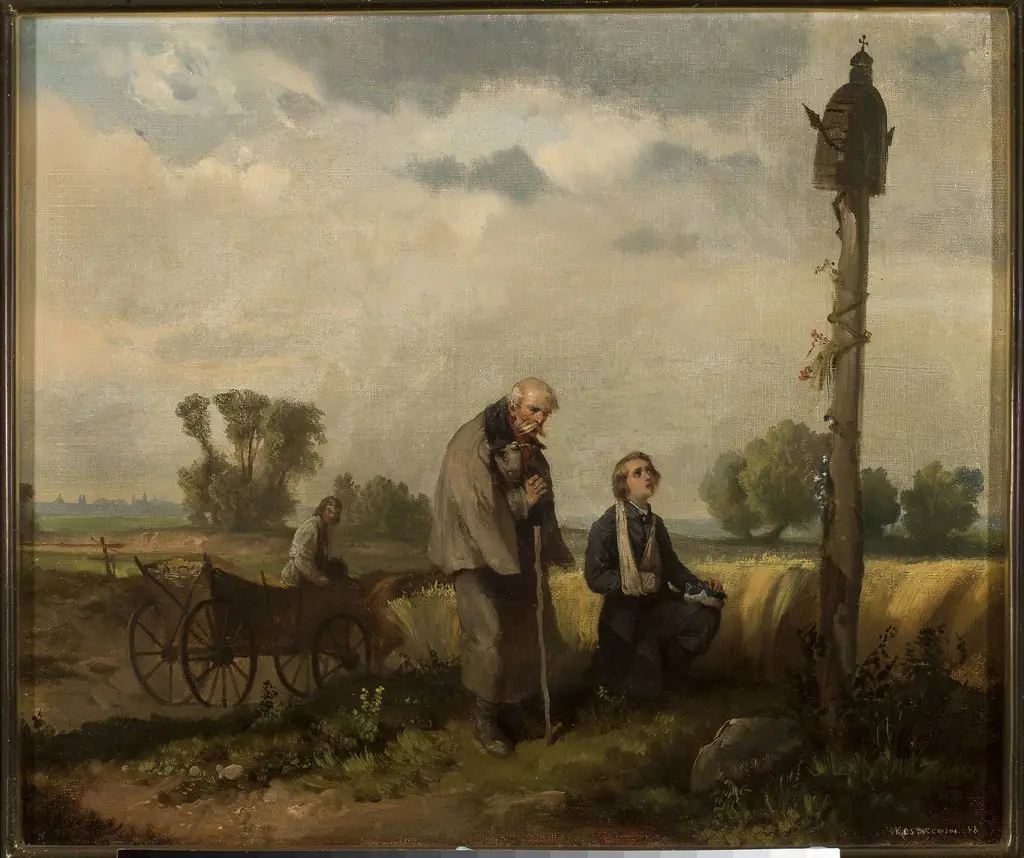 Son's return (insurgent)